



What is sublimation? A guide for UK business owners 2026
Many UK business owners mistakenly believe sublimation printing works on any fabric or surface, leading to costly mistakes and wasted materials. This guide clarifies the science behind sublimation, reveals which materials deliver vibrant results, and explains the precise workflow needed to create durable custom products that won’t fade, crack, or peel.
Table of Contents
- Understanding Sublimation Printing: The Basics And Science
- How Sublimation Printing Works: Step-By-Step Workflow And Equipment
- Materials Suitable For Sublimation: Choosing The Right Sublimation Blanks And Substrates
- Benefits And Limitations Of Sublimation Printing For Business Applications
- Common Misconceptions About Sublimation: Separating Fact From Fiction
- Practical Guidance And Troubleshooting For Business Owners
- Explore Our Sublimation Blanks And Equipment For Your Business
- Frequently Asked Questions About Sublimation Printing
Key takeaways
| Point | Details |
|---|---|
| Definition and durability | Sublimation transforms solid dye directly into gas under heat, embedding colour beneath polymer surfaces for prints that resist fading and washing. |
| Material requirements | Only polyester fabrics or polymer-coated blanks (mugs, phone cases) work; cotton and dark substrates fail due to poor dye bonding. |
| Process essentials | Print design on transfer paper, heat press at 190°C for 50-60 seconds with medium pressure, then cool before handling. |
| Key advantages | Superior durability versus vinyl transfers, no cracking or peeling, vibrant full-colour prints ideal for promotional items and sportswear. |
| Common errors | Using untreated cotton, dark substrates, or incorrect heat settings causes poor transfer and colour visibility. |
Understanding sublimation printing: the basics and science
Sublimation printing relies on a unique chemical process where solid dye particles convert directly into gas when exposed to heat and pressure, skipping the liquid phase entirely. This transformation allows dye molecules to bond permanently with polyester fibres or polymer coatings on hard surfaces. The result is a print embedded beneath the surface rather than sitting on top like traditional ink or vinyl.
This method demands three critical components: specialised sublimation inks, polyester or polymer-coated substrates, and precise heat press machinery. Sublimation printing equipment includes specialised printers with sublimation inks, heat presses applying pressure and heat, and specially coated blanks. Without polymer molecules in the substrate, dye has nothing to bond with, causing prints to wash out immediately.
The science is straightforward yet specific. Heat opens pores in the polymer coating or polyester fibres, allowing gaseous dye to penetrate. When cooled, these pores close, trapping colour permanently inside the material. This explains why sublimation blanks play such a vital role in business success, as coating quality directly impacts print durability.
Equipment types vary by business scale and product focus:
- Desktop sublimation printers suit low-volume operations producing name badges and small promotional items
- Commercial heat presses handle larger substrates like sportswear and banners with consistent pressure distribution
- Specialised presses for mugs, plates, and curved surfaces ensure even heat contact across three-dimensional objects
Choosing equipment matched to your product range and volume prevents bottlenecks and quality issues. Understanding why businesses use sublimation textiles helps clarify which machinery investments deliver the best return for custom printing operations.
How sublimation printing works: step-by-step workflow and equipment
The sublimation workflow follows a precise sequence that business owners must master to achieve consistent, professional results. Each step builds on the previous one, and skipping or rushing any phase compromises print quality and durability.
- Select your blank: Choose a polyester garment or polymer-coated hard substrate like a mug or phone case that matches your design dimensions.
- Design and mirror your artwork: Create or import graphics in design software, ensuring colours are vibrant and the image is mirrored horizontally for proper transfer.
- Print on sublimation transfer paper: Load specialised transfer paper into your sublimation printer and print the mirrored design using sublimation inks.
- Position and secure the transfer: Place the printed paper face-down on the blank, securing it with heat-resistant tape to prevent shifting during pressing.
- Heat press the transfer: Apply heat at 190°C/375°F for 50-60 seconds with medium pressure, allowing dye to convert to gas and bond with the polymer coating.
- Cool and peel: Remove the blank from the press, let it cool for 30-60 seconds, then carefully peel away the transfer paper to reveal the embedded print.
Temperature, pressure, and timing form a critical triangle for quality control. Too little heat fails to convert dye to gas, leaving faded prints. Excessive heat can scorch substrates or cause colour shifts. Insufficient pressure prevents complete dye transfer, creating patchy results. Following a detailed sublimation printing step-by-step guide ensures you calibrate these variables correctly from the start.
The role of sublimation inks and transfer papers cannot be overstated. Standard inkjet inks contain pigments that sit on surfaces rather than bonding chemically. Sublimation inks contain special dyes formulated to gasify at specific temperatures, enabling the molecular bonding that makes prints permanent.
Pro Tip: Always test new blanks and substrates with sample prints before committing to large production runs. Small variations in coating thickness or polyester content can require slight adjustments to time and temperature settings.
Understanding proper sublimation printer setup prevents the most common beginner mistakes. Incorrect colour profiles, wrong paper types, or misaligned heat press platens waste materials and frustrate operators. Investing time in setup and calibration pays dividends through consistent output and minimal waste.
Materials suitable for sublimation: choosing the right sublimation blanks and substrates
Material selection determines whether your sublimation prints look vibrant and last for years or fade after a single wash. The chemistry requires polyester fibres or polymer coatings to create the molecular bonds that make sublimation permanent.
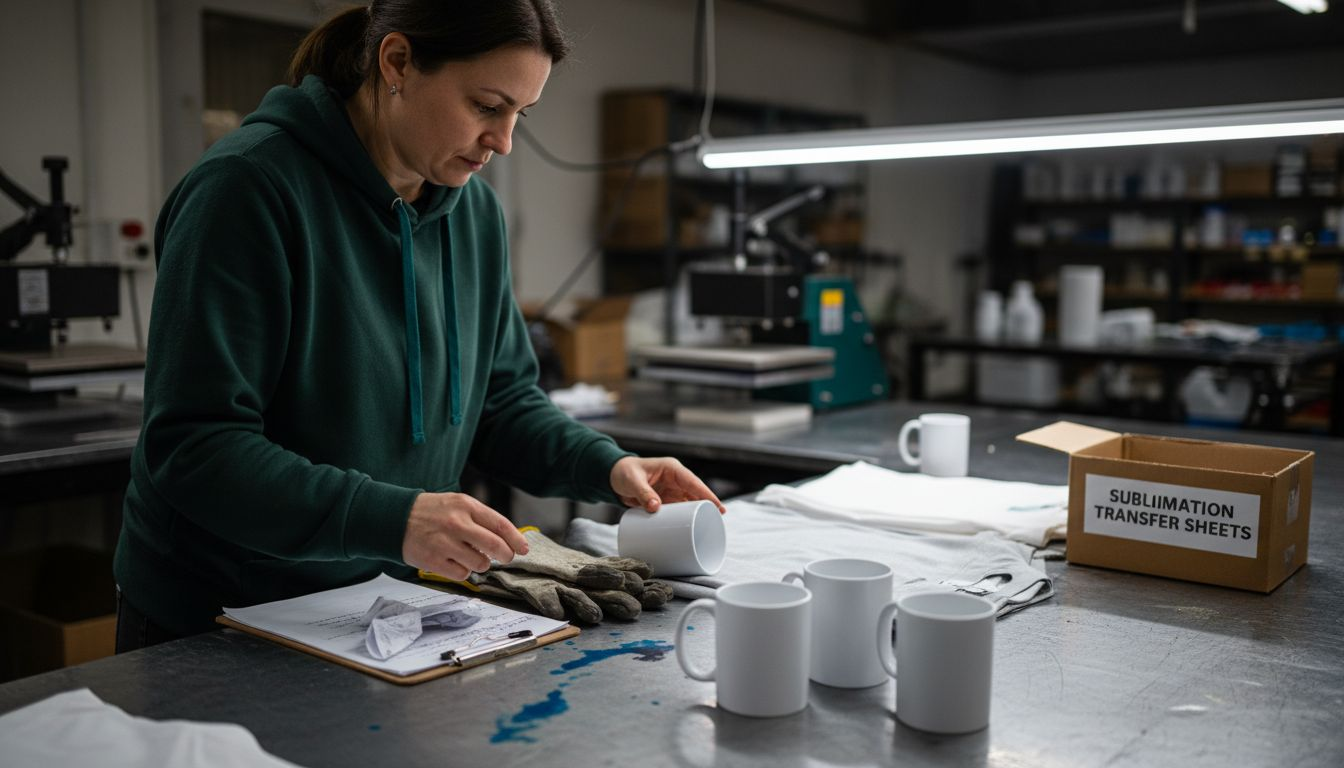
100% polyester fabrics deliver the most vivid colours and best wash durability. Blends with at least 65% polyester content can work but produce less saturated colours because cotton fibres cannot bond with sublimation dye. Pure cotton fails completely, as the natural cellulose structure lacks the polymer chains needed for dye bonding.
For hard surfaces, polymer-coated blanks are essential:
- Ceramic mugs with specialised polymer coating withstand dishwashers whilst maintaining colour brilliance
- Phone cases require flexible polymer layers that bond with curved surfaces without cracking
- Metal signs and plaques need heat-resistant coatings that prevent warping under press temperatures
- Keyrings, coasters, and badges demand uniform coating thickness for consistent colour reproduction
Substrate colour dramatically affects final appearance. Light or white backgrounds allow sublimation dyes to show their true vibrance. Dark substrates absorb dye molecules, rendering colours dull or invisible. This limitation stems from sublimation being a dye process rather than a paint or ink layer.
Pro Tip: Always verify polyester content or coating specifications before purchasing blanks. Suppliers who cannot provide detailed material composition likely sell untreated or incompatible products that waste your time and money.
| Blank Type | Recommended Substrate | Polyester Requirement | Typical Applications |
|---|---|---|---|
| T-shirts and sportswear | 100% polyester fabric | Essential | Team kits, promotional apparel |
| Mugs and drinkware | Polymer-coated ceramic | Coating required | Corporate gifts, personalised merchandise |
| Phone cases | Polymer-coated plastic | Coating required | Retail products, branded accessories |
| Name badges | MDF with polymer coating | Coating required | Conference materials, staff identification |
| Tote bags | Polyester canvas | 100% polyester preferred | Event giveaways, retail merchandise |
When evaluating blanks, examine coating quality closely. Uneven coatings create blotchy prints with colour variations across the surface. Understanding tips for sublimation blanks helps you identify quality products and avoid common sourcing mistakes.
Learning how to use sublimation blanks effectively includes testing samples from new suppliers and documenting which blanks perform best with your specific equipment settings. Building a reliable supply chain of quality materials prevents production delays and customer complaints.
The benefits of using quality sublimation blanks extend beyond just successful transfers. Consistent coating thickness means predictable results across large production runs. Superior polymer formulations resist yellowing and degradation over time, ensuring printed products maintain their appearance for years.
Benefits and limitations of sublimation printing for business applications
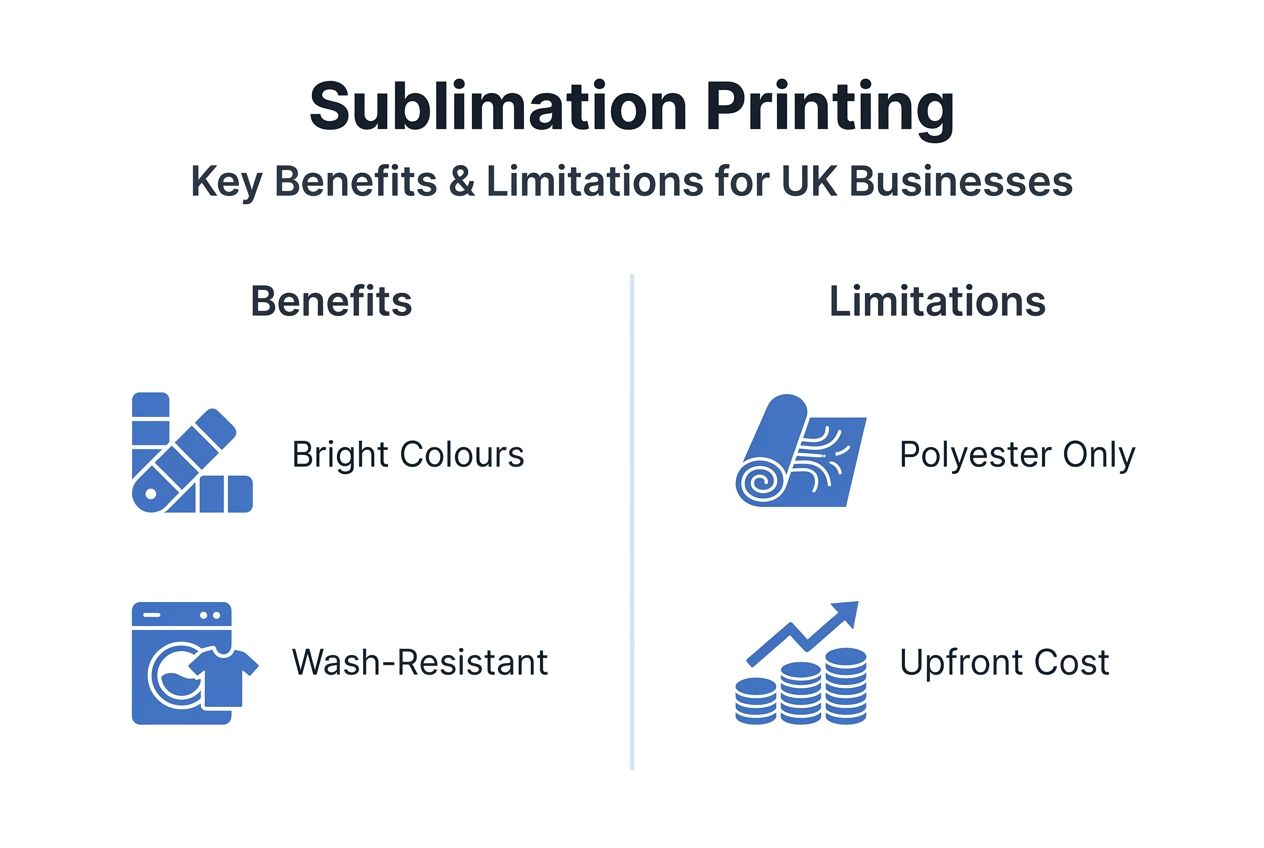
Sublimation offers distinct advantages for businesses producing custom printed products, but understanding its constraints helps you choose the right printing method for each application. Print durability stands out as the primary benefit. Sublimation embeds dye beneath surface coatings, making prints resistant to cracking, peeling, or washing away unlike vinyl heat transfers.
Key advantages for commercial operations:
- Prints withstand hundreds of wash cycles without fading or deteriorating
- No texture or raised surface feel, creating a professional finish
- Full-colour photographic quality with unlimited colour options
- Fast production speeds once equipment is calibrated
- Low per-unit costs for medium to high volume runs
Compared to direct-to-garment (DTG) printing, sublimation delivers superior wash fastness and colour vibrancy on polyester fabrics. DTG excels on cotton but requires pretreatment chemicals and shows more fading over time. Screen printing suits large runs of simple designs but cannot match sublimation’s photographic detail or colour range.
| Print Method | Substrate Compatibility | Durability | Colour Range | Setup Time | Best Use Case |
|---|---|---|---|---|---|
| Sublimation | Polyester, polymer-coated | Excellent | Unlimited | Medium | Full-colour designs, sportswear, promotional items |
| DTG | Cotton, cotton blends | Good | Unlimited | Low | Cotton garments, small batches |
| Screen printing | Most fabrics | Excellent | Limited by screens | High | Large runs, simple designs |
| Vinyl transfer | Most fabrics | Fair to Good | Limited by stock | Low | Names, numbers, simple graphics |
Limitations require careful consideration. Sublimation’s substrate restrictions mean you cannot print on cotton T-shirts, leather goods, or untreated wood without special preparation. Dark-coloured items remain incompatible because sublimation dyes are translucent, not opaque. Black or navy blanks will not show colours regardless of technique.
“The key to sublimation success lies in matching your product range to compatible materials. Businesses that try to force sublimation onto incompatible substrates waste resources and frustrate customers with poor results.”
Applications where sublimation excels include sportswear with complex designs, promotional items requiring photographic detail, and personalised gifts where durability matters. Understanding why sublimation blanks benefit your business helps you focus on products that maximise this method’s strengths whilst avoiding its limitations.
The initial equipment investment can deter small operations, but sublimation printers and heat presses have become more affordable. Entry-level systems now cost less than commercial DTG printers whilst offering comparable output quality for compatible substrates.
Common misconceptions about sublimation: separating fact from fiction
Misunderstandings about sublimation capabilities lead businesses to invest in equipment and materials that cannot deliver expected results. Correcting these misconceptions prevents costly errors and helps you set realistic expectations for customers.
The most damaging myth claims sublimation works on cotton or untreated fabrics. Cotton lacks the polymer structure needed for dye bonding, causing prints to wash out immediately or fail to transfer at all. This confusion likely stems from seeing other printing methods on cotton and assuming all techniques are interchangeable.
Another widespread error involves substrate colour expectations. Business owners frequently attempt to sublimate onto dark blue, black, or navy items, expecting vibrant results. Sublimation dyes are translucent, meaning they show colour by reflecting light through the dye layer. Dark backgrounds absorb this light, rendering colours invisible or muddy.
Key misconceptions to avoid:
- Believing sublimation is just another term for heat transfer vinyl (they are completely different processes)
- Assuming all white or light-coloured items can be sublimated (coating or polyester content remains essential)
- Thinking higher temperatures or longer press times compensate for incompatible materials (they do not)
- Expecting sublimation to produce raised or textured prints like screen printing (sublimation creates smooth, embedded colour)
- Assuming sublimation prints fade like standard inkjet prints (properly executed sublimation lasts for years)
The durability comparison with vinyl transfers deserves special attention. Sublimation prints outlast heat transfers because dye molecules bond at the molecular level rather than sitting as a separate layer. Vinyl can crack, peel at edges, or separate from fabric after repeated washing and drying cycles.
Understanding sublimation terminology and key concepts helps you communicate accurately with suppliers and customers. Using precise language about substrate requirements, coating specifications, and process limitations prevents misunderstandings that lead to dissatisfaction.
Some business owners mistakenly believe sublimation equipment requires constant technical expertise to operate. Modern sublimation printers and heat presses feature user-friendly controls and consistent performance once properly calibrated. Initial setup demands attention to detail, but daily operation becomes routine.
The myth that sublimation only suits small craft businesses ignores its widespread use in commercial sportswear manufacturing, corporate promotional products, and large-scale textile printing. Industrial sublimation systems produce thousands of units daily with remarkable consistency.
Practical guidance and troubleshooting for business owners
Successful sublimation printing requires mastering technical details and developing systematic quality control processes. Training staff properly reduces waste and improves output consistency from the first production run.
Maintaining correct heat press settings prevents the majority of print failures. Temperature variations of just 10-15 degrees Celsius can cause faded colours, incomplete transfers, or substrate scorching. Invest in a heat press with accurate digital temperature control and verify calibration regularly with an infrared thermometer.
Top troubleshooting tips for common issues:
- Poor image transfer or faded colours: Increase press time by 10-15 seconds or raise temperature by 5 degrees, ensuring substrate specifications are followed
- Ghosting (doubled images): Secure transfer paper more firmly with heat-resistant tape to prevent shifting during pressing
- Colour shifts or dullness: Verify you are using genuine sublimation inks and that printer colour profiles match your specific ink and paper combination
- Blotchy or uneven colour: Check heat press platen for even pressure distribution and replace worn padding that creates pressure variations
- Yellowing or browning: Reduce temperature or press time, as excessive heat degrades polymer coatings and causes discolouration
Pro Tip: Create a production log documenting successful settings for each blank type and substrate. Record temperature, time, pressure, and any special techniques. This reference guide accelerates training for new staff and ensures consistency across production shifts.
Choosing approved polyester or polymer-coated blanks eliminates the most frustrating variables. Cheap, untreated blanks from unreliable suppliers waste time and materials whilst damaging your reputation with customers. Following a comprehensive sublimation transfer process guide helps standardise your workflow and identify exactly where problems occur.
Proper sublimation printer setup includes regular maintenance schedules. Print heads clog if not used regularly or if printers sit idle for weeks. Running cleaning cycles and printing test patterns weekly prevents costly repairs and maintains colour accuracy.
Quality control should happen at multiple stages: inspect blanks before printing, verify transfer paper prints before pressing, and examine finished products before packaging. Catching defects early prevents wasted labour on flawed items.
Investing in proper ventilation for your workspace protects staff health and maintains air quality. Sublimation releases minimal fumes compared to solvent-based printing, but adequate airflow remains important during high-volume production.
Explore our sublimation blanks and equipment for your business
Ready to implement sublimation printing with confidence? We supply the quality blanks and equipment that UK and Ireland businesses rely on for consistent, professional results.
Our polymer-coated sublimation blanks deliver vibrant colour reproduction and long-lasting durability across diverse product categories. Whether you need name badges for corporate events, promotional items for marketing campaigns, or custom merchandise for retail, our range covers your requirements without minimum order quantities.
Popular products that help businesses succeed with sublimation include our round MDF name badge with pin, perfect for conferences and staff identification. The rectangle sublimation MDF pin badge offers a classic professional look, whilst our MDF name badge with magnet provides a pin-free attachment option.
Each blank features consistent polymer coating thickness for reliable transfers and brilliant colour saturation. We test products rigorously to ensure compatibility with standard sublimation equipment settings, reducing your trial-and-error phase.
Frequently asked questions about sublimation printing
What types of materials can I sublimate?
Only polyester fabrics or polymer-coated materials successfully accept sublimation dye. Light or white substrates produce the most vibrant colour results because sublimation dyes are translucent rather than opaque.
Why do sublimation prints not work well on cotton?
Cotton lacks the polymer molecular structure needed to bond with sublimation dye, causing poor print transfer and minimal durability. The natural cellulose fibres in cotton cannot trap gaseous dye molecules during the sublimation process.
How do I avoid fading or peeling in sublimation prints?
Use correct heat press temperature around 190°C and timing of 50-60 seconds with medium pressure. Choose quality polyester or polymer-coated blanks from reliable suppliers and follow recommended settings. Consult professional sublimation transfer guides for detailed setup and troubleshooting steps.
Can I sublimate on dark-coloured items?
Sublimation dyes require light or white substrates because the dyes are translucent. Dark colours absorb light that would normally reflect through the dye layer, making prints appear dull or completely invisible regardless of technique used.
Recommended
- Sublimation Blanks: Powering Custom Product Success – SubliBlanks Ltd
- Sublimation Terminology – Key Concepts for Small Businesses – SubliBlanks Ltd
- Sublimation for Promotional Items: Boosting Customisation and Value – SubliBlanks Ltd
- Why Choose Sublimation Blanks for Custom Products – SubliBlanks Ltd


