



Sublimation for Promotional Items: Boosting Customisation and Value
Finding reliable ways to make your branded merchandise stand out is a challenge for many Custom merchandise business owners in the UK and Ireland. The demand for vibrant, durable promotional items means traditional printing methods rarely deliver the results customers expect. With sublimation printing enabling permanent molecular bonding and exceptional photorealistic colour reproduction, this article highlights how you can tap into its full potential. Discover practical guidance for substrate selection, product types, and efficient production setups to help your business stay competitive.
Table of Contents
- Defining Sublimation In Promotional Production
- Main Types Of Sublimation-Ready Products
- How Sublimation Works In Merchandise Printing
- Key Equipment And Setup Requirements
- Pitfalls And Common Mistakes To Avoid
- Comparing Sublimation To Alternative Printing Methods
Key Takeaways
| Point | Details |
|---|---|
| Sublimation Process | Sublimation is a specialised printing technique that transforms solid materials directly into gas, allowing for vibrant, durable graphics on promotional products. |
| Material Compatibility | Selecting appropriate substrates, such as polyester or polymer-coated materials, is crucial for successful dye absorption and permanent bonding. |
| Equipment Requirements | Investing in high-quality sublimation printers and heat transfer equipment is essential for achieving consistent, professional results in promotional merchandise production. |
| Common Mistakes | Avoid design preparation and material selection errors that can significantly undermine the quality of sublimation printing, ensuring thorough quality control at each stage of the process. |
Defining Sublimation in Promotional Production
Sublimation represents a specialised printing technique transforming solid materials directly into gas without passing through a liquid state. Transition of material from solid to vapour forms the foundational principle behind this innovative production method used extensively in personalised merchandise creation.
In promotional product manufacturing, sublimation operates through a precise thermal transfer process. Heat is strategically applied to specialised dyes, causing them to convert instantly into gaseous form. These gaseous dyes then penetrate and chemically bond with polyester, polymer-coated, or specially prepared surfaces, creating vibrant, durable graphics that become an intrinsic part of the substrate rather than merely sitting on top.
Key characteristics of sublimation printing include:
- Exceptional durability of transferred graphics
- Ability to produce photorealistic colour images
- Compatibility with multiple substrate materials
- Minimal degradation of original product quality
- Cost-effective for medium to large production runs
The technique proves particularly effective for various promotional items such as:
- Custom sportswear and team jerseys
- Personalised corporate merchandise
- Branded technical apparel
- Commemorative event products
- Professional uniform accessories
Substrate Selection plays a critical role in successful sublimation. Materials must contain polyester or polymer-based coatings to enable effective dye absorption and permanent bonding. Cotton and natural fibres typically require specialised pre-treatment to achieve optimal results.
Sublimation transforms promotional item production by enabling unprecedented levels of personalisation and graphic complexity.
Pro tip: Always conduct material compatibility tests before commencing large-scale promotional item production to ensure consistent, high-quality results.
Main Types of Sublimation-Ready Products
Sublimation printing offers remarkable versatility across numerous product categories, with specific material requirements for effective transfer. The technique enables businesses to create personalised merchandise spanning soft and hard substrates, transforming ordinary items into branded communication tools.
The primary categories of sublimation-ready products encompass diverse materials that can be transformed through thermal transfer processes. These substrates are carefully engineered to accept and retain specialised dyes, ensuring long-lasting, vibrant graphics that become integral to the product’s surface.
Key sublimation-compatible product categories include:
- Textiles and Apparel
- Sports jerseys
- Team uniforms
- Technical performance wear
- Ceramic Products
- Mugs and drinking vessels
- Decorative tiles
- Commemorative plates
- Metal Items
- Promotional badges
- Aluminium panels
- Personalised signage
- Polymer-Coated Surfaces
- Smartphone cases
- Laptop covers
- Promotional keychains
Successful sublimation depends critically on Material Compatibility. Not all surfaces accept dye transfer equally, requiring specific polymer or polyester-based coatings to enable permanent graphic bonding. Natural fibres like cotton demand specialised pre-treatment to achieve optimal results.
To help visualise material choices, here is a reference table of common substrates for sublimation and their typical uses:
| Substrate Material | Typical Application | Special Handling Requirement |
|---|---|---|
| Polyester fabric | Sportswear, uniforms | None; direct sublimation possible |
| Ceramic with polymer coat | Mugs, tiles, plates | Must be pre-coated before printing |
| Aluminium panel | Badges, signage, photo panels | Polymer layer required for bonding |
| Polymer plastic | Phone cases, keyrings | Needs consistent coating for results |
| Natural cotton (pre-treated) | T-shirts, bags | Requires chemical pre-treatment |
Sublimation transforms ordinary products into personalised marketing assets with unprecedented graphic complexity and durability.
The range of potential products continues expanding as manufacturing technologies improve, allowing increasingly sophisticated graphic applications across multiple substrate types.
Pro tip: Always verify substrate compatibility and conduct test prints before launching full production runs to ensure consistent, high-quality promotional items.
How Sublimation Works in Merchandise Printing
Sublimation printing represents a sophisticated thermal transfer technique that transforms promotional merchandise through precision molecular bonding. Solid dye conversion into molecular gas enables extraordinary graphic reproduction across diverse product surfaces, creating vibrant, permanent designs that integrate seamlessly with substrate materials.
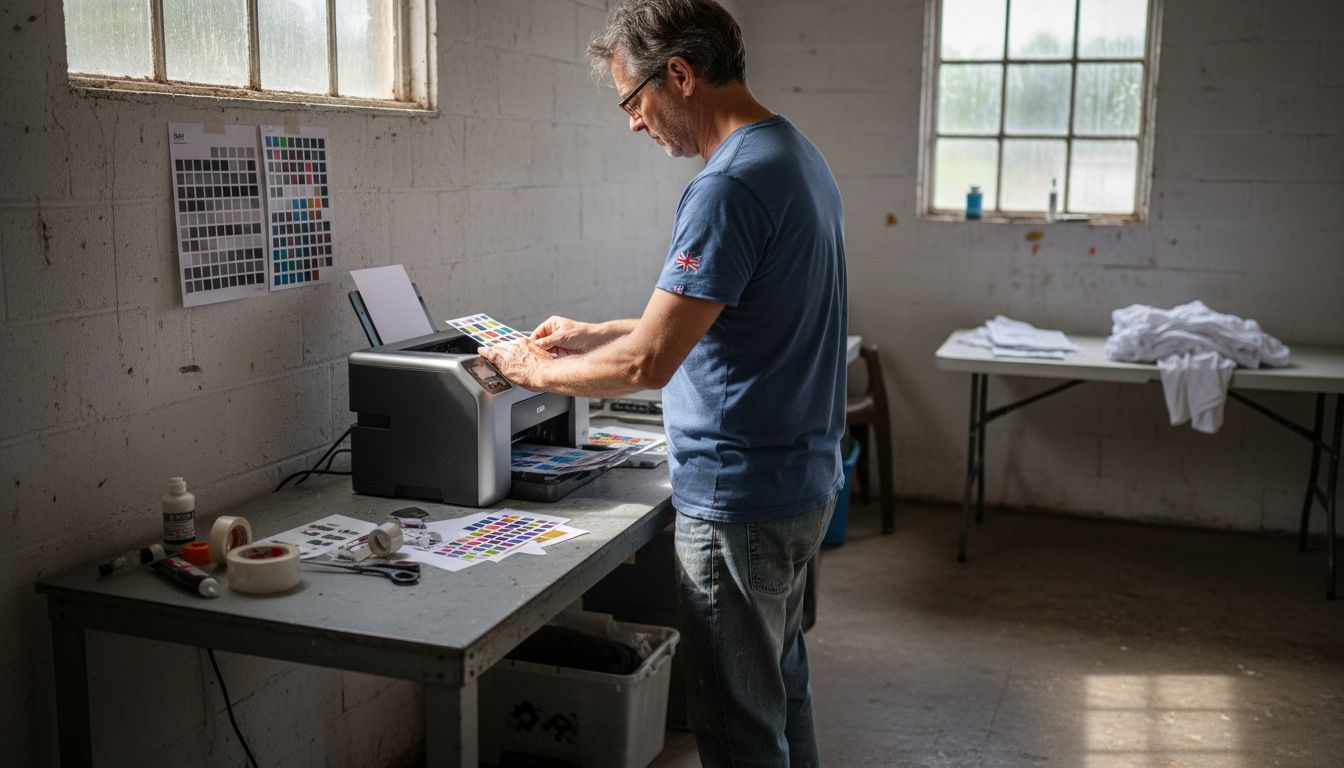
The process operates through a carefully controlled sequence of heat, pressure, and precise timing. Specialised transfer paper containing solid dye is placed against a polyester or polymer-coated surface, then subjected to high temperatures that cause the dye to transition directly from solid to gaseous state. This gas penetrates the material’s molecular structure, creating an incredibly durable bond that becomes part of the substrate itself.
Key stages in the sublimation printing process include:
- Graphic Design Preparation
- Creating high-resolution digital artwork
- Colour calibration for accurate reproduction
- Sizing design to match target product dimensions
- Transfer Paper Printing
- Using specialised sublimation ink
- Ensuring mirror image orientation
- Maintaining precise colour saturation
- Heat Press Application
- Controlling exact temperature
- Managing precise pressure settings
- Monitoring transfer duration
The technical complexity of sublimation demands Precise Environmental Control. Factors such as temperature variation, substrate composition, and transfer duration dramatically influence final product quality. Professional operators must understand intricate interactions between heat, pressure, and material properties.
Sublimation transforms ordinary promotional items into extraordinary branded communication tools with unprecedented graphic permanence.
Unlike traditional printing methods, sublimation creates graphics that are essentially ‘baked into’ the product surface, ensuring remarkable durability and resistance to washing, scratching, or fading.
Pro tip: Invest in high-quality calibration tools and conduct regular test prints to maintain consistent sublimation print quality across different substrate materials.
Key Equipment and Setup Requirements
Successful sublimation printing demands a carefully curated set of professional-grade equipment designed to deliver consistent, high-quality results. Establishing a robust production environment requires strategic investment in specialised machinery, precise tools, and comprehensive workspace configuration.
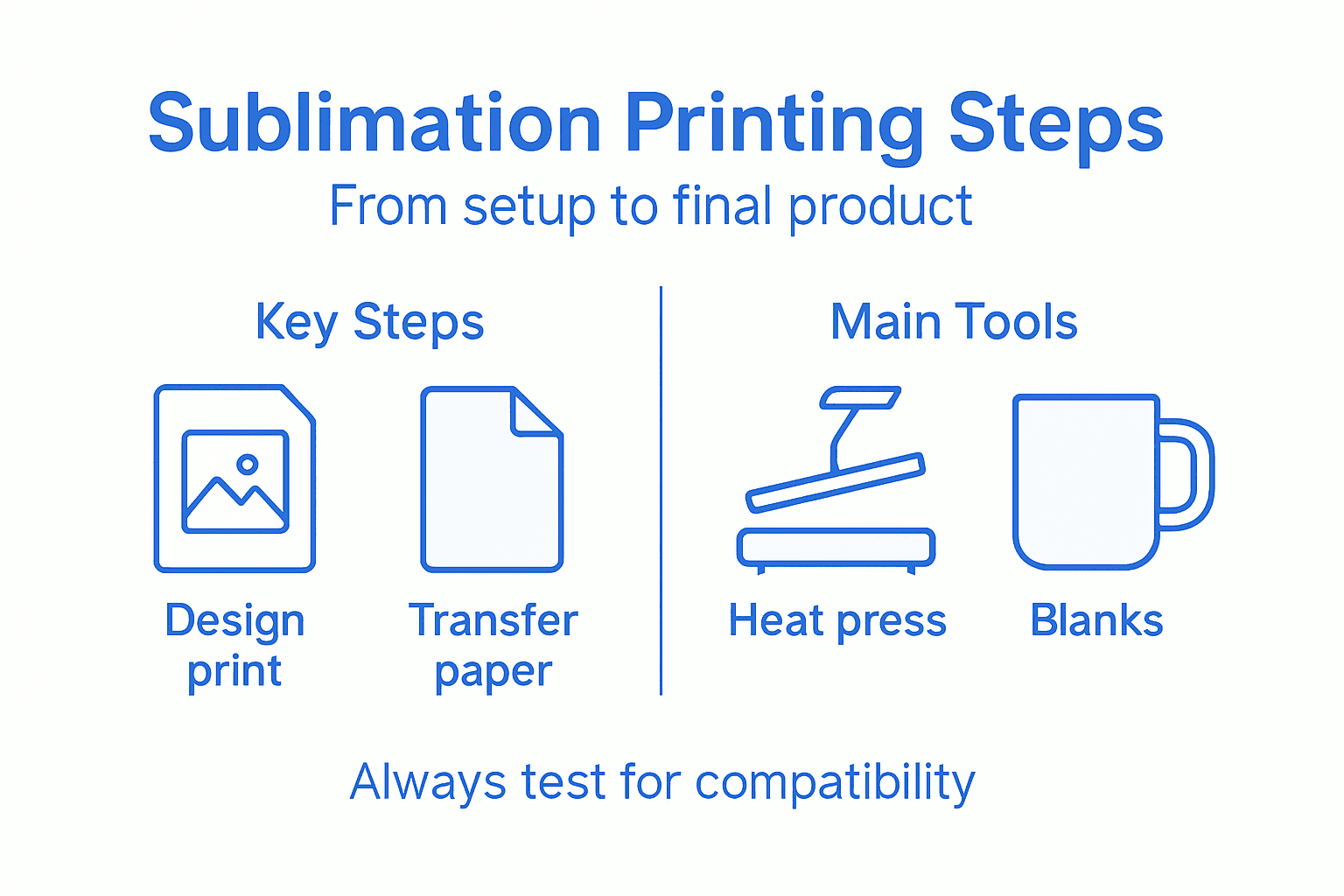
The fundamental equipment for professional sublimation printing encompasses several critical components that work synergistically to transform digital designs into permanent, high-resolution graphics. Each piece of equipment plays a crucial role in achieving optimal transfer quality and operational efficiency.
Essential sublimation printing equipment includes:
-
Printing Hardware
- Specialised sublimation printer
- High-resolution colour management system
- Dedicated computer with graphic design software
-
Heat Transfer Equipment
- Professional-grade heat press
- Digital temperature and pressure controllers
- Silicone or Teflon protective sheets
-
Preparation Tools
- Precision cutting mat
- High-quality transfer papers
- Colour calibration tools
- Protective gloves
The Workspace Configuration represents another critical consideration for sublimation printing success. Professional setups require dedicated areas with:
- Stable, level work surfaces
- Consistent ambient temperature
- Adequate ventilation
- Organised supply storage
- Electrical stability for sensitive equipment
Professional sublimation printing requires precision equipment and meticulous workspace management to achieve consistently exceptional results.
Advanced operators understand that equipment quality directly correlates with print sophistication. Investing in professional-grade tools transforms sublimation from a simple printing technique into a refined graphic production methodology.
Pro tip: Develop a comprehensive maintenance schedule for your sublimation equipment, including regular calibration, cleaning, and performance testing to ensure long-term print quality and machine reliability.
Pitfalls and Common Mistakes to Avoid
Sublimation printing demands precision and technical expertise, with numerous potential pitfalls that can dramatically compromise product quality and operational efficiency. Recognising and pre-empting these common errors represents a critical skill for businesses seeking consistent, professional results in promotional merchandise production.
The most prevalent challenges in sublimation printing emerge from technical, material, and operator-related factors that can undermine graphic transfer integrity. Understanding these potential complications enables proactive management and quality control throughout the production process.
Critical mistakes to avoid include:
-
Design Preparation Errors
- Incorrect colour profile settings
- Low-resolution artwork
- Improper image scaling
- Neglecting colour calibration
-
Equipment-Related Issues
- Inconsistent heat press temperatures
- Uneven pressure application
- Poorly maintained printing equipment
- Incorrect substrate preparation
-
Material Selection Problems
- Using non-compatible substrates
- Inadequate polymer coating
- Inappropriate material thickness
- Ignoring substrate heat resistance
Technical challenges often stem from Operator Knowledge Gaps. Precise control parameters require deep understanding of:
- Material thermal properties
- Ink molecular behaviour
- Substrate surface characteristics
- Equipment calibration techniques
- Environmental conditioning
Successful sublimation printing demands continuous learning and meticulous attention to technical details.
Professional operators recognise that seemingly minor variations can produce dramatically different outcomes. Temperature fluctuations of mere degrees, uneven pressure, or suboptimal substrate preparation can transform a potential masterpiece into a compromised product.
Pro tip: Develop a comprehensive quality control checklist that documents every stage of your sublimation printing process, enabling systematic error tracking and continuous improvement.
Comparing Sublimation to Alternative Printing Methods
Each printing technique offers distinct advantages and limitations, making sublimation a sophisticated choice for businesses seeking high-quality, durable promotional merchandise. Understanding the comparative landscape helps organisations make informed decisions about their graphic reproduction strategies.
Traditional printing methods contrast sharply with sublimation’s unique molecular transfer approach. Screen printing, heat transfer vinyl, and direct-to-garment techniques each present specific constraints that sublimation elegantly overcomes through its advanced thermal bonding process.
Key comparative characteristics include:
-
Print Durability
- Sublimation: Permanent molecular bonding
- Screen Printing: Surface-level ink application
- Heat Transfer: Potential peeling and cracking
-
Colour Reproduction
- Sublimation: Photorealistic, vibrant colours
- Screen Printing: Limited colour complexity
- Digital Printing: Moderate colour accuracy
-
Production Flexibility
- Sublimation: Multiple substrate compatibility
- Screen Printing: Limited material options
- Vinyl Transfer: Restricted design intricacy
Advanced printing techniques require nuanced Performance Evaluation. Critical comparison factors include:
The table below summarises key differences between sublimation and other common printing techniques:
| Printing Method | Durability | Colour Detail | Product Range |
|---|---|---|---|
| Sublimation | Very high (wash proof) | Photorealistic, vibrant | Wide (polyester/polymer) |
| Screen Printing | Moderate | Limited by ink layers | Fabrics, some plastics |
| Heat Transfer Vinyl | Can crack/peel | Solid but less detailed | Fabrics, hard items |
| Direct-to-Garment | Good, can fade | Good, depends on fabric | Mostly textiles |
- Graphic resolution
- Colour vibrancy
- Production speed
- Cost per unit
- Long-term product integrity
Sublimation transcends traditional printing limitations by creating graphics that are intrinsically part of the product, not merely applied to its surface.
While alternative methods serve specific purposes, sublimation stands out for its ability to produce complex, durable graphics across diverse promotional item categories. The technique’s molecular-level integration ensures unparalleled longevity and visual sophistication.
Pro tip: Conduct comprehensive comparative testing across different printing methods to determine the most suitable technique for your specific promotional merchandise requirements.
Elevate Your Sublimation Production with Expert Tools and Blanks
The article highlights key challenges in sublimation printing such as achieving perfect material compatibility, maintaining precise temperature and pressure control, and avoiding common pitfalls like colour calibration errors and substrate preparation issues. If you are striving to boost customisation quality and product durability through sublimation, addressing these pain points is essential for creating vibrant, long-lasting promotional items that truly stand out.
At Subliblanks, we understand the technical precision sublimation demands. Our comprehensive range includes sublimation blanks tailored for perfect dye absorption, professional sublimation printers and heat press equipment designed for consistent thermal transfer, and all the accessories to fine-tune your workflow and avoid costly mistakes. Partnering with us means eliminating minimum order quantities so you can test and grow your sublimation production confidently without unnecessary risk.
Explore our complete selection of sublimation blanks and supplies and discover the tools that empower professional quality and flawless results every time.
Ready to transform your sublimation process and deliver customised promotional items that captivate
Take control of your sublimation printing with expert equipment and materials from Subliblanks. Visit us now to browse our offerings and start producing personalised merchandise that sets you apart.
Frequently Asked Questions
What is sublimation printing and how does it work for promotional items?
Sublimation printing is a technique that transforms solid dye into gas without passing through a liquid phase. The dye penetrates and bonds with polyester or polymer-coated surfaces at high temperatures, creating vibrant and durable graphics that are an integral part of the product.
What types of products can be made using sublimation printing?
Sublimation printing can be applied to a variety of products, including custom sportswear, team jerseys, personalised corporate merchandise, ceramic mugs, metal badges, and polymer-coated items like phone cases and keychains.
Why is substrate compatibility important in sublimation printing?
Substrate compatibility is crucial because only materials containing polyester or special polymer coatings can effectively absorb the dye and facilitate permanent bonding. Using incompatible substrates can lead to poor graphic quality and durability.
How does sublimation compare to traditional printing methods?
Sublimation printing provides superior durability and vibrancy compared to traditional methods like screen printing and heat transfer vinyl. It creates graphics that are embedded in the product surface, making them resistant to washing and fading, while traditional methods may experience peeling or cracking over time.
Recommended
- Sublimation Terminology – Key Concepts for Small Businesses – SubliBlanks Limited
- Sublimating Aluminium – SubliBlanks Limited
- SubliFlex - Round Keyring for sublimation – SubliBlanks Limited
- SubliFlex - Rectangle Keyring for sublimation – SubliBlanks Limited


