



Top sublimation printing tips for perfect UK results
Sublimation printing offers UK and Ireland small businesses a powerful way to create vibrant, lasting custom products. However, mastering the precise temperature, time, and pressure settings for different materials can feel overwhelming at first. Getting these parameters right is essential to avoid faded colours, blurry edges, or wasted substrates. This guide delivers actionable tips to help you achieve consistent, professional-quality sublimation prints across polyester textiles, ceramics, metals, and MDF blanks, reducing costly trial and error while building your confidence.
Table of Contents
- Choosing The Right Sublimation Printing Settings
- Mastering Material-Specific Sublimation Techniques
- Comparing Sublimation Printing Settings For Common Substrates
- Pro Tips To Optimise Your Sublimation Printing Results
- Explore Premium Sublimation Blanks And Supplies
- Frequently Asked Questions About Sublimation Printing Tips
Key takeaways
| Point | Details |
|---|---|
| Settings vary by material | Temperature, time, and pressure differ for polyester, ceramic, metal, and MDF substrates. |
| Documentation reduces waste | Recording successful settings helps replicate quality results and minimise expensive mistakes. |
| Correct parameters prevent defects | Proper heat press configuration stops fading, peeling, and scorching on finished prints. |
| Pre-press improves adhesion | Removing moisture from blanks before transfer enhances colour vibrancy and durability. |
Choosing the right sublimation printing settings
Selecting the correct temperature, time, and pressure is the foundation of quality sublimation printing. Optimal sublimation results depend on precise temperature, time, and pressure settings, which vary by material. Polyester fabrics typically need around 190 to 200°C for 40 to 60 seconds at 40 psi, whilst ceramic mugs require similar temperatures but longer exposure times. Understanding these differences prevents common defects like fading, peeling, or scorching.
Each substrate reacts differently to heat. Sublimation printing involves transformation of solid ink into a gas bonding with polyester or coated surfaces, preventing fading when settings match the material. Polyester textiles bond quickly at moderate temperatures, whilst ceramics need extended contact to achieve full colour saturation. Metal sheets and hardwoods fall somewhere in between, demanding balanced timing to avoid damage.
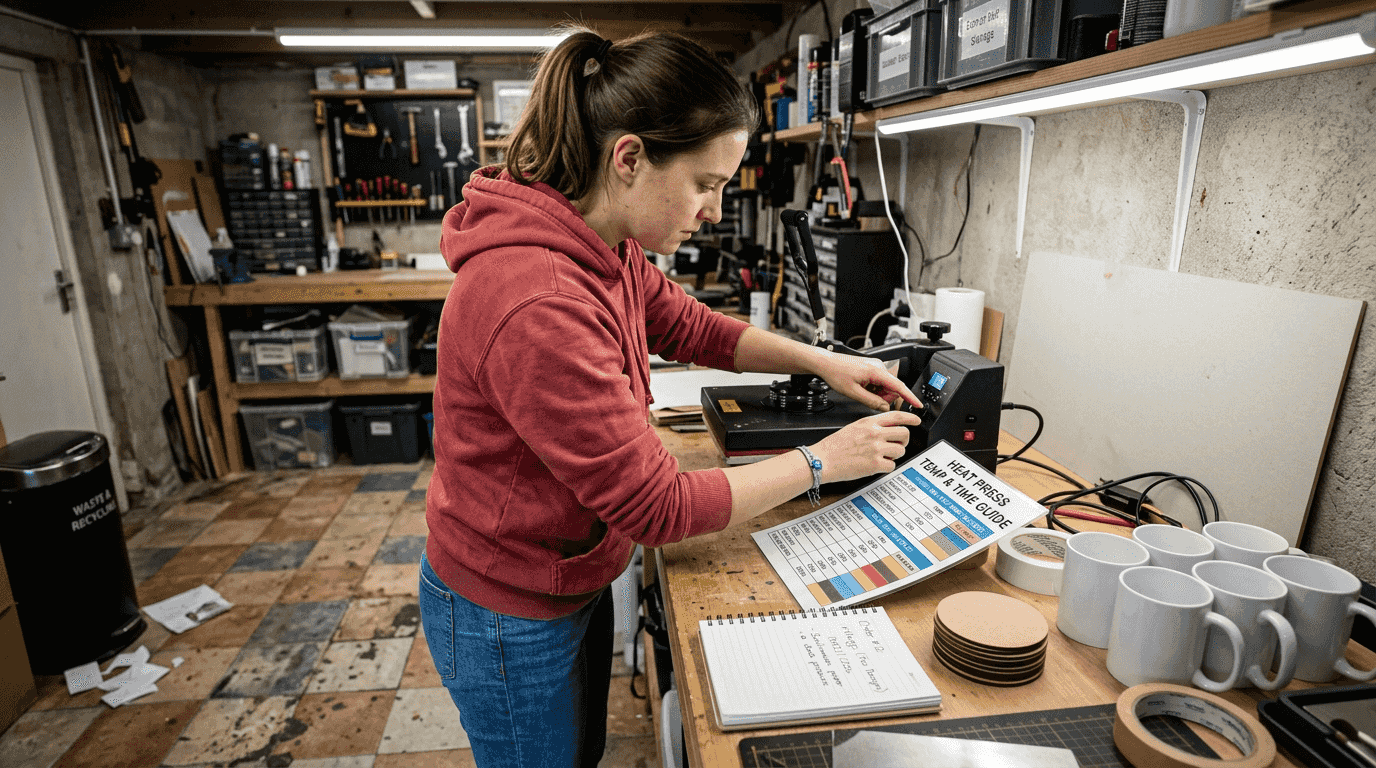
Documenting your successful settings is crucial for repeatability. When you discover the perfect combination for a specific blank, record the temperature, time, pressure, paper brand, and ink type. This simple habit saves time and reduces waste on future runs. Refer to our printer setup guide for initial equipment configuration, and explore sublimation terminology to build your technical knowledge.
Common sublimation settings by material:
- Polyester textiles: 190–200°C, 45–60 seconds, 40 psi
- Ceramic mugs: 200°C, 180 seconds, 40 psi
- Metal sheets: 200°C, 60 seconds, 40 psi
- MDF blanks: 200°C, 60–90 seconds, 40 psi
Pro tip: Adjust settings slightly when switching between different brands of the same substrate type, as coating thickness and composition can vary.
For detailed reference charts, consult this heat press settings guide which covers dozens of substrate combinations. Testing on scrap material before production runs helps you fine-tune parameters without risking finished inventory.
Mastering material-specific sublimation techniques
Polyester textiles remain the most popular substrate for sublimation printing in UK small businesses. Polyester fabrics require 190–200°C for 45–60 seconds to achieve vibrant, wash-resistant prints. Tote bags, t-shirts, and cushion covers perform best within this range. Pre-pressing removes moisture and wrinkles, creating a smooth surface for optimal ink transfer. Discover why sublimation textiles advantages make them ideal for custom merchandise.
Ceramic items need longer exposure times than textiles. Mugs typically require 200°C for 180 seconds to allow the coating to fully absorb the sublimated ink. Insufficient time results in pale, washed-out designs that fade quickly. Use heat-resistant tape to secure your transfer paper, preventing shifting during the extended press cycle. Rotate mugs slightly if you notice uneven colour distribution, as this indicates inconsistent pressure.
Metal sheets and hardwoods demand balanced timing to avoid damage. Aluminium blanks transfer beautifully at 200°C for 60 seconds, producing glossy, photo-quality results. MDF requires slightly longer exposure, typically 60 to 90 seconds, depending on thickness. Our MDF blank guide explains coating types and optimal preparation methods. Always follow the substrate manufacturer’s instructions when available, as proprietary coatings may have specific requirements.
Step-by-step process for ceramic mugs:
- Pre-press the mug for 10 seconds to remove moisture
- Wrap your printed transfer tightly around the mug
- Secure with heat-resistant tape at both ends
- Place in mug press at 200°C for 180 seconds
- Remove carefully with heat-resistant gloves
- Allow to cool completely before handling
Pro tip: Pre-pressing items for 5 to 10 seconds removes trapped moisture, improving adhesion quality and preventing ghosting or blurring.
Explore our guide on using sublimation blanks for detailed preparation techniques across different product categories. This sublimation time temperature guide provides comprehensive charts for dozens of materials.
Comparing sublimation printing settings for common substrates
Comparing heat press parameters side by side helps you select optimal settings quickly and minimise costly errors. Accurate settings are crucial to avoid faded colours, blurry edges, or material damage. The table below summarises recommended starting points for popular substrates used by UK small businesses.
Sublimation settings comparison:
| Substrate | Temperature | Time | Pressure |
|---|---|---|---|
| Polyester textiles | 190–200°C | 45–60 seconds | 40 psi |
| Ceramic mugs | 200°C | 180 seconds | 40 psi |
| Metal sheets | 200°C | 60 seconds | 40 psi |
| Hardwood | 200°C | 60 seconds | 40 psi |
| MDF blanks | 200°C | 60–90 seconds | 40 psi |
| Plywood | 200°C | 60 seconds | 40 psi |
| Fibre-reinforced plastics | 190°C | 50 seconds | 40 psi |
Higher temperatures and longer times typically suit ceramics and MDF better than textiles. Polyester fabrics bond quickly, whilst rigid substrates need extended contact to achieve full colour saturation. Notice that 40 psi pressure remains standard across most materials, simplifying your workflow once you calibrate your heat press correctly.
Documenting ideal times and temperatures for your specific equipment minimises waste and improves repeatability. Environmental factors like room temperature and humidity affect results, so record conditions alongside your settings. Our transfer process guide walks through professional techniques for consistent quality.
Key comparison insights:
- Textiles need shorter times than rigid substrates
- Ceramics require highest temperatures and longest exposure
- Pressure stays consistent at 40 psi for most materials
- Pre-pressing reduces variables across all substrate types
Refer to this sublimation temperature chart for expanded coverage including glass, stone, and specialty materials. Testing on scrap pieces before production runs confirms your settings match your specific equipment and environment.
Pro tips to optimise your sublimation printing results
Always test on scrap material before production runs. This simple step prevents wasting expensive blanks and helps you fine-tune settings for your specific equipment. Fine-tuning sublimation involves minimising waste by documenting successful settings and recreating conditions consistently. Keep a detailed log of temperature, time, pressure, paper brand, and ink type for each successful print.
Use quality sublimation paper and inks to avoid dull colours and poor transfer efficiency. Cheap consumables produce inconsistent results and can clog printheads, leading to expensive repairs. Invest in reputable brands and store paper in sealed bags to prevent moisture absorption. Check our equipment setup guide for recommended specifications.
Maintain your heat press regularly for consistent pressure and temperature. Calibrate your machine quarterly using an infrared thermometer to verify actual platen temperature matches the display. Clean heating elements and replace worn Teflon sheets to prevent scorching and uneven heat distribution. Consistent equipment performance is essential for repeatable results.
“Success in sublimation printing comes from meticulous documentation and consistent process control. Record every variable for each successful print, then recreate those exact conditions. This systematic approach transforms guesswork into predictable, professional results.”
Essential optimisation practices:
- Label stored templates with settings for quick retrieval
- Use a Teflon sheet to protect prints and avoid scorching
- Replace heat-resistant tape between uses to maintain secure positioning
- Clean substrates with lint-free cloths before pressing
- Allow items to cool completely before handling to prevent smudging
Pro tip: Label stored design templates with the exact heat press settings that produced the best results, enabling quick retrieval and consistent reproduction.
Explore our range of promotional sublimation items to see how professional businesses apply these techniques. This heat press settings guide offers troubleshooting advice for common quality issues.
Explore premium sublimation blanks and supplies
Achieving professional sublimation results starts with quality materials. We offer high-quality blanks for MDF badges, promotional items, and textiles, all designed for optimal ink transfer and durability. Our round MDF name badge pin provides a smooth, consistent surface for vibrant designs.
Protective accessories like our Teflon heat press sheet prevent scorching and extend the life of your equipment. Combining quality blanks with correct heat press accessories ensures premium final products that satisfy customers and build your reputation. Browse our complete wholesale sublimation supplies catalogue to find everything you need for consistent, professional results.
Frequently asked questions about sublimation printing tips
What temperature is best for sublimation printing on polyester?
Polyester fabrics perform best at 190 to 200°C for 45 to 60 seconds at 40 psi pressure. This range ensures vibrant colour transfer without scorching the material.
How do I prevent colour fading in sublimation prints?
Use correct temperature and time settings for your specific substrate, and ensure you are printing on polyester or polymer-coated surfaces. Pre-pressing removes moisture that can interfere with ink bonding.
Can I use sublimation on materials other than textiles?
Yes, sublimation works brilliantly on ceramics, metals, MDF, hardwood, and any substrate with a polyester or polymer coating. Each material requires specific temperature and time adjustments.
What is the ideal pressure setting for a heat press?
Most sublimation applications use 40 psi pressure, which provides firm, even contact without crushing delicate substrates. Adjust slightly for very thin or thick materials.
How important is documenting successful settings?
Documentation is essential for consistent results and waste reduction. Recording temperature, time, pressure, and materials lets you replicate success and troubleshoot problems efficiently. Review our sublimation printing steps for systematic process guidance.
Recommended
- Sublimation Blanks Selection Guide 2026: Cut Waste 25% – SubliBlanks Ltd
- Sublimation Transfer Process: Achieve Professional Prints Easily – SubliBlanks Ltd
- 6 Essential Items for Your Sublimation Equipment List – SubliBlanks Ltd
- Sublimation Printing Step by Step for Personalised Goods – SubliBlanks Ltd


