



Sublimation Blanks Selection Guide 2026: Cut Waste 25%
Selecting the wrong sublimation blanks costs UK and Ireland business owners money through print failures, wasted materials, and unhappy customers. Research shows proper blank selection and testing reduces material waste by up to 25%, transforming operational efficiency and profit margins. This guide equips you with the material science knowledge, equipment compatibility insights, supplier evaluation criteria, and testing protocols needed to confidently choose sublimation blanks that deliver consistent, vibrant results every time.
Table of Contents
- Prerequisites: Tools, Knowledge, And Conditions Before Selecting Blanks
- Material Composition And Quality: What Substrates Work Best
- Compatibility And Size Considerations With Heat Press Equipment
- Supplier Selection And Flexibility: Finding The Right Wholesale Partner
- Testing And Quality Control: Minimizing Waste And Maximizing Print Success
- Common Mistakes And Troubleshooting When Selecting Sublimation Blanks
- Expected Outcomes: Measuring Success And Product Longevity
- Discover Quality Sublimation Blanks For UK Businesses
- Frequently Asked Questions
Key Takeaways
| Point | Details |
|---|---|
| Material matters | Choose blanks with 65%+ polyester content for optimal ink absorption and vibrant prints |
| Equipment fit | Match blank size and shape to your heat press molds to avoid distortion and damage |
| Supplier flexibility | No minimum orders and UK focused delivery reduce risk and improve cash flow for small businesses |
| Testing saves money | Sample testing before bulk orders cuts waste by identifying compatibility issues early |
| Track outcomes | Monitor print longevity and failure rates to refine your selection process continuously |
Prerequisites: Tools, Knowledge, and Conditions Before Selecting Blanks
Before diving into blank selection, you need the right equipment and workspace setup. Your foundation starts with a sublimation printer loaded with sublimation specific inks, not standard inkjet cartridges. Transfer paper designed for sublimation carries your design from printer to blank, so generic copy paper won’t work.
Your heat press is the engine of the operation. Flat presses handle items like tiles and phone cases, while mug presses use cylindrical heating elements for curved surfaces. Each blank type requires specific temperature ranges, typically between 180°C and 205°C, and pressure settings that vary by substrate thickness. Getting these parameters wrong leads to faded prints or scorched materials.
Workspace safety protects you and your results. Sublimation releases fumes during heat transfer, so adequate ventilation through windows or extractor fans is essential. Heat presses reach dangerous temperatures, requiring heat resistant gloves and a stable work surface away from flammable materials. Keep a clear workspace with good lighting to spot alignment issues before pressing.
Basic material knowledge prevents costly mistakes. Understanding that sublimation bonds with polyester molecules, not natural fibres like cotton, saves you from ordering incompatible blanks. Knowing the difference between polymer coated ceramics and raw wood helps you ask suppliers the right questions. Essential sublimation tips cover these fundamentals for newcomers to the craft.
Pro Tip: Create a reference chart showing your heat press temperature, pressure, and time settings for each blank type you use regularly. This eliminates guesswork and speeds up production.
Material Composition and Quality: What Substrates Work Best
Polyester content determines sublimation success. The dye sublimation process converts solid ink into gas that bonds with polyester molecules, creating permanent, vibrant images. Blanks with 65% or higher polyester content produce sharp, colourful results that withstand washing and daily use.
Ceramic mugs rank among the most popular sublimation blanks because their polymer coating mimics polyester’s molecular structure. The coating bonds permanently with sublimation ink, creating dishwasher safe designs with excellent colour reproduction. Polyester fabrics like performance sportswear offer the highest colour vibrancy since the entire material is polyester, not just a coating.
Polymer coated metals, including aluminium photo panels and keyrings, combine durability with print quality. The coating provides the polyester surface needed for ink bonding while the metal substrate adds strength and a premium feel. Avoid uncoated metals, untreated wood, and cotton fabrics as sublimation inks cannot bond with these materials, resulting in washed out or nonexistent prints.
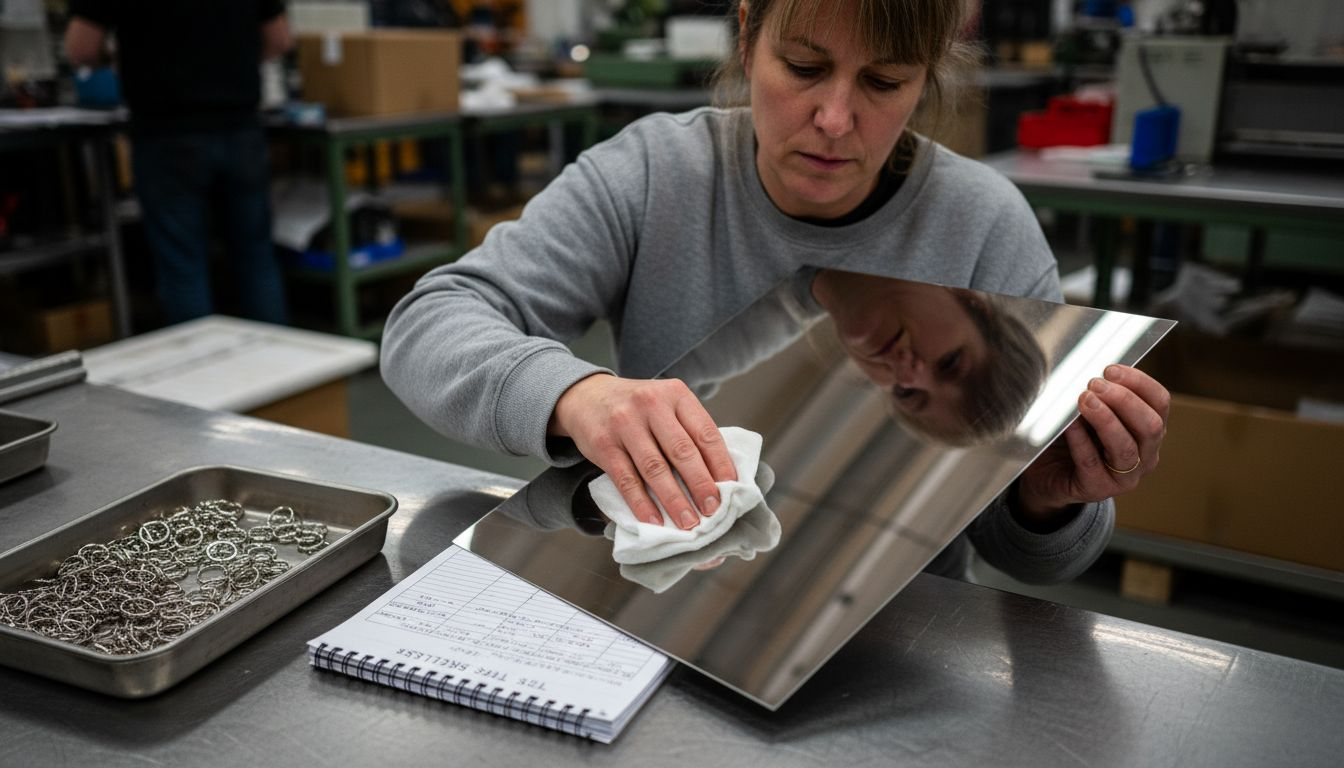
| Substrate Type | Polyester Content | Durability Rating | Cost Category |
|---|---|---|---|
| Ceramic mugs | Polymer coating | High (dishwasher safe) | Low to medium |
| Polyester fabric | 100% polyester | Medium (depends on weave) | Medium |
| Coated metal | Polymer coating | Very high (scratch resistant) | Medium to high |
| MDF with coating | Polymer coating | Medium (moisture sensitive) | Low |
Quality varies within substrate categories. Premium ceramic mugs use thicker polymer coatings that resist chipping and maintain colour accuracy after hundreds of wash cycles. Budget mugs may have thin, uneven coatings that yellow over time or show print inconsistencies.
Pro Tip: Order samples from multiple suppliers of the same blank type. Test them side by side to compare coating quality, colour accuracy, and durability before committing to bulk orders.
Compatibility and Size Considerations with Heat Press Equipment
Your heat press dictates which blanks you can successfully produce. A standard 11oz mug press accommodates mugs with specific dimensions, typically 9.5cm diameter and 8cm height. Attempting to press an oversized 15oz mug in an 11oz press leads to incomplete heat coverage, creating uneven or partial transfers that waste materials and disappoint customers.
Flat heat presses come in various platen sizes, commonly 38cm x 38cm or 40cm x 50cm. Your blank must fit entirely within the heating element with room for protective paper around the edges. Standard sublimation blank sizes align with common press dimensions, but custom products require careful measurement.
Measure your heat press platen dimensions accurately before ordering blanks. For mug presses, check the heating element diameter and depth to ensure compatibility. 3D vacuum presses for phone cases require blanks that fit the mould inserts, so obtain exact specifications from your equipment manufacturer. Document these measurements in a reference file to streamline future orders.
Custom sizing becomes necessary when serving niche markets or creating unique products. Many suppliers offer blanks in non standard dimensions, but you need to verify compatibility first. Provide your heat press specifications to suppliers and request samples before placing large orders. This testing phase prevents investing in blanks your equipment cannot handle.
Key equipment compatibility checks:
- Measure platen or heating element dimensions precisely in centimetres
- Verify blank thickness fits within press gap settings
- Check if curved blanks match your press mould shapes
- Confirm heat press pressure range suits blank material density
- Test sample blanks with actual press before bulk ordering
- Document successful blank and setting combinations for reference
Supplier Selection and Flexibility: Finding the Right Wholesale Partner
Startups and small businesses need suppliers who understand cash flow constraints and testing requirements. UK sublimation blank suppliers offering no minimum order quantities let you experiment with product lines without tying up capital in untested inventory. This flexibility proves crucial when exploring new markets or responding to custom customer requests.
Delivery speed impacts your ability to fulfil orders and maintain customer satisfaction. Suppliers with same day dispatch for orders placed before cutoff times, typically 2pm, help you meet tight deadlines. UK and Ireland focused logistics mean shorter transit times compared to international shipping, reducing the risk of delayed deliveries that damage your reputation.
Product range determines your business versatility. Suppliers stocking diverse substrates including mugs, textiles, metals, wood, and glass enable you to offer varied product portfolios without managing multiple vendor relationships. This consolidation simplifies ordering, reduces shipping costs, and often unlocks better pricing through increased purchase volumes.
Selecting reliable suppliers requires evaluating support services beyond products. Technical support teams who provide heat press settings, troubleshooting guidance, and product data sheets help you succeed, especially when starting out. Customer service responsiveness matters when you need urgent replacements or have questions about new products.
Supplier evaluation checklist:
- No minimum order requirements for flexibility and cash flow management
- Same day dispatch availability with clear cutoff times
- UK or Ireland based warehousing for faster delivery
- Comprehensive product range covering your target markets
- Technical support and product documentation availability
- Sample ordering options before bulk purchase
- Clear returns policy for defective blanks
- Transparent pricing without hidden fees
Testing and Quality Control: Minimizing Waste and Maximizing Print Success
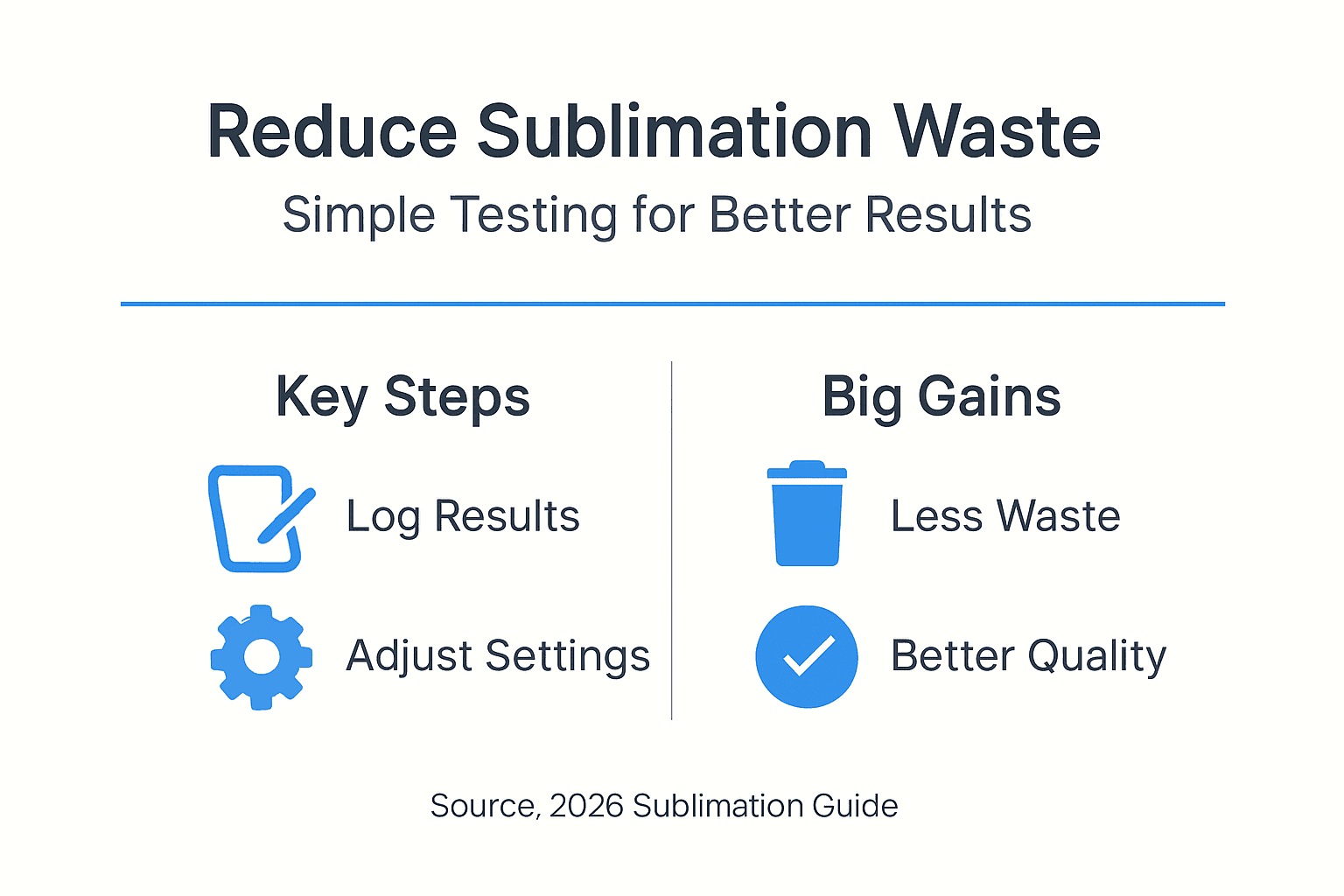
Sample testing protects your investment before committing to large orders. Testing sublimation blanks involves a systematic approach that reveals compatibility issues, optimal settings, and quality variations that could affect your production.
Follow this testing protocol:
- Order 3 to 5 samples of each new blank type from your supplier
- Prepare identical test designs with colour gradients, fine text, and solid blocks to evaluate different aspects of print quality
- Press the first sample using manufacturer recommended settings for temperature, pressure, and time
- Immediately after cooling, inspect for colour accuracy, edge sharpness, and coating adhesion
- Adjust one variable (temperature, pressure, or time) for the second sample and press again
- Compare results and continue adjusting until you achieve optimal quality
- Document successful settings in your reference chart
- Perform durability tests on successful samples including washing, rubbing, and exposure to light
- Calculate cost per successful print including waste to inform pricing decisions
- Order small production batches before scaling to full inventory levels
Assess each test print against specific quality criteria. Check colour vibrancy by comparing printed areas to your original design on screen. Examine edge sharpness under good lighting to spot blurring or feathering. Test adhesion by firmly rubbing the print surface with a cloth after it cools completely. Any flaking or transfer indicates inadequate bonding.
Adjust heat press parameters methodically. If colours appear washed out, increase temperature by 5°C increments. Blurry edges suggest too much pressure causing ink to spread beyond design boundaries. Incomplete transfers often result from insufficient pressure or time, while scorched blanks indicate excessive temperature.
Record keeping transforms testing from guesswork into science. Create a spreadsheet logging each test with columns for blank type, supplier, temperature, pressure, time, and outcome notes. Photograph results to build a visual reference library. This documentation helps you replicate success and troubleshoot failures efficiently.
Common Mistakes and Troubleshooting When Selecting Sublimation Blanks
Experienced sublimation businesses trace most failures back to preventable selection errors. Understanding these mistakes helps you avoid expensive lessons and accelerate your path to consistent quality.
Choosing blanks based solely on price ranks as the most common mistake. Budget blanks with thin polymer coatings or low polyester content produce faded prints that fail quality standards. These false economies damage your reputation and increase waste rates, ultimately costing more than investing in quality blanks from the start. Balance initial costs against print longevity and customer satisfaction to calculate true value.
Ignoring size compatibility wastes materials and time. Ordering blanks that don’t fit your heat press means you cannot use them, turning purchased inventory into dead stock. Always verify dimensions against your equipment specifications before ordering, even for seemingly standard items where size variations exist between manufacturers.
Skipping test prints before production runs multiplies minor issues into major losses. A setting that works for one supplier’s mugs may fail with another brand due to coating differences. Avoiding sublimation blank errors requires testing every new product line, even familiar blank types from new suppliers.
Common mistakes and solutions:
- Wrong material selection: Choosing cotton or uncoated items for sublimation. Solution: Verify 65%+ polyester content or polymer coating before purchasing.
- Size incompatibility: Ordering blanks too large or oddly shaped for your press. Solution: Measure press dimensions and request samples to confirm fit.
- No test prints: Proceeding directly to production without verifying settings. Solution: Always test new blanks with sample runs before bulk printing.
- Ignoring quality variations: Assuming all suppliers deliver identical products. Solution: Compare samples from multiple sources and document quality differences.
- Inadequate record keeping: Failing to document successful settings and suppliers. Solution: Maintain detailed logs of settings, suppliers, and outcomes for reference.
Expected Outcomes: Measuring Success and Product Longevity
Proper blank selection and testing deliver measurable business benefits. High quality polyester blanks produce prints that maintain colour vibrancy and image sharpness for 3 to 5 years under normal use conditions. Ceramic mugs withstand hundreds of dishwasher cycles without noticeable fading, while polyester garments retain their designs through 50+ wash cycles.
Material waste drops significantly with systematic testing and quality blank selection. Businesses implementing the testing protocols outlined here report reducing print failure rates from 15 to 20% down to 3 to 5%, translating to substantial cost savings on materials and labour. These improvements also free up production time for fulfilling orders rather than remaking failed prints.
Customer satisfaction rises when you consistently deliver durable, vibrant products. Repeat business and referrals grow as customers trust your quality, creating sustainable revenue streams. Positive reviews mentioning product longevity attract new customers searching for reliable personalised items, expanding your market reach organically.
| Selection Approach | Print Longevity | Failure Rate | Material Cost Impact | Customer Satisfaction |
|---|---|---|---|---|
| Poor quality blanks | 6 to 12 months | 15 to 20% | High (frequent remakes) | Low (fading complaints) |
| Proper blank selection | 3 to 5 years | 3 to 5% | Low (minimal waste) | High (durable products) |
Track key metrics to assess your sublimation business performance. Monitor your print failure rate by logging successful versus failed transfers weekly. Calculate material costs per finished product including waste to identify improvement opportunities. Survey customers about product durability after 6 and 12 months to gather satisfaction data.
Measuring sublimation print success involves comparing your outcomes against industry benchmarks. Aim for failure rates below 5%, customer satisfaction scores above 90%, and material waste under 8% to maintain competitive efficiency. These metrics guide your supplier and blank selection decisions, helping you refine your process continuously.
Discover Quality Sublimation Blanks for UK Businesses
Equipped with selection criteria and testing knowledge, you need a supplier partner who supports your growth. We specialise in serving UK and Ireland sublimation businesses with comprehensive blank selections, no minimum order requirements, and same day dispatch for orders placed before 2pm.
Our product range spans ceramic mugs, polyester textiles, polymer coated metals, and specialty items, giving you flexibility to diversify your offerings without managing multiple suppliers. We understand small business challenges, which is why we eliminated minimum orders so you can test new products and respond to custom requests without inventory risk.
Explore our blog for additional insights including why choose sublimation blanks and sublimation tips for beginners. Browse our full catalogue at UK wholesale sublimation supplies to discover products that match your heat press capabilities and market opportunities.
Frequently Asked Questions
What does MOQ mean and why is it important for small businesses?
MOQ stands for minimum order quantity, the smallest number of units a supplier requires per order. High MOQs tie up cash flow and create inventory risk for startups, while no minimum requirements let you test products and respond to custom orders without financial strain.
How can I test sublimation blanks without wasting many samples?
Order 3 to 5 samples and use a systematic testing approach adjusting one variable at a time. Print identical test designs on each sample, document your settings, and photograph results to build a reference library for future production runs.
Are polyester coated MDF blanks good for sublimation?
Polyester coated MDF works well for sublimation producing vibrant prints on plaques and decorative items. However, MDF is moisture sensitive and less durable than ceramic or metal blanks, so it suits indoor decorative applications better than functional items exposed to moisture or heavy use.
What should I look for in a UK supplier’s delivery terms?
Prioritise same day dispatch for orders placed before the cutoff time, typically 2pm, and UK based warehousing for faster transit. Clear delivery timeframes, tracking information, and reasonable shipping costs help you plan production schedules and maintain customer satisfaction. Review our sublimation blanks tips for more supplier selection guidance.
How often should I recalibrate my heat press for new blank types?
Recalibrate settings for every new blank type or supplier, even for seemingly identical products. Coating thickness and substrate density variations affect optimal temperature and pressure, so test samples with different settings before production runs to ensure consistent quality.
Recommended
- Sublimation Blanks: Powering Custom Product Success – SubliBlanks Ltd
- Why Choose Sublimation Blanks for Custom Products – SubliBlanks Ltd
- 7 Steps to a Reliable Sublimation Blanks Checklist – SubliBlanks Ltd
- 7 Steps to a Reliable Sublimation Blanks Checklist – SubliBlanks Ltd


