



Why Use Sublimation Blanks: 95% Color Retention Proven
Many assume sublimation printing requires expert skills to avoid errors, but user error rates drop by 20% when using coated sublimation blanks versus plain materials. Sublimation blanks are specially coated substrates that bond with dye to create vibrant, durable custom products. This article helps small UK and Irish businesses and hobbyists understand how sublimation blanks simplify production, reduce costs, and deliver professional results. We’ll cover everything from polymer coatings to product variety and practical buying strategies, plus tips for sublimation blanks beginners to get you started quickly.
Table of Contents
- Introduction To Sublimation Blanks
- How Sublimation Blanks Improve Print Quality And Durability
- Cost-Effectiveness For Small Businesses And Hobbyists
- Common Misconceptions About Sublimation Blanks
- Comparison With Other Blank Materials
- Product Variety And Customization Options
- Practical Benefits Like No Minimum Order Quantities
- Conclusion And How To Choose The Right Sublimation Blanks
- Explore Premium Sublimation Blanks And Supplies
Key Takeaways
| Point | Details |
|---|---|
| Polymer coating bonds dye permanently | Vibrant, durable prints resist fading after washing |
| Reduces errors and production costs | Lower ink waste and flexible ordering support small runs |
| No minimum orders enable experimentation | Small businesses and hobbyists test designs without bulk commitment |
| Misconceptions debunked | Coatings simplify use and enhance durability, not complicate it |
| Superior to other blank types | Better color vibrancy and durability than heat transfer vinyl or screen printing |
Introduction to Sublimation Blanks
Sublimation blanks are products coated with a polymer layer designed specifically to bond with sublimation dyes during heat transfer. This coating is critical because it allows the dye to penetrate the surface and become part of the material itself, rather than sitting on top. Sublimation blanks have a polymer coating that allows dye bonding for vibrant and durable prints, making them ideal for customisation projects.
The variety of sublimation blanks available means you can create almost any custom product you imagine:
- Ceramic mugs, coasters, and tiles for home and promotional use
- Textiles like t-shirts, tote bags, and cushion covers
- MDF plaques, photo panels, and decorative items
- Phone cases, keychains, and tech accessories
- Metal products such as water bottles and jewellery
These blanks serve as the foundation for high quality sublimation printing. They ensure consistent results across different product types. For small batch producers and hobbyists, sublimation blanks remove guesswork from the printing process. The pre-coated surface means you don’t need to apply treatments or worry about compatibility. You simply print, press, and achieve professional results every time.
Understanding essential sublimation blanks tips and sublimation terminology guide concepts helps you select the right blanks for your specific projects and avoid common pitfalls during production.
How Sublimation Blanks Improve Print Quality and Durability
The polymer coating on sublimation blanks creates a chemical bond with sublimation dyes when heat and pressure are applied. This process differs fundamentally from other printing methods where ink or vinyl sits on the surface. When dye molecules bond into the polymer layer, they become part of the substrate itself. This integration means prints won’t peel, crack, or fade like surface treatments often do.
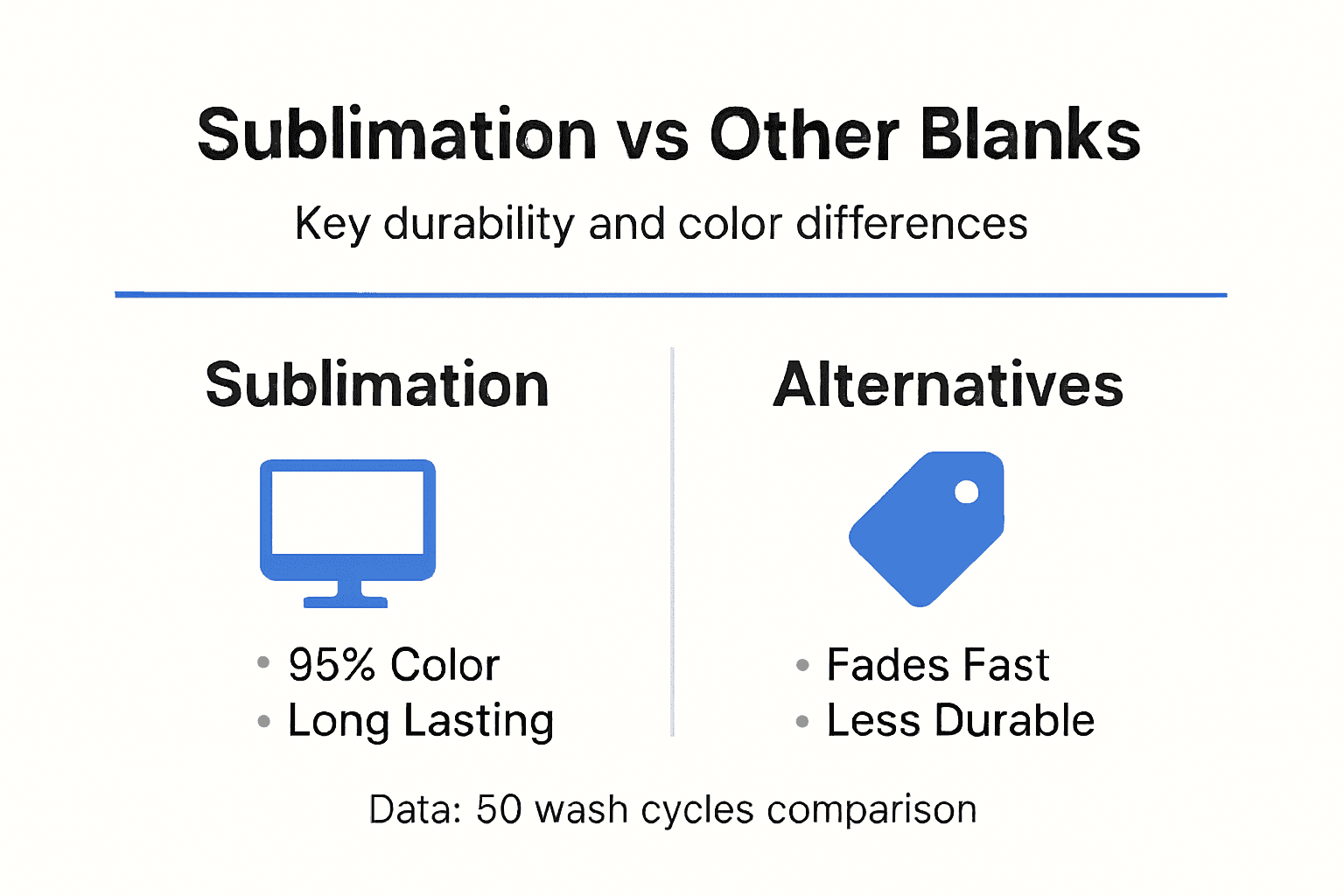
Sublimation prints retain 95% of their color vibrancy after 50 wash cycles, demonstrating exceptional durability that other methods struggle to match. The bonded dye resists washing, UV exposure, and daily wear. For products like mugs and textiles that face frequent use, this durability translates directly to customer satisfaction and fewer returns.

When you compare sublimation blanks to non-coated materials or alternative blanks, the difference becomes obvious. Regular ceramic mugs without polymer coating produce dull, patchy prints that wash away quickly. Cotton fabrics without polyester content can’t accept sublimation dyes at all. Even low quality coated blanks with thin polymer layers deliver inconsistent results and premature fading.
Pro Tip: Always verify the polymer coating quality before purchasing blanks in bulk. Test a sample from each supplier by printing a high contrast design and washing it multiple times. Quality coatings maintain sharp edges and vibrant colors even after 20 or more washes. Poor coatings show fading within five cycles.
The benefits of sublimation blanks extend beyond durability to include color accuracy and detail reproduction. Because dye penetrates the coating rather than sitting on top, you achieve photographic quality with smooth gradients and precise details. This capability opens opportunities for custom photo gifts, artistic merchandise, and branded promotional items that demand professional appearance.
Cost-Effectiveness for Small Businesses and Hobbyists
Sublimation blanks deliver significant cost advantages for small scale producers. The printing process uses less ink because the polymer coating accepts dye efficiently. You don’t need multiple passes or heavy ink saturation to achieve vibrant results. This efficiency reduces your per unit material cost compared to methods requiring thick ink layers or multiple applications.
Flexible ordering policies make sublimation blanks particularly attractive for small businesses and hobbyists. Over 85% of small business owners prefer suppliers with no minimum order quantities for flexibility. When you can order exactly what you need, you avoid tying up cash in inventory. You test new designs without committing to hundreds of units. You respond to custom orders without maintaining large stock levels.
Consider these cost benefits:
- Lower inventory investment means better cash flow management
- Testing new products costs less when you buy small quantities
- Reduced waste from unsold stock or design changes
- Ability to offer custom orders without bulk purchase requirements
- No setup fees or plate costs like screen printing demands
Small UK businesses using sublimation blanks report saving 30% to 50% on startup costs compared to traditional printing methods. A hobbyist creating personalised mugs can start with 10 blanks instead of 100. A small business testing a new design prints 20 units before committing to larger production. This flexibility reduces financial risk dramatically.
Pro Tip: Calculate your true cost per unit including waste and unsold inventory, not just the blank price. Sublimation blanks might cost slightly more per item than plain materials, but eliminating waste and enabling precise ordering often results in lower overall costs. Track your actual production numbers for three months to understand your real expense profile.
The sublimation blanks for business success approach means you can grow gradually without large capital outlays. Start with one product type, prove the concept, then expand your range using profits from initial sales rather than upfront investment.
Common Misconceptions About Sublimation Blanks
Several persistent myths prevent businesses and hobbyists from exploring sublimation blanks. Understanding the facts helps you make informed decisions based on reality rather than misconceptions.
Myth: Sublimation blanks are complicated and require expert skills. Many people believe successful sublimation printing demands years of experience and complex techniques. The truth is that polymer coating simplifies dye bonding and reduces user errors by 20%. The coating does much of the work for you. You follow basic steps for temperature, pressure, and time. The polymer layer ensures consistent dye acceptance across the entire surface.
Myth: Sublimation prints lack durability and fade quickly. Some assume heat transfer prints inevitably deteriorate with use. Reality proves otherwise. Properly produced sublimation prints maintain their appearance through dozens of wash cycles and years of daily use. The chemical bond between dye and polymer creates permanent coloration that becomes part of the material structure.
Myth: Sublimation is too costly for small users. Cost concerns often stem from confusion with commercial screen printing or DTG setups. Sublimation blanks work differently:
- No minimum order requirements mean you buy only what you need
- Lower ink consumption reduces ongoing costs
- Simple equipment requirements keep startup expenses manageable
- No setup fees or plate charges for each design
- Ability to produce single custom items profitably
“The polymer coating on quality sublimation blanks transforms an intimidating process into something straightforward. I was printing professional mugs within my first week.” – Small business owner testimony from multiple UK suppliers
These misconceptions often arise from experiences with inferior blanks or inadequate guidance. Quality sublimation blanks from reliable suppliers eliminate most technical challenges. Following sublimation blanks beginner tips ensures you avoid common mistakes and achieve good results from your first attempts.
Comparison with Other Blank Materials
Understanding how sublimation blanks compare to alternative methods helps you choose the right approach for your products and business model. Each method has strengths and limitations.
| Feature | Sublimation Blanks | Heat Transfer Vinyl | Screen Printing |
|---|---|---|---|
| Color Vibrancy | Excellent, photographic quality | Good but limited by vinyl colors | Excellent for solid colors |
| Durability | 95% retention after 50 washes | Prone to cracking and peeling | Very good for simple designs |
| Setup Cost | Low, no minimums | Low for small quantities | High, requires screens |
| Design Complexity | Unlimited colors and details | Limited by cutting and layering | Best for 1 to 4 colors |
| Minimum Order | None required | None required | Economical only in bulk |
| Production Speed | Fast for small batches | Moderate | Fast for large runs |
Sublimation blanks have higher durability and color vibrancy with no minimum order options compared to HTV and screen printing, making them ideal for custom work and small production runs.
Heat transfer vinyl works well for specific applications:
- Solid color designs with defined edges
- Metallic, glitter, or textured effects
- Single color text or simple graphics
- Products requiring specialty finishes
However, HTV struggles with photographic images, gradients, and complex multicolor designs. The vinyl sits on the surface rather than bonding into the material, making it vulnerable to cracking and peeling over time.
Screen printing excels at high volume production of simple designs. Once you create the screens, printing hundreds or thousands of items becomes cost effective. But setup costs make small runs prohibitively expensive. You also face limitations on color count and design complexity.
For small UK and Irish businesses and hobbyists, sublimation blanks offer the best balance. You achieve professional quality without minimum orders or setup fees. You can compare sublimation blanks against your specific needs to determine if the advantages align with your production goals.
Product Variety and Customization Options
The range of sublimation blanks available enables creation of diverse custom products across multiple market segments. Understanding the variety helps you identify opportunities for your business or creative projects.
A wide variety of sublimation blank products support diversified custom merchandise, from everyday items to specialised gifts. Major categories include:
- Ceramics: Mugs, coasters, tiles, plates, and ornaments for home décor and promotional use
- Textiles: Polyester fabrics for clothing, bags, cushions, and soft furnishings
- MDF Products: Photo panels, plaques, keychains, and decorative shapes for personalised gifts
- Plastic Items: Phone cases, luggage tags, and protective covers
- Metal Products: Water bottles, badges, jewellery, and outdoor signage
Each material type suits particular applications. Ceramic mugs remain consistently popular for corporate gifts and personal customisation. Textile products dominate the apparel and home goods markets. MDF works perfectly for photo gifts and commemorative items. Metal products offer durability for outdoor and heavy use applications.
Customization flexibility stimulates creativity and business growth. You can print full color photographs, intricate patterns, or branded designs without restrictions. This capability supports multiple business models including made to order products, small batch custom merchandise, and personalised gifts. Hobbyists experiment with artistic designs, family photos, and creative projects without large investments.
Market segments benefiting from sublimation blanks include promotional product suppliers, gift shops, craft businesses, photographers, event planners, and creative hobbyists. Product examples range from corporate branded mugs to personalised birthday banners for special occasions.
Exploring using sublimation blanks for merchandise and sublimation for promotional items reveals practical applications and market opportunities you might not have considered.
Practical Benefits Like No Minimum Order Quantities
No minimum order quantity policies transform how small businesses and hobbyists approach custom product creation. This flexibility addresses several practical challenges that traditional suppliers create.
Ordering exact quantities reduces financial risk significantly. You purchase 15 mugs for a specific order rather than buying 100 to meet a supplier minimum. This precision prevents capital from being locked in unsold inventory. You maintain better cash flow because money isn’t tied up in stock sitting on shelves.
Experimentation becomes viable when you can order small quantities. Testing a new product design costs £20 for five samples instead of £200 for a minimum order of 50. You validate customer interest before committing to larger production. You try multiple designs simultaneously to identify the most popular options.
Access to a wide product range without bulk commitment encourages business diversification. You can offer ceramic mugs, textile bags, and MDF plaques without maintaining large inventory of each. Customers get more choices. You respond to varied requests without substantial upfront investment.
Improved cash flow management helps small operators stay financially healthy:
- Buy inventory as orders arrive rather than stocking speculatively
- Reduce storage costs and space requirements
- Eliminate waste from expired or damaged stock
- Respond to seasonal demand without carrying off season inventory
No minimum order policies are preferred by over 85% of small business owners for operational flexibility. This preference reflects real business needs for adaptability and financial control.
For hobbyists, no minimums remove barriers to entry. You start creating custom products with a small investment. You explore different blanks and techniques without committing hundreds of pounds. You can pursue creative projects without worrying about using up large quantities of materials.
Practical tips on buying sublimation blanks help you maximise the benefits of flexible ordering policies while ensuring you select quality products that deliver consistent results.
Conclusion and How to Choose the Right Sublimation Blanks
Selecting appropriate sublimation blanks requires evaluating several key factors that impact your results and satisfaction. Making informed choices ensures you achieve quality outcomes while managing costs effectively.
Material and polymer coating quality directly affect print durability and vibrancy. High quality coatings bond dye permanently and maintain color through extensive use and washing. Lower quality coatings may appear similar initially but fade quickly or produce inconsistent results. Request samples before committing to bulk purchases. Test them thoroughly with your printer and heat press.
Match blank type to your intended product use and printer compatibility:
- Verify your printer uses sublimation ink suitable for the blanks you’re considering
- Ensure your heat press accommodates the size and shape of your chosen blanks
- Select materials appropriate for your product’s intended use and washing requirements
- Consider your target market’s preferences for ceramic, textile, or other materials
- Check that blank dimensions work with your design layouts and printing equipment
Prefer suppliers offering no minimum order quantities and reliable delivery terms. These policies provide the flexibility small businesses and hobbyists need. Verify the supplier’s reputation through reviews and test orders. Consistent quality matters more than the lowest price. A slightly more expensive blank from a reliable supplier costs less than dealing with defective products or delayed deliveries.
Pro Tip: Create a simple testing protocol for new blanks. Print the same design on samples from different suppliers using identical settings. Compare the results after printing and after 10 wash cycles. Document which blanks deliver the best combination of initial quality, durability, and cost. This systematic approach eliminates guesswork and ensures you identify the best suppliers for your needs.
Balancing cost, quality, and supplier reliability requires looking beyond per unit price. Consider total cost including waste, returns, and time spent dealing with problems. A supplier offering slightly higher prices but consistent quality and helpful support often proves more cost effective than the cheapest option.
Review choosing sublimation blanks tips for detailed guidance on making selections that align with your specific requirements and business goals.
Explore Premium Sublimation Blanks and Supplies
Our comprehensive range of sublimation blanks supports UK and Irish businesses and hobbyists in creating professional custom products. We supply everything from ceramic mugs to textile items, all with polymer coatings ensuring vibrant, durable prints. 
Discover detailed guidance on why choose sublimation blanks for your projects and explore sublimation blanks tips for beginners to achieve excellent results from your first prints. Browse popular items like our sublimation blank bar runner for customisation projects that demand quality and durability.
FAQ
What Are Sublimation Blanks Made Of?
Sublimation blanks consist of base materials like plastic, ceramic, MDF, or polyester fabric coated with a polymer layer. This polymer coating bonds with sublimation dyes during heat transfer, creating permanent, vibrant prints. The coating differentiates sublimation blanks from regular uncoated materials.
Are There Minimum Order Quantities for Sublimation Blanks?
Many suppliers, including trade wholesalers serving UK and Irish markets, offer sublimation blanks with no minimum order requirements. This flexibility supports small batch production and experimental projects. You can purchase exactly the quantity needed for specific orders or testing purposes.
How Do Sublimation Blanks Compare to Heat Transfer Vinyl?
Sublimation blanks produce more vibrant, durable full color prints than heat transfer vinyl. HTV allows layering and specialty effects but offers limited color range and less durability due to surface application. Sublimation proves superior for small custom batches featuring photographic images or complex multicolor designs.
Can Hobbyists Achieve Professional Results with Sublimation Blanks?
Yes, polymer coatings on quality sublimation blanks simplify the printing process and ensure consistent results. The coating reduces user errors and enables vibrant, durable prints without expert skills. No minimum order policies lower barriers, allowing hobbyists to start with small investments and learn through affordable experimentation.


