



Why Choose Sublimation Blanks for Custom Products
Finding quality sublimation blanks for custom printing can feel daunting when you want products that impress and last. Learning the truth about these specially coated substrates helps small businesses across the United Kingdom and Ireland avoid costly mistakes. This guide clears up the myths and shows how the right sublimation blanks deliver vibrant, durable prints that keep customers satisfied and coming back.
Table of Contents
- Sublimation Blanks Explained And Common Myths
- Types Of Sublimation Blanks And Their Uses
- How Sublimation Blanks Enable Vibrant Printing
- Comparing Sublimation Blanks With Alternatives
- Cost, Supply And Risks For Small Businesses
Key Takeaways
| Point | Details |
|---|---|
| Sublimation Blanks Require Specific Fabrics | Only synthetic fabrics with polyester content can properly bond with sublimation dyes, ensuring durability and vibrancy. |
| Importance of Quality Blanks | Low-quality sublimation blanks result in faded prints and increased costs due to necessary reprints, making investing in premium blanks essential. |
| Equipment Matters for Successful Transfers | Reliable heat press equipment is crucial for achieving consistent pressure and temperature to ensure optimal print quality. |
| Inventory Management is Key | Effective inventory management prevents cash flow issues by ensuring that only necessary quantities of sublimation blanks are stocked based on demand. |
Sublimation blanks explained and common myths
Sublimation blanks are specially coated substrates designed to bond permanently with sublimation ink through heat and pressure. These aren’t regular items off the shelf—they’re engineered products with polymeric bases, typically polyester or polyester blends, that allow dyes to transform directly from solid to gas during printing.
The science works because sublimation requires a specific chemical reaction. When you apply heat and pressure, the ink doesn’t sit on top like traditional printing. Instead, it transforms into a gas and bonds molecularly with the material itself. This is why substrate composition matters so much for durability.
What Makes Sublimation Blanks Different
Unlike standard blanks, sublimation products feature special coatings that enable this permanent bonding process. Polyester blends are essential because synthetic fibres accept sublimation dyes in ways that natural cotton simply cannot.
Here’s what sets them apart:
- Permanent colour integration rather than surface coating
- Vibrant, fade-resistant prints that last years of washing and use
- Full-colour capability without separate colour separations
- No cracking or peeling even after repeated handling
- Cost-effective per unit when producing multiple items
The key difference is that sublimation blanks are manufactured specifically for this process. Regular items won’t deliver the same results because they lack the proper base material and coating.
Common Myths About Sublimation Blanks
Myth 1: You can sublimate on any fabric
This isn’t true. Natural fibres like 100% cotton reject sublimation dyes entirely. Synthetic fabric substrates with polyester content are absolutely required for the chemical bond to occur.
Myth 2: The process works on dark colours
Sublimation works best on white or light-coloured blanks. Dark fabrics won’t show the vibrant colour saturation because the dyes transfer as gases and need a light base to display properly.
Myth 3: Lower-quality blanks save money
Cheaper blanks often have poor coatings that don’t bond well with sublimation inks. You’ll end up with faded prints, customer complaints, and wasted materials—costing far more than investing in proper quality sublimation products.
Myth 4: Any heat press can sublimate
You need consistent pressure and temperature control. Cheap equipment produces uneven transfers and colour inconsistencies. Professional sublimation requires reliable equipment that maintains exact specifications.
Myth 5: Sublimation fades quickly
Actually, sublimation prints are exceptionally durable when done correctly. The molecular bond created through proper heat and pressure means colours remain vibrant through washing, sunlight exposure, and years of use.
Sublimation blanks aren’t a cost-cutting option—they’re an investment in quality that customers will appreciate and return for.
Pro tip: Start with white or light pastel sublimation blanks from a reputable wholesaler. They’re more forgiving for beginners whilst delivering consistently excellent results, helping you build customer confidence in your custom products.
Types of sublimation blanks and their uses
Sublimation blanks come in many varieties, each designed for specific products and applications. The type you choose directly affects your print quality, durability, and the final product your customers receive. Understanding these options helps you select the right blank for each project.
The most common sublimation blanks fall into fabric and hard substrate categories. Each category serves different purposes and requires slightly different techniques to achieve optimal results.
Fabric Sublimation Blanks
Fabric blanks are the most popular choice for DIY enthusiasts and small businesses. These include polyester clothing, bags, and home décor items that accept sublimation dyes exceptionally well.
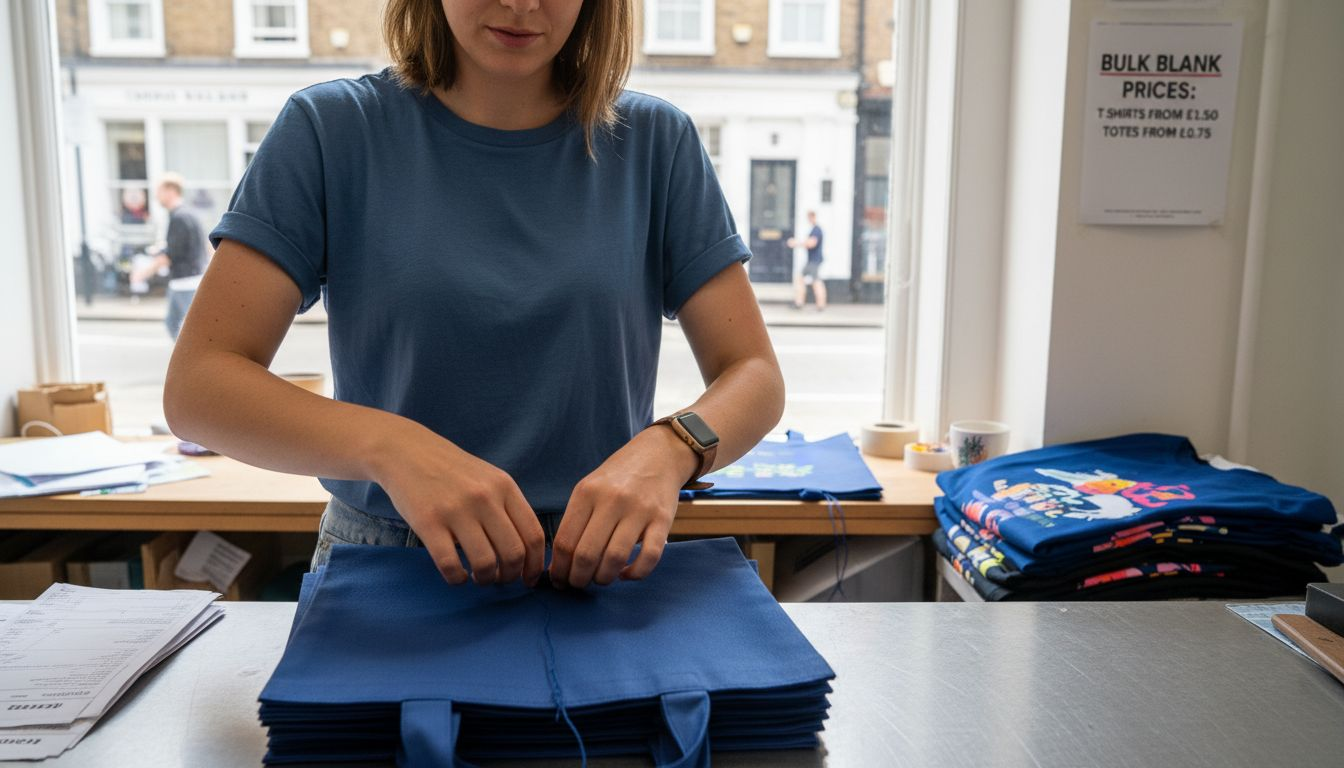
Polyester garments are the standard choice. T-shirts, hoodies, and polo shirts in 100% polyester or high-polyester blends deliver vibrant, long-lasting prints. The synthetic fibres bond permanently with sublimation inks during heat transfer.
Other fabric options include:
- Polyester blend garments (85% polyester, 15% cotton minimum)
- Nylon and acrylic blanks for specific applications requiring unique properties
- Polyester bags and totes for promotional items and retail products
- Polyester home décor like cushions, blankets, and wall hangings
- Athletic wear and performance fabrics with moisture-wicking properties
Different textile compositions require different heat and pressure settings for optimal colour transfer. Always test settings on sample blanks before running full production batches.
Here is a quick comparison of sublimation blank categories, their properties, and best-suited uses:
| Blank Category | Typical Materials | Ideal Use Cases | Notable Advantage |
|---|---|---|---|
| Fabric Blanks | Polyester, blends, nylon | Apparel, bags, décor | Lightweight, wearable |
| Hard Substrate | Ceramic, aluminium, coated wood | Mugs, tech accessories, gifts | Rigid, premium feel |
| Performance Fabric | Moisture-wicking synthetics | Sportswear, uniforms | Durable for active use |
| Composite Blanks | Polymer-coated composites | Photo panels, puzzles | High-definition printing |
Hard Substrate Blanks
Hard substrates open entirely new product possibilities beyond fabric. These items accept sublimation inks through special coatings that enable permanent dye bonding.
Common hard substrate options include:
- Ceramic mugs and drinkware for personalised gifts and corporate orders
- Aluminium products like photo panels, ornaments, and decorative items
- Composite wooden blanks for coasters, plaques, and decorative pieces
- Phone cases and tech accessories with polymer coatings
- Puzzle and jigsaw blanks for custom photo puzzles
The blank type you select determines your market reach—fabric serves everyday wear, whilst hard substrates attract premium gift buyers.
Choosing the Right Blank for Your Project
Consider your target market when selecting blanks. Fabric sublimation suits customers wanting personalised clothing and casual merchandise. Hard substrates attract buyers seeking unique gifts, home décor, and premium items.
Production volume matters too. Bulk fabric blanks cost less per unit, whilst hard substrates command higher prices per item. Your profit margins shift based on blank type and finished product pricing.
Start by testing small batches of different blank types. This helps you understand colour output, durability, and customer preferences without significant investment. Document your best-performing blanks and settings for future reference.
Pro tip: Stock white or light-coloured fabric blanks as your core inventory—they’re universally appealing, offer excellent colour saturation, and remain the easiest option for beginners to achieve professional results.
How sublimation blanks enable vibrant printing
Sublimation blanks create vibrant prints through a carefully engineered process. The special coatings and material composition work together with heat, pressure, and dwell time to transform ink into permanent colour that’s locked into the fabric’s molecular structure.
This isn’t like regular printing where ink sits on top. Sublimation actually changes how the colour bonds with your blank, creating prints that don’t fade, crack, or peel even after extensive washing and use.
The Science Behind Vibrant Colour
The magic happens when three elements align perfectly: heat, pressure, and substrate quality. Each factor directly influences how vivid and durable your final print becomes.
Heat converts sublimation ink from solid to gas form. This gaseous state allows the dye to penetrate the blank’s surface and bond at a molecular level. Without sufficient heat, the ink never fully transforms, resulting in weak, dull prints.
Pressure ensures uniform contact between the design and blank. Inconsistent pressure creates colour variations across your print, with some areas appearing darker or lighter. Professional heat presses maintain even pressure across the entire transfer area.
Dwell time refers to how long heat and pressure are applied. Too short, and the colour transfer is incomplete. Too long risks scorching or damaging the blank. Optimal sublimation conditions vary by blank type and thickness.
Why Blank Quality Matters for Colour Vibrancy
Not all blanks are created equal. The coating applied during manufacturing determines how well your sublimation inks bond and how vibrant the final colour appears.
High-quality blanks feature:
- Consistent, even coating across entire surface for uniform colour
- Polymer-based compositions that accept sublimation dyes eagerly
- Proper fibre opacity preventing colour from appearing washed out
- Heat-resistant materials that won’t degrade during transfer
- Treated surfaces optimised specifically for sublimation ink adhesion
Cheaper blanks often have patchy coatings or unsuitable fibre compositions. These limit colour saturation no matter how perfect your technique becomes.
Achieving Maximum Colour Vibrancy in Practice
Start by matching your heat press settings to your blank type. Polyester t-shirts typically require 200 degrees Celsius for 15 seconds. Ceramic mugs need higher temperatures and longer dwell times.
Test your settings on scrap blanks first. Print a colour swatch and examine the results. If colours appear pale, increase temperature slightly or extend dwell time by a few seconds. Document what works for future batches.
Vibrant prints aren’t accidents—they’re the result of matching quality blanks with precise heat press settings tailored to your specific materials.
Invest in a reliable heat press with accurate temperature control. Budget equipment with temperature fluctuations produces inconsistent results that waste materials and frustrate customers.
Pro tip: Use white or very light coloured blanks exclusively when starting out—they require less precise settings, reveal colour vibrancy more easily, and forgive minor temperature variations whilst still delivering stunning results.
Comparing sublimation blanks with alternatives
Sublimation blanks outperform most alternative printing methods in durability, colour vibrancy, and long-term value. Understanding how they compare helps you make informed decisions about which approach suits your business and customers.
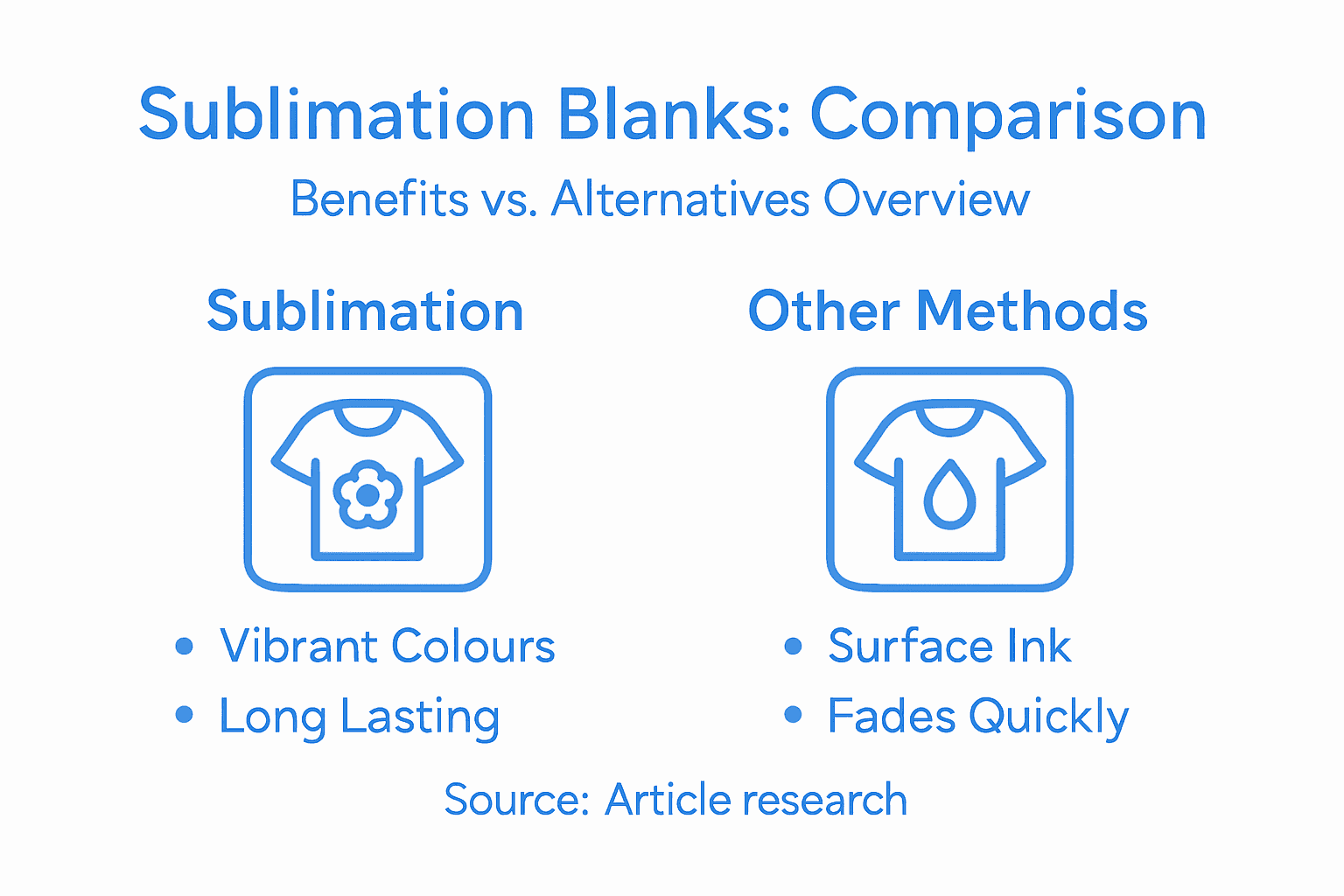
The key difference lies in how ink bonds with materials. Sublimation creates a molecular bond that penetrates the blank’s surface. Most alternatives rely on surface adhesion, which degrades faster and fades more easily.
Sublimation vs Screen Printing
Screen printing is affordable and works on virtually any fabric, making it tempting for beginners. However, the comparison reveals significant limitations.
Screen printing deposits ink as a thick layer on top of fabric. This surface-level adhesion means prints wear away after repeated washing. Colours also appear flat and lack the depth achievable through sublimation.
Sublimation blanks absorb dye molecules into the material itself, creating prints that last years. Colours remain vibrant and true even after dozens of washes. The downside is that screen printing costs less per unit for very small batches.
Sublimation vs Heat Transfers
Heat transfers seem similar to sublimation at first glance—both use heat presses and require special blanks. The results tell a different story.
Heat transfers place a pre-printed design onto material using heat and pressure. The transferred image sits on top like a sticker. After a few months of regular use, heat transfer designs crack, peel, and fade noticeably.
Sublimation provides superior durability and colour fidelity because the dye bonds molecularly rather than sitting on the surface. Designs look professionally printed and maintain their appearance indefinitely.
Sublimation vs Direct-to-Garment (DTG) Printing
Direct-to-garment printing offers convenience—printing directly onto garments without pre-treatment. Sound appealing? Consider the practical limitations.
DTG works best on 100% cotton or cotton-dominant fabrics. Print quality relies heavily on fabric type and colour. DTG struggles with dark garments and produces inconsistent results across different materials.
Sublimation works reliably across polyester blanks with consistent, predictable results. Colours appear identical batch after batch. The trade-off is that sublimation requires specially coated blanks rather than regular clothing.
Cost and Value Comparison
Compare these factors across methods:
- Upfront blank cost: Sublimation blanks cost slightly more than regular fabric
- Per-unit price: Sublimation becomes cheaper when selling multiple items
- Durability: Sublimation designs outlast competitors by years
- Colour vibrancy: Sublimation maintains quality through years of use
- Customer satisfaction: Lasting prints reduce complaints and returns
- Repeat business: Durable products encourage customers to return for more
Sublimation blanks cost more upfront but deliver superior value through durability, vibrant colours, and customer satisfaction that drives repeat business.
Choose sublimation if you’re building a reputation for quality. Choose alternatives only if you’re targeting single-use items or extremely price-conscious buyers who don’t expect longevity.
Pro tip: Create sample products using sublimation and competing methods, then show customers side-by-side comparisons after washing and wear—this real-world evidence convinces them that sublimation’s higher price delivers genuine long-term value.
The table below highlights the business impacts of choosing sublimation blanks versus key alternatives:
| Method | Average Product Lifespan | Customer Repeat Rate | Startup Investment Level |
|---|---|---|---|
| Sublimation | 5+ years | High, due to durability | Moderate |
| Screen Printing | 1-2 years | Moderate, risk of fading | Low to Moderate |
| Heat Transfers | 6-12 months | Low, as prints degrade | Low |
| DTG Printing | 1-3 years | Variable, depends on fabric | High |
Cost, supply and risks for small businesses
Small businesses face real challenges when sourcing sublimation blanks consistently. Rising costs, supply chain disruptions, and inventory management create genuine pressures that affect profitability and growth. Understanding these risks helps you plan better and protect your business.
Sublimation blanks require upfront investment before you generate revenue. Unlike made-to-order services, you’re purchasing inventory that sits on shelves until customers buy it. This capital ties up cash flow, particularly for startups with limited budgets.
Understanding Startup and Ongoing Costs
Beginning a sublimation business requires more than just blanks. Calculate your startup costs carefully to understand total investment needed before launching.
Initial expenses typically include:
- Sublimation printer (£300-800 for entry-level models)
- Heat press equipment (£200-600 depending on size)
- Sublimation blanks inventory (£150-500 for starter stock)
- Inks and supplies (£100-300 for initial purchases)
- Software and design tools (£0-200 depending on choices)
- Storage space (rent or dedicated area for inventory)
Ongoing costs continue monthly. Blank prices fluctuate with raw materials and shipping expenses. Ink refills add up quickly when running high-volume production. Storage requirements grow as you expand your product range.
Supply Chain and Availability Risks
Sublimation blank availability isn’t guaranteed. Global supply chain disruptions affect raw material costs and inventory accessibility for small businesses especially.
Common supply challenges include:
- Price volatility from month to month on popular blanks
- Stock shortages during peak demand seasons
- Long lead times from overseas suppliers delaying orders
- Minimum order requirements forcing larger purchases
- Discontinued items leaving you with outdated stock
- Quality inconsistencies across different production batches
Working with a trade wholesaler that offers no minimum order quantities reduces these risks significantly. You can purchase exactly what you need, when you need it, without overcommitting capital.
Managing Inventory and Cash Flow
Inventory management makes or breaks small businesses. Overstocking ties up cash that could fund growth. Understocking means missing sales when customers order.
Start small and test demand before bulk purchasing. Track which blank types sell fastest. Document seasonal trends. Adjust your orders based on actual customer behaviour, not assumptions.
Smart inventory management protects cash flow—buy only what you can reasonably sell within 30-60 days, then reorder based on actual demand.
Use inventory tracking spreadsheets or simple software to monitor stock levels. Know when to reorder before you run out, but not so early that capital sits idle in slow-moving products.
Partner with reliable suppliers offering flexible ordering. Having a supplier you trust who can provide emergency stock prevents lost sales when demand spikes unexpectedly.
Pro tip: Start with 5-10 of each bestselling blank type rather than 50 units, test customer response over 4-6 weeks, then scale orders for items with proven demand whilst avoiding dead stock.
Elevate Your Custom Product Business with Premium Sublimation Blanks
Are you ready to overcome the challenges of inconsistent print quality and stock shortages while delivering vibrant, durable products your customers will love Sublimation blanks require careful selection of quality materials and reliable suppliers to achieve perfect molecular bonding and lasting colour vibrancy By partnering with a supplier who understands these demands you avoid common pitfalls like faded prints and wasted inventory
Explore our comprehensive range at Subliblanks, where you benefit from no minimum order quantities and expertly curated sublimation blanks alongside top-tier sublimation printers and heat press equipment Secure your inventory with confidence and enjoy flexible ordering tailored to your business needs Start building customer trust with flawless products today Visit Sublimation blanks supply to find the exact blanks your project demands or browse our full inventory at Subliblanks homepage and transform your custom printing experience.
Frequently Asked Questions
What are sublimation blanks?
Sublimation blanks are specially coated substrates designed to bond permanently with sublimation ink through heat and pressure. They are engineered products, typically made of polyester or polyester blends, that allow for vibrant and durable prints.
Why can’t I use regular fabrics for sublimation printing?
Regular fabrics, particularly those made from natural fibres like 100% cotton, are not suitable for sublimation printing as they do not bond with sublimation dyes. It is essential to use synthetic fabrics, primarily those with polyester content, to achieve the desired chemical bond for effective dye transfer.
How do sublimation blanks differ from other printing methods?
Sublimation blanks create a molecular bond with the dye, resulting in prints that are vibrant, fade-resistant, and durable. In contrast, methods like screen printing rely on surface adhesion, which can lead to fading and cracking over time.
What should I consider when choosing sublimation blanks for my projects?
When selecting sublimation blanks, consider the material composition, desired product type (fabric or hard substrate), and your target market. White or light-coloured blanks are recommended, especially for beginners, as they yield better colour saturation and results.
Recommended
- Sublimation Blanks: Powering Custom Product Success – SubliBlanks Limited
- Sublimation Terminology – Key Concepts for Small Businesses – SubliBlanks Limited
- Sublimation Transfer Process: Achieve Professional Prints Easily – SubliBlanks Limited
- 7 Essential Tips for Sublimation Blanks for Beginners – SubliBlanks Limited


