



Role of Heat Press in Production: Boosting Efficiency and Quality
Choosing the best method for your custom printing business can feel daunting when deadlines are tight and customer expectations run high across the UK and Ireland. Heat pressing stands out for its ability to deliver consistent results across garments, mugs, and more, with precise control over both temperature and pressure applied all at once. Mastering heat and pressure working together is often the difference between products that delight your clients and batches that drain your profits.
Table of Contents
- Heat Press In Production: Core Concepts
- Types Of Heat Press And Transfer Methods
- Key Features And How Heat Press Works
- Practical Applications For Print Businesses
- Comparing Alternatives And Avoiding Pitfalls
Key Takeaways
| Point | Details |
|---|---|
| Heat and Pressure | Combining heat and pressure is essential for achieving superior bonding and durability in custom printing. Precision in controlling both elements is crucial for quality outcomes. |
| Press Type Selection | Choose your heat press type based on production volume and material compatibility to optimise workflow efficiency and product quality. |
| Transfer Methods | Understanding the differences between heat transfer vinyl and sublimation printing is vital for selecting the best approach for specific applications. |
| Investment in Quality | Investing in high-quality heat presses with accurate temperature control and adjustable pressure settings is critical to avoid costly mistakes and improve production efficiency. |
Heat Press in Production: Core Concepts
A heat press combines two fundamental forces: temperature and pressure applied simultaneously to transform materials. This dual application works because materials respond differently when you combine heat with mechanical force, compared to applying either one alone.
At its core, a heat press uses controlled heat and downward pressure to bond, shape, or transfer designs onto substrates. Think of it like combining a heavy weight with an oven—but with precision control over both elements. The result? Products that emerge with superior adhesion, durability, and consistency.
How Heat and Pressure Work Together
Heat softens materials, making them malleable and receptive. Pressure then forces them into permanent shapes or bonds. Working together, they achieve what neither could accomplish independently.
The process follows these principles:
- Heat raises the material’s temperature to a specific point where bonding becomes possible
- Pressure flattens, compresses, and locks elements together
- Controlled cooling sets the final result permanently
- Timing ensures the material reaches optimal fusion without burning
Complex pressing operations share these core mechanics across industries, from ceramics to composites to your custom printing work.
What Makes Heat Press Essential for Your Business
In custom printing, heat pressing transfers designs onto mugs, t-shirts, caps, and other blanks through sublimation or direct transfer methods. Your customers expect vibrant colours that don’t fade, designs that won’t peel, and professional finishes that justify their investment.
Without proper heat and pressure control, you get:
- Faded or incomplete colour transfer
- Peeling designs after a few washes
- Uneven application across the product
- Wasted blanks and materials
A reliable heat press prevents all of these costly mistakes.
Temperature precision matters. Even a 5-degree variance can determine whether your design bonds permanently or fails within weeks.
Key Variables You Control
Three elements determine your results:
- Temperature – measured in degrees Celsius; each material requires a specific range
- Pressure – how firmly the platen presses down; measured in PSI or kilograms
- Time – duration the heat and pressure remain applied; typically 15–60 seconds depending on material
Get any one wrong, and your entire batch suffers. Too hot, too long, or too much pressure damages delicate fabrics. Too cool, too brief, or insufficient pressure leaves designs loose.
Why Precision Matters for Your Bottom Line
Production efficiency means completing more jobs faster without quality loss. A heat press with accurate temperature readouts, consistent pressure distribution, and reliable timer functions transforms raw margins into profit.
You’re competing against other custom printers in the UK and Ireland market. The ones delivering perfect results every single time win repeat customers and referrals. Heat press reliability directly enables that consistency.
Pro tip: Invest in a heat press with digital temperature display and pressure adjustment—these features eliminate guesswork and let you dial in exact settings for each product type, saving failed batches and creating repeatable excellence.
Types of Heat Press and Transfer Methods
Choosing the right heat press type depends on your production volume, the materials you work with, and your budget. Different designs suit different workflows, and understanding the distinctions helps you invest wisely.
Heat Press Types by Design
Each design affects how you position blanks, apply heat, and manage production speed. Your choice directly impacts workflow efficiency and the quality of finished products.
Clamshell presses feature a top platen that lowers onto a stationary bottom surface. They’re compact, affordable, and perfect for small batches or starting out. Setup is straightforward: place your blank, lower the lid, wait, lift it off.
Swing-away presses swing the heated platen to the side rather than straight down. This design improves safety by reducing finger pinch points and allows better visibility during positioning. You can see exactly where designs land before heat activates.
Draw presses slide the heated platen toward or away from you horizontally. This setup works brilliantly for precise placement and reduces strain on your arms during repeated pressing. Many professionals prefer this style for meticulous work.
Different heat press types suit various production scales and complexity levels.
Here’s how the main heat press types compare for different production needs:
| Press Type | Best For | Key Advantage | Typical Drawback |
|---|---|---|---|
| Clamshell | Small batch printing | Space-efficient design | Limited work area |
| Swing-away | Delicate positioning | Safe, clear visibility | Larger footprint |
| Draw Press | Precise alignment | Reduces arm fatigue | Slower for bulk production |
| Automatic Press | High-speed jobs | Consistent automation | Greater upfront cost |
Transfer Methods: Two Main Approaches
Your transfer method determines which blanks work best and what results you achieve. Both have distinct advantages for different custom printing applications.
Heat transfer vinyl (HTV) uses adhesive activation. You cut vinyl designs, position them on fabric or hard surfaces, then apply heat and pressure to activate the adhesive. The design bonds permanently to the substrate.
Best for:
- T-shirts, hoodies, and garments
- Custom caps and bags
- Single-colour or multi-colour designs with sharp edges
Sublimation printing employs gas-phase dye diffusion. Your design prints onto special transfer paper using sublimation inks, then heat and pressure convert the ink into gas that bonds with polyester or coated blanks.
Best for:
- Mugs and ceramic blanks
- Polyester items
- Photo-quality, full-colour designs
- Maximum colour vibrancy
Sublimation produces photographs on mugs; heat transfer vinyl creates bold graphics on t-shirts. Each method has its perfect application.
See how heat transfer vinyl and sublimation differ for custom printing:
| Method | Material Compatibility | Colour Quality | Typical Use Case |
|---|---|---|---|
| Heat Transfer Vinyl | Cotton/polyester/blends | Bold, solid colours | Garments, caps, bags |
| Sublimation Printing | Polyester, ceramics | Vivid, photographic | Mugs, photo gifts, signage |
Matching Press Type to Your Work
Consider this quick guide:
- Low volume, mixed products → Clamshell press
- High precision work → Swing-away or draw press
- Fast production batches → Automatic press with timer
- Budget-conscious startup → Manual clamshell
Your production goals should dictate your equipment choice, not the reverse.
Pro tip: Start with a swing-away clamshell press if you’re new to the business—you get safety features, visibility for positioning, and flexibility to test multiple transfer methods before committing to specialised equipment.
Key Features and How Heat Press Works
Every heat press machine contains the same core components working together in harmony. Understanding what each part does helps you troubleshoot problems, maintain your equipment, and achieve consistent results.
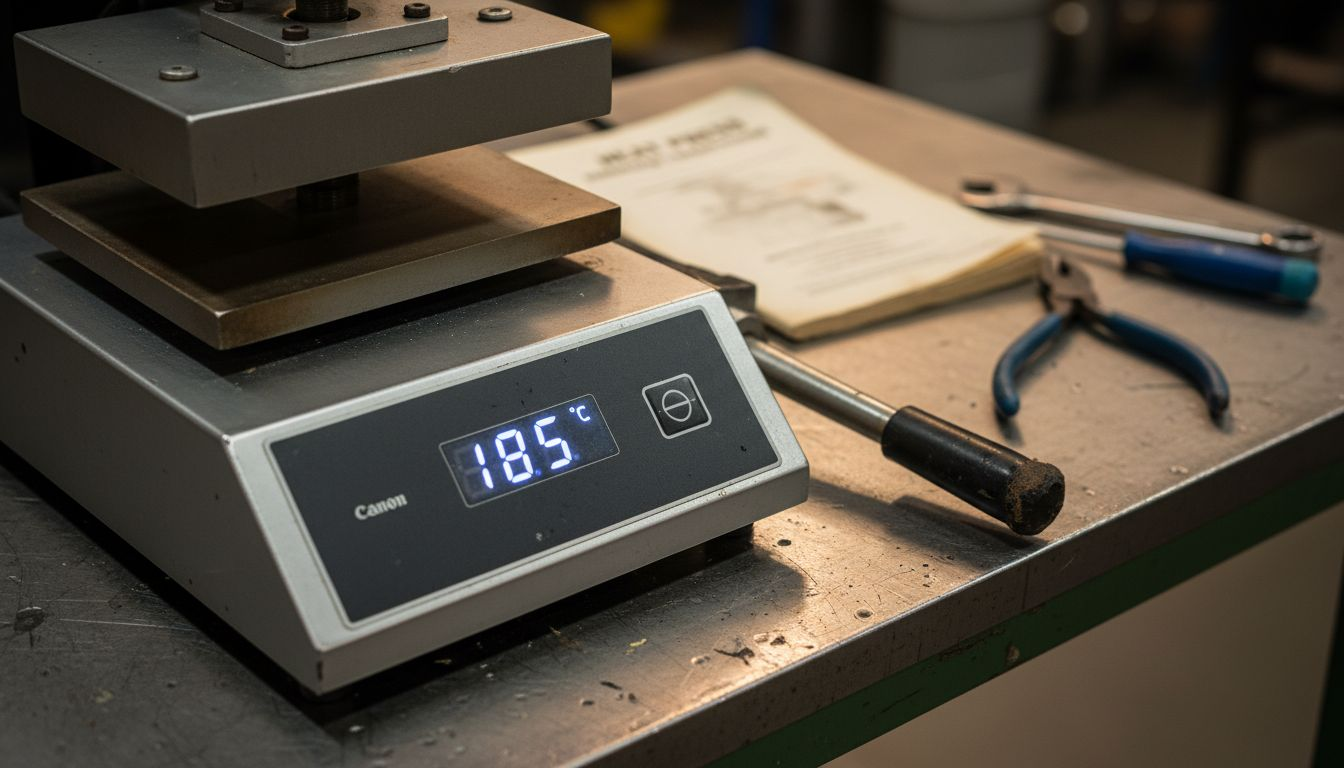
The Essential Components
A functional heat press requires four critical elements that must work as a unified system.
The heating element generates and maintains temperature. It sits behind or within the platen and transfers heat consistently across the entire surface. Better heating elements distribute warmth evenly, preventing hot spots that scorch designs.
The platen is the heated surface where designs transfer. It must remain flat and smooth to ensure uniform contact with your blanks. Any warping or surface damage creates uneven pressure and inconsistent results.
The pressure mechanism applies downward force. Hydraulic heat presses use fluid dynamics for superior consistency and control compared to manual or pneumatic systems. This matters when you’re pressing hundreds of items weekly.
The timer prevents overheating and ensures precise timing. Modern digital timers eliminate guesswork. Set your time, and the machine alerts you when pressing completes.
How These Parts Work Together
The process unfolds in three simultaneous actions: heat rises, pressure applies, and time elapses. None works effectively without the others.
- You place your blank on the heated bottom platen
- The top platen lowers and applies consistent pressure
- Heat penetrates the design and substrate simultaneously
- The timer counts down the required duration
- The platen releases, and your transfer is bonded permanently
Heat press machines integrate heat, pressure, and time to achieve reliable bonding across all materials.
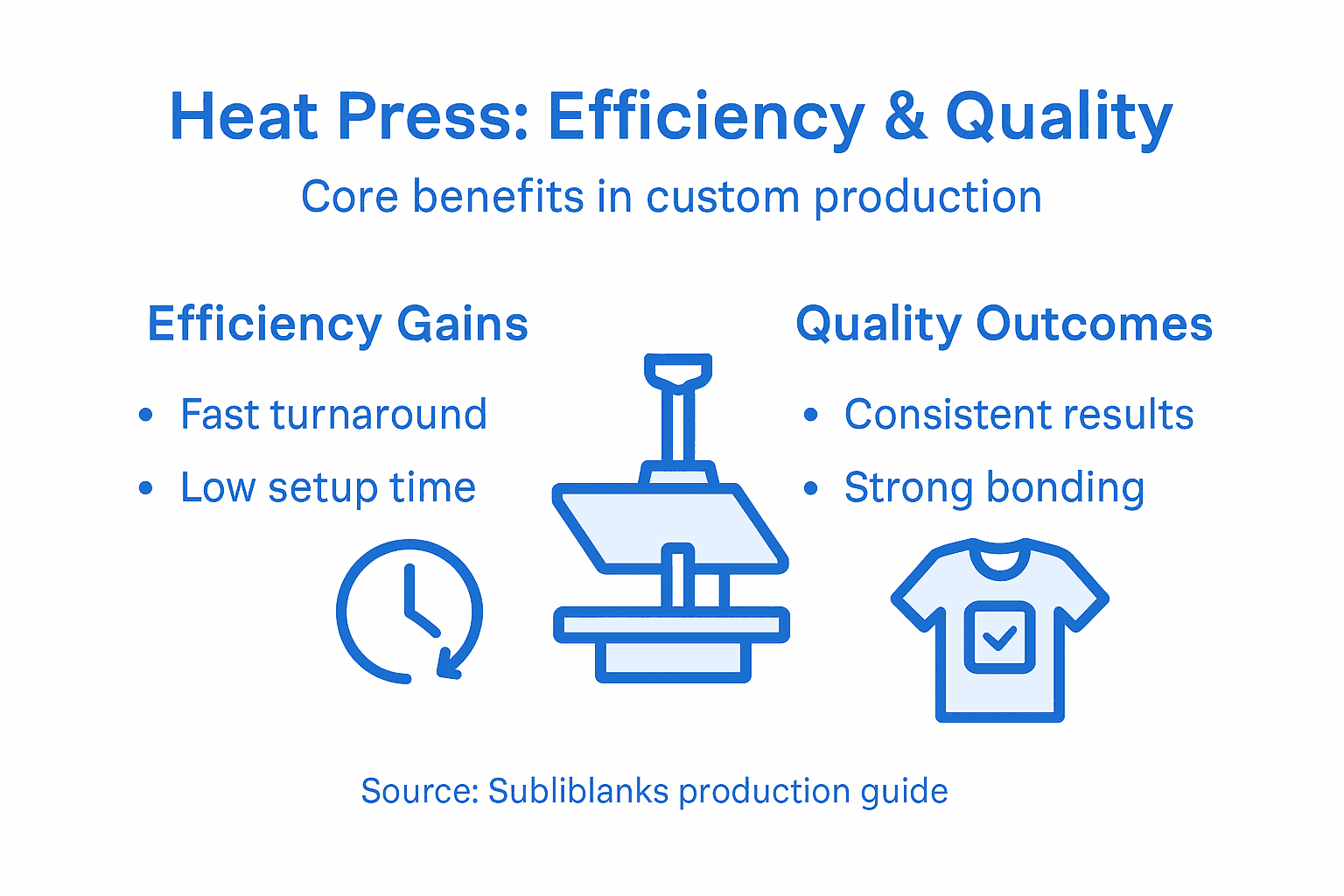
Key Features That Separate Good from Exceptional
Not all heat presses perform identically. These features determine quality and longevity.
- Digital temperature display – Shows exact heat in real-time, eliminating dial guesswork
- Adjustable pressure settings – Allows customisation for different material thicknesses
- Even heat distribution – Prevents scorching on edges whilst leaving centres under-bonded
- Protective heat-resistant sheets – Prevent scorching and extend platen life
- Consistent pressure across the platen – Guarantees uniform bonding across the entire design
- Durable construction – Steel frames withstand daily production stress
Pressure consistency matters as much as temperature accuracy. Uneven pressure creates uneven transfers—and unhappy customers.
Why Specifications Matter
When comparing machines, three numbers tell the real story: maximum temperature in degrees Celsius, pressure range in PSI, and platen size in centimetres.
A machine rated 200°C but reaching only 190°C under load performs worse than specifications promise. Verify actual performance, not just advertised ratings. Read user reviews carefully—they reveal real-world performance after months of daily use.
Pro tip: Invest in a heat press with a digital display and adjustable pressure—these features let you dial in exact settings for sublimation mugs, vinyl t-shirts, and other custom blanks without trial-and-error, saving materials and time.
Practical Applications for Print Businesses
A heat press transforms your business from offering basic printing into delivering customised products clients actually want. The versatility of heat pressing means you can serve multiple market segments from a single piece of equipment.
Apparel Customisation
T-shirts, hoodies, and caps represent your highest-volume opportunities. Heat transfer vinyl and sublimation both work brilliantly on fabric, allowing you to create everything from single custom items to bulk corporate orders.
Your apparel services include:
- Custom t-shirt designs for small bands or clubs
- Corporate merchandise with company logos
- Personalised gifts with names or dates
- Sports team uniforms with player numbers
- Event merchandise for conferences or festivals
Each pressing takes 15–30 seconds. A single operator can complete 100+ garments in a shift, turning apparel customisation into reliable revenue.
Promotional Products and Home Décor
Beyond fabric, heat press machines transfer vibrant graphics onto ceramics, plastics, and wood. This expands your addressable market significantly.
Popular items include:
- Ceramic mugs with photographs or designs
- Wooden coasters with custom artwork
- Phone cases with personalised images
- Canvas prints with sublimated colours
- Puzzle boxes and decorative items
These products command premium pricing because customisation adds perceived value. A standard mug costs £2–3; a personalised mug with a family photo sells for £10–15.
Meeting Diverse Client Demands
Small businesses, event planners, and corporate clients all need customisation. Without a heat press, you’re limited to one-colour screen printing or outsourcing to competitors.
With heat pressing capability, you become a one-stop solution. A client wanting 50 branded t-shirts and 25 personalised mugs for an event comes to you instead of splitting the order between multiple suppliers.
Customisation at scale transforms customers into loyal repeat clients. They return because you solve problems competitors cannot.
Building a Profitable Service Menu
Start with your strongest materials, then expand. Most businesses begin with apparel, add sublimation mugs within months, then explore additional blanks as demand grows.
Your pricing strategy matters. Sublimation mugs, for example, command 300–400% markup over material cost. A £3 blank becomes a £12–15 finished product your customers happily purchase.
Track which services generate the highest margins. Focus your marketing there. If mugs consistently outsell shirts on profit, allocate more production capacity to mugs.
Efficiency Gains from Heat Pressing
Manual screen printing requires setup time, drying time, and multiple colour stations. Heat pressing requires blank placement, one button press, and removal. Setup to finished product takes minutes, not hours.
This speed enables you to accept rush orders competitors cannot fulfill. A client needing 20 custom t-shirts by tomorrow morning? Your heat press makes it possible. Their competitors lose the sale.
Pro tip: Focus your initial marketing on apparel and mugs—these are proven revenue generators with established customer demand. Once you’re consistently profitable, experiment with new blanks like phone cases or coasters without risking your core income.
Comparing Alternatives and Avoiding Pitfalls
Heat pressing isn’t your only option for customising products. Understanding why alternatives fall short helps you make the right investment decision for your business.
Heat Press vs. Screen Printing
Screen printing dominated custom apparel for decades. But it carries serious limitations that heat pressing overcomes.
Screen printing requires:
- Separate screens for each colour
- Setup time of 30–60 minutes per design
- Drying time between colour applications
- Minimum orders of 50–100 units to justify setup costs
- Significant water waste and chemical disposal
Heat pressing eliminates all of these constraints. You press one unit or 500 units with identical turnaround. No setup. No minimum orders. No environmental headaches.
For custom printing, heat pressing wins on speed and flexibility.
Heat Press vs. Direct-to-Garment Printing
Direct-to-garment (DTG) machines print designs directly onto fabric using inkjet technology. They sound brilliant until you examine real-world costs.
DTG machines cost £8,000–20,000. Heat presses cost £300–2,000. DTG inks are expensive, with ongoing cartridge replacements adding up quickly. Maintenance requires specialist technicians, not basic cleaning.
For high-volume apparel work, DTG makes sense. For custom printing shops doing varied work, heat pressing delivers better margins and reliability.
Heat Press vs. Embroidery
Embroidery creates textured, premium-looking designs. But it’s slow, expensive, and limited to fabric.
One embroidered polo shirt takes 20–40 minutes. One heat-pressed shirt takes 30 seconds. Scale those numbers across a hundred orders, and heat pressing saves weeks of labour.
Embroidery also requires specialised equipment and operator training. Heat pressing requires one training session.
Common Pitfalls to Avoid
Many print businesses invest in heat presses then abandon them within months. Understanding what goes wrong prevents wasted money.
Buying undersized equipment – A small desktop press seems cost-effective until you realise you can’t fit large designs or wide items. You’ll replace it within a year.
Ignoring temperature accuracy – Cheap presses claim 200°C but deliver 180°C under load. Your sublimation mugs fade. Your vinyl peels. Your reputation suffers.
Skipping material testing – Every material (cotton, polyester, ceramic, plastic) requires different settings. Test thoroughly before accepting customer orders.
Neglecting maintenance – Platens wear out. Heating elements fail. Regular cleaning and inspection prevents catastrophic failures during rush jobs.
Buying the cheapest heat press available is the most expensive mistake you can make. Quality equipment pays for itself within months through successful projects.
Why Heat Press Wins for Custom Printing
Heat pressing offers speed, flexibility, and reliability that alternatives cannot match. You accept rush orders, serve diverse clients, and maintain profit margins competitors struggle to achieve.
The investment is modest. The returns are significant. The competition cannot replicate your turnaround times.
Pro tip: Before committing to a heat press purchase, test one thoroughly on your target materials—hire one for a day or attend a supplier’s demonstration. Confirm actual performance matches specifications, and verify it handles your most common projects flawlessly before investing.
Elevate Your Production with Precision Heat Press Solutions
The article highlights the vital role of precise temperature, pressure, and timing in heat press operations to ensure flawless transfers and boost productivity. If you are facing challenges like faded designs, peeling vinyl, or inconsistent results due to unreliable equipment or improper material compatibility, the right tools can transform your workflow and protect your profit margins. Don’t let inaccurate machines or limited blanks stall your business growth.
Discover how you can streamline your production and offer vibrant, durable customisations by pairing your heat press with high-quality sublimation blanks and equipment available at Subliblanks. Explore our extensive range designed specifically for demanding print environments including sublimation mugs, apparel blanks, and much more.
Take control of your custom printing today. Visit https://subliblanks.com to browse our no-minimum order sublimation blanks, printers and essential heat press supplies. Start creating consistent, professional-quality products your customers will trust and return for. Your business deserves equipment and blanks that work in perfect harmony—make your next project a guaranteed success now!
Frequently Asked Questions
How does a heat press work?
A heat press uses controlled heat and pressure to bond designs onto materials. The heating element raises the material’s temperature while the pressure mechanism compresses it, allowing for a permanent bond to form under precise conditions of time and temperature.
What are the main variables I need to control when using a heat press?
The three key variables are temperature, pressure, and time. Each material has a specific temperature range that allows for effective bonding, the pressure must be firm enough to ensure contact without damaging the substrate, and the time must be accurately timed to achieve optimal results without burning the material.
What types of materials can be used with heat presses?
Heat presses can work with a variety of materials, including cotton, polyester, wood, ceramic, and plastics. Choosing the right transfer method—such as heat transfer vinyl (HTV) or sublimation printing—depends on the material and desired quality of the finished product.
Why does precision matter in heat pressing?
Precision in temperature, pressure, and timing is crucial for achieving consistent quality and durability in heat-pressed products. Even a small deviation can lead to poor adhesion, faded designs, and ultimately customer dissatisfaction, which can affect your business’s reputation and profitability.
Recommended
- 7 Top Sublimation Printers 2026 for Print Shops – SubliBlanks Limited
- Sublimation for Promotional Items: Boosting Customisation and Value – SubliBlanks Limited
- Sublimation Transfer Process: Achieve Professional Prints Easily – SubliBlanks Limited
- Sublimation Blanks: Powering Custom Product Success – SubliBlanks Limited


