



What Is Heat Transfer Printing? 30% Better Colour UK SMEs
Many UK businesses believe heat transfer printing delivers flimsy, short-lived designs. The reality: dye sublimation bonds ink inside polymer fibers, achieving over 90% colour retention after 50+ commercial washes at 40°C. For businesses in the UK and Ireland seeking vibrant customization without minimum orders, heat transfer printing offers unmatched flexibility. This guide explains how it works, why it suits small batch runs under 100 units, and how to implement it cost-effectively. You’ll discover material requirements, practical workflows, and common myths that might hold you back from adopting this versatile printing method.
Table of Contents
- Introduction To Heat Transfer Printing
- How Heat Transfer Printing Works: Science And Process
- Cost-Effectiveness And No Minimum Order Benefits
- Material Compatibility And Print Quality Considerations
- Common Misconceptions About Heat Transfer Printing
- Comparisons With Other Printing Methods
- Practical Implementation For UK And Ireland Businesses
- Conclusion And Next Steps
- Explore Heat Transfer Printing Solutions With SubliBlanks Ltd
- Frequently Asked Questions
Key Takeaways
| Point | Details |
|---|---|
| Definition & Process | Heat transfer printing uses heat and pressure to vaporize sublimation ink and bond it inside polyester or polymer-coated substrates, delivering vibrant, durable designs. |
| Cost & Flexibility | Low setup costs and no minimum orders make it ideal for small batch runs under 100 units, reducing inventory risk and enabling responsive production. |
| Material Compatibility | Works best on polyester fabrics and coated hard goods (mugs, ceramics, signage); natural fibers like cotton require special treatments for optimal results. |
| Durability & Quality | Prints retain colour and resist fading through 50+ washes, dispelling myths about poor longevity; suitable for commercial-grade promotional products. |
| Implementation Tips | UK and Ireland businesses need a reliable heat press, quality sublimation paper, and proper substrate selection to achieve consistent, professional results. |
Introduction to Heat Transfer Printing
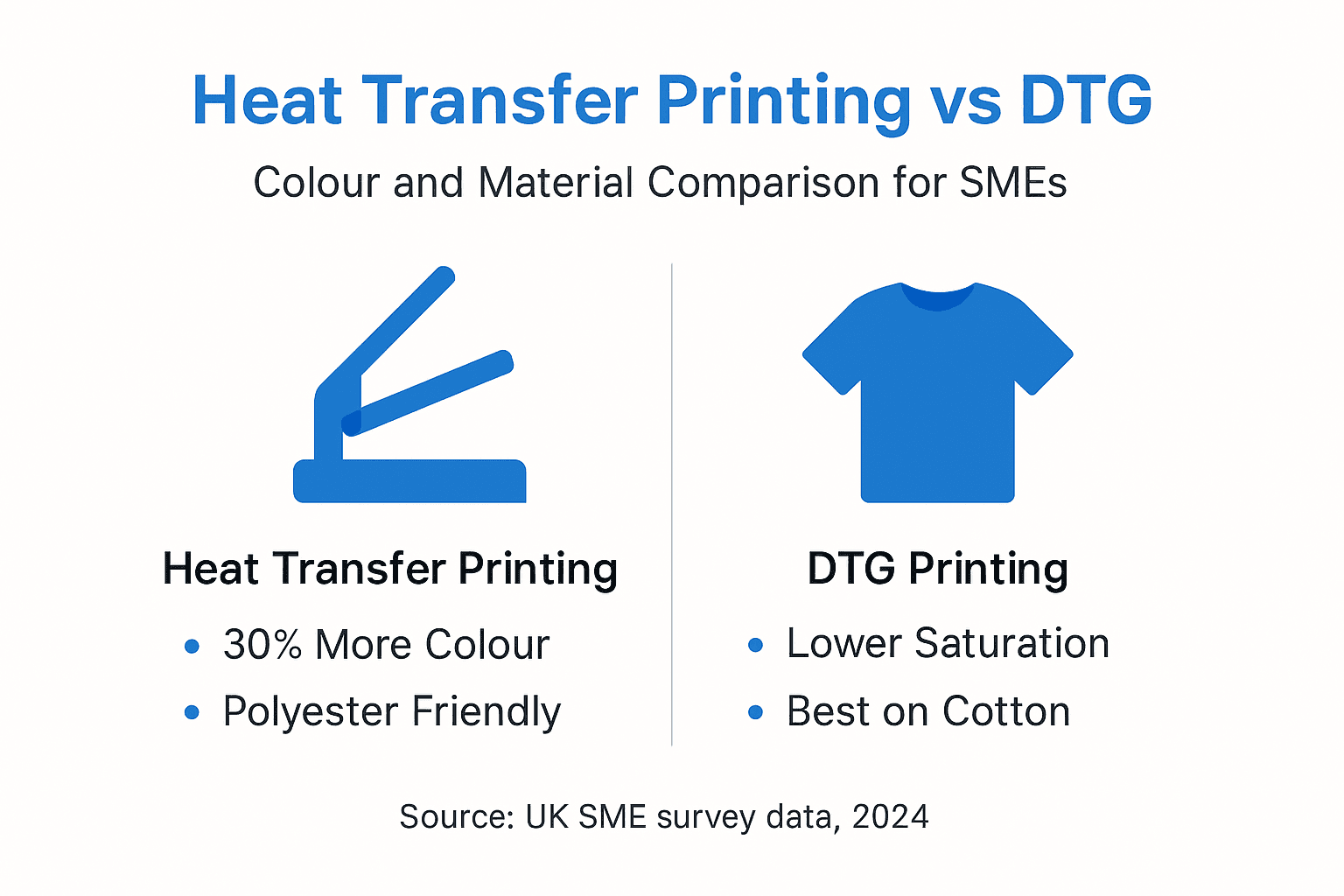
Heat transfer printing transfers designs onto substrates using heat and pressure, primarily through dye sublimation. The process involves printing designs onto special transfer paper with sublimation ink, then applying heat (typically 180-200°C) to vaporize the ink. The vaporized dye penetrates polymer fibers or coatings and solidifies, creating a permanent bond. Unlike direct-to-garment (DTG) printing which inks fabric directly, heat transfer printing uses pre-printed transfer papers allowing better colour vibrancy and design flexibility on polyester blends.
This method excels in producing vibrant, photographic-quality images on textiles like sportswear, casual apparel, and promotional clothing. It also works brilliantly on coated hard goods such as mugs, ceramic tiles, signage, and phone cases. The role of heat press in production is central: it applies consistent temperature and pressure to ensure complete ink transfer and bonding.
Key applications include:
- Sportswear and team uniforms requiring full-colour logos
- Promotional merchandise (mugs, coasters, keychains)
- Personalized gifts and awards
- Small batch fashion and bespoke apparel
Heat transfer printing delivers superior colour saturation on polyester blends compared to DTG. This comparison between heat transfer and DTG printing shows how sublimation achieves richer hues and sharper details on synthetic fabrics. For businesses targeting niche markets or testing new product lines, this flexibility is invaluable. With a base understanding established, let’s explore the detailed heat transfer printing process and material requirements next.
How Heat Transfer Printing Works: Science and Process
The heat transfer printing process transforms digital artwork into durable, vibrant prints through controlled heat and pressure. Understanding each step ensures consistent quality and helps you troubleshoot issues quickly.
- Design preparation: Create or adapt artwork in suitable software, ensuring colours are vivid and resolution is high (300 dpi minimum).
- Print onto sublimation transfer paper: Use a sublimation printer loaded with specialized dye sublimation ink to print your design in mirror image.
- Position transfer paper: Place the printed transfer face down onto the polyester or coated substrate, securing it to prevent shifting.
- Apply heat and pressure: Use a heat press set to 180-200°C for 30-60 seconds (times vary by substrate thickness and material type).
- Cool and peel: Allow the substrate to cool slightly, then peel away the transfer paper to reveal the bonded design.
Temperature and time are critical. Too low and ink won’t vaporize fully; too high and you risk scorching or colour distortion. The sublimation transfer process guide provides detailed settings for various materials.
Material selection determines success. Polyester fabrics (minimum 65% polyester content) or polymer-coated hard goods are essential. The polymer structure opens under heat, allowing gaseous dye molecules to enter and bond permanently. Natural fibers like cotton lack this polymer structure, so sublimation won’t work without special polymer coatings.
Essential equipment includes a quality heat press with adjustable temperature and pressure controls, a sublimation printer compatible with sublimation inks, and high-grade transfer paper. Investing in reliable equipment reduces defects and downtime.
Pro Tip: Always perform a test print on scrap material before running your final batch. This catches colour mismatches, incorrect temperatures, or pressure issues without wasting valuable substrates.
Common issues include ghosting (double images from paper shifting), uneven colour (inconsistent pressure), and faded prints (insufficient heat or time). Quality checks should examine colour accuracy, edge sharpness, and bond integrity. Having covered the process, explore why heat transfer printing is cost-effective and well-suited to no minimum order requirements.
Cost-Effectiveness and No Minimum Order Benefits
Heat transfer printing eliminates the financial barriers that restrict small UK and Ireland businesses from entering custom printing markets. Unlike screen printing, which demands expensive screens and setup fees, heat transfer requires only a heat press, printer, and transfer paper. Your upfront investment stays low, making it accessible even for startups and sole traders.
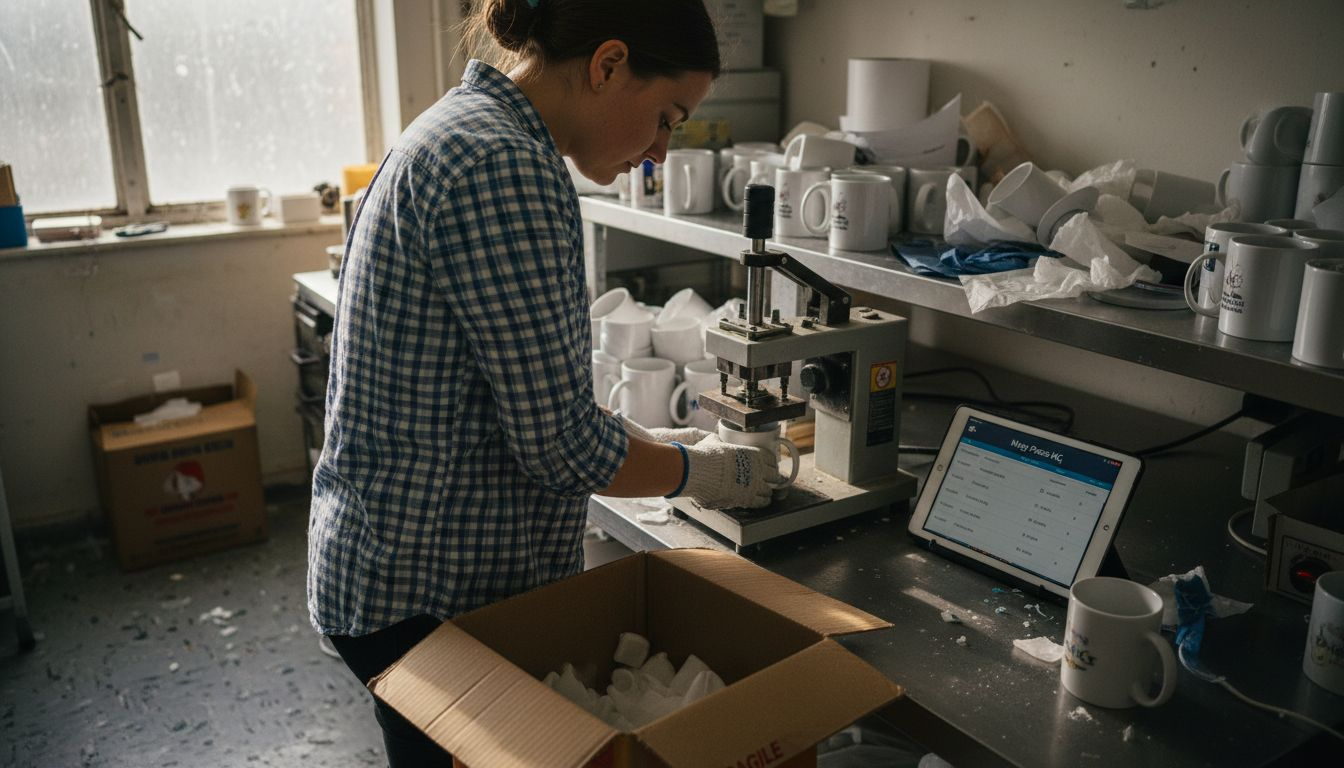
No minimum order constraints transform how you operate. You can fulfill single-item orders profitably or test new designs with batches of 10-20 units. Businesses leveraging no minimum order heat transfer printing can react quickly to market trends, customize to customer segments, and reduce unsold inventory risks, boosting operational agility. This flexibility means you stock less, waste less, and respond faster to customer preferences.
Key cost advantages include:
- Zero setup fees per design (no screens or plates)
- Lower material waste from printing exact quantities needed
- Reduced storage costs by producing on demand
- Ability to offer personalized products without price premiums
Operational agility rises when you can launch limited edition products or seasonal promotions without financial risk. If a design doesn’t sell, you’ve invested minimal resources. If it succeeds, you scale production instantly. The sublimation equipment setup for small businesses shows how modest initial investments yield professional results.
Statistic Highlight: UK SMEs adopting no minimum order printing report 40% lower unsold inventory costs compared to traditional bulk printing contracts, directly improving cash flow and profitability.
This model suits market testing, bespoke orders, and businesses serving niche communities. You gain the freedom to innovate without betting your budget on unproven products. For advantages of small-batch custom printing, the evidence is clear: flexibility drives growth. Next, address the importance of material compatibility and expected print quality to ensure best results.
Material Compatibility and Print Quality Considerations
Choosing the right substrate makes or breaks your heat transfer printing results. Polyester fabrics and polymer-coated items deliver optimal outcomes because their molecular structure bonds permanently with sublimated dye. You achieve vibrant colours, sharp details, and excellent wash durability on these materials.
Polyester content matters. Fabrics with 65% or higher polyester content produce vivid, long-lasting prints. Over 90% colour retention after 50+ washes at 40°C demonstrates the durability advantage. For textiles, blends work well but expect slight colour muting on lower polyester percentages.
Suitability extends far beyond clothing:
- Coated mugs, water bottles, and drinkware
- Ceramic tiles and plaques for signage or awards
- Phone cases, laptop covers, and tech accessories
- Metal panels and keychains with polymer coatings
- Fabric banners and flags (polyester weave)
Natural fibers like 100% cotton, linen, or silk don’t bond with sublimation dyes unless pre-treated with polymer coatings. This limitation requires alternative methods like DTG for pure cotton garments. Understanding why use sublimation for textiles clarifies when to choose heat transfer over other techniques.
Substrate selection directly impacts customer satisfaction. A print on 100% polyester sportswear remains vibrant after dozens of washes, while the same design on untreated cotton fades quickly. Always match substrate to application. For promotional products, explore using sublimation blanks for merchandise to ensure compatibility.
Pro Tip: Keep sample substrates on hand to show clients realistic colour and texture results. This manages expectations and builds trust, reducing disputes over finished products.
Quality considerations include substrate colour (white or light colours yield truest hues), coating evenness on hard goods, and fabric weave density. Higher thread counts produce sharper images. With product quality and materials clarified, dispel common misunderstandings that might deter businesses from choosing heat transfer printing.
Common Misconceptions About Heat Transfer Printing
Misconceptions about heat transfer printing prevent many UK businesses from adopting this flexible method. Let’s correct the top myths with facts.
Myth: Prints peel or crack easily after a few washes. Fact: Dye sublimation bonds ink inside polymer fibers at the molecular level, not on the surface. This creates a permanent bond resistant to peeling, cracking, or fading. Properly executed sublimation prints withstand 50+ commercial washes with minimal colour loss, making them suitable for sportswear and workwear.
Myth: Heat transfer only works on textiles. Fact: Heat transfer printing applies to 15+ substrate types including ceramics, coated metals, glass, and rigid plastics. Any item with a polymer coating or polyester composition accepts sublimation dye. This versatility makes it ideal for promotional items, awards, and personalized gifts. Explore sublimation versatility for promotional items to see the range.
Myth: You need large batches to make heat transfer cost-effective. Fact: Heat transfer thrives on small runs. With no setup fees or minimum orders, single-item production remains profitable. This suits bespoke orders, product testing, and niche markets where traditional printing methods fail economically.
Myth: Sublimation prints look washed out or dull. Fact: Sublimation delivers some of the most vibrant, photographic-quality prints available. Colours appear richer on polyester than DTG on cotton because dye penetrates fibers rather than sitting on top. The result is depth and saturation that stands out.
Myth: The process is too complex for small businesses. Fact: Heat transfer printing involves straightforward steps: print, press, peel. With basic training and quality equipment, even solo operators achieve professional results. The learning curve is gentle compared to screen printing or embroidery.
Clearing these misconceptions empowers you to evaluate heat transfer printing objectively. Now compare heat transfer printing with alternative printing methods highlighting advantages and disadvantages for SMEs.
Comparisons with Other Printing Methods
Understanding how heat transfer printing stacks up against DTG and screen printing helps you choose the best method for your business needs. Each technique has distinct strengths.
| Method | Best For | Cost Structure | Colour Quality | Substrate |
|---|---|---|---|---|
| Heat Transfer | Small batches, polyester, hard goods | Low setup, no minimums | Excellent on synthetics | Polyester, coated items |
| DTG | Cotton garments, complex designs | Moderate per unit, low setup | Good on cotton, limited on synthetics | Natural fibers |
| Screen Printing | Large volumes, simple designs | High setup, low per unit | Good, limited colours | Most fabrics |
Heat transfer printing achieves up to 30% higher colour saturation compared to typical DTG on synthetic fabrics. This advantage matters for sportswear, activewear, and products where vibrancy attracts buyers. DTG excels on 100% cotton but costs more per unit for small runs and requires pretreatment chemicals.
Screen printing suits large orders (500+ units) where per-unit costs drop significantly. However, setup fees and minimum orders make it impractical for businesses needing flexibility. Each colour requires a separate screen, limiting design complexity and increasing costs.
Key comparisons:
- Turnaround time: Heat transfer and DTG offer same-day or next-day fulfillment; screen printing needs days for setup.
- Design flexibility: Heat transfer handles full-colour photos effortlessly; screen printing struggles with gradients.
- Equipment investment: Heat transfer requires the least capital; screen printing demands the most.
- Scalability: Screen printing scales best for high volumes; heat transfer suits growing businesses with variable demand.
For UK SMEs exploring custom printing, heat transfer provides the lowest barrier to entry with the broadest substrate range. If you focus on cotton t-shirts exclusively, DTG may fit better. For diverse product lines and small batch flexibility, heat transfer wins. The top sublimation printers for 2026 offer affordable entry points for businesses ready to start.
This heat transfer vs DTG comparison dives deeper into technical specifications and real-world applications. Finally, provide actionable guidance for UK and Ireland businesses ready to implement heat transfer printing with no minimum orders.
Practical Implementation for UK and Ireland Businesses
Adopting heat transfer printing requires selecting the right equipment, sourcing quality supplies, and establishing efficient workflows. Here’s how to implement it successfully without overcomplicating the process.
Equipment Selection: Invest in a reliable heat press with digital temperature and pressure controls. Swing-away or clamshell designs suit different workspace layouts. Look for models with even heat distribution and adjustable pressure to handle various substrate thicknesses. Pair this with a sublimation printer compatible with your volume needs. Entry-level models suit businesses starting with 10-50 items weekly, while higher-capacity printers handle larger batches.
Supply Sourcing: Source sublimation blanks and transfer papers from trusted UK suppliers to ensure consistent quality and fast delivery. The essential sublimation equipment list covers must-have items. Buy transfer paper in bulk to reduce costs but store it in a cool, dry place to prevent moisture damage.
Workflow Optimization: Batch similar items together to minimize heat press adjustments. Set up workstations for design prep, printing, pressing, and quality inspection. This assembly line approach reduces changeover time and increases daily output. For businesses producing 20-100 units weekly, a streamlined workflow doubles efficiency.
Practical tips for success:
- Test temperature and time settings on sample substrates before full production runs
- Keep a log of successful settings for each material type
- Inspect every print for colour accuracy and bond quality before packaging
- Plan inventory based on confirmed orders to avoid storage costs
- Build relationships with local suppliers for urgent material needs
Pro Tip: Start with a core product range (5-10 items) and master those before expanding. Consistency builds reputation faster than variety with quality issues.
The step-by-step sublimation printing guide walks through detailed workflows. For comprehensive setup advice, the equipment setup guide for sublimation covers space planning, power requirements, and safety considerations. Summarize learnings and encourage readers to explore heat transfer printing solutions that fit their business needs.
Conclusion and Next Steps
Heat transfer printing delivers vibrant, durable customization without the financial barriers or rigid minimums that restrict small businesses. You’ve learned how sublimation bonds ink inside polyester and coated substrates, achieving professional results with modest equipment investments. The cost-effectiveness for small batches, combined with design flexibility and fast turnaround, makes this method ideal for UK and Ireland businesses seeking competitive advantages.
No minimum orders mean you test new products, serve niche markets, and respond to trends without inventory risk. Material compatibility extends beyond textiles to promotional items, awards, and personalized gifts. By dispelling durability myths and understanding process requirements, you’re equipped to implement heat transfer printing confidently.
Next steps: evaluate your product range, identify polyester or coated items that suit your market, and source reliable equipment and supplies. Start small, master core products, then expand as demand grows. Connect with specialist suppliers who understand your needs and provide ongoing support. Heat transfer printing offers the flexibility and quality modern businesses require to thrive in competitive markets. Lead naturally into promotional content highlighting relevant services and products for readers interested in starting heat transfer printing.
Explore Heat Transfer Printing Solutions with SubliBlanks Ltd
Ready to start heat transfer printing without minimum order constraints? SubliBlanks Ltd supplies everything UK and Ireland businesses need: sublimation blanks for textiles and hard goods, affordable heat presses built for reliability, and high-quality transfer papers that deliver consistent results. We understand the challenges small businesses face and provide expert resources to get you started confidently.
Choose sublimation blanks from SubliBlanks to ensure substrate compatibility and quality. Our high-quality sublimation paper packs reduce waste and deliver vibrant colour transfer. For equipment guidance, explore our essential sublimation equipment guide to build your setup efficiently. With no minimums and trade pricing, we support your growth from first print to scaling production. After summarizing and inspiring action, transition to the FAQ section addressing specific practical concerns and questions.
Frequently Asked Questions
What is the best substrate for heat transfer printing?
Polyester fabrics and polymer-coated items deliver optimal heat transfer printing results. The polymer structure bonds permanently with sublimation dye, ensuring vibrant colours and excellent wash durability. Avoid untreated natural fibers like cotton; they lack the polymer structure needed for dye bonding, resulting in faded or washed-out prints. For best substrates for sublimation, choose materials with at least 65% polyester content for textiles or confirmed polymer coatings for hard goods.
Can heat transfer printing be cost-effective for small orders?
Yes, heat transfer printing is highly cost-effective for small orders under 100 units. Low setup costs and no minimum order requirements make it ideal for small volume production, eliminating the fixed expenses that screen printing demands. This flexibility reduces waste and inventory costs, allowing businesses to fulfill bespoke orders profitably or test new designs without financial risk. For small-batch printing cost-effectiveness, heat transfer outperforms traditional methods for SMEs.
What equipment is needed to start heat transfer printing?
You need three essential items: a heat press with adjustable temperature and pressure controls, a sublimation printer loaded with compatible sublimation inks, and high-quality sublimation transfer paper. Optional but helpful additions include a heat-resistant mat, protective paper to prevent substrate scorching, and a variety of sublimation blanks or coated substrates for testing. The essential heat transfer printing equipment guide provides detailed specifications and recommendations for UK businesses starting out.
How durable are prints made with heat transfer printing?
Heat transfer prints bond inside polymer fibers at the molecular level, ensuring exceptional durability. Prints retain over 90% colour accuracy after 50+ commercial washes at 40°C, resisting fading, peeling, and cracking. This makes sublimated products suitable for sportswear, workwear, and promotional items requiring long-term use. The permanence of the dye bond means prints last the life of the substrate, maintaining professional appearance through repeated washing and handling. For durability of sublimation prints, heat transfer rivals or exceeds other printing methods.
Recommended
- Role of Heat Press in Production: Boosting Efficiency and Quality – SubliBlanks Ltd
- 6 Essential Items for Your Sublimation Equipment List – SubliBlanks Ltd
- 7 Essential Examples of Sublimation Equipment for Start-Ups – SubliBlanks Ltd
- Why Use Sublimation for Textiles: Lasting Impact and Value – SubliBlanks Ltd


