



What is inkjet sublimation? UK business guide 2026
Many entrepreneurs mistakenly believe sublimation printing works on all fabric types, leading to disappointing results and wasted materials. Inkjet sublimation demands polyester or polymer-coated substrates to achieve its signature vibrant, durable prints. This guide clarifies the technology, process, and strategic advantages of inkjet sublimation for UK and Irish businesses seeking reliable custom printing solutions.
Table of Contents
- What Is Inkjet Sublimation?
- How Does Inkjet Sublimation Work? The Process Explained
- Comparison Of Inkjet Sublimation With Other Printing Methods
- Common Misconceptions About Inkjet Sublimation
- Starting And Scaling Your Inkjet Sublimation Business
- Print Quality, Durability, And Product Selection
- Conclusion And Next Steps For Businesses
- Explore Sublimation Supplies For Your Business
- Frequently Asked Questions
Key takeaways
| Point | Details |
|---|---|
| Technology fundamentals | Inkjet sublimation uses heat to transform dye into gas that chemically bonds with polyester surfaces for permanent, vibrant prints. |
| Equipment essentials | Requires specialised sublimation inks, compatible printers, calibrated heat presses, and polymer-coated substrates for successful transfers. |
| Comparative advantages | Offers superior durability and colour vibrancy over screen printing and DTG but demands specific polyester-based materials. |
| Common misconceptions | Standard inkjet printers cannot perform sublimation, and prints only bond with polyester or coated surfaces, not natural fibres. |
| Business considerations | Successful ventures carefully select equipment, source quality blanks, and target niches suited to sublimation’s material requirements. |
What is inkjet sublimation?
Inkjet sublimation represents a transformative printing method where solid dye inks turn directly into gas under heat, bypassing the liquid phase entirely. This gas then penetrates polyester fibres or polymer coatings, creating a permanent chemical bond that embeds colour within the material rather than sitting atop it. The precision of inkjet technology ensures accurate dye deposition onto transfer paper before the crucial heat press stage.
The sublimation mechanism relies on controlled thermal energy. Heat presses operating at 180 to 200°C apply consistent pressure for specific durations, triggering the dye sublimation chemical bond with polyester substrates. This temperature range activates the phase change whilst protecting substrate integrity. Lower temperatures fail to open polyester pores sufficiently, whilst excessive heat risks scorching or warping materials.
Material compatibility defines sublimation’s scope. Polyester content must exceed 50% for satisfactory results, with 100% polyester yielding optimal vibrancy. Polymer-coated ceramics, metals, and rigid substrates also accept sublimation dyes effectively. Natural fibres like cotton lack the molecular structure necessary for dye bonding, making them incompatible with this process.
Key characteristics distinguishing inkjet sublimation:
- Dye becomes part of the material structure, not a surface layer
- Prints resist cracking, peeling, or fading under normal use
- Colour vibrancy exceeds traditional printing methods
- Substrate limitations restrict application to polyester-based products
- Requires specialised equipment and consumables
Pro tip: Invest in a reliable heat press with digital temperature controls and even pressure distribution. Temperature variations of just 10°C can dramatically affect transfer quality, causing incomplete bonding or substrate damage that ruins entire production runs.
How does inkjet sublimation work? The process explained
The inkjet sublimation workflow involves precise sequential steps that transform digital designs into permanent, vibrant prints. Understanding this process helps businesses maintain consistency and troubleshoot quality issues effectively.
- Design creation and preparation using graphic software with colour profiles optimised for sublimation inks
- Printing the mirrored image onto specialised sublimation transfer paper using sublimation inks
- Positioning the printed transfer paper face-down against the polyester substrate
- Applying controlled heat and pressure using a calibrated heat press
- Removing the transfer paper to reveal the permanently embedded design
Sublimation inks contain dispersed dyes engineered to vaporise at specific temperatures. Unlike standard inkjet inks that dry on paper surfaces, sublimation inks remain solid until heated. The transfer paper’s coating prevents premature absorption whilst allowing controlled dye release during pressing. Reverse printing proves essential because the design transfers as a mirror image during the heat press stage.
Heat press settings directly determine print quality and durability. Temperature typically ranges from 180 to 200°C, with pressure set according to substrate thickness and composition. Timing varies from 30 seconds for thin fabrics to 60 seconds for rigid materials like ceramic mugs. Essential equipment includes compatible sublimation printers and heat presses calibrated to manufacturer specifications.
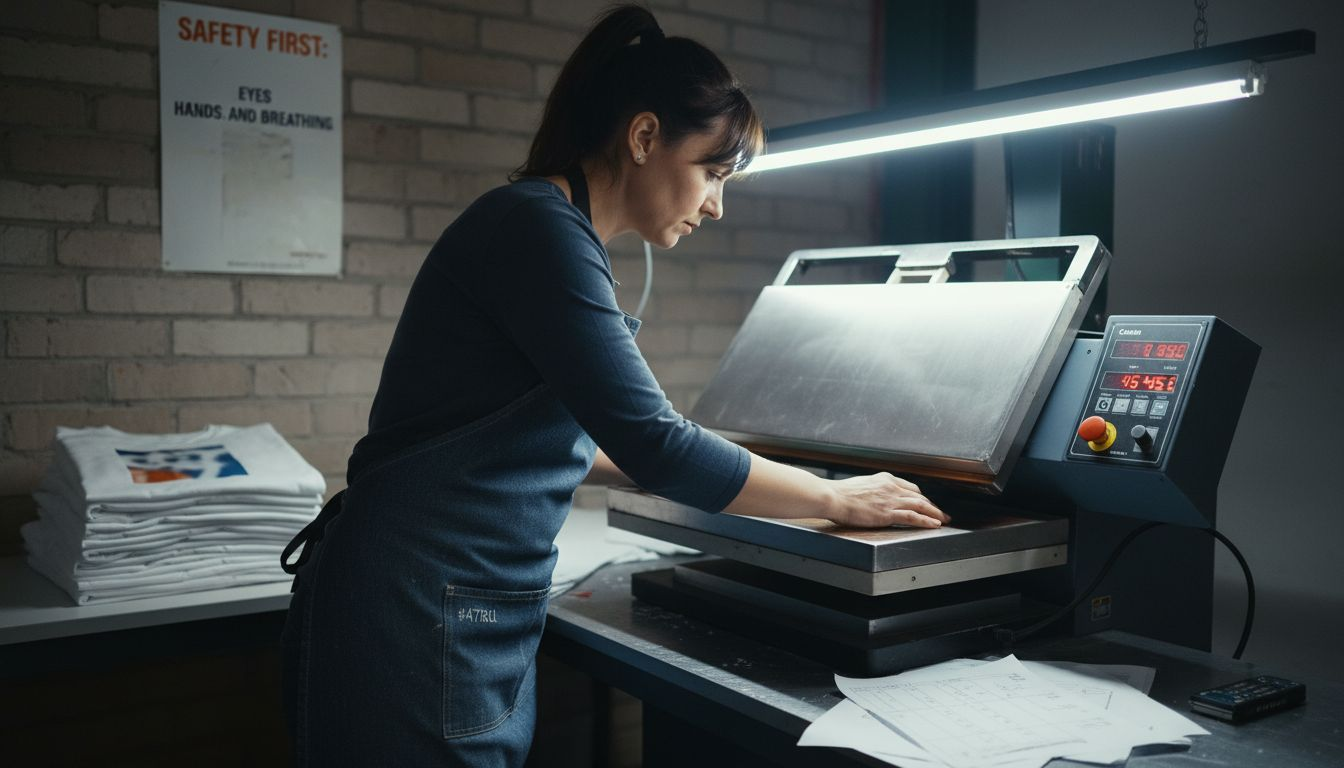
Substrate preparation matters significantly. Polyester fabrics require pre-pressing to remove moisture and wrinkles that create uneven pressure points. Polymer-coated items need cleaning to eliminate oils or residues that block dye penetration. Protective sheets prevent ink bleed and guard heating elements from contamination.
Understanding the sublimation transfer process enables businesses to diagnose common problems. Ghosting occurs when substrates shift during pressing, whilst faded areas indicate insufficient temperature or pressure. Successful operators master these variables through testing and calibration, following detailed sublimation printer setup guides and comprehensive step-by-step sublimation printing resources.
Pro tip: Use premium sublimation transfer paper with consistent coating thickness. Lower-quality papers produce uneven dye release, creating blotchy prints and wasting expensive substrates. The small additional cost per sheet delivers dramatically better consistency across production runs.
Comparison of inkjet sublimation with other printing methods
Choosing the optimal printing method impacts product quality, production costs, and market positioning. Each technique offers distinct advantages suited to specific business models and product types.
| Feature | Inkjet Sublimation | Screen Printing | Direct-to-Garment (DTG) |
|---|---|---|---|
| Durability | 3+ years, embedded dye | 2-3 years, surface ink | 1-2 years, prone to cracking |
| Colour vibrancy | Exceptional, full spectrum | Good, limited colours per setup | Good, full colour capable |
| Material compatibility | Polyester only | Cotton, blends, polyester | Cotton, blends |
| Setup complexity | Low, digital workflow | High, requires screens | Medium, printer calibration |
| Minimum order viability | Single units profitable | Bulk orders economical | Small batches viable |
| Production speed | Moderate, heat press limited | Fast for large volumes | Slow, sequential printing |
Inkjet sublimation’s quicker setup times and superior colour vibrancy stem from its digital workflow and dye infusion chemistry. Screen printing demands separate screens for each colour, making small orders uneconomical. DTG prints directly onto garments but applies ink as a surface layer vulnerable to wear.
Durability differences prove substantial. DTG prints fade or crack within 1-2 years, whilst sublimation maintains vibrancy beyond three years because dyes embed within fibres. Screen printing falls between these extremes, with proper curing extending lifespan to three years under normal conditions.
Key advantages and limitations for business decisions:
- Sublimation excels for personalised polyester products with complex designs and small order quantities
- Screen printing suits large cotton garment runs with simple, bold graphics
- DTG bridges the gap, handling cotton items with full-colour designs in moderate quantities
- Sublimation’s material restriction limits market scope but ensures unmatched quality for compatible substrates
- Investment costs favour sublimation for startups due to lower equipment and setup expenses
Businesses targeting the name badge, sportswear, or promotional products sectors benefit most from sublimation’s strengths. Understanding essential sublimation equipment requirements helps entrepreneurs assess whether this method aligns with their niche and budget constraints whilst monitoring sublimation printing market trends for emerging opportunities.
Common misconceptions about inkjet sublimation
Several persistent myths about sublimation printing lead entrepreneurs to make costly equipment purchases or attempt impossible applications. Clearing these misconceptions prevents frustration and financial losses.
The most damaging misconception suggests sublimation works on any fabric. Sublimation chemistry demands polyester molecules to accept and retain gaseous dyes. Cotton, linen, wool, and other natural fibres lack the necessary molecular structure for dye bonding. Attempts to sublimate onto these materials produce faint, washed-out images that disappear after initial washing. Only polyester fabrics or items with polymer coatings enable successful sublimation transfers.
Many beginners assume standard inkjet printers can perform sublimation with simple ink swaps. This proves categorically false. Sublimation requires specialised inks formulated to sublimate at precise temperatures, and printer mechanisms must accommodate these unique ink properties. Regular desktop inkjet printers use water-based or pigment inks incompatible with the sublimation process. Only dedicated sublimation printers or specifically converted models with appropriate ink delivery systems work reliably.
Another widespread belief positions sublimation prints as surface applications similar to screen printing or heat transfer vinyl. This fundamentally misunderstands sublimation chemistry. During heat pressing, dyes transform into gas and penetrate opened polyester pores, creating permanent molecular bonds. The result embeds colour within the material structure rather than applying a separate layer atop it. This distinction explains sublimation’s superior durability and resistance to cracking.
Critical points dispelling common errors:
- Sublimation exclusively bonds with polyester or polymer-coated surfaces, never natural fibres
- Converted inkjet printers require complete ink system replacement, not simple cartridge swaps
- Temperature and pressure parameters demand precision, with variations causing transfer failures
- Substrate quality directly affects results, making blank selection crucial for consistent output
- Colour accuracy requires ICC profiles matched to specific ink and paper combinations
Pro tip: Before committing to bulk substrate purchases, request samples and conduct test prints. Material suppliers occasionally mislabel products or substitute lower polyester content versions. Testing reveals coating quality and true polyester percentage, preventing production disasters and customer complaints when you understand why to choose sublimation blanks carefully.
Starting and scaling your inkjet sublimation business
Launching a sublimation printing venture requires strategic equipment selection, realistic budgeting, and careful market positioning. UK and Irish entrepreneurs face specific considerations regarding supplier access and niche opportunities.
Essential startup equipment includes sublimation printers such as converted Epson EcoTank models or dedicated Sawgrass systems, heat presses with precise controls, sublimation inks, transfer paper, and diverse substrate inventory. Initial investment typically ranges from £800 to £2,500 depending on production capacity and equipment quality. Budget-conscious startups often begin with converted consumer printers whilst established operations invest in commercial-grade systems.
Market research from 2025 shows 35% of UK SMEs adopted AI and digital printing technologies, signalling strong demand for customised products. This trend positions sublimation businesses favourably within the expanding personalisation sector. Identifying profitable niches proves essential for competitive differentiation.
Popular sublimation product categories include:
- Corporate name badges and identification solutions for businesses and events
- Personalised mugs and drinkware for gifts and promotional campaigns
- Custom sportswear and team uniforms leveraging polyester performance fabrics
- Branded phone cases and tech accessories appealing to younger demographics
- Home décor items including cushions, wall art, and personalised textiles
Scaling production requires systematic workflow optimisation. Batch processing similar designs reduces setup time, whilst maintaining equipment calibration ensures consistent quality across volume orders. Inventory management balances popular blank stock against storage costs, with reliable supplier relationships enabling rapid replenishment.
Sourcing considerations for UK operations prioritise domestic suppliers offering fast shipping and responsive support. Evaluating multiple vendors prevents supply chain disruptions whilst comparing pricing structures identifies cost savings opportunities. Trade wholesalers providing diverse product ranges without minimum order requirements suit startup budgets and testing phases. Comprehensive sublimation business setup guides and practical sublimation blanks tips help new operators avoid common pitfalls.
Pro tip: Start with two to three focused product categories rather than attempting full-range offerings immediately. Mastering specific items builds reputation and streamlines processes before expanding inventory. This approach reduces initial capital requirements whilst establishing quality standards and efficient production workflows, positioning businesses to capitalise on emerging UK small business trends through 2026.
Print quality, durability, and product selection
Achieving consistent, professional results demands attention to substrate quality, equipment maintenance, and environmental factors affecting the sublimation process. Understanding these variables separates successful operations from struggling startups.
Substrate material and coating quality directly determine final print vibrancy and longevity. Premium blanks feature uniform polymer coatings that accept dyes evenly, whilst inferior products show streaking or blotchy colour distribution. Polyester percentage matters significantly, with 100% polyester fabrics delivering far superior results compared to 50/50 blends. White or light-coloured substrates showcase designs optimally because sublimation inks appear translucent rather than opaque.
Sublimation prints maintain colour vibrancy for three or more years under normal use and washing conditions. Factors accelerating degradation include prolonged UV exposure, harsh detergents, and mechanical abrasion. Indoor applications like name badges and mugs retain appearance longer than outdoor items subjected to weather extremes. Educating customers about care instructions extends product lifespan and reduces warranty claims.
Ink and paper quality prove equally critical. Genuine sublimation inks formulated for specific printer models ensure accurate colour profiles and proper sublimation temperatures. Compatible aftermarket inks may reduce costs but often produce inconsistent results requiring extensive testing. Transfer paper coating thickness affects dye release rates, with premium papers delivering sharper details and more vivid colours.
Best practices for maintaining superior output:
- Calibrate heat presses weekly using temperature strips to verify actual heating element temperatures
- Store sublimation paper in sealed packaging to prevent moisture absorption affecting transfers
- Clean printer heads regularly following manufacturer schedules to prevent clogs and colour shifts
- Control workspace humidity between 40% and 60% for optimal ink performance and paper stability
- Test new blank suppliers with small sample orders before committing to bulk purchases
Environmental conditions impact results more than many operators realise. High humidity causes transfer paper to absorb moisture, leading to steam explosions during pressing that create print defects. Low humidity increases static electricity, attracting dust particles that mar finished surfaces. Temperature extremes affect ink viscosity and paper dimensional stability.
Comparing blank suppliers reveals significant quality variations justifying price differences. Testing identical designs across multiple brands identifies coating consistency, colour accuracy, and durability characteristics. This empirical approach prevents bulk purchases of substandard materials that compromise customer satisfaction. Resources explaining the benefits of sublimation blanks and demonstrating proper testing protocols help businesses establish quality standards and maintain competitive advantages through reliable sublimation print quality.
Conclusion and next steps for businesses
Inkjet sublimation delivers unmatched vibrancy, durability, and customisation capabilities for polyester and polymer-coated products. The technology’s chemical dye bonding process creates permanent prints resistant to fading, cracking, and peeling, distinguishing it from surface application methods.
Successful implementation requires correct equipment selection, quality substrate sourcing, and process mastery through systematic testing. UK and Irish businesses targeting personalised products, corporate branding, or niche markets benefit most from sublimation’s strengths whilst acknowledging its material limitations.
Starting small allows entrepreneurs to refine techniques, establish quality standards, and identify profitable product categories before scaling production. Careful budgeting balances equipment investment against market demand, with supplier relationships supporting sustainable growth.
Exploring comprehensive UK sublimation supplies from established trade wholesalers provides the foundation for launching and expanding sublimation ventures. Combining quality materials with technical knowledge positions businesses to deliver exceptional products that build customer loyalty and drive repeat orders.
Explore sublimation supplies for your business
Ready to launch or expand your sublimation printing operation? SubliBlanks offers an extensive range of sublimation blanks perfect for diverse applications, from professional name badges to personalised drinkware. Our trade wholesale model eliminates minimum order quantities, letting you test products and scale inventory according to demand.
Discover essential consumables including sublimation paper and protective Teflon sheets that ensure consistent, professional results. Our round MDF name badge with pin proves ideal for corporate identification, whilst our A4 sublimation paper pack delivers reliable transfers every time. Protect your heat press investment with our heat press Teflon sheet designed for thousands of uses.
UK-based operations ensure fast shipping and responsive support, helping new businesses overcome initial challenges and established operators maintain supply consistency. Browse our complete catalogue to find the perfect substrates and accessories for your sublimation venture.
Frequently asked questions
What materials are compatible with inkjet sublimation?
Inkjet sublimation requires polyester fabrics with minimum 50% content or items featuring polymer coatings applied to ceramics, metals, and rigid substrates. Natural fibres like cotton, linen, and wool lack the molecular structure necessary for dye bonding, making them completely unsuitable for this process. Always verify substrate specifications before purchasing to ensure compatibility.
Can I use a regular inkjet printer for sublimation?
Regular inkjet printers cannot perform sublimation transfers even with ink cartridge changes. Only printers specifically designed for sublimation inks or professionally converted models with complete ink system replacements work reliably. Attempting sublimation with standard equipment produces failed transfers and potential printer damage, wasting materials and time.
How long does a sublimation print typically last?
Sublimation prints on quality polyester substrates maintain colour vibrancy for three or more years without fading, peeling, or cracking under normal use conditions. This durability substantially exceeds DTG prints lasting one to two years and rivals properly cured screen printing. Indoor applications protected from UV exposure often last considerably longer than outdoor items.
What is the initial cost to start an inkjet sublimation business?
Startup equipment costs typically range from £800 to £2,500 depending on production capacity requirements and equipment quality. Essential items include a sublimation printer (£300 to £600 for converted models), heat press (£200 to £800), sublimation inks, transfer paper, and initial substrate inventory. UK sourcing options and trade wholesalers with no minimum orders help reduce initial capital requirements whilst testing market viability.


