



Why use sublimation printers for cost-effective custom merchandise
Many print shop owners mistakenly believe sublimation printing works on all fabric types. The truth is simpler yet more specific: sublimation only bonds effectively with polyester or polymer-coated surfaces. This guide explains why sublimation printers deliver exceptional value for UK and Ireland print shops producing custom merchandise in small to medium batches, combining vibrant durability with genuine cost efficiency.
Table of Contents
- Understanding Sublimation Printing Technology
- Advantages Of Sublimation Printing For Print Shops
- Common Misconceptions About Sublimation Printing
- Comparing Sublimation Printing With Other Methods
- Practical Tips For Getting Started With Sublimation Printing
- Maximising Business Success With Sublimation Printing In The UK And Ireland
- Frequently Asked Questions
Key takeaways
| Point | Details |
|---|---|
| Chemical bonding process | Sublimation infuses dye into polyester surfaces using heat, creating vibrant, durable prints that won’t crack or peel. |
| Consistent cost structure | Printing one item costs the same as printing a thousand, making small batches economically viable with no minimum order requirements. |
| Material requirements | Only works on polyester or polymer-coated substrates; unsuitable for cotton or dark-coloured fabrics. |
| Environmental advantage | Water-based inks produce minimal waste compared to traditional screen printing methods. |
| Accessible setup | Simple equipment requirements make sublimation printing achievable for small UK and Ireland print shops. |
Understanding sublimation printing technology
Sublimation printing operates through a fascinating chemical transformation. Heat converts solid dye directly into gas, skipping the liquid phase entirely. This gaseous ink then penetrates polyester fibres or polymer coatings, bonding at the molecular level.
The process requires precise conditions: temperatures between 180°C and 200°C combined with firm, even pressure. This combination opens the polymer structure temporarily, allowing dye molecules to embed themselves deeply. When the material cools, the polymers close around the ink, trapping colour permanently within the substrate rather than merely coating the surface.
Unlike traditional printing methods that layer ink on top of fabric, sublimation produces vibrant, photo-quality images with rich colour gradients and no raised texture. The chemical bond creates prints that feel like part of the original material because they genuinely are integrated into the fibres.
Your design workflow requires one critical adjustment: mirror all images before printing. Transfer paper receives the reversed design, which then flips correctly during the heat press application. This mirroring step prevents backwards text and ensures proper image orientation on the final product.
The sublimation transfer process starts with printing onto specialised transfer paper using sublimation ink. Position this printed paper face down onto your polyester blank, then apply heat and pressure. Within seconds, the transformation occurs, infusing permanent colour that withstands countless washes without fading.
Pro Tip: Always test new materials with a small corner press first. Different polyester blends and polymer coatings respond slightly differently to heat, so confirming optimal temperature prevents wasted materials.
Advantages of sublimation printing for print shops
Durability sets sublimation apart from surface printing methods. Because ink bonds chemically within fibres, prints resist fading, cracking, and peeling indefinitely. Customers can wash sublimated items repeatedly without colour degradation, making this method ideal for frequently used merchandise like sportswear and promotional textiles.
Cost efficiency transforms how you price small orders. Traditional screen printing demands expensive setup for each design, making single items prohibitively costly. Printing one item costs the same as printing a thousand with sublimation, eliminating minimum order barriers entirely. You can profitably fulfil orders for one personalised mug or five custom t-shirts without financial penalty.

Production speed improves dramatically. No screen preparation, no weeding vinyl, no curing time between colours. Design, print onto transfer paper, press, and deliver. This streamlined workflow lets you turn around orders within hours rather than days, satisfying customers who need quick delivery.
Environmental responsibility increasingly influences purchasing decisions. Sublimation printing uses water-based inks and produces minimal waste compared to traditional screen printing techniques. No chemical rinses, no excess ink disposal, no rejected screens. This eco-friendly profile appeals to environmentally conscious clients whilst reducing your operational waste management costs.
Colour vibrancy exceeds most competing methods. The molecular bonding creates rich, saturated hues with smooth gradients and photographic detail. Complex designs with multiple colours print as easily as simple logos, giving you creative freedom to accept challenging projects competitors might decline.
Pro Tip: Highlight your environmental advantages using sublimation textiles in your marketing materials. Many UK and Ireland businesses actively seek suppliers with sustainable practices, giving you a competitive edge.
Common misconceptions about sublimation printing
The fabric compatibility myth persists stubbornly. Sublimation requires polyester or polymer-coated substrates and doesn’t work on cotton, canvas, or other natural fibres. The chemical bonding depends on synthetic polymers that natural fibres simply don’t possess. Attempting sublimation on cotton produces faded, washed-out results that disappear after laundering.
White ink doesn’t exist in sublimation printing. The technology relies entirely on substrate colour showing through unprinted areas. White elements in your design must correspond to white or light-coloured material underneath. This limitation means dark fabrics produce poor results because colours appear muddy against dark backgrounds.
Cost assumptions mislead some shop owners. Whilst sublimation excels at small batches, extremely high-volume orders of simple designs might prove more economical with screen printing. Sublimation ink and transfer paper costs accumulate per item, whereas screen printing setup costs amortise across thousands of units.
Colour substrate requirements matter significantly. Light or white materials showcase vibrant colours brilliantly. Grey or pastel substrates mute your designs. Dark materials render sublimation impractical because transparent ink cannot show against dark backgrounds. Always match substrate colour to design requirements for optimal results.
Understanding these sublimation transfer limitations prevents disappointing customers and wasted materials. Set clear expectations about material requirements upfront, steering clients towards appropriate substrates for their vision.
Comparing sublimation printing with other methods
Each printing technology serves specific production needs. Screen printing dominates high-volume orders with simple designs because setup costs spread across thousands of items. However, small batches become expensive due to screen preparation labour and materials. Colour limitations also constrain complex designs.
Direct-to-garment printing handles cotton beautifully and reproduces photographic detail well. But prints often feel slightly textured and may fade faster than sublimation. DTG also requires fabric pretreatment for optimal results, adding production steps and materials costs.
Vinyl printing offers quick turnaround for bold, simple designs with excellent opacity on dark fabrics. The applied vinyl creates noticeable texture and thickness, though, which some customers dislike. Weeding intricate designs consumes significant labour time, and vinyl can peel or crack with repeated washing or stretching.
Sublimation delivers lasting impact through permanent chemical bonding, producing vibrant prints with no surface texture. The consistent per-item cost makes it ideal for personalised merchandise and small batches. Material restrictions to polyester limit some applications but ensure exceptional durability on compatible substrates.
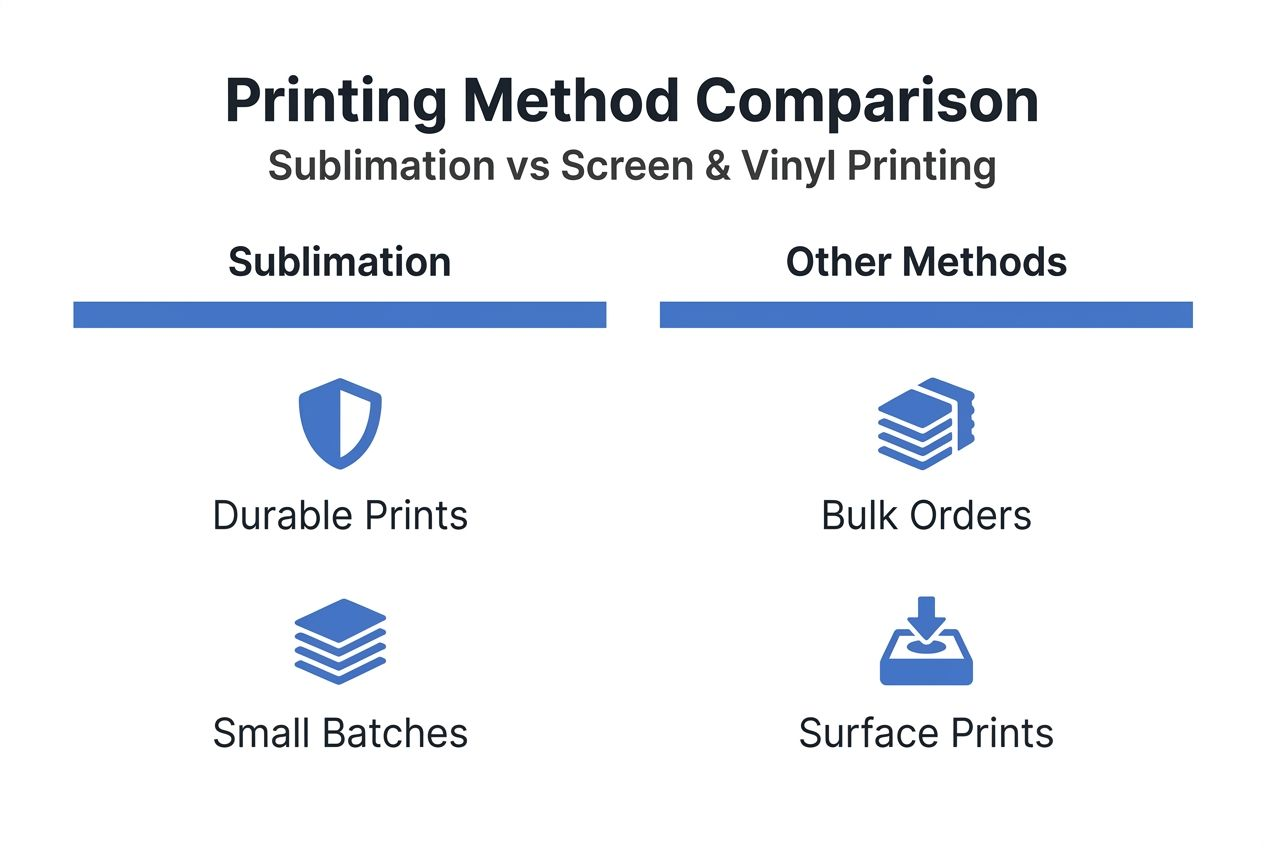
| Method | Best For | Limitations | Durability |
|---|---|---|---|
| Sublimation | Small batches, polyester, photo-quality | Polyester only, no dark fabrics | Excellent, permanent bonding |
| Screen Printing | High volumes, simple designs, cotton | Expensive setup, colour limits | Very good for proper curing |
| Direct-to-Garment | Cotton, complex designs, small runs | Texture, fading, pretreatment needed | Good with proper care |
| Vinyl | Bold logos, dark fabrics, quick jobs | Texture, weeding labour, peeling risk | Moderate, depends on quality |
Pro Tip: Match printing method to substrate and order volume. Keep multiple technologies available to serve diverse customer needs rather than forcing all projects through one process.
Practical tips for getting started with sublimation printing
Your essential equipment list remains surprisingly brief. Sublimation printers require specialized ink, sublimation transfer paper, a reliable heat press, and polyester or polymer-coated blanks. This minimal setup enables small business operators to enter the market without enormous capital investment.
Follow this workflow for consistent results:
- Design preparation: Create or modify your artwork digitally, ensuring all elements mirror correctly for transfer.
- Printer setup: Load sublimation ink cartridges and specialised transfer paper, adjusting printer settings for paper type.
- Print execution: Print your mirrored design onto transfer paper, allowing ink to dry completely before handling.
- Heat press preparation: Preheat your press to the recommended temperature for your specific substrate, typically 180°C to 200°C.
- Transfer application: Position transfer paper face down on your blank, apply firm pressure for the specified duration.
- Cooling and inspection: Remove the blank carefully, allow cooling, then inspect for colour accuracy and coverage.
Temperature and pressure precision determines quality outcomes. Too little heat produces faded colours that wash out quickly. Excessive heat can scorch materials or create yellowing. Insufficient pressure leaves patchy coverage with white spots. Too much pressure may damage delicate substrates.
Start with common sublimation blanks like polyester t-shirts, ceramic mugs, and hardboard coasters. These forgiving materials help you master technique before attempting complex substrates. Build confidence with simple projects, then expand into phone cases, mousepads, and specialised promotional items.
Refer to our comprehensive sublimation printer setup guide for detailed calibration instructions and troubleshooting common issues during initial equipment configuration.
Pro Tip: Maintain a temperature and time log for different materials. Substrates vary in their optimal settings, and recording successful parameters saves trial and error on future orders.
Maximising business success with sublimation printing in the UK and Ireland
Personalised merchandise demand continues growing across UK and Ireland markets. Customers increasingly value unique items that reflect individual identity or brand personality. Sublimation’s ability to produce small runs economically positions your shop to capture this personalisation trend without inventory risk.
Flexible order sizes suit modern retail patterns. Corporate clients need twenty branded mugs for an event. Sports teams want fifteen custom jerseys. Individuals order single commemorative gifts. Your sublimation equipment setup handles all these scenarios profitably because production costs remain consistent regardless of quantity.
Environmental consciousness influences purchasing decisions more each year. Marketing your low-waste, water-based printing process attracts environmentally aware customers actively seeking sustainable suppliers. This positioning differentiates your business from competitors still using chemical-intensive traditional methods.
Product durability builds customer loyalty and generates repeat business. When sublimated items maintain vibrant colours through countless washes, satisfied customers return for additional products and recommend your services. Quality outcomes create marketing momentum through word-of-mouth referrals.
Speed and responsiveness provide competitive advantages. Quick turnaround times let you accept rush orders that competitors decline, commanding premium pricing for expedited service. The streamlined sublimation workflow supports rapid production without sacrificing quality.
Diversify your offerings with sublimation promotional items including corporate gifts, event merchandise, and branded giveaways. These applications tap into consistent business-to-business demand whilst showcasing your capabilities to new customer segments.
Frequently asked questions
Why does substrate colour matter for sublimation printing?
Sublimation ink is transparent rather than opaque, meaning it cannot cover dark backgrounds. White or light-coloured substrates allow colours to appear vibrant and true to your design. Dark materials absorb light, making sublimated colours appear muddy or nearly invisible.
Can sublimation printing work on cotton or cotton blends?
Pure cotton lacks the polymer structure needed for dye bonding, making sublimation ineffective. Blends containing at least 65% polyester can accept sublimation, though colours appear less vibrant than on 100% polyester. Natural fibres simply don’t hold sublimation dye permanently.
How do I maintain vibrant sublimated prints through multiple washes?
Wash sublimated items in cold or warm water using mild detergent, avoiding bleach or harsh chemicals. Turn garments inside out to reduce friction on printed surfaces. Tumble dry on low heat or air dry. The chemical bonding resists fading naturally, but gentle care extends longevity further.
What environmental benefits does sublimation offer compared to screen printing?
Sublimation produces minimal waste because you print only needed quantities with no excess ink disposal. Water-based inks eliminate harsh chemical usage and toxic runoff. No screen cleaning or reclamation processes means reduced water consumption. The streamlined process generates less manufacturing waste overall.
What are typical start-up costs for sublimation printing in a small UK print shop?
Basic setup including an entry-level sublimation printer, heat press, starter ink supply, and transfer paper typically ranges from £800 to £2,000. Professional-grade equipment costs more but offers better reliability and output quality. Substrate inventory varies by business model, with starter packs of common blanks adding £200 to £500 initially.
Start your sublimation printing journey with the right supplies
Transitioning to sublimation printing requires reliable equipment and quality materials that deliver consistent results. Your success depends on sourcing sublimation blanks, printers, and consumables from suppliers who understand print shop needs.
We supply everything you need to launch or expand your sublimation printing capabilities. Our trade wholesale model eliminates minimum order quantities, letting you purchase exactly what each project requires without tying up capital in excess inventory. Browse our comprehensive range of sublimation printers, transfer papers, polyester blanks, and heat presses designed specifically for UK and Ireland print shops. Whether you’re producing personalised mugs, custom sportswear, or promotional merchandise, we stock the materials that help you deliver exceptional quality to your customers. Visit our sublimation equipment collection to explore professional-grade solutions that fit your production volume and budget.
Recommended
- How to Use Sublimation Blanks for Custom Merchandise – SubliBlanks Ltd
- Sublimation for Promotional Items: Boosting Customisation and Value – SubliBlanks Ltd
- Sublimation Blanks: Powering Custom Product Success – SubliBlanks Ltd
- Why Use Sublimation for Textiles: Lasting Impact and Value – SubliBlanks Ltd


