



DTF supplies advantages: a business guide to cost-effective printing
TL;DR:
- DTF printing offers small and medium businesses a cost-effective way to expand product ranges with minimal setup costs and versatile fabric compatibility.
- Choosing high-quality supplies and managing printer maintenance diligently ensures durable, vibrant, and washable transfers for various substrates.
DTF (direct-to-film) printing has quietly become one of the most practical routes for UK and Ireland businesses looking to expand their product range without overhauling their entire operation. The dtf supplies advantages are real and measurable, from lower entry costs to the ability to print vivid, detailed designs on almost any fabric. But the quality of your results depends entirely on the supplies you choose. This article breaks down the key advantages, flags what most guides miss, and gives you a practical framework for making better sourcing decisions.
Table of Contents
- Cost efficiency and low setup expenses
- Versatility across materials and design complexity
- Quality and durability benefits of premium supplies
- Scalability and workflow efficiency with dtf supplies
- Key considerations for sourcing dtf supplies in the UK and Ireland
- Rethinking dtf supplies: beyond typical advantages
- Discover quality dtf supplies at SubliBlanks
- Frequently asked questions
Cost efficiency and low setup expenses
One of the most compelling dtf supplies advantages for small and medium businesses is the low barrier to entry. Screen printing requires physical screens, emulsions, and separate setups for each colour in a design. DTF sidesteps all of that. You print directly onto film, cure adhesive powder, and press. That is it.
The cost advantages of dtf become especially clear when you are dealing with short runs. DTF print costs average £1 to £5 per piece depending on size and quantity, which makes it genuinely competitive against screen printing for orders under 50 units, where screen setup fees eat into margins fast.
For a small operation running perhaps 50 to 100 transfers per week, monthly DTF supply costs typically sit between £80 and £150, covering inks, film, and adhesive powder. That is a workable overhead for a start-up or a business adding DTF as a second revenue stream. As volumes grow, those costs scale proportionally rather than spiking unpredictably, which makes cash flow planning far easier.
Key cost advantages of dtf supplies at a glance:
- No screens, plates, or colour separations required
- Minimal waste per run, especially with gang sheet printing (multiple designs on one sheet)
- Low minimum viable order quantity, sometimes as low as one piece
- Equipment investment for dtf printing garment businesses is increasingly accessible
- Predictable per-unit cost regardless of colour count
Pro Tip: Before committing to a monthly supply volume, run a four-week cost log tracking ink usage per print size. White ink consumption is consistently underestimated and is the biggest hidden cost in most small DTF operations. More on that in the perspective section.
Understanding choosing dtf supplies for roi before you buy helps you avoid over-specifying on film width or under-buying on inks during peak periods.
Versatility across materials and design complexity
Beyond costs, the material versatility of DTF supplies is what genuinely separates it from most other decoration methods. Cotton, polyester, nylon, performance blends, canvas, leather effect materials — DTF handles all of them with no surface pretreatment required. That last point is significant. DTF eliminates pretreatment unlike direct-to-garment (DTG) printing, which removes a production step, reduces the risk of errors, and speeds up order fulfilment considerably.
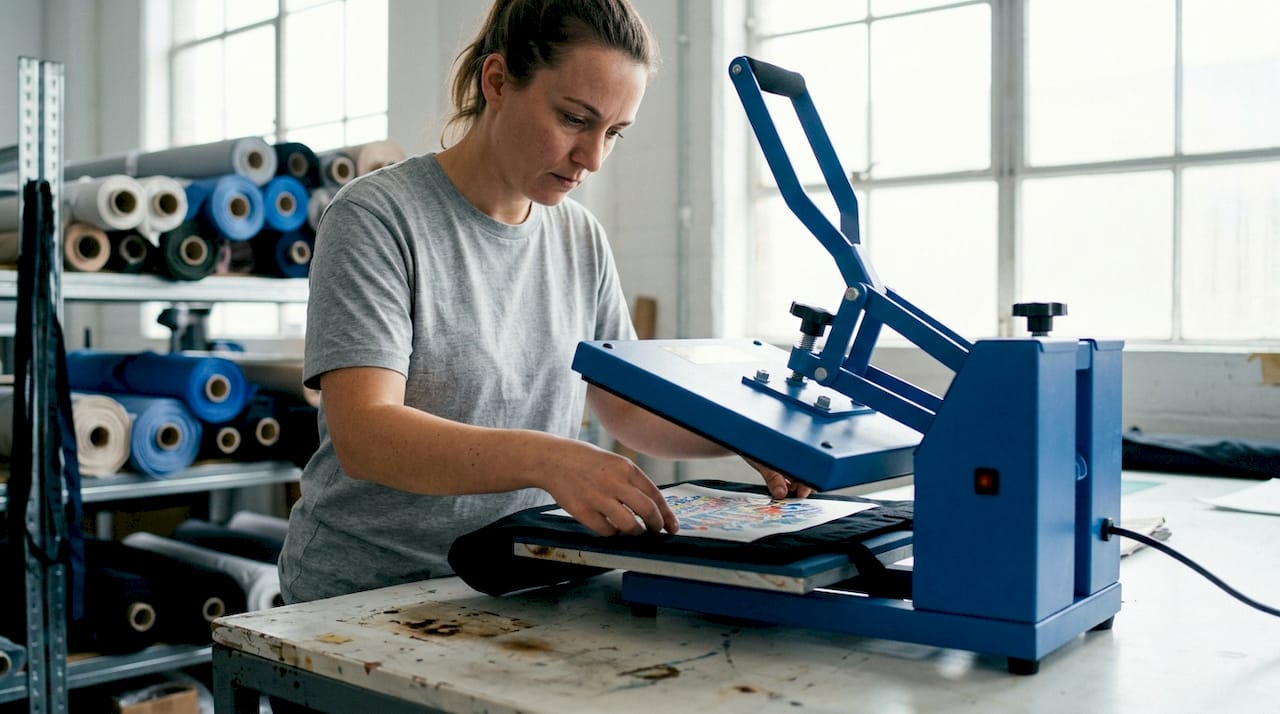
White DTF ink is the unsung hero here. It prints as an underbase beneath your CMYK layers, providing opacity that makes colours pop on dark or deeply saturated fabrics. Without it, printing on a navy hoodie or a black polyester jacket would produce washed-out, muted results. With it, you get the same vivid output across light and dark substrates alike.
Design complexity is also a non-issue with DTF. Multi-colour photographic artwork, fine gradients, small text, intricate line work — none of these add to your setup cost. You send the file, and the printer handles it. That is genuinely useful when your customers are bringing complex branded artwork or photographic prints.
Fabric and design versatility advantages:
- Works on cotton, polyester, tri-blends, nylon, and most synthetic fabrics
- Prints sharp detail at 300 DPI or higher for complex artwork
- No additional cost per colour, unlike screen printing
- White ink underbase ensures colour accuracy on dark garments
- Transfers can be applied to pre-made garments, cutting production time
Quality DTF films and powders contribute directly to wash resistance, flexibility, and the soft hand feel that customers notice. Choosing cheaper, incompatible supplies to save money upfront often results in cracking and peeling after a handful of washes, which costs far more in reprints and lost customers.
Pro Tip: When printing on performance sportswear, use a low-melt adhesive powder rather than standard hot-melt. It bonds better to synthetic fibres at lower temperatures, reducing the risk of heat damage to the fabric.
The complete guide for UK print shops covers substrate-specific considerations in more depth, and the essential dtf supplies for 2026 resource is worth bookmarking for staying current on what is available.
Quality and durability benefits of premium supplies
The advantages of using dtf supplies only hold up long-term if the quality of those supplies is adequate. This is where a dtf supplies comparison between budget and mid-to-premium options becomes important. The difference is not subtle.
Premium DTF films and inks deliver wash resistance, flexibility, reduced cracking, and a noticeably softer feel against the skin. A cheaper film might produce a visually acceptable print off the press, but after ten washes it can look worn and brittle. For businesses supplying workwear, promotional clothing, or anything a customer will wear regularly, that difference directly affects whether they reorder.
“Using the wrong film for a given ink formulation produces adhesion and banding problems.” — from The Rise of Direct-to-Film (DTF) Printing Supplies
This is a critical point. Ink and film compatibility is not optional. Mixing brands without checking formulation compatibility causes banding (visible horizontal lines in your print) and adhesion failures, both of which destroy print quality and accelerate printhead wear.
Film type comparison:
| Film type | Peel method | Finish | Best use case |
|---|---|---|---|
| Instant peel | Peel immediately after pressing | Glossy | High-volume, fast turnaround orders |
| Cold peel | Peel once cooled | Matte, softer feel | Premium garments, fashion apparel |
| Textured film | Cold peel | Textured | Specialist or high-end applications |
Storage matters too. DTF films are humidity sensitive. Storing them in a damp environment causes moisture absorption, which leads to bubbling and transfer defects during pressing. Sealed bags in a climate-controlled space is the minimum standard, not a luxury.
If you encounter recurring print issues, the step-by-step printing problem guide is a practical diagnostic resource. Ongoing equipment performance is also tied to maintenance habits covered in the equipment maintenance guide.
Scalability and workflow efficiency with dtf supplies
DTF supplies for businesses also offer a genuine workflow efficiency that compounds as your operation grows. The absence of pretreatment is the obvious gain, but the real efficiency comes from the print-now, press-later model. You can produce a batch of transfers during a quiet period, store them, and press on demand. That flexibility is difficult to achieve with other decoration methods.
Steps to an efficient DTF workflow:
- Batch your design files and nest them on a gang sheet to maximise film usage
- Print transfers during lower-demand periods and store in a sealed, humidity-controlled space
- Organise transfers by size and design type for fast retrieval during pressing
- Use a consistent heat press temperature and time log to maintain quality across operators
- Review ink levels weekly, with white ink checked more frequently given its higher consumption rate
Gang sheets cut production costs significantly by fitting multiple designs onto a single sheet of film, eliminating the wasted film between individual prints. Some operations report cost reductions of around 40% on consumables through disciplined gang sheet layouts alone.
DTF versus alternative decoration methods:
| Factor | DTF | Screen printing | DTG |
|---|---|---|---|
| Setup cost per run | Low | High (per colour) | Low |
| Fabric pretreatment | None required | None | Required for dark fabrics |
| Small run viability | Excellent | Poor | Good |
| Design complexity cost | No extra cost | Increases per colour | No extra cost |
| Production speed (batch) | Fast | Fast at volume | Slower |
DTF eliminates pretreatment unlike DTG, which removes a significant source of production delays and errors, particularly for urgent turnaround orders. For businesses offering next-day or same-day decorated garments, this is a meaningful operational advantage.
Pro Tip: If you are considering a printer upgrade, look at 9-colour DTF printers. The expanded colour gamut produces noticeably richer outputs, particularly for photographic prints and skin tones, and is worth the additional investment if design quality is a differentiator for your customers.
The building an efficient dtf workflow guide walks through practical production planning for businesses at different volume levels.
Key considerations for sourcing dtf supplies in the UK and Ireland
Why choose dtf supplies from a local or UK-based supplier rather than importing from overseas? Lead times. A stockout on white ink or adhesive powder stops production entirely. Commercial DTF setups are now available under approximately £15,500, which has made the technology accessible to far more businesses, but that investment only delivers returns if your supply chain is reliable.
Sourcing checklist for UK and Ireland businesses:
- Confirm supplier holds consistent stock of your specific ink formulation
- Verify film and ink compatibility before switching brands
- Maintain 1 to 2 weeks of buffer stock across inks, films, and adhesive powders
- Account for higher white ink consumption when calculating monthly order volumes
- Check that cleaning solutions are compatible with your printhead type
- Understand the supplier’s lead time and returns policy before committing to volume
US-based DTF supply distributors now stock comprehensive DTF product ranges with reliable shipping, but for UK and Ireland businesses, local availability remains a practical advantage when you need to restock quickly.
Inventory management for DTF is straightforward once you have a few months of usage data. White ink typically runs out two to three times faster than your CMYK inks. If you ignore that ratio when placing orders, you will find yourself short at the worst possible time. Planning your essential dtf supplies for 2026 with accurate consumption data is the difference between a smooth operation and regular firefighting. Pairing that with a clear approach to maximising roi with dtf supplies compounds the benefit over time.
Rethinking dtf supplies: beyond typical advantages
Here is what most articles on the advantages of using dtf leave out. The real cost efficiency in DTF is not found in the price per litre of ink. It is found in how well you understand and manage your printer’s maintenance demands, particularly around white ink.
White DTF ink settles and requires circulation two to three times faster than CMYK inks. Ignore that, and you end up with clogged printheads, wasted ink, and potentially expensive repairs. The businesses that get the best return from DTF are the ones running their printers on a daily circulation and maintenance schedule, not just when problems appear.
Film selection is also more strategic than it looks. Instant peel versus cold peel is not simply a speed preference. Instant peel films suit high-volume, fast-turnaround production. Cold peel films produce a softer, more premium-feeling transfer that many fashion and retail customers prefer. Choosing one and sticking with it for all jobs is a missed opportunity to match product quality to the actual expectations of each customer segment.
The humidity issue is one that almost every new DTF operator learns the hard way. Film stored in a poorly ventilated stockroom in November in the UK is at genuine risk of moisture damage. That produces defects, wasted materials, and a frustrating diagnostic process when the real cause is storage, not the printer. Treating humidity control as a core part of your supply management, rather than an afterthought, saves time and money.
From our perspective, the businesses that thrive with DTF long-term are not the ones who found the cheapest ink. They are the ones who treat supply management as seriously as print quality. Vendor relationships, proactive reordering, compatible materials, and consistent maintenance are what solve printing problems before they start.
Discover quality dtf supplies at SubliBlanks
If you are ready to put these advantages into practice, SubliBlanks supplies a wide range of DTF-compatible products alongside sublimation blanks, badge-making supplies, and equipment for UK and Ireland businesses. There are no minimum order quantities, so you can start small and scale without being locked into bulk commitments you are not ready for.
Our product range includes items well-suited to businesses expanding into branded merchandise, such as the round MDF name badge with pin and the rectangle MDF pin badge, both ideal for promotional printing alongside your DTF garment work. Browse the full SubliBlanks wholesale supply range to find everything your operation needs, shipped reliably from a UK-based supplier that understands the pace of a working print business.
Frequently asked questions
What makes DTF printing supplies cost-effective for small businesses?
DTF printing requires no screens or colour separation setup, keeping entry costs low. Per-print costs average £1 to £5, making short runs commercially viable without large upfront investment.
Can DTF supplies be used on various types of fabrics?
Yes. DTF works on cotton, polyester, tri-blends, nylon, and most performance textiles without any fabric pretreatment, giving you much broader substrate flexibility than DTG printing.
How important is white ink in DTF printing?
White ink is essential for opacity on dark fabrics and is the most maintenance-intensive component in the system. White DTF ink requires circulation to prevent settling at a rate two to three times faster than CMYK inks, making regular maintenance non-negotiable.
What factors influence the durability of DTF prints?
Ink and film compatibility, adhesive powder quality, curing temperature, and heat press settings all affect longevity. Quality films, powders, and inks deliver wash resistance, reduced cracking, and a soft hand feel that holds up over repeated laundering.
Recommended
- Understanding DTF technology: Key benefits for UK printers – SubliBlanks Ltd
- What does DTF mean? A complete guide to direct-to-film printing – SubliBlanks Ltd
- DTF Printing: Transforming Garment Businesses Today – SubliBlanks Ltd
- Why choose DTF supplies: maximise print versatility and ROI – SubliBlanks Ltd


