



Define sublimation equipment: choose right UK printers
Many assume sublimation can print on any fabric, but it exclusively bonds with polyester or polymer-coated substrates. This limitation shapes every equipment decision you make, from printer selection to heat press choice. Understanding sublimation equipment fundamentals helps UK and Ireland business owners invest wisely in custom merchandise production, avoiding costly mistakes whilst maximising return on investment for personalised branding solutions.
Table of Contents
- Introduction To Sublimation Equipment
- How Sublimation Equipment Works
- Types And Applications Of Sublimation Equipment
- Common Misconceptions About Sublimation Equipment
- Investment And Maintenance Considerations
- Comparison Framework: Sublimation Equipment Vs Alternatives
- Conclusion And Practical Next Steps
Key takeaways
| Point | Details |
|---|---|
| Core components | Sublimation equipment combines a specialised printer with a heat press to transfer designs onto polymer-coated merchandise |
| Heat-driven process | Dye transforms into gas under heat and pressure, bonding permanently at a molecular level with polyester substrates |
| Equipment variety | Manual heat presses suit small operations whilst automated systems increase production speed by up to 50% for scaling businesses |
| Substrate limitations | Sublimation works exclusively on polyester or coated materials, not natural fibres like cotton |
| Investment planning | Quality UK printers range from £500 to £3,000 with typical ROI between six and eighteen months |
Introduction to sublimation equipment
Sublimation equipment consists of a specialised printer and heat press working together to create vibrant, permanent designs on polymer-coated merchandise. The printer uses sublimation inks, whilst the heat press applies controlled temperature and pressure to complete the transfer process. This combination enables businesses to customise products ranging from mugs and phone cases to sportswear and promotional items.
The sublimation printer differs from standard inkjet models by using special dyes formulated to transform from solid to gas under heat. These inks print your design onto transfer paper, creating a mirror image ready for pressing. Heat presses then apply precise temperature, typically between 180°C and 205°C, along with firm pressure to activate the sublimation process.
For UK and Ireland entrepreneurs, sublimation equipment opens opportunities in personalised merchandise markets. You can produce small batches without minimum order constraints, test new designs quickly, and respond to customer demands with rapid turnaround times. The technology suits businesses focused on custom gifts, corporate branding, sports team uniforms, and niche product lines where personalisation drives value.
Core equipment functions include:
- Printing designs with sublimation-specific inks onto transfer paper
- Applying controlled heat to transform solid dye into gas state
- Generating pressure to open polyester fibres for molecular bonding
- Cooling substrates to lock dye permanently within material structure
How sublimation equipment works
The sublimation process relies on a unique physical transformation where solid dye skips the liquid phase entirely, converting directly to gas under heat. When you apply temperatures above 180°C with your heat press, sublimation inks vaporise and penetrate polyester fibres or polymer coatings. This molecular bonding creates permanent, wash-resistant prints that won’t crack, peel, or fade like surface-applied graphics.
Temperature and pressure work together as critical variables. Insufficient heat prevents complete dye transformation, resulting in faded or incomplete transfers. Too much pressure can cause substrate warping, whilst too little fails to open polymer fibres adequately for dye penetration. Most successful transfers require 40-60 seconds at 190-200°C with medium to firm pressure, though specific substrates may demand adjustments.
The molecular bonding occurs because polyester fibres expand under heat, creating microscopic spaces. Vaporised dye molecules enter these spaces, and when the substrate cools, fibres contract and trap the dye permanently within the material structure. This differs fundamentally from surface printing methods where ink sits atop the fabric.
Follow this workflow for consistent results:
- Design your artwork using graphics software with mirror image settings enabled
- Print the mirrored design onto sublimation transfer paper using sublimation inks
- Position the printed transfer face-down on your polyester or coated substrate
- Place the assembly in your heat press and apply specified temperature and pressure
- Hold for the recommended duration, typically 40-60 seconds depending on substrate thickness
- Remove and allow the substrate to cool before peeling away the transfer paper
Pro tip: Always conduct test presses with new substrates to determine optimal time, temperature, and pressure settings before committing to large production runs.
Types and applications of sublimation equipment
Manual heat presses require you to operate opening, closing, and timing functions yourself, offering precise control at lower price points between £150 and £800. Automated models handle these functions electronically, increasing production speed by up to 50% when compared to manual models, with prices ranging from £1,200 to £5,000 depending on features and capacity.
Printer selection depends on your production volume and product dimensions. Desktop A4 models suit small operations producing phone cases, coasters, and similar compact items. Wide-format printers accommodate larger substrates like sportswear, banners, and home textiles, though they command higher initial investment and running costs.
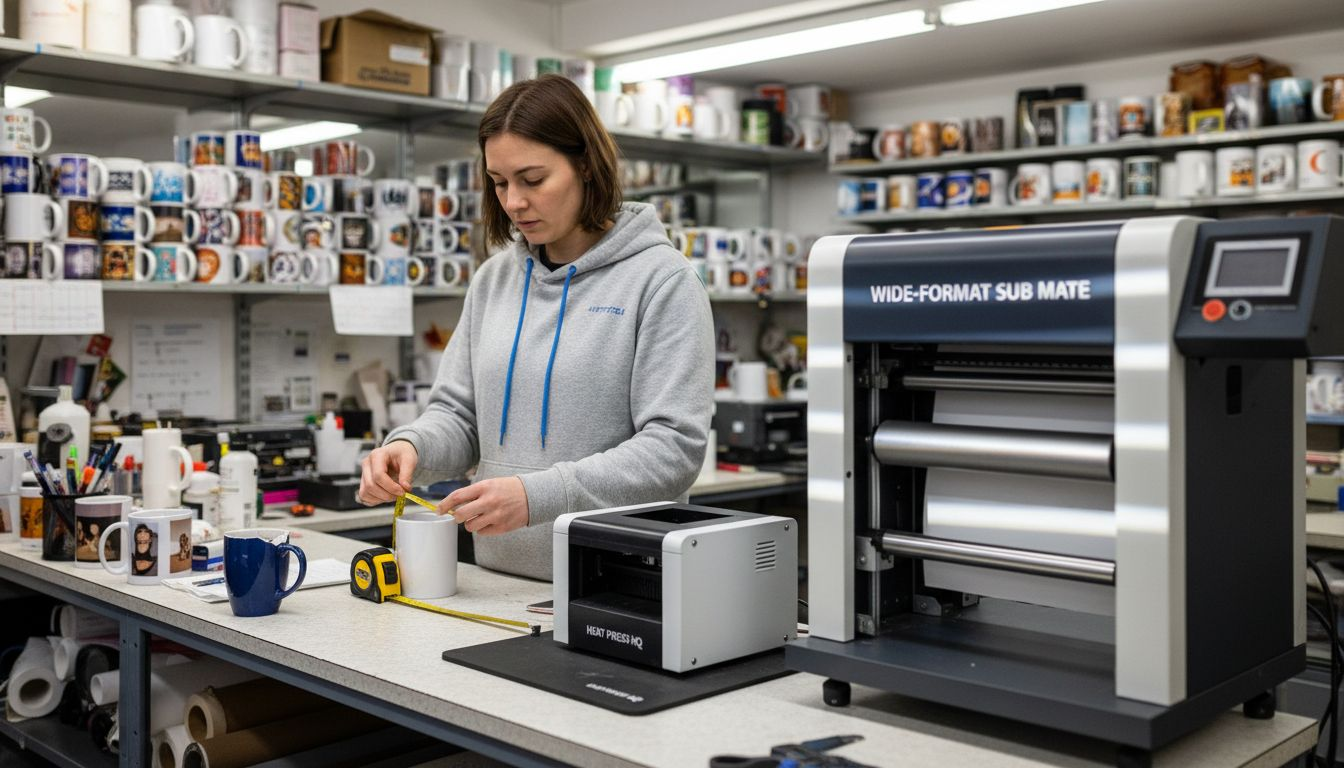
Your equipment choice should align with merchandise types and production goals. Small personalised gift businesses thrive with compact desktop setups, whilst operations focused on textile customisation benefit from larger format systems. Consider your target market, available workspace, and growth projections when selecting equipment specifications.
| Equipment type | Typical cost | Production capacity | Best applications |
|---|---|---|---|
| Manual flat press | £150-£800 | 15-30 items/hour | T-shirts, tote bags, flat substrates |
| Automated flat press | £1,200-£3,500 | 40-80 items/hour | High-volume apparel, textiles |
| Mug press | £80-£300 | 12-20 mugs/hour | Drinkware, cylindrical items |
| Desktop A4 printer | £500-£1,200 | Small format only | Promotional items, gifts |
| Wide-format printer | £2,000-£5,000+ | Large substrates | Banners, sportswear, home décor |
Different heat press configurations handle specific product shapes. Flat presses work for planar surfaces, mug presses curve around cylindrical drinkware, and cap presses accommodate curved headwear profiles. Investing in multiple press types expands your product range but increases initial capital requirements.
Common misconceptions about sublimation equipment
The most damaging myth claims sublimation works on cotton, leading businesses to purchase equipment unsuitable for their intended products. Sublimation requires polyester or coated substrates for quality prints because the dye bonds exclusively with polymer molecules. Cotton lacks these polymers, resulting in faded, temporary prints that wash out after minimal laundering cycles.
Another widespread misconception equates higher equipment cost with superior print quality. Whilst professional-grade machines offer consistency and durability, print quality depends primarily on ink formulation, transfer paper quality, and operator technique. A £500 printer with quality consumables and proper settings often outperforms a £3,000 model operated incorrectly with inferior supplies.
Many assume sublimation equipment requires minimal maintenance, but neglected print heads clog quickly, causing streaked prints and costly repairs. Regular cleaning after each session, periodic deep cleaning cycles, and proper storage in climate-controlled environments extend equipment lifespan significantly. Ignoring maintenance schedules voids warranties and reduces print quality gradually until failure occurs.
These misconceptions impact business outcomes directly:
- Purchasing equipment incompatible with target products wastes capital and delays market entry
- Expecting automatic quality from expensive machines without skill development produces inconsistent results
- Skipping maintenance creates unexpected downtime during peak production periods
- Believing substrate myths limits product range and revenue opportunities
Pro tip: Request substrate samples from suppliers before committing to large equipment purchases, testing compatibility with your specific equipment setup to verify performance claims.
Investment and maintenance considerations
Quality sublimation printers cost between £500 and £3,000 for UK small businesses, with ROI typically between six and eighteen months depending on production volume and pricing strategy. Entry-level desktop systems suit businesses testing market demand, whilst established operations benefit from professional models offering faster speeds, larger format capabilities, and enhanced colour accuracy.
Return on investment timelines depend on several factors including product pricing, production efficiency, and marketing effectiveness. Businesses charging premium rates for personalised merchandise recover costs faster than those competing on price alone. Calculate your break-even point by dividing total equipment investment by expected profit per item, then multiply by your realistic monthly production capacity.
Maintenance practices directly influence equipment longevity and print quality consistency. Daily tasks include wiping print heads with lint-free cloths and checking ink levels before production runs. Weekly responsibilities involve running cleaning cycles and inspecting heat press plates for residue buildup. Monthly maintenance should include calibrating temperature sensors and checking pressure mechanisms for wear.
Key budgeting and upkeep considerations:
- Factor consumable costs including sublimation inks, transfer paper, and replacement print heads into pricing calculations
- Allocate 10-15% of equipment cost annually for maintenance supplies and potential repairs
- Maintain climate-controlled storage with humidity below 60% to prevent ink degradation
- Schedule professional servicing annually even when equipment appears to function normally
- Build contingency funds for unexpected repairs to avoid production interruptions
Following manufacturer maintenance schedules prevents most common equipment failures whilst preserving warranty coverage. Document all maintenance activities with dates and observations to identify patterns before minor issues escalate into costly breakdowns. Regular upkeep costs less than emergency repairs and protects your production capacity.
Comparison framework: sublimation equipment vs alternatives
Direct-to-garment printing offers better natural fabric compatibility but comes with higher costs and slower production speed compared to sublimation. DTG machines spray water-based inks directly onto garments, enabling cotton printing that sublimation cannot achieve. However, DTG requires pre-treatment solutions, longer curing times, and more expensive consumables that increase per-item production costs significantly.
Sublimation excels with polyester and coated substrates, producing vibrant, permanent prints that withstand repeated washing without fading. The process completes faster than DTG, typically 60 seconds per item versus 3-5 minutes for direct printing methods. This speed advantage becomes critical for high-volume operations where production capacity directly impacts revenue potential.
Scalability differs substantially between technologies. Sublimation equipment handles increased volume by adding more heat presses to your workflow, a relatively affordable expansion path. DTG scaling requires additional printer units costing £8,000-£15,000 each, creating higher barriers to growth for small businesses operating on limited capital.
| Factor | Sublimation | Direct-to-garment (DTG) |
|---|---|---|
| Initial investment | £650-£3,500 | £8,000-£15,000 |
| Substrate compatibility | Polyester, coated items only | Cotton, blends, natural fibres |
| Print durability | Permanent molecular bonding | Good with proper curing |
| Production speed | 40-80 items/hour | 12-20 items/hour |
| Per-item consumable cost | £0.30-£0.80 | £1.50-£3.00 |
| Maintenance complexity | Moderate | High (daily cleaning required) |
Choose sublimation when your product range focuses on polyester sportswear, drinkware, phone cases, and promotional items where vibrant colours and wash durability matter most. Select DTG for businesses targeting natural fibre apparel markets, particularly fashion-focused customers who prioritise cotton garments over synthetic alternatives.
Conclusion and practical next steps
Sublimation equipment transforms your ability to produce personalised merchandise by combining specialised printers with heat presses that bond dye permanently into polymer substrates. Understanding substrate limitations, maintenance requirements, and cost structures prevents common mistakes whilst positioning your business for profitable growth in UK and Ireland custom merchandise markets.
Use this checklist when selecting equipment:
- Verify target substrates contain polyester or polymer coatings suitable for sublimation
- Calculate realistic production volumes to determine manual versus automated heat press needs
- Budget for consumables including inks, transfer paper, and maintenance supplies at 10-15% of equipment cost annually
- Research supplier reputations and warranty terms before committing to purchases
- Test sample substrates with potential equipment to verify compatibility and quality standards
Reliable UK wholesale suppliers provide comprehensive product ranges including sublimation blanks, printers, and essential consumables without minimum order quantities. Partnering with established wholesalers ensures consistent supply access whilst reducing per-unit costs through trade pricing structures. Informed equipment decisions backed by quality suppliers create foundations for sustainable, profitable sublimation businesses.
Explore high-quality sublimation supplies at SubliBlanks
Ready to start your sublimation journey with confidence? SubliBlanks supplies everything you need for professional results, from essential equipment to premium consumables. Our 9x12 teflon sheets protect your heat press whilst ensuring even heat distribution across every transfer. Pair these with our A4 Dino DyeSub sublimation paper for crisp, vibrant prints that transfer cleanly without residue.
Explore our complete range of sublimation supplies designed specifically for UK and Ireland businesses. We offer trade pricing without minimum order quantities, letting you stock exactly what you need when you need it. From sublimation blanks to printers and consumables, we support your production goals with reliable products and expert guidance.
FAQ
What is sublimation equipment used for?
Sublimation equipment prints vibrant, permanent designs onto polyester fabrics and polymer-coated products using heat and pressure. It’s ideal for creating personalised merchandise including sportswear, mugs, phone cases, and promotional items where durability and colour vibrancy matter most.
Can sublimation printing be used on cotton products?
Sublimation printing requires polyester or polymer-coated substrates because the dye bonds exclusively with synthetic polymer molecules. Cotton and other natural fibres lack these polymers, resulting in faded prints that wash out quickly. For cotton printing, explore alternatives like direct-to-garment technology instead.
How much does sublimation equipment cost in the UK?
Entry-level sublimation printers start around £500, whilst professional models exceed £3,000 depending on format size and features. Heat presses range from £150 for manual units to £5,000 for automated systems. Your specific equipment setup costs depend on production volume, substrate types, and automation preferences.
How often should sublimation equipment be maintained?
Clean print heads after each printing session using lint-free cloths to prevent ink buildup and clogging. Check heat press temperature calibration weekly for consistent results, adjusting to monthly intervals during lower-usage periods. Follow your manufacturer’s maintenance schedule precisely to preserve warranty coverage and equipment longevity.


