



Badge making supplies: Essential guide for creative success
TL;DR:
- Choosing the right supplies, understanding their functions, and precise assembly determine badge quality and professionalism. Small modifications and quality materials enhance durability, appearance, and brand trust, especially for business use. Investing in suitable equipment and premium components from the outset prevents costly reworks and improves creative results.
Badge making looks deceptively straightforward. You have an image, you have a pin, and surely that is enough. In practice, the quality of your finished badges depends almost entirely on choosing the right supplies, using them in the correct order, and understanding why each component exists. Whether you are a craft hobbyist producing a small run for a school fair or a small business owner turning out hundreds of promotional badges for an event, getting your supplies right from the start saves time, money, and a great deal of frustration. This guide covers everything you need to know.
Table of Contents
- What goes into a badge: Essential supplies explained
- Step-by-step badge making: How the process really works
- Comparing badge making blanks: Metal or plastic?
- Badge making machines and kits: Picking the right tool for the job
- Why badge making supply choices matter more than you think
- Upgrade your badge making supplies for creative success
- Frequently asked questions
Key Takeaways
| Point | Details |
|---|---|
| Know your supplies | Understanding badge blanks, covers, and backs helps choose the right materials for any project. |
| Master the workflow | Step-by-step badge assembly ensures professional results and avoids common mistakes. |
| Choose blanks wisely | Metal and plastic blanks suit different needs, so compare their properties before buying. |
| Upgrade when needed | Moving from kits to machines boosts efficiency for business and event production. |
| Quality supplies matter | Investing in high-quality badge making supplies makes a big difference in outcomes and satisfaction. |
What goes into a badge: Essential supplies explained
The badge making process is more structured than most people realise. Each component serves a specific function in the finished product, and substituting or skipping any one of them typically leads to a substandard result. Understanding what each supply does helps you make smarter purchasing decisions and avoid the classic beginner mistake of buying the wrong item in bulk.
Here is a breakdown of the core badge making supplies you will need:
- Badge blanks: The metal or plastic shells that form the body of the badge. These come in standard sizes such as 25mm, 38mm, 44mm, and 58mm, and are available in round, oval, and rectangular shapes.
- Artwork inserts: Printed paper or card cut to fit precisely inside the badge. Your design goes here. Accuracy matters enormously at this stage.
- Mylar covers: Clear protective film that sits over your artwork inside the badge shell. Mylar shields the design from scratching and moisture, giving badges a professional finish.
- Badge backs: The fixing mechanism attached to the reverse of the badge. Pin backs are standard for clothing, whilst magnet backs are popular for school uniforms, corporate lanyards, and situations where fabric damage is a concern.
- Badge press: The tool that crimps all components together. Without a proper press, the badge will not seal correctly and the mylar may lift or shift.
Understanding the role of badge supplies in security and trust is particularly relevant for small businesses. A poorly finished badge can undermine brand credibility far more than people expect.
For versatile everyday use, a round MDF pin badge offers a clean, professional result suitable for events and retail. If your customers prefer a non-piercing option, the round MDF magnet badge is an excellent alternative. For name badges in particular, a rectangular MDF magnet badge provides a neat, corporate appearance that suits hospitality, healthcare, and retail settings equally well.
The choice between pin and magnet backs matters more than it might seem. Pin backs are lower cost and universally recognised, but they can damage delicate fabrics. Magnet backs carry a slight price premium and are not suitable for anyone wearing a pacemaker, but they are vastly preferred in settings where appearance and fabric integrity matter. Knowing your end user’s needs before you order saves unnecessary waste.
Step-by-step badge making: How the process really works
Once your supplies are assembled, production follows a clear sequence. Skipping steps or rushing through them is where most quality issues arise. The standard badge making method involves cutting artwork, layering the metal blank with artwork and mylar cover, pressing, adding the back, and pressing again. Each stage is critical.
Here is the full process laid out clearly:
- Print and cut your artwork. Size your design to match your badge blank diameter exactly. Use a circular cutter or template to achieve a precise fit. Slightly oversized artwork causes wrinkling; undersized artwork leaves visible gaps.
- Place the blank face-down into the press die. The die holds the blank in position and ensures even crimping. Metal blanks should sit flush without forcing.
- Layer your artwork over the blank. Position it centred and straight. Even a small misalignment becomes very obvious in the finished badge.
- Place the mylar cover over the artwork. Smooth out any air bubbles before pressing. Trapped air creates visible blemishes under the clear film.
- Press the front of the badge. Apply firm, even pressure using the badge press lever. Listen for a clean click or resistance that indicates a properly formed crimp.
- Insert the badge back (pin or magnet). Position it at the correct angle for wearability. Pins are typically placed at the upper third of the badge so it hangs straight on clothing.
- Press the back into the badge shell. A second press secures the back plate. This final crimp locks everything together and determines the durability of the finished badge.
Pro Tip: Artwork alignment is the single most common source of rejected badges in small runs. Print a test sheet on plain paper before using your good stock, and check alignment through the press die before committing to your full print run. This two-minute check saves significant material costs.
For those working with sublimation-printed artwork, understanding how sublimation blanks work can help you optimise your printed inserts for vivid, lasting colours. Sublimation-printed artwork holds colour exceptionally well under the mylar layer and resists fading far longer than standard inkjet or laser-printed inserts.
Artwork preparation is genuinely half the battle. Work at 300 DPI (dots per inch, the measure of print resolution) minimum for crisp results. If your design includes text, keep it well within the safe area, roughly 2mm inside the badge edge, to avoid it being lost in the crimp.
Comparing badge making blanks: Metal or plastic?
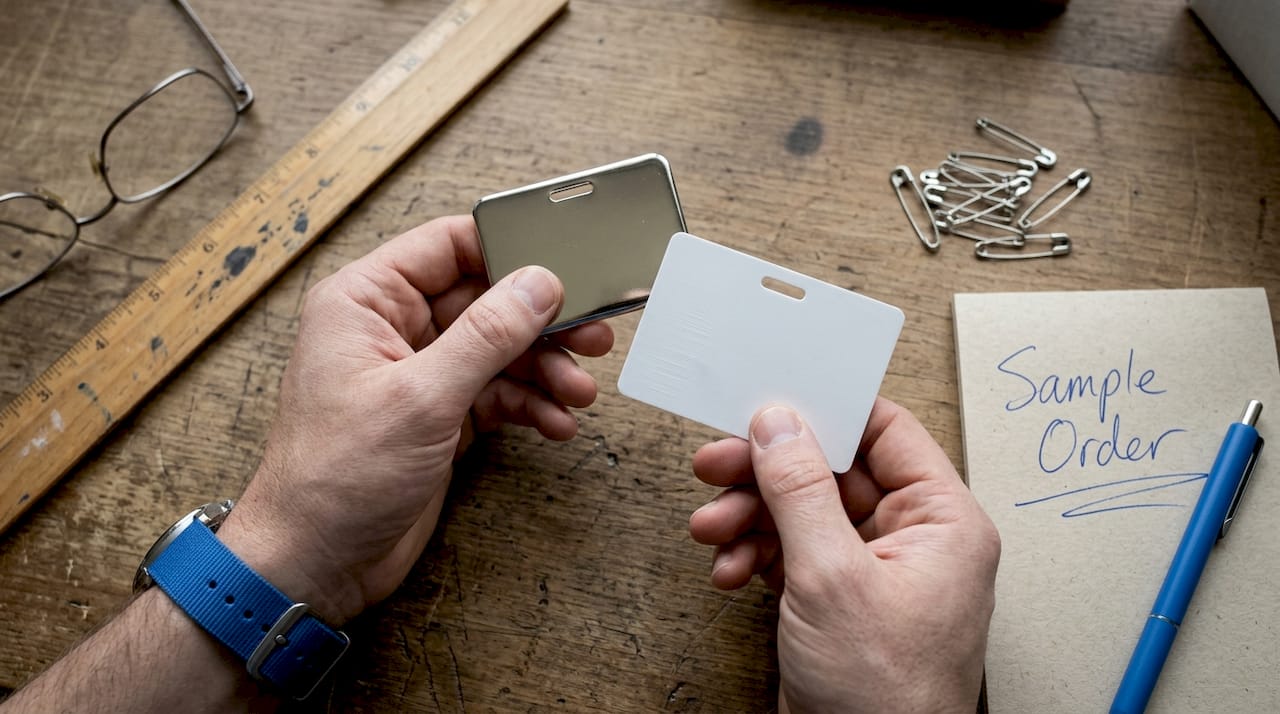
Choosing the right blank material affects your finished product’s durability, appearance, and cost per unit. Both metal and plastic blanks have legitimate uses; the decision comes down to your specific project, budget, and audience expectations.
| Feature | Metal blanks | Plastic blanks |
|---|---|---|
| Durability | High, resists bending and denting | Moderate, can crack under pressure |
| Finish | Smooth, professional sheen | Slightly lighter appearance |
| Weight | Heavier, premium feel | Lightweight, comfortable for long wear |
| Cost per unit | Slightly higher | Lower, suits high-volume orders |
| Print compatibility | Excellent with sublimation | Good with standard print methods |
| Eco friendliness | Recyclable in most cases | Varies by plastic type |
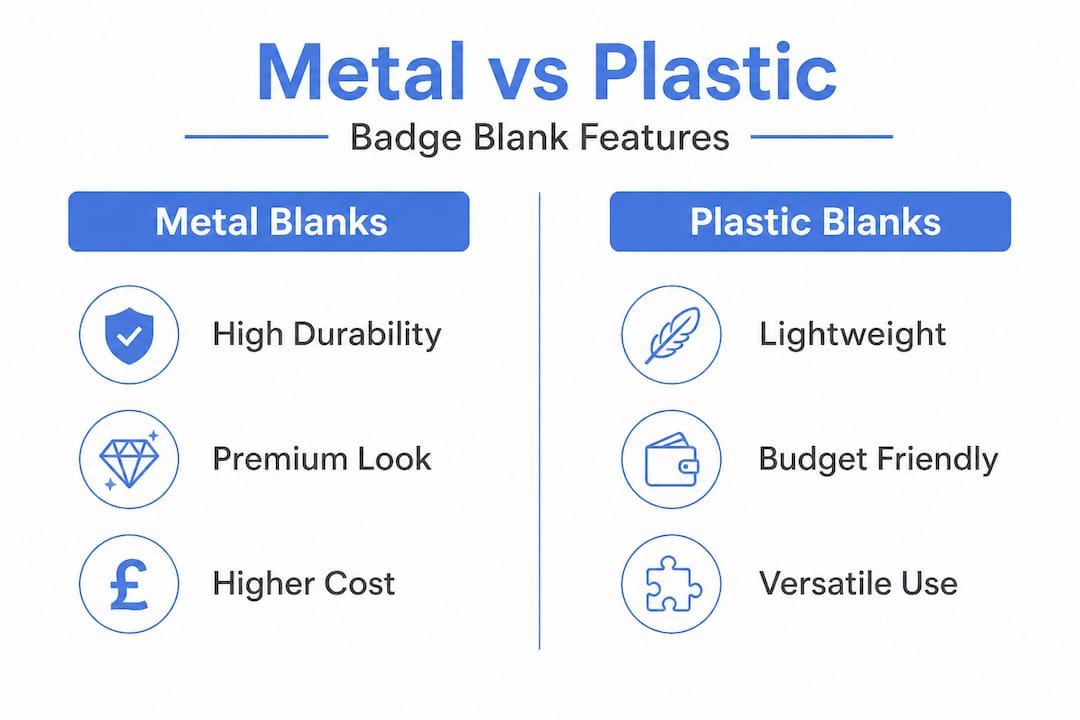
Metal blanks are the industry standard for good reason. They crimp cleanly and consistently, hold artwork securely under the mylar, and produce a finish that reads as genuinely professional to the recipient. For events, charity fundraisers, and small business promotional use, the perceived quality of a metal badge is noticeably higher than a plastic equivalent.
Plastic blanks, however, have their own advantages worth considering:
- Cost: Plastic blanks typically cost less per unit, making them attractive for very large runs where budget is tighter than branding impact.
- Weight: Lighter badges are more comfortable on clothing for extended wear, relevant for conference badges or children’s event badges worn all day.
- Colour vibrancy: Certain plastic substrates can display printed colours slightly more brightly due to their white base.
- Novelty designs: Plastic blanks are available in a wider range of novelty shapes that metal pressing cannot easily achieve.
Understanding what custom blanks offer helps you match blank type to project outcome. For businesses considering longer-term efficiency, laser engravable blanks offer a completely different route to personalised badges, particularly for premium corporate name badges or award pieces. Thinking carefully about blank selection also helps you reduce badge waste by ordering the right type and quantity from the outset rather than correcting mistakes after the fact.
Badge making machines and kits: Picking the right tool for the job
Your press is arguably the most important investment in your badge making setup. The right tool for you depends entirely on your production volume and budget. A kit is a fine starting point; a dedicated machine is a sound investment once you are producing regularly.
| Option | Typical cost | Output | Best suited for |
|---|---|---|---|
| Starter kit | £20 to £50 | Up to 100 badges per session | Hobbyists, one-off events, trying the craft |
| Mid-range kit | £50 to £100 | 100 to 150 badges per session | Regular small runs, school fundraisers |
| Dedicated machine | £100 and above | 200+ badges per hour | Small business, events, charity campaigns |
The benchmarks here are worth understanding in practical terms. A hobbyist making badges for a local charity fundraiser can comfortably produce their full run using a starter kit over a couple of evenings. A small business supplying event organisers or corporate clients with 500 branded badges needs a machine capable of consistent, rapid output; a kit at that volume becomes genuinely inefficient and physically tiring.
Pro Tip: If you are ordering more than 200 badges per month consistently, the time savings from a dedicated machine will pay for the investment within your first two to three months of use. Factor in not just the material cost but the labour time involved in slow kit production.
Supply decisions change meaningfully with scale. At low volumes, you can purchase supplies in smaller quantities and experiment with different blank sizes. At higher volumes, buying badge blanks, mylar covers, and artwork inserts in bulk drops your per-unit cost considerably and smooths out your production workflow.
Understanding what a stamping machine can do also helps you contextualise badge presses within the broader world of craft production machinery. The principles of consistent pressure, correct die sizing, and material compatibility apply across many crafting disciplines.
Why badge making supply choices matter more than you think
Here is something the standard badge making guides rarely say plainly: the supply choices most people treat as afterthoughts are usually the ones that determine whether a badge project succeeds or quietly disappoints.
We have seen this repeatedly. Someone invests time in a beautiful design, prints it carefully, and then reaches for the cheapest available blanks and mylar. The result looks acceptable in isolation but sits noticeably below the quality bar in a retail or professional context. Recipients notice, even if they cannot articulate why. A badge that flexes slightly, has a faint crinkle under the mylar, or uses a back that rotates on the fabric sends a subtle but real message about the brand behind it.
Conversely, the people who get badge making consistently right are those who think of supplies as part of the creative brief, not an afterthought. They select blank sizes that suit the design rather than defaulting to the most common size. They choose backing types that match their audience’s actual situation. They invest in mylar that is cut correctly and handled with care during assembly.
The relationship between badge supplies and professional trust is particularly relevant for small businesses using badges as part of their brand touchpoints. A well-made badge at a market stall, a charity event, or a trade show does quiet but effective work for your brand identity. A poorly made one does the opposite.
Our honest experience is this: hobbyists and small business owners rarely regret spending slightly more on quality blanks and a decent press. They do frequently regret buying the cheapest possible option and then needing to reorder or reproduce a full run. Starting with quality supplies is not extravagance; it is the most practical decision you can make.
Upgrade your badge making supplies for creative success
Whether you are just starting out or scaling up a badge making operation, having access to the right supplies without minimum order quantities makes a real difference to how flexibly you can work.
At SubliBlanks Ltd, we stock badge blanks, mylar covers, backing options, and presses suitable for every scale of project, from a hobbyist’s first kit to a small business running regular production. You can pick up individual packs to experiment or buy in bulk when your volume justifies it. Our range includes both pin-back and magnet-back options, with MDF and metal blanks available to suit your specific use case. If you are ready to start, browse our round MDF pin badges and find the right supplies to bring your designs to life with confidence.
Frequently asked questions
What are the must-have badge making supplies for beginners?
Beginners need badge blanks, printed artwork, mylar covers, pin or magnet backs, and a press or starter kit to assemble everything correctly. The standard badge making process requires all five components for a complete, professional result.
How do I choose between metal and plastic badge blanks?
Metal blanks offer superior durability, a premium finish, and consistent crimping, making them ideal for professional and event use. Plastic blanks are lighter and lower cost, suiting high-volume, lightweight applications.
Can badge kits handle bulk production for events?
Badge kits work well for runs up to around 100 badges, but dedicated machines producing 200+ badges per hour are a far more practical choice for larger events or regular commercial orders.
Is artwork preparation important in badge making?
Artwork must be sized and cut precisely to the blank diameter, with correct resolution and adequate safe zone margins, since any misalignment affects badge quality visibly in the finished piece.
Where can I find trusted badge making supplies in the UK or Ireland?
SubliBlanks Ltd supplies badge blanks, mylar covers, backing options, presses, and kits to hobbyists and small businesses across the UK and Ireland, with no minimum order quantities.
Recommended
- The real role of badge supplies in security and trust – SubliBlanks Ltd
- How to package sublimation products to impress customers – SubliBlanks Ltd
- Personalise gifts with sublimation: a step-by-step guide – SubliBlanks Ltd
- How to print on mugs: step-by-step guide for beginners – SubliBlanks Ltd
- Additive Manufacturing Guide for Rapid Prototyping Success


