



What is substrate material? A practical guide
TL;DR:
- Substrate material serves as the foundational surface to which inks, coatings, and processes are applied, directly impacting product quality and durability. Selecting the right substrate depends on understanding its properties, applications, and compatibility with specific inks and techniques. Proper preparation, ongoing evaluation, and awareness of material changes are essential for consistent, professional results.
Substrate material is the foundational base layer to which other materials, coatings, inks, or processes are applied. Whether you are printing a brochure, decorating a ceramic mug, or manufacturing a printed circuit board, the substrate is the surface that makes everything else possible. Paper, PET film, MDF, fabric, and metal all qualify as substrate materials depending on the application. The choice of substrate directly determines how well inks bond, how durable a finished product becomes, and whether a coating performs as expected. Getting this decision right is the difference between a professional result and a wasted run.
What is substrate material and why does it matter?
A substrate material is defined as the underlying surface or base to which other layers are applied, and Kuraray describes it as the foundation for coatings, adhesives, or layers across industrial and commercial applications. The term appears in printing, electronics, crafting, packaging, and construction, but the core meaning stays consistent. It is the thing everything else sits on top of.
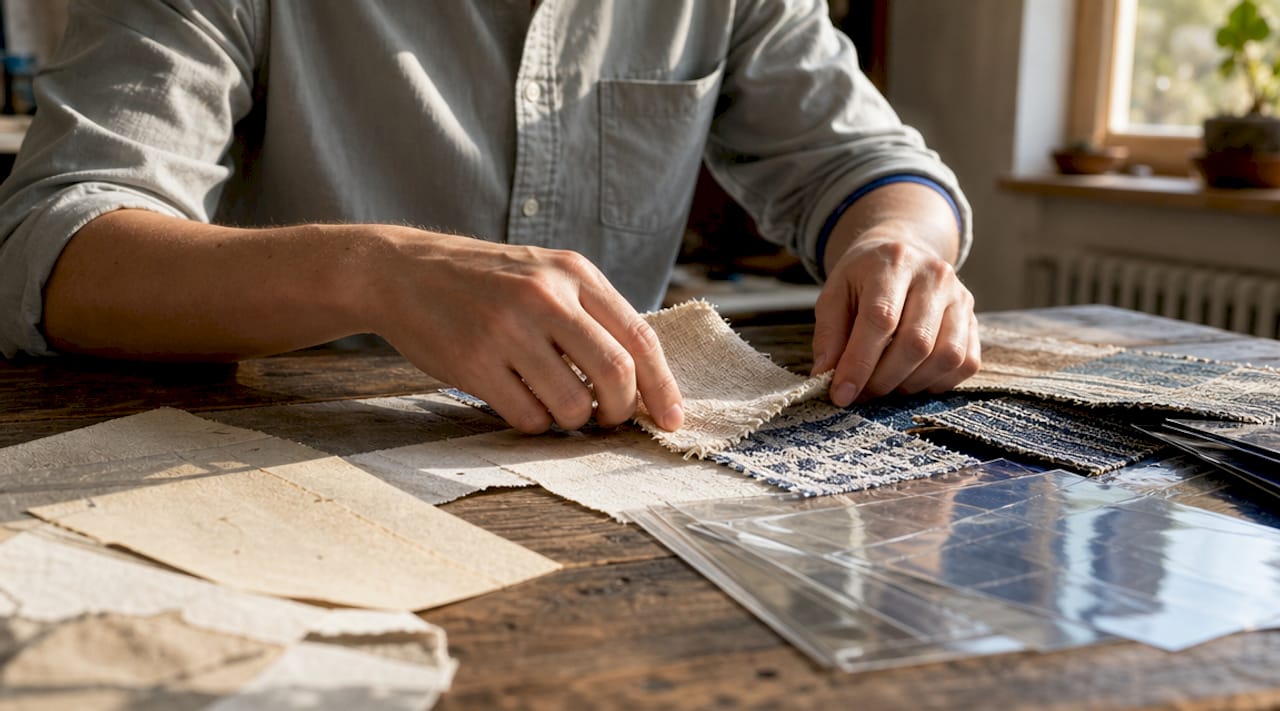
The reason substrate selection matters so much is that it controls the outcome of whatever process follows. In sublimation printing, for example, a polyester-coated blank accepts dye sublimation ink in a way that plain cotton simply cannot. In packaging, a laminated cardboard substrate protects contents differently from a plain paper one. The substrate is not passive. It actively participates in the process.
Understanding the substrate material definition also helps you avoid costly mistakes. Printers, crafters, and manufacturers who treat substrate choice as an afterthought often encounter poor adhesion, colour inconsistency, or product failure. Treating it as a system-level decision from the start produces far better results.
What are the main types of substrate materials?
Printing substrates include paper, cardboard, plastic films, fabric, and metal, each affecting ink transfer and print quality in distinct ways. Beyond printing, substrate types span a wide range of materials used across manufacturing and crafting. The table below summarises the most common types, their key properties, and their typical applications.
| Substrate type | Key properties | Typical applications |
|---|---|---|
| Paper and cardboard | Porous, absorbent, lightweight | Brochures, packaging, labels |
| PET and PVC films | Non-porous, flexible, durable | Outdoor signage, labels, overlays |
| Metals (aluminium, steel) | Rigid, non-porous, heat-resistant | Durable signage, industrial panels |
| Fabrics (polyester, cotton) | Flexible, porous, texture-variable | Garments, soft furnishings, flags |
| Wood and MDF | Semi-porous, rigid, machinable | Crafts, name badges, décor items |
| Glass and ceramics | Non-porous, smooth, heat-stable | Drinkware, tiles, promotional gifts |
| Flexible electronics films | Ultra-thin, conductive-compatible | Printed electronics, sensors |
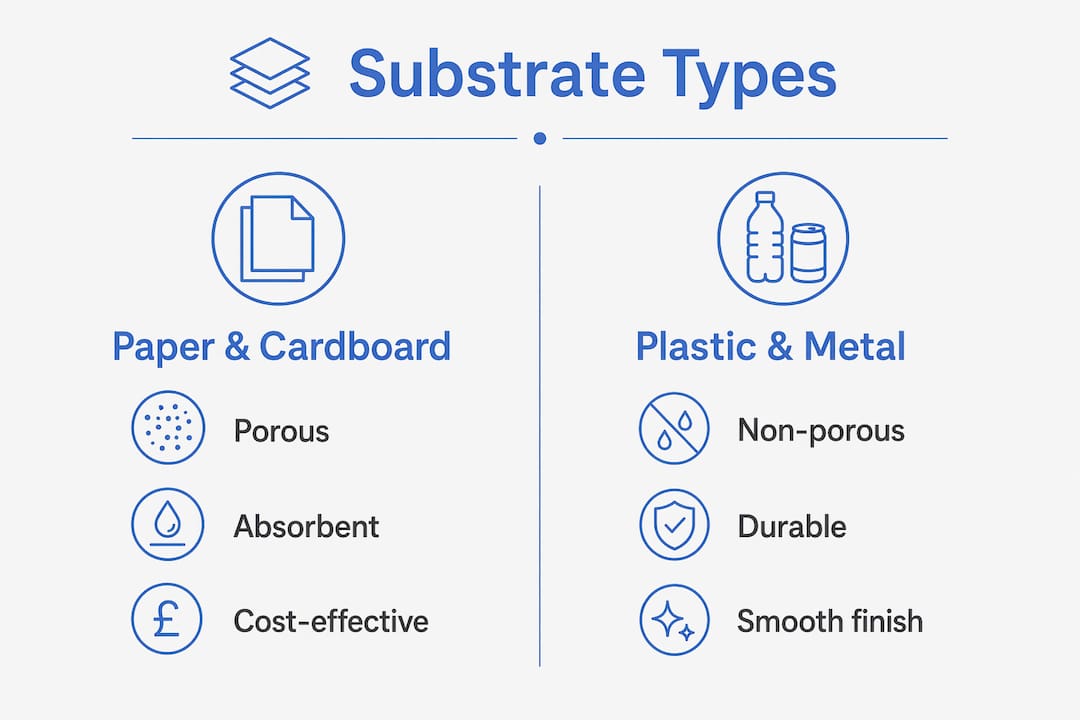
Paper and cardboard remain the most widely used substrates in commercial printing because they are cost-effective and accept a broad range of inks. Plastic films such as PET and PVC dominate outdoor and retail applications where weather resistance is required. Metals are chosen when longevity and rigidity are non-negotiable. In crafting and personalised gift production, MDF and ceramic blanks are popular because they hold sublimation coatings well and produce vibrant, lasting results.
Specialised substrates used in printed electronics, such as flexible polymer films, represent a growing category. These materials must conduct or insulate selectively, tolerate heat during processing, and maintain dimensional stability. For most crafters and print shops, however, the practical range of substrate material examples sits firmly within paper, plastics, fabric, wood, and coated ceramics.
How do substrate properties affect print and coating quality?
The physical and chemical properties of a substrate control what happens the moment ink or coating touches its surface. Four properties matter most: porosity, absorbency, surface energy, and roughness.
Porosity and absorbency work together to determine how much ink a substrate draws in versus how much stays on the surface. Paper absorbs ink, reducing surface accumulation, while plastics retain nearly all deposited ink, enabling denser layers and greater thickness. A Springer study found that PET yields 25 to 30% thicker ink layers than paper-based substrates due to its non-absorbent nature. Thicker ink layers can mean richer colour saturation but also longer drying times and a greater risk of smearing if the process is not calibrated correctly.
Surface energy determines how well a liquid spreads across a substrate before it cures or dries. High-surface-energy materials like glass and metals allow inks and adhesives to wet out and spread evenly. Low-surface-energy plastics such as polyethylene resist wetting, which is why untreated polyethylene bags are notoriously difficult to print on without pre-treatment.
Roughness affects both adhesion and visual finish. A smooth substrate produces sharper detail and higher gloss. A textured substrate creates mechanical grip for coatings but can reduce resolution in fine-detail printing.
Key substrate properties to evaluate before printing or coating:
- Porosity: High porosity absorbs ink quickly, reducing surface film thickness and colour density.
- Surface energy: Low surface energy requires pre-treatment to achieve reliable adhesion.
- Roughness: Smooth surfaces favour detail and gloss; textured surfaces favour adhesion.
- Thermal stability: Heat-sensitive substrates limit process temperatures for curing or pressing.
- Dimensional stability: Substrates that warp or stretch under heat or moisture cause registration errors.
Pro Tip: Before committing to a substrate for a new print run, always request a sample and run a small test with your actual ink and process settings. What works on one PET film may not work on another due to coating differences from the manufacturer.
What determines substrate compatibility with inks and coatings?
Substrate compatibility is a system-level decision that connects the base material, the ink or coating chemistry, and the printing or application method into one interdependent process. Choosing a substrate in isolation, without considering what will be applied to it, is a reliable route to adhesion failure.
Chemical compatibility comes down to polarity and surface energy. Inks and adhesives bond most reliably when the substrate surface has sufficient polarity to allow initial wetting. Many plastics, particularly polyethylene and polypropylene, have low surface energy and resist bonding. Surface treatments like corona or plasma increase surface energy on these materials by oxidising the surface, creating reactive sites that inks and adhesives can grip. Corona treatment is standard practice in flexible packaging production and is increasingly used in digital print workflows on film substrates.
Physical compatibility involves matching the substrate’s thermal and mechanical behaviour to the process. A substrate that shrinks or warps during UV curing will cause registration problems. One that is too rigid for a roll-to-roll press will jam the equipment.
Steps for evaluating substrate compatibility before production:
- Identify the ink or coating system you will use, including its chemistry (water-based, solvent, UV, sublimation dye).
- Check the substrate’s surface energy using dyne test pens or contact angle measurement to confirm wettability.
- Assess porosity and absorbency by applying a small ink drop and observing spread and absorption rate.
- Test adhesion using a cross-hatch tape test after a sample print has cured fully.
- Evaluate thermal behaviour by exposing a substrate sample to process temperatures and checking for warping or shrinkage.
- Review the supplier’s technical data sheet for recommended inks, coatings, and pre-treatments specific to that substrate.
Skipping these steps is where most production problems originate. A 1% reduction in substrate cost can translate into approximately 34% profit increase in printing operations, which makes the economics of getting substrate selection right very compelling.
How is substrate material selected in practice?
Practical substrate selection balances four factors: cost, durability requirements, process compatibility, and the end-use environment. A substrate that performs brilliantly in a controlled indoor setting may fail within weeks outdoors if it lacks UV resistance or moisture tolerance.
In crafting and personalised product production, sublimation blanks are a clear example of substrate selection done well. A sublimation blank is a product pre-coated with a polyester layer that accepts sublimation dye under heat and pressure. MDF name badges, ceramic mugs, and aluminium photo panels are all substrate materials prepared specifically to work with the sublimation process. The sublimation process on textiles relies on polyester-rich fabrics as the substrate because the dye bonds chemically with polyester fibres, producing wash-fast, vibrant colour that does not sit on the surface.
In packaging and manufacturing, substrate preparation before printing or laminating is standard practice. Cleaning removes oils, dust, and contaminants that would prevent adhesion. Priming or corona treatment modifies the surface chemistry. Substrate cleaning and surface preparation are documented as critical steps for consistent, high-quality results in sublimation and wider print production.
Pro Tip: For sublimation blanks specifically, store them in a dust-free environment and handle them with clean gloves before pressing. Even fingerprint oils can cause adhesion inconsistencies that show up as pale spots in the final print.
The trade-off between absorbency and surface finish is worth understanding clearly. Highly absorbent substrates like uncoated paper produce a softer, more muted colour result because ink soaks in rather than sitting on the surface. Coated or non-porous substrates produce sharper, more saturated results. For promotional gifts and personalised products, non-porous or coated substrates almost always deliver the more impressive visual outcome.
Key takeaways
Substrate material is the foundational base layer that controls ink adhesion, coating performance, and finished product quality across printing, crafting, and manufacturing.
| Point | Details |
|---|---|
| Core definition | A substrate is the base surface to which inks, coatings, or layers are applied in any process. |
| Property impact | Porosity, surface energy, and roughness directly determine ink laydown, adhesion, and print quality. |
| Compatibility is a system | Substrate choice must align with ink chemistry, process method, and end-use conditions together. |
| Preparation matters | Cleaning, priming, and surface treatment before application prevents adhesion failure and inconsistency. |
| Cost and quality balance | Substrate is often the largest direct cost in printing, so informed selection drives both quality and profitability. |
Why substrate choice is the decision most people get wrong
Most people entering printing or crafting focus on the equipment first. They research sublimation printers, compare heat presses, and spend hours on ink settings. Then they buy the cheapest blank they can find and wonder why the results look flat or inconsistent. The substrate is the variable they underestimated.
In my experience, the single most common source of print quality complaints is not the printer, the ink, or the press settings. It is an incompatible or poorly prepared substrate. A ceramic mug without an adequate polyester coating will produce a washed-out sublimation print regardless of how well everything else is calibrated. An MDF badge that has absorbed moisture will cause colour banding. These are substrate problems, not equipment problems.
The other thing I have noticed is that people treat substrate selection as a one-time decision rather than an ongoing evaluation. Suppliers change formulations. Batches vary. A substrate that worked perfectly six months ago may behave differently today if the manufacturer has adjusted the coating weight or surface treatment. Running a test print at the start of each new batch is not excessive caution. It is standard professional practice.
The future of substrate materials is moving towards more sustainable options. Recycled paper stocks, bio-based films, and water-based coatings are gaining ground in commercial printing. For crafters and small-batch producers, this mostly means watching what your blank suppliers are doing and asking questions about coating composition when you notice a change in results.
— chris
Find the right substrate blanks at Subliblanks
Subliblanks supplies a broad range of substrate blanks designed specifically for sublimation printing, laser engraving, and badge making, with no minimum order quantities. Whether you are starting out or scaling up production, having access to properly prepared substrates makes every press run more predictable.
MDF name badges are a strong example of a substrate material chosen for its surface stability and coating compatibility. The round MDF name badge with pin and the rectangle MDF badge with pin from Subliblanks are pre-coated for sublimation, giving you a consistent, ready-to-press surface every time. Browse the full range at Subliblanks to find substrate blanks matched to your process and application.
FAQ
What is the substrate material definition?
A substrate material is the base surface or layer to which inks, coatings, adhesives, or other materials are applied. It serves as the foundation for any printing, manufacturing, or crafting process.
What are common substrate material examples?
Common examples include paper, cardboard, PET and PVC films, aluminium, MDF, polyester fabric, glass, and ceramics. Each material has distinct properties that affect how inks and coatings perform on its surface.
What is the difference between substrate and superstrate?
A substrate sits beneath the material being applied, acting as the base. A superstrate sits above, typically as a protective or functional top layer. In solar panel construction, for example, the glass cover is the superstrate and the backing sheet is the substrate.
How does porosity affect substrate performance in printing?
Porous substrates like uncoated paper absorb ink, reducing surface film thickness and colour density. Non-porous substrates like PET retain ink on the surface, producing thicker ink layers and more saturated colour results.
Do substrates need pre-treatment before printing?
Many substrates, particularly low-surface-energy plastics, require corona or plasma treatment to improve ink and adhesive bonding. Cleaning to remove dust, oils, and contaminants is recommended for all substrates before any printing or coating process.
Recommended
- Sublimation Terminology – Key Concepts for Small Businesses – SubliBlanks Ltd
- Sublimation projects for UK classrooms: practical ideas – SubliBlanks Ltd
- Top sublimation printing tips for perfect UK results – SubliBlanks Ltd
- What is sublimation blank: essential guide for UK craft businesses – SubliBlanks Ltd


