



What is sublimation blank: essential guide for UK craft businesses
Most new sublimation printers assume any white surface works for heat transfer, only to discover faded, patchy designs after their first attempt. The secret lies in polyester content and polymer coatings. Sublimation blanks are specially prepared materials that allow ink to bond permanently at a molecular level, creating vibrant, durable custom products. This guide reveals how to identify quality blanks, avoid costly mistakes, and select the right materials to transform your printing results and boost your craft business profits.
Table of Contents
- Understanding Sublimation Blanks: Definition And Science
- Material Compatibility And Types Of Sublimation Blanks
- Common Misconceptions And Mistakes In Sublimation Blanks
- Comparing Sublimation Blank Types: Fabric Vs Hard Surfaces
- Practical Tips For Selecting And Using Sublimation Blanks
- Boost Your Sublimation Business With Quality Blanks And Supplies
- Frequently Asked Questions
Key takeaways
| Point | Details |
|---|---|
| Material requirements | Sublimation blanks need polyester or polymer coatings for reliable ink bonding and vibrant prints. |
| Colour matters | Light-coloured blanks display designs best because sublimation ink is translucent, not opaque. |
| Product variety | Fabric blanks suit wearables whilst hard surface blanks like mugs and coasters offer decorative options. |
| Common errors | Wrong materials, dark colours, and incorrect heat settings cause fading, peeling, and wasted inventory. |
| Quality impact | Premium blanks with consistent coatings deliver durable prints that withstand washing and daily use. |
Understanding sublimation blanks: definition and science
Sublimation blanks are materials specifically engineered with polyester content or polymer coatings that enable permanent dye bonding during heat transfer. Unlike regular fabrics or surfaces, these blanks allow molecular-level ink bonding that creates scratch-resistant, washable designs. The science behind this process is elegant yet precise.
When sublimation ink heats to approximately 180-200°C, it transforms from solid to gas without becoming liquid. This gas state allows dye molecules to penetrate polyester fibres or polymer coatings, where they bond permanently as the material cools. The result is a design that becomes part of the blank itself rather than sitting on top like screen printing or vinyl.
Fabric blanks require minimum 65% polyester content for successful sublimation. Cotton fibres lack the molecular structure needed for dye bonding, which explains why pure cotton shirts produce disappointing results. Polyester blends work proportionally, so a 50% polyester shirt will show half the vibrancy of 100% polyester.
Hard surface blanks like mugs, coasters, and photo slates receive special polymer coatings during manufacturing. These coatings mimic polyester’s molecular properties, enabling dye adhesion on ceramic, metal, and wood surfaces. The durability comes from permanent dye bonding into coatings, making prints resistant to cracking, peeling, and fading through multiple washes or years of use.
Pro Tip: Test new blank suppliers with small sample orders before committing to bulk purchases. Press a detailed design with both light and dark colours to evaluate coating quality and colour accuracy.
“The molecular bond created during sublimation is why properly printed items can withstand commercial washing machines and years of daily use without losing vibrancy.”
Understanding this science helps you recognise quality blanks and avoid materials that waste ink and time. The [role sublimation blanks play](https://subliblanks.com/blogs/news/sublimation blanks role business) in your business success starts with choosing materials engineered for heat transfer chemistry.
Material compatibility and types of sublimation blanks
Not all materials accept sublimation ink equally. Polyester and polymer-coated surfaces are the only reliable options for vibrant, permanent prints. This compatibility determines which products you can offer customers and how those products perform over time.

Fabric blanks dominate the wearables market. T-shirts, hoodies, and sports jerseys require 65% minimum polyester content, though 100% polyester delivers optimal results. Polyester blends with cotton offer softer hand feel but sacrifice some colour vibrancy. Performance fabrics used in athletic wear typically contain high polyester percentages, making them excellent sublimation candidates.
Hard surface blanks expand your product range beyond apparel:
- Ceramic mugs with polymer coatings for daily use items
- Aluminium photo panels for wall art and signage
- MDF coasters and placemats with white polymer surfaces
- Polyester-coated metal keyrings and badges
- Glass cutting boards with heat-resistant coatings
Light or white blanks display colours most accurately because sublimation ink is translucent. Dark blanks require special white toner printers or produce muted, vintage-looking designs. This translucency affects colour matching and design choices.
| Material Type | Polyester Content | Best Products | Durability |
|---|---|---|---|
| 100% Polyester Fabric | 100% | Sports jerseys, flags | Excellent |
| Poly-Cotton Blend | 65-80% | T-shirts, tea towels | Good |
| Polymer-Coated Ceramic | Coating only | Mugs, tiles | Excellent |
| Polymer-Coated Metal | Coating only | Keyrings, signs | Very Good |
| Untreated Cotton | 0% | Unsuitable | N/A |
Cotton, uncoated wood, and standard plastics are incompatible with sublimation. The ink won’t bond and washes away immediately. Some suppliers sell “sublimation-ready” cotton treated with special polymers, but results rarely match true polyester quality. When evaluating new blank types, verify the polyester percentage or coating quality before investing in inventory.
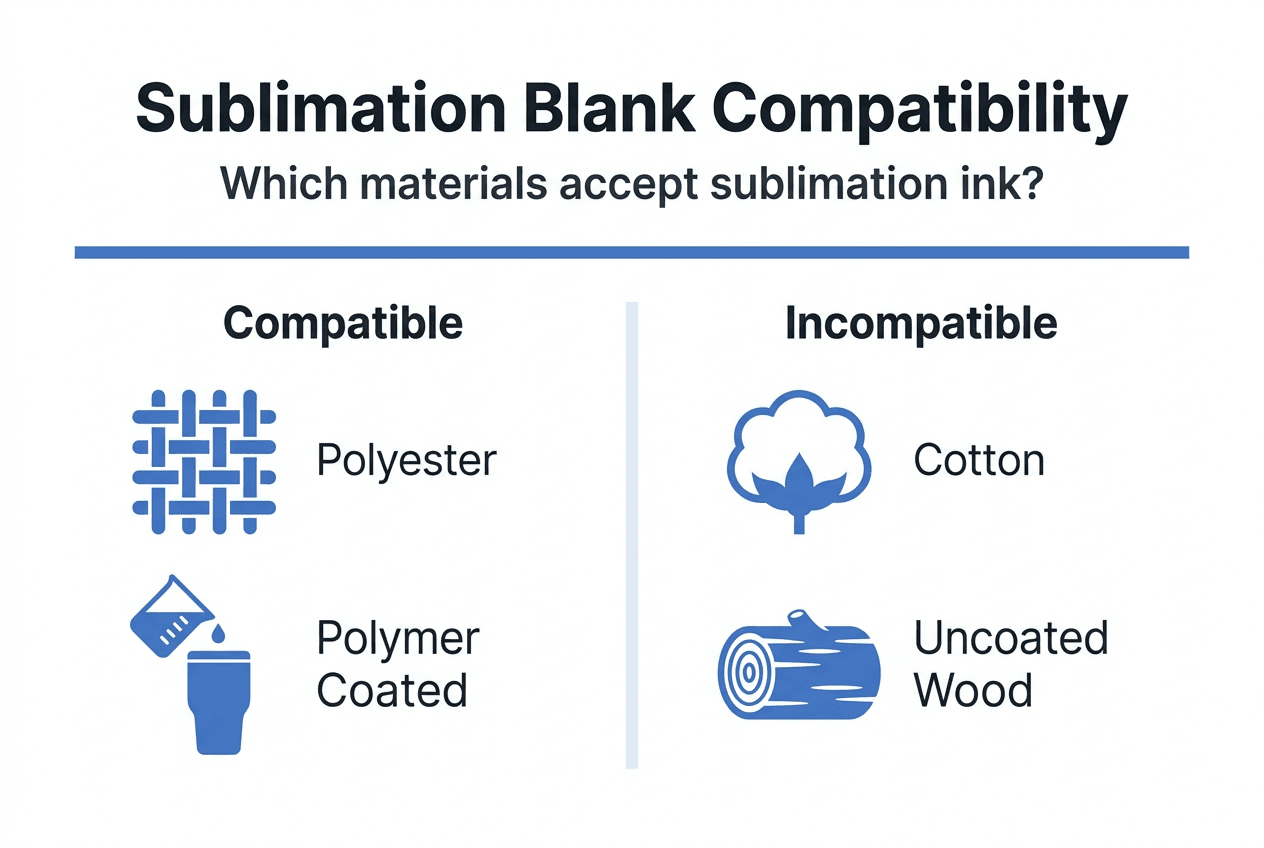
The [selection process for quality blanks](https://subliblanks.com/blogs/news/sublimation blanks selection guide 2026) begins with understanding these material requirements. Stock blanks that align with your target products and customer expectations for durability.
Common misconceptions and mistakes in sublimation blanks
Many craft entrepreneurs waste money and inventory by believing myths about sublimation compatibility. Understanding these misconceptions prevents frustrating failures and improves your bottom line.
The biggest mistake is attempting sublimation on dark-coloured blanks expecting vibrant results. Sublimation ink is translucent, meaning it shows the base colour underneath. A bright red design on a black shirt appears muddy brown or invisible. Dark blanks work only for vintage effects or designs intentionally incorporating the base colour. Light colours always deliver better vibrancy.
Not all blanks labelled “sublimation compatible” offer equal quality. Cheap blanks often have inconsistent coatings leading to faded prints and wasted production time. Budget suppliers may use thin polymer layers that can’t withstand proper heat exposure or degrade after minimal use. Premium blanks cost more initially but reduce waste and returns.
Heat and time settings critically affect print durability. Each blank type requires specific temperature, pressure, and duration combinations. Using generic settings across all products produces inconsistent results. Mugs need different parameters than t-shirts. Following manufacturer recommendations prevents common quality issues.
Cotton content ruins sublimation quality unless specially treated. A 50% cotton blend only accepts ink on the polyester fibres, creating a faded, washed-out appearance. Customers disappointed with results often blame printing technique when material choice caused the problem. Always verify fibre content before pressing.
Pro Tip: Create a reference chart documenting successful heat press settings for each blank type you stock. Include temperature, time, and pressure alongside a photo of the finished product for quick troubleshooting.
Some businesses buy blanks from multiple suppliers without consistency checks, leading to colour variations between supposedly identical products. Establish relationships with [reliable suppliers offering quality guarantees](https://subliblanks.com/blogs/news/why choose sublimation blanks) and consistent coating standards. Testing samples from new suppliers before bulk orders saves money and preserves your reputation.
Another misconception involves storage conditions. Sublimation blanks with polymer coatings can degrade when exposed to excessive heat or humidity before printing. Store blanks in cool, dry locations and rotate stock to use older inventory first. These [practical beginner tips](https://subliblanks.com/blogs/news/7 tips sublimation blanks for beginners) prevent avoidable losses.
Comparing sublimation blank types: fabric vs hard surfaces
Choosing between fabric and hard surface blanks depends on your product strategy, target market, and profit margins. Each category offers distinct advantages and challenges worth evaluating.
Fabric blanks require polyester blends for successful printing, with higher percentages delivering more vibrant results. They suit businesses focusing on custom apparel, promotional textiles, and personalised gifts like cushions or tote bags. Fabric prints feel soft and natural because ink bonds within fibres rather than sitting on the surface. Wearable products appeal to broad customer bases and generate repeat orders.
Hard surface blanks feature polymer coatings engineered for durability on non-fabric materials. Mugs, coasters, and photo panels target customers wanting decorative items and practical gifts. These blanks typically cost more per unit but command higher retail prices. A sublimation mug sells for significantly more than a printed t-shirt despite similar production costs.
| Feature | Fabric Blanks | Hard Surface Blanks |
|---|---|---|
| Material Base | Polyester or blends | Polymer-coated ceramic, metal, wood |
| Best Products | T-shirts, bags, cushions | Mugs, coasters, plaques |
| Print Feel | Soft, integrated | Smooth, glossy |
| Durability | Excellent with proper care | Excellent, dishwasher varies |
| Cost Per Unit | £2-8 typically | £3-15 typically |
| Profit Margin | Moderate | Higher |
Coating quality determines print adherence and lifespan across all blank types. Premium fabric blanks use tightly woven polyester that prevents ghosting and colour bleeding. Quality hard surface coatings withstand dishwashers and daily handling without chipping or fading. Budget alternatives may look identical initially but fail after minimal use.
Price-quality trade-offs influence business profitability directly. Cheap blanks attract price-conscious customers but generate returns and damage your reputation. Premium blanks cost 30-50% more but justify higher retail prices and reduce replacement costs. Calculate true cost per successful print rather than just blank purchase price.
Pro Tip: Offer both fabric and hard surface products to diversify revenue streams. Customers buying custom mugs often return for matching t-shirts, increasing lifetime value per client.
Your equipment also affects blank selection. Some heat presses handle only flat items whilst others accommodate mugs and curved surfaces. Investing in [versatile equipment and accessories](https://subliblanks.com/blogs/news/sublimation blanks checklist reliable 7 steps) expands your product range without requiring multiple machines. Consider your current capabilities and growth plans when choosing blank categories to stock.
Practical tips for selecting and using sublimation blanks
Selecting quality sublimation blanks and using them correctly separates profitable businesses from struggling start-ups. These actionable strategies improve print quality whilst reducing waste.
Verify polyester content or coating quality before purchasing any blank. Request material specifications from suppliers and test samples before committing to bulk orders. Legitimate suppliers provide detailed product information including fibre percentages, coating types, and recommended heat settings. Vague descriptions often indicate inferior products.
Start with light-coloured blanks when building inventory. White and cream bases display designs most accurately and appeal to broader customer preferences. Experiment with coloured blanks only after mastering white substrates and understanding colour interaction with translucent inks. This approach minimises learning curve waste.
Use suppliers offering no minimum order quantities for flexible stock management. Small businesses benefit from testing products without committing to large inventories. Trade wholesalers supporting craft entrepreneurs enable experimentation with new product lines without financial risk. Stock depth grows naturally as you identify best-selling items.
Follow heat press manufacturers’ recommended settings for each blank type. Create detailed reference guides documenting successful temperature, time, and pressure combinations. Adjust settings when switching between fabric weights, mug sizes, or coating types. Consistency in process produces consistency in results.
Pro Tip: Invest in quality heat-resistant tape and Teflon sheets to protect blanks during pressing. These accessories prevent scorching, ensure even heat distribution, and extend blank lifespan by reducing direct contact with press plates.
Inspect blanks consistently for coating quality before printing. Look for even colour, smooth surfaces free from scratches, and consistent thickness. Reject blanks showing discolouration, rough patches, or visible coating defects. Catching issues before printing saves ink and production time. [Premium blanks with verified quality](https://subliblanks.com/blogs/news/sublimation blanks selection guide 2026) reduce inspection time and waste.
Develop relationships with reliable suppliers who understand your business needs. Consistent quality matters more than rock-bottom prices when building customer trust and minimising returns. Suppliers offering technical support help troubleshoot problems quickly, reducing downtime and frustration.
Maintain proper storage conditions for sublimation blanks. Keep them in climate-controlled environments away from direct sunlight, moisture, and extreme temperatures. Polymer coatings can degrade when exposed to harsh conditions before printing. Rotate stock to use older inventory first, preventing age-related quality issues.
Track blank performance by recording which products generate returns or customer complaints. This data reveals quality patterns and helps identify problematic suppliers or blank types. Discontinue poor performers quickly and double down on reliable options. Understanding the [role quality blanks play](https://subliblanks.com/blogs/news/sublimation blanks role business) in business success drives smarter purchasing decisions.
Boost your sublimation business with quality blanks and supplies
Transforming sublimation knowledge into profitable products requires reliable supplies and practical accessories. UK and Ireland craft businesses benefit from accessing premium blanks without restrictive minimum orders, enabling flexible inventory management as your business grows.
Protect your prints and extend blank lifespan with essential heat press accessories. A quality 9x12 inch Teflon sheet prevents scorching, ensures even heat distribution, and keeps your press plates clean for consistent results across hundreds of prints. These protective layers prove invaluable when working with delicate coatings or achieving professional finishes.
Expand your product range beyond mugs and t-shirts with speciality blanks like the 440x250 bar runner, perfect for hospitality clients and promotional campaigns. Diversifying your catalogue attracts different customer segments and increases average order values. Explore comprehensive sublimation supplies designed for small businesses ready to grow their custom printing operations with confidence and quality.
Frequently asked questions
What is a sublimation blank?
A sublimation blank is any material with polyester content or polymer coating engineered to accept sublimation ink during heat transfer. These specially prepared surfaces enable permanent dye bonding at a molecular level, creating vibrant designs that resist fading, cracking, and peeling through washing and daily use.
Can I sublimate on any fabric?
No, sublimation requires minimum 65% polyester content for successful prints on fabric. Pure cotton, linen, and other natural fibres lack the molecular structure needed for dye bonding. The ink simply washes away without adhering. Light-coloured polyester fabrics deliver the most vibrant, durable results for wearable products.
Why do some sublimation prints fade or peel?
Poor print durability typically results from low-quality blanks with inconsistent or thin polymer coatings that can’t withstand proper heat exposure. Incorrect heat press settings, insufficient pressure, or using incompatible materials also cause premature fading and peeling. Premium blanks and proper technique prevent these common failures.
How do I choose the best sublimation blanks for my business?
Verify polyester content or coating quality through supplier specifications and sample testing before bulk purchases. Select light-coloured blanks initially to optimise print vibrancy and minimise colour-matching challenges. Prioritise supplier reputation and consistent quality over lowest prices to reduce waste and build customer trust through reliable products.


