



How to choose sublimation equipment for your UK business
Choosing the right sublimation equipment can feel overwhelming when you’re bombarded with countless printer models, heat press types, and technical specifications. Whether you’re launching a custom product business or expanding your existing operation, selecting equipment that matches your needs and budget is crucial for success. This guide simplifies the decision-making process with practical insights and expert recommendations tailored for UK and Ireland entrepreneurs.
Table of Contents
- Understanding The Basics: What Sublimation Equipment Do You Need?
- Assessing Your Business Needs: Selecting Printers And Heat Presses
- Choosing Sublimation Inks, Papers, And Substrates For Best Results
- Step-By-Step Guide To Setting Up And Operating Sublimation Equipment
- Troubleshooting Common Issues And Ensuring Quality Control
- Find The Best Sublimation Equipment And Supplies In The UK
- Frequently Asked Questions
Key takeaways
| Point | Details |
|---|---|
| Essential equipment | You need a sublimation printer, inks, paper, heat press, and compatible substrates to start producing quality custom products. |
| Business-fit matters | Match your printer and heat press capacity to your production volume, product range, and budget constraints for optimal return. |
| Quality supplies drive results | Premium sublimation inks and paper directly impact colour vibrancy, print durability, and customer satisfaction. |
| Precise heat application | Correct temperature, pressure, and timing on your heat press prevent defects and ensure professional transfers every time. |
| Material compatibility counts | Understanding which substrates work with sublimation saves money and improves final product quality significantly. |
Understanding the basics: what sublimation equipment do you need?
Sublimation printing transforms your creative designs into permanent, vibrant images on various products. Sublimation is a versatile solution that combines creativity with durability, ideal for creating unique t-shirts, eye-catching mugs, or bespoke home décor. The process uses heat to convert solid dye into gas, which then bonds with polymer-based materials.
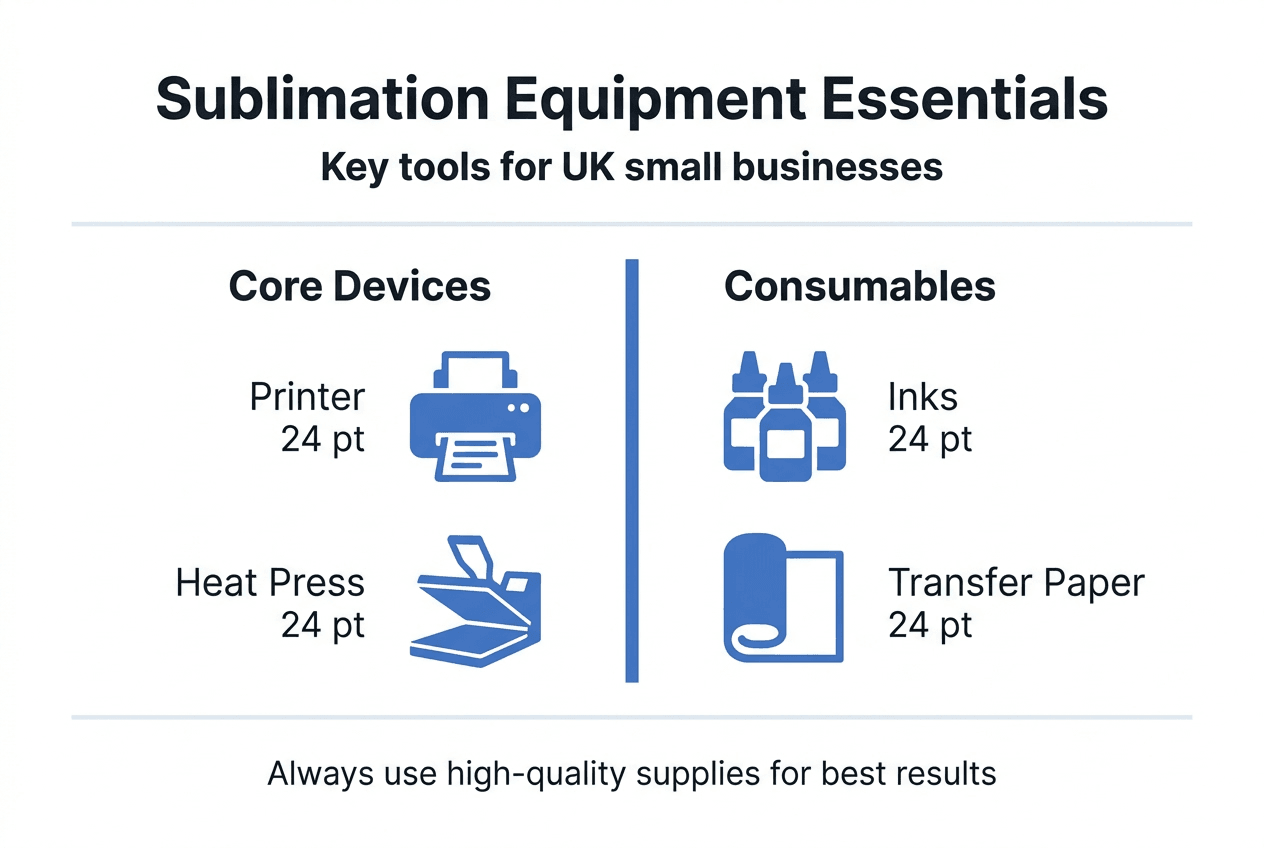
Before investing, you need to understand the essential sublimation equipment components. Each piece serves a specific function in the production workflow. The sublimation printer applies special ink to transfer paper, whilst the heat press activates the chemical transformation that creates permanent images.
Your core equipment list includes these fundamental items:
- A dedicated sublimation printer designed for dye-sublimation inks
- Sublimation-specific inks formulated for heat transfer
- Specialised transfer paper that releases ink efficiently
- A heat press with precise temperature and pressure control
- Sublimation-compatible substrates like polyester fabrics or coated hard surfaces
Here’s how different equipment types compare:
| Equipment Type | Primary Purpose | Key Consideration |
|---|---|---|
| Desktop sublimation printer | Small to medium print runs | Print size capacity and ink cost |
| Commercial sublimation printer | High-volume production | Speed, reliability, and service support |
| Clamshell heat press | Space-efficient pressing | Limited access for thick items |
| Swing-away heat press | Versatile substrate handling | Requires more workspace |
| Sublimation paper | Ink transfer medium | Release efficiency and curl resistance |
Pro Tip: Focus your initial investment on equipment that aligns with your primary product categories rather than trying to cover every possible application at once.
The sublimation process differs from traditional printing because the ink becomes part of the material rather than sitting on top. This creates scratch-resistant, washable designs that maintain colour intensity for years. Understanding this fundamental principle helps you appreciate why equipment quality matters so much.
Assessing your business needs: selecting printers and heat presses
Your production requirements should drive equipment selection, not the other way round. A small startup creating personalised mugs has vastly different needs than a business producing hundreds of custom sports jerseys weekly. Matching capacity to demand prevents both bottlenecks and wasteful overspending.
When evaluating sublimation printers, consider these critical factors:
- Maximum print size dictates your largest possible designs
- Print speed affects how many items you can produce hourly
- Colour accuracy ensures brand consistency across orders
- Ink system design impacts running costs and maintenance frequency
- Manufacturer support availability saves downtime when issues arise
Getting started with sublimation requires a dedicated sublimation printer, sublimation-specific inks and paper, sublimation-ready substrates, and heat tape, plus a heat source with applied pressure. Desktop models suit businesses producing fewer than 50 items daily, whilst commercial systems handle hundreds of transfers efficiently.
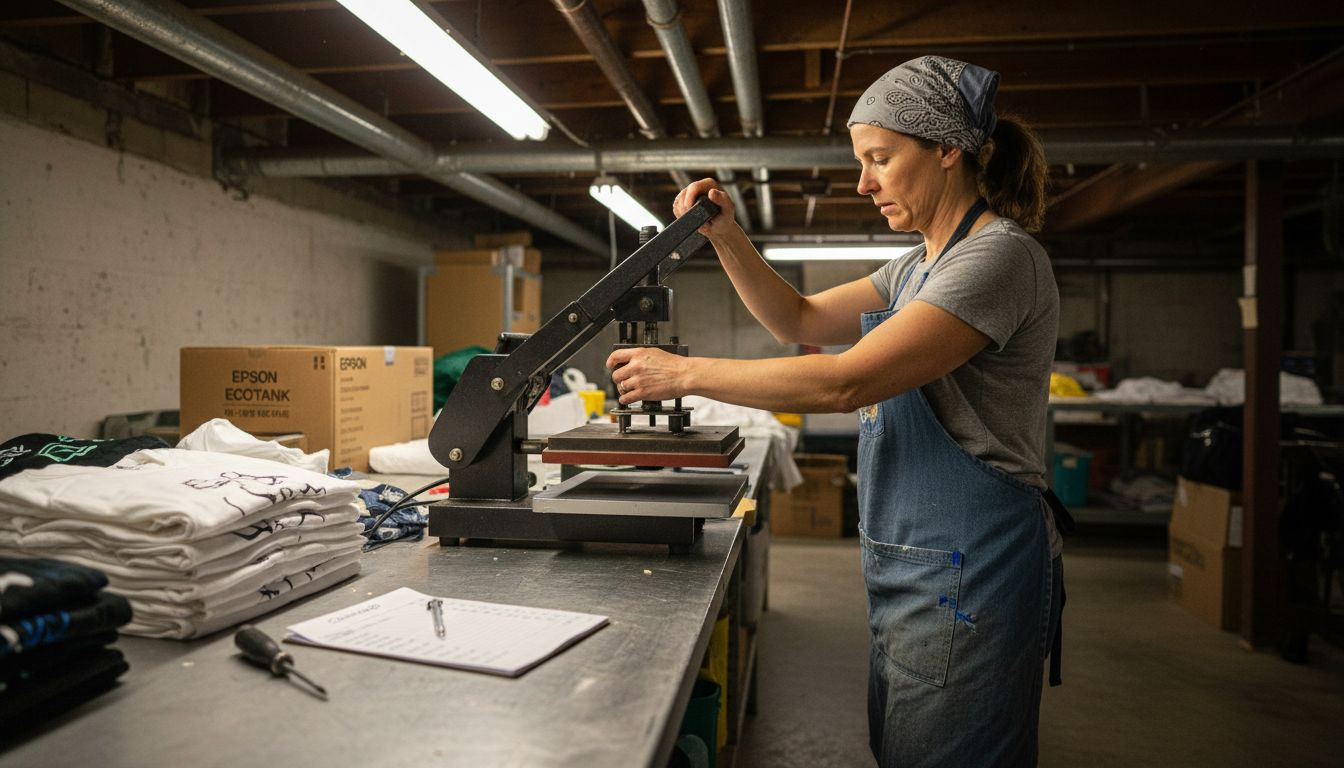
Heat press selection involves understanding the trade-offs between different designs. Clamshell presses offer compact footprints and lower prices but make positioning thick items challenging. Swing-away models provide superior access and even pressure distribution but require more workspace. Flatbed presses excel at large textile pieces but cost considerably more.
| Printer Model Type | Typical Print Size | Production Volume | Approximate Price Range |
|---|---|---|---|
| Entry desktop | A4 | 10-30 items/day | £200-£500 |
| Professional desktop | A3 | 30-100 items/day | £500-£1,500 |
| Commercial system | A2 or larger | 100+ items/day | £2,000-£10,000+ |
| Heat Press Type | Best For | Workspace Needed | Price Range |
|---|---|---|---|
| Clamshell | Flat items, limited space | Minimal | £150-£800 |
| Swing-away | Varied substrates, quality focus | Moderate | £400-£2,000 |
| Flatbed | Large textiles, apparel | Substantial | £1,000-£5,000+ |
Balancing cost against performance requires honest assessment of your growth trajectory. Buying equipment that’s too basic means replacing it within months as demand increases. Conversely, purchasing commercial-grade machinery for hobby-level production wastes capital you could invest in marketing or inventory.
Pro Tip: Choose modular equipment systems that allow capacity expansion through add-on components rather than complete replacement as your business scales.
Review examples of sublimation equipment to understand how different configurations support various business models. Consider visiting trade shows or requesting demonstrations to see equipment performance firsthand before committing to purchases.
Choosing sublimation inks, papers, and substrates for best results
Equipment quality means nothing without proper consumables. The inks, papers, and substrates you select determine whether your finished products look professional or amateurish. Cutting corners on supplies rarely saves money because poor results damage your reputation and generate costly returns.
Sublimation-specific inks differ fundamentally from standard printer inks. They’re formulated to vaporise at precise temperatures and bond chemically with polyester fibres or polymer coatings. Using regular inks in a sublimation printer causes clogged print heads and wasted materials. Quality inks deliver vibrant colours that resist fading even after hundreds of wash cycles.
Transfer paper selection impacts both print quality and production efficiency. Heavyweight papers resist curling during storage and handling but cost more per sheet. Lighter-weight options reduce expenses but may shift during pressing, causing ghosting. Release coatings affect how completely ink transfers from paper to substrate, directly influencing colour saturation.
Substrate compatibility determines which products you can offer customers. Sublimation combines creativity with durability, making it ideal for unique t-shirts, eye-catching mugs, or bespoke home décor. Natural fibres like cotton don’t work with sublimation unless they’re blended with at least 65% polyester. Hard surfaces require special polymer coatings applied during manufacturing.
Key compatibility checks when selecting materials:
- Verify polyester content in fabrics reaches minimum 50% for acceptable results
- Confirm hard substrates carry sublimation-compatible coatings from reputable suppliers
- Test colour accuracy on white versus light-coloured base materials
- Assess surface texture impacts on image sharpness and detail retention
- Check washing durability specifications for textile applications
Supply quality directly affects customer satisfaction and repeat business. Vibrant, long-lasting prints justify premium pricing and generate positive reviews. Faded or peeling designs trigger complaints and damage your brand regardless of how good your initial equipment investment was.
Explore sublimation promotional items to understand how material selection influences product applications. Understanding sublimation terminology helps you communicate effectively with suppliers and troubleshoot issues.
Step-by-step guide to setting up and operating sublimation equipment
Proper equipment setup prevents frustrating failures and wasted materials. Following manufacturer specifications carefully during initial configuration saves hours of troubleshooting later. Rushing through setup almost always creates problems that impact your first production runs.
Follow these steps for successful equipment installation:
- Unpack your printer carefully, removing all protective materials and shipping locks before powering on.
- Install sublimation ink cartridges or fill continuous ink supply systems according to manufacturer instructions, avoiding air bubbles.
- Load sublimation paper with the coated side facing the correct direction for your specific printer model.
- Run printer alignment and nozzle check routines to ensure all colours print clearly without gaps or streaking.
- Position your heat press on a stable, level surface with adequate clearance for safe operation.
- Calibrate heat press temperature using an external thermometer to verify displayed settings match actual platen temperature.
- Test pressure settings by pressing scrap materials and checking for even contact across the entire pressing surface.
Printer calibration affects colour accuracy and consistency across production runs. Most sublimation printers include software utilities for adjusting colour profiles and print density. Spend time creating test prints and comparing results to your design files before accepting paying orders.
Heat press settings vary considerably between substrate types. Getting started with sublimation requires a heat source with applied pressure for effective transfer. Mugs typically need 180-200°C for 180-240 seconds, whilst polyester shirts work best at 190-205°C for 45-60 seconds. Recording successful settings for each product type streamlines future production.
Pro Tip: Secure transfer prints to substrates using heat-resistant tape before pressing to prevent movement that causes blurry or ghosted images.
Critical: Incorrect temperature causes washed-out colours or scorched materials, whilst insufficient pressure creates incomplete transfers with white spots. Always verify settings before pressing production items.
Consult detailed printer setup guides for model-specific configuration instructions. Understanding the complete sublimation transfer process helps you anticipate potential issues before they occur.
Troubleshooting common issues and ensuring quality control
Even perfectly configured equipment occasionally produces unexpected results. Recognising common problems quickly and knowing their solutions minimises wasted materials and maintains production schedules. Most sublimation issues stem from incorrect settings, contaminated materials, or equipment maintenance oversights.
Frequent challenges include:
- Colour fading results from insufficient heat, inadequate pressure, or expired sublimation inks
- Ghosting occurs when transfer paper shifts during pressing or is removed before cooling completely
- Uneven transfers indicate pressure inconsistencies across the heat press platen or warped substrates
- Print head clogs develop from using incorrect inks or allowing printers to sit idle for extended periods
- Blurry images suggest movement during transfer or incorrect paper loading in the printer
Preventing these issues requires consistent attention to detail throughout your workflow. Proper control of print quality and extended equipment life require knowledge of common issues and their fixes. Regular printer maintenance prevents most technical failures before they disrupt production.
Quick troubleshooting checks before every print run:
- Verify heat press reaches target temperature and holds it steadily
- Confirm sublimation paper loads with coating side positioned correctly
- Check that substrates are clean, dry, and free from oils or residues
- Run printer nozzle checks to identify clogged jets before wasting materials
- Inspect heat press platen for debris or damage affecting pressure distribution
Maintenance schedules vary by equipment manufacturer but typically include weekly print head cleaning cycles and monthly heat press calibration checks. Desktop printers benefit from running at least one test print weekly even during slow periods to prevent ink from drying in nozzles.
Testing new designs or substrates with sample prints before full production runs catches compatibility issues early. Creating a reference library of successful settings for different product types speeds up setup and reduces errors. Document everything that works well so you can replicate results consistently.
Review equipment maintenance tips regularly to keep your investment performing optimally. Developing systematic quality control habits separates professional operations from inconsistent hobbyists.
Find the best sublimation equipment and supplies in the UK
Now that you understand how to select and operate sublimation equipment effectively, sourcing quality products from reliable UK suppliers becomes your next priority. SubliBlanks serves business owners and entrepreneurs throughout the UK and Ireland with comprehensive sublimation solutions and no minimum order requirements.
Our product range includes everything from entry-level desktop printers to commercial-grade equipment, along with premium inks, papers, and an extensive selection of sublimation blanks. Whether you’re creating personalised mugs, custom apparel, or unique home décor items, you’ll find the supplies needed to deliver professional results consistently.
Explore UK wholesale sublimation supplies to discover equipment and materials suited to your business goals. Quality products like our A3 SubliFlex sublimation paper deliver reliable transfers every time, whilst speciality items such as bar runner sublimation blanks help you expand your product offerings.
Frequently asked questions
What is sublimation printing and why is it popular for custom products?
Sublimation printing uses heat to transform solid dye into gas that bonds permanently with polyester fibres or polymer-coated surfaces. The process creates vibrant, durable designs that resist fading, cracking, or peeling even after hundreds of wash cycles. This longevity and colour richness make sublimation ideal for personalised items that customers use frequently.
How do I know which sublimation printer is right for my business size?
Smaller operations producing fewer than 50 items daily typically succeed with desktop A4 or A3 printers costing £200-£1,500. Businesses handling 100+ daily transfers should invest in commercial systems offering faster speeds and larger print areas. Assess your expected order volume and largest design sizes to determine the minimum specifications your printer must meet.
What substrates can be used with sublimation printing?
Sublimation works best on materials containing at least 50% polyester content, though 100% polyester delivers optimal results. Hard surfaces like mugs, coasters, and phone cases require special polymer coatings applied during manufacturing. Always verify substrates are specifically labelled as sublimation-compatible before purchasing to avoid wasted materials and disappointing results.
How important is heat press quality and settings for sublimation?
Heat press performance directly determines transfer quality and consistency across production runs. Correct temperature, pressure, and timing prevent common defects like incomplete transfers, scorched materials, or washed-out colours. Investing in reliable equipment with accurate digital controls and even pressure distribution improves product quality significantly whilst reducing material waste from failed transfers.


