



What is a printing blank? A guide for UK business owners
Many business owners assume creating customised products requires expensive equipment, technical expertise, or large upfront investments. In reality, printing blanks make personalisation straightforward and accessible for entrepreneurs across the UK and Ireland. A printing blank is simply a pre-made item designed specifically for customisation through printing, engraving, or heat transfer. Understanding how these versatile products work opens doors to new revenue streams, branded merchandise opportunities, and creative business ventures without the complexity you might expect. This guide explains everything you need to know about printing blanks, from materials to techniques.
Table of Contents
- What Is A Printing Blank And How Does It Work?
- Materials Commonly Used For Printing Blanks
- Printing Techniques And How They Use Printing Blanks
- Choosing The Right Printing Blank For Your Business Needs
- Discover Quality Printing Blanks At SubliBlanks
- Frequently Asked Questions
Key takeaways
| Point | Details |
|---|---|
| Pre-made customisation base | Printing blanks are unfinished items ready for personalisation through various printing methods |
| Multiple material options | Available in MDF, plastics, metals, and textiles to suit different project requirements |
| Compatible with various techniques | Work with sublimation, screen printing, laser engraving, and other customisation processes |
| Cost-effective business solution | Enable small batch production without minimum order quantities or large capital investment |
| Versatile product applications | Create badges, promotional items, homeware, textiles, and branded merchandise efficiently |
What is a printing blank and how does it work?
A printing blank is an unfinished product manufactured specifically for customisation. These items arrive ready to accept designs through printing, engraving, or heat transfer processes. Think of them as canvases waiting for your creative input. Unlike finished products, blanks lack branding, imagery, or personalised elements, making them perfect foundations for bespoke creations.
Printing blanks serve as foundational items for custom printing methods like sublimation and screen printing. They come in countless forms suited to different business needs. Common examples include:
- MDF badges and keyrings for promotional merchandise
- Coated mugs and plates for personalised homeware
- Polyester textiles like t-shirts and tea towels
- Bar runners and coasters for hospitality branding
- Metal and acrylic panels for signage
The beauty of printing blanks lies in their simplicity. You purchase the blank item, apply your design using appropriate equipment, and create a finished product ready for sale or distribution. This approach eliminates manufacturing complexity whilst maintaining professional quality. For UK entrepreneurs, blanks offer flexibility to test product ideas, fulfil custom orders, or build inventory gradually without committing to large production runs.
Pro Tip: Start with versatile blanks like MDF badges or polyester textiles. These materials work with multiple printing methods, giving you flexibility as you explore different customisation techniques and find your niche.
The process typically involves three stages. First, you source appropriate blanks for your intended product. Second, you prepare your design using software compatible with your printing method. Third, you transfer the design onto the blank using equipment like sublimation printers, laser engravers, or screen printing setups. The result is a professional, customised product created in-house with minimal waste and maximum control over quality and turnaround times.
Materials commonly used for printing blanks
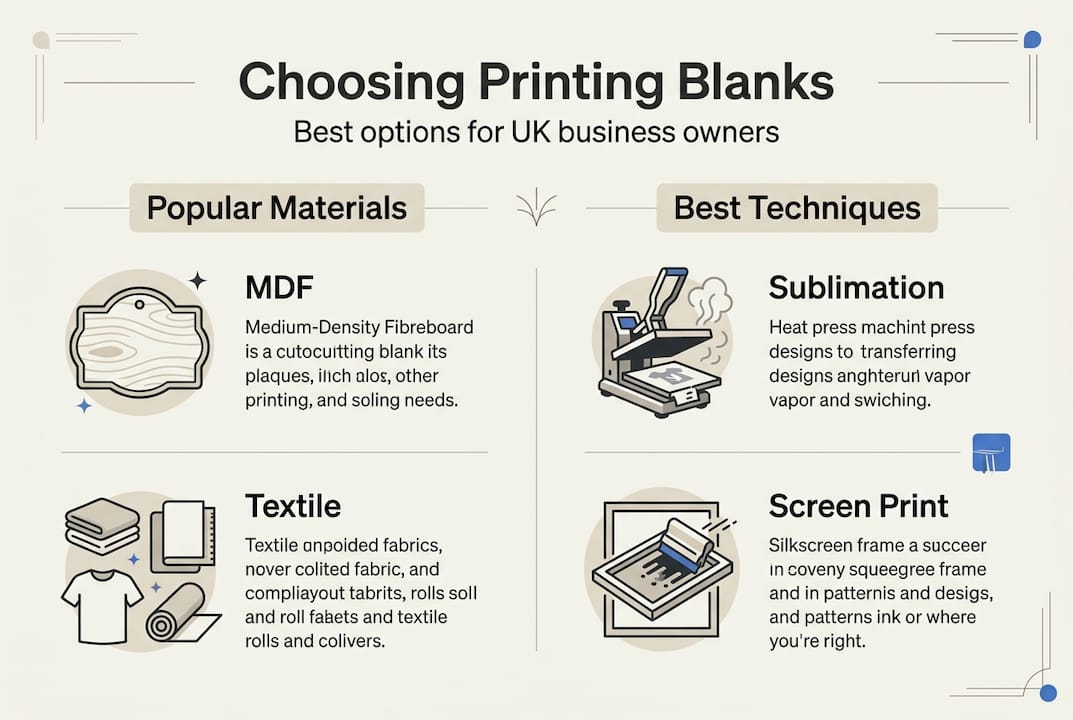
Printing blanks can be made from MDF, plastics, metals, and textiles, each suited for different customisation methods and product uses. Understanding material properties helps you match blanks to your business goals and target market expectations.
MDF (Medium Density Fibreboard) remains popular for badges, plaques, and decorative items. This engineered wood product offers smooth surfaces ideal for sublimation printing and laser engraving. MDF blanks provide excellent value, lightweight portability, and clean edges. They work brilliantly for promotional products, event badges, and personalised gifts. The material accepts vibrant colours through sublimation whilst laser engraving creates precise, permanent designs. However, MDF lacks water resistance, making it unsuitable for outdoor use or items requiring frequent washing.

Plastic blanks encompass various polymers including acrylic, PVC, and polyester-coated substrates. These materials excel in durability and weather resistance. Coated plastics accept sublimation printing beautifully, producing vivid, long-lasting images on items like keyrings, phone cases, and promotional merchandise. Acrylic sheets suit laser engraving for signage and awards. Plastic blanks typically cost more than MDF but offer superior longevity, especially for products facing regular handling or outdoor conditions.
Metal blanks include aluminium, stainless steel, and brass options. Metal provides premium aesthetics and exceptional durability. Sublimation-coated metal blanks create stunning photo panels, jewellery, and high-end promotional items. Uncoated metals work perfectly with laser engraving for industrial labels, identification tags, and architectural signage. Metal blanks command higher prices but deliver professional results that justify premium pricing for finished products.
Textile blanks cover polyester fabrics and blends suitable for heat transfer and sublimation. T-shirts, tea towels, cushion covers, and bags fall into this category. Polyester content determines print quality, with higher percentages yielding brighter, more durable results. Textile blanks enable apparel businesses, homeware ranges, and promotional textile products. They require different handling than rigid blanks but open vast market opportunities.
| Material | Best For | Durability | Cost |
|---|---|---|---|
| MDF | Badges, plaques, indoor items | Moderate | Low |
| Plastic | Keyrings, outdoor items | High | Moderate |
| Metal | Premium products, signage | Very High | High |
| Textiles | Apparel, homeware | Moderate to High | Moderate |
Pro Tip: Request sample blanks before committing to large orders. Testing materials with your specific equipment and designs prevents costly mistakes and ensures the finished product meets your quality standards.
Printing techniques and how they use printing blanks
Sublimation and screen printing are popular printing techniques leveraging blanks to achieve vibrant, long-lasting custom designs. Each method offers distinct advantages depending on your product type, volume requirements, and design complexity.
Sublimation printing transforms solid dye into gas using heat and pressure, bonding it permanently into polyester-coated surfaces. This technique produces photographic quality images with unlimited colours and no texture. The process works on coated blanks including mugs, plates, textiles with high polyester content, and specially prepared MDF or metal items. Sublimation creates durable, washable designs that won’t crack, peel, or fade with normal use.
The sublimation transfer process follows these steps:
- Design your artwork using graphics software with colour profiles optimised for sublimation
- Print the design onto sublimation paper using a sublimation printer with specialist inks
- Position the printed paper against your blank, securing it with heat-resistant tape
- Apply heat and pressure using a heat press at temperatures typically between 180-200°C
- Remove the paper to reveal the transferred, permanent design
Pro Tip: Always mirror your designs before printing for sublimation. The image prints in reverse on the paper, then transfers correctly onto the blank during the heat press stage.
Screen printing pushes ink through a mesh screen onto the blank surface, creating bold, opaque designs. This method suits textile blanks, paper products, and some rigid materials. Screen printing excels for simple designs with few colours, particularly when producing larger quantities. Setup costs make it less economical for single items, but per-unit costs decrease significantly with volume.
Laser engraving offers precise and durable customisation on various blank materials, beneficial for branding and mass production. Unlike printing methods that add material to surfaces, laser engraving removes material through focused light beams. This creates permanent marks resistant to wear, chemicals, and environmental exposure. Laser engraving works on wood, leather, acrylic, anodised metals, and coated materials. The technique suits detailed designs, text, and intricate patterns impossible with traditional printing.
Beginners should explore sublimation blanks tips to understand equipment requirements, common mistakes, and techniques for achieving professional results. Each printing method requires specific equipment, but entry-level options make customisation accessible for small businesses and creative entrepreneurs starting their journey.
Choosing the right printing blank for your business needs
Choosing the right printing blank depends on your product type, printing method, target audience, and cost considerations. Strategic selection ensures your finished products meet quality expectations whilst maintaining healthy profit margins.
Start by identifying your target market and product category. Corporate clients seeking promotional merchandise prioritise durability and professional appearance, making metal or high-quality plastic blanks appropriate despite higher costs. Conversely, event organisers purchasing badges for single-use occasions accept lower-cost MDF options. Understanding end-use scenarios guides material selection effectively.
Evaluate these key criteria when selecting blanks:
- Printing method compatibility: Ensure the blank accepts your chosen technique (sublimation requires coated surfaces, laser engraving needs suitable materials)
- Durability requirements: Match material longevity to product lifespan expectations
- Design complexity: Intricate designs need smooth, high-quality surfaces for optimal reproduction
- Cost structure: Balance material costs against selling prices and profit margins
- Availability and lead times: Reliable suppliers prevent production delays and stockouts
- Size and shape options: Variety enables diverse product ranges without changing suppliers
Common pitfalls include purchasing uncoated blanks for sublimation (the design won’t transfer properly), selecting materials incompatible with your equipment, or choosing blanks that compromise finished product quality to save pennies. These mistakes damage your reputation and waste resources.
| Business Type | Recommended Blanks | Rationale |
|---|---|---|
| Event merchandise | MDF badges, polyester lanyards | Cost-effective for single-use or short-term products |
| Corporate gifts | Metal pens, premium mugs | Professional appearance justifies higher investment |
| Retail homeware | Coated ceramics, cushion covers | Durability and washability essential for consumer products |
| Signage services | Acrylic panels, metal plates | Weather resistance and longevity required |
When scaling from small batches to larger production runs, establish relationships with reliable suppliers offering consistent quality. Test samples from new suppliers before committing to bulk orders. Volume discounts improve margins, but only if product quality remains consistent across batches.
Pro Tip: Calculate your true cost per finished item including the blank, consumables like ink or paper, equipment running costs, and labour time. This reveals which products deliver best returns and informs pricing strategies that keep your business profitable.
Discover quality printing blanks at SubliBlanks
SubliBlanks supplies trade customers across the UK and Ireland with comprehensive ranges of printing blanks suitable for sublimation, laser engraving, and other customisation methods. Our catalogue includes everything from round MDF name badges to rectangle pin badges, alongside sublimation papers, heat presses, and laser engraving equipment.
What sets us apart is our no minimum order quantity policy. Whether you need five blanks to test a new product idea or five hundred for a corporate order, we support your business at every stage. Our wholesale sublimation supplies include badge-making machines, DTF supplies, xTool laser engravers, 3D printing filaments, and packaging materials. This comprehensive offering means you source everything needed for your customisation business from one reliable supplier, simplifying procurement and ensuring compatible products throughout your workflow.
Frequently asked questions
What exactly is a printing blank?
A printing blank is an unfinished product manufactured specifically for customisation through printing, engraving, or heat transfer. These items arrive without designs, branding, or personalisation, serving as foundations for creating bespoke products. Common examples include MDF badges, coated mugs, polyester textiles, and metal panels ready to accept your creative designs.
Which materials work best for different printing methods?
Sublimation requires polyester-coated surfaces like specially prepared MDF, ceramics, metals, or high-polyester textiles. Laser engraving works on wood, leather, acrylic, anodised aluminium, and coated materials. Screen printing suits textiles, paper, and some plastics. Match your blank material to your equipment capabilities and intended printing technique for optimal results.
Can beginners successfully use printing blanks?
Absolutely. Printing blanks make customisation accessible for entrepreneurs without manufacturing experience. Start with simple projects using versatile materials like MDF badges or polyester items. Basic sublimation equipment or entry-level laser engravers enable professional results after minimal practice. Many suppliers offer guidance, tutorials, and sample packs to help beginners develop skills confidently.
Where should UK businesses source printing blanks?
Source from established trade suppliers offering consistent quality, reliable delivery, and appropriate certifications. Look for suppliers with no minimum order quantities if you’re starting small or testing products. Verify that blanks suit your specific equipment and printing methods. Request samples before bulk purchases to confirm quality meets your standards and customer expectations.
How do printing blanks reduce business costs?
Blanks eliminate manufacturing setup costs, tooling expenses, and minimum order requirements associated with traditional production. You purchase only what you need, when you need it, reducing inventory costs and waste. In-house customisation removes outsourcing fees and shipping delays. This model enables profitable small-batch production and rapid product testing without significant capital investment.


