



Stamp embossing for print shops: the trade buyer's guide
TL;DR:
- Stamp embossing creates raised or recessed impressions on materials using pressure, heat, foil, or powder. Different methods, including dry embossing, hot-foil stamping, and heat embossing, suit various applications from premium stationery to packaging and bespoke gifts. Proper equipment, consumables, and substrate testing are crucial to achieving high-quality results and minimizing waste.
Stamp embossing is the process of creating a raised or recessed impression on a substrate using pressure, heat, foil, or powder. For a UK or Irish print shop, the practical first step is to identify which method suits your product range and volume, then source the right machine and consumables from a trade wholesaler such as Subliblanks.
Table of Contents
- What is stamp embossing? The three main methods
- How each embossing method works in practice
- Which method suits which job?
- What equipment and supplies does a print shop need?
- Which substrates emboss well?
- Common problems and how to fix them
- Costs and lead times for UK trade buyers
- How to run a test and sign off a job
- Key takeaways
- A note from the trade floor
- Stock your embossing setup through Subliblanks
- Useful sources
What is stamp embossing? The three main methods
Embossing presses two matched dies against a substrate to permanently displace its fibres, producing a three-dimensional relief. That core mechanic underpins three distinct techniques, each with a different finish, tooling requirement and cost profile.
| Method | Finish | Tooling | Run suitability | Key consumables |
|---|---|---|---|---|
| Dry (blind) embossing | Raised or recessed, no colour | Male/female steel dies | Short to long runs | Dies, backing board |
| Hot-foil stamping | Metallic or coloured foil impression | Heated metal die + foil roll | Mid to long runs | Dies, foil rolls/sheets |
| Heat embossing (powder) | Glossy, metallic or matte raised image | Rubber/polymer stamp | Short runs, bespoke work | Slow-dry ink, embossing powder, heat tool |
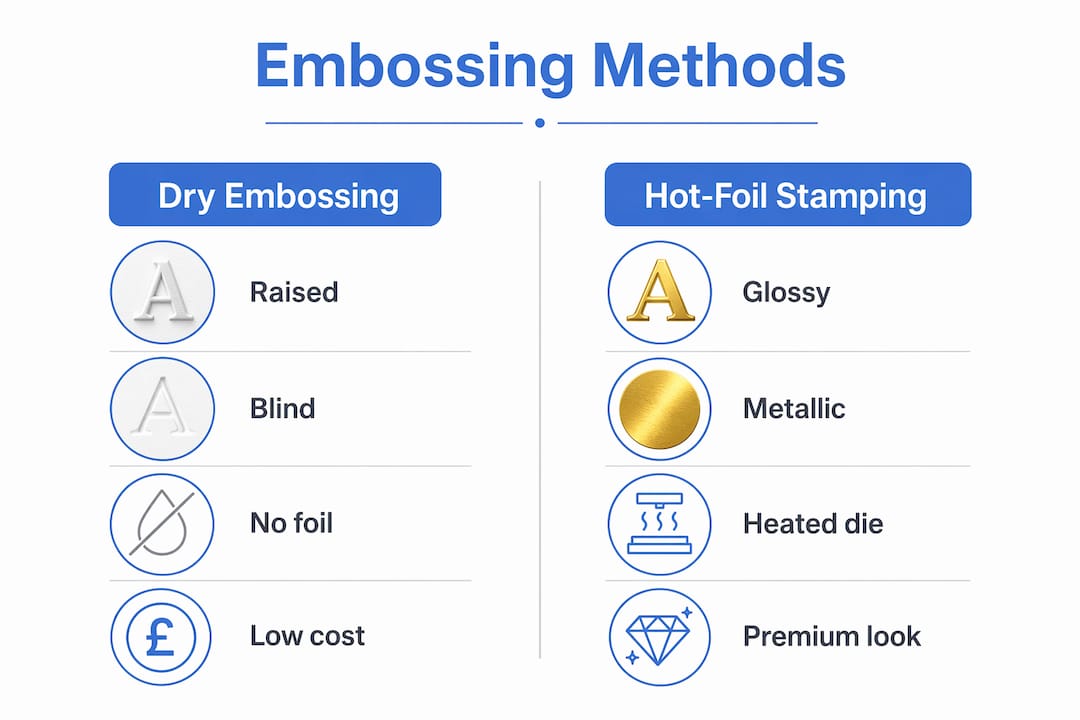
Dry (blind) embossing uses a convex and a concave die pressed together to squeeze paper fibres into a permanent relief, with no ink or powder involved. The result is a subtle, tactile impression that reads as premium without adding colour. Notaries, architects and corporate offices use desktop embossers for document validation; production presses handle packaging and bookbinding at volume.
Hot-foil stamping adds a heated metal die to the equation. The die presses a foil carrier film against the substrate; heat and pressure transfer a thin metallic or pigmented layer, leaving a crisp, reflective impression. It is the standard finish for premium business cards, gift packaging and invitation suites.

Heat embossing with powder works differently. A rubber or polymer stamp applies a slow-drying ink, embossing powder is dusted over the wet impression, the excess is tapped away, and a heat tool melts the powder into a glossy raised image. It is the most flexible method for short, bespoke runs and multi-colour effects.
How each embossing method works in practice
Dry embossing: step by step
- Mount the male and female dies in the press, aligned precisely to each other.
- Position the substrate on the lower platen, using registration guides.
- Apply pressure gradually — too fast and fibres tear rather than displace.
- Hold dwell time (typically a few seconds) to let fibres settle into the die.
- Release pressure and remove the piece; inspect the relief for sharpness and consistency.
Hot-foil stamping: step by step
- Mount the metal die on the heated platen; allow it to reach working temperature.
- Load the foil roll so the carrier film sits between die and substrate.
- Bring the die down with controlled pressure; heat transfers the foil layer in one stroke.
- Advance the foil, remove the stamped piece, and check adhesion and edge definition.
Heat embossing with powder: step by step
- Run an anti-static preparation sweep across the substrate to prevent stray powder adhesion.
- Stamp the image using a watermark or pigment ink with a long open time.
- Pour embossing powder over the wet impression; tilt the sheet and tap off the excess.
- Warm the heat tool for around 20 seconds before use, then move it steadily over the image until the powder melts to a smooth, glossy surface.
- Allow the piece to cool flat before handling or batching.
Pro Tip: Never use a domestic hairdryer for heat embossing. Purpose-built heat tools offer the temperature control needed for consistent powder melt without scorching the substrate.
Which method suits which job?
| Product / application | Best method | Notes |
|---|---|---|
| Premium invitations and stationery | Dry embossing or hot-foil | Foil adds colour; blind embossing keeps it minimal |
| Branded packaging and boxes | Hot-foil stamping | High repeatability; suits mid-to-long runs |
| Certificates and official documents | Dry embossing | Desktop or platen press; no consumable cost per piece |
| Leather goods and bookbinding | Dry embossing or hot-foil | Requires heat and pressure calibration for material thickness |
| Short-run bespoke cards and gifts | Heat embossing (powder) | Low tooling cost; wide finish variety |
| Laminated or coated surfaces | Hot-foil stamping | Powder adhesion is poor on sealed surfaces |
Blind embossing suits jobs where the tactile impression is the point and colour would distract. Hot-foil stamping is the workhorse for branded packaging where metallic finish and volume repeatability both matter. Powder heat embossing earns its place on short, varied runs where changing colours or finishes between jobs is a practical advantage. Laminated and heavily coated stocks are poor candidates for powder embossing because the ink cannot key into the sealed surface.
What equipment and supplies does a print shop need?
Core equipment
- Manual desktop embossers: suited to document seals, low-volume stationery and sampling.
- Platen presses: adjustable pressure and dwell; the standard for dry embossing in trade production.
- Hot-foil stamping presses: heated platens with temperature and pressure controls; essential for foil work.
- Dedicated heat tools: variable-temperature, purpose-built units for powder embossing.
- Semi-automatic production units: higher throughput for mid-volume foil or blind embossing runs.
Subliblanks supplies stamp-making machines across these categories to UK and Irish trade buyers.
Consumables
- Steel or shim embossing dies (custom-engraved to artwork)
- Hot-foil rolls and sheets in metallic, pigmented and holographic finishes
- Embossing powders in fine, regular and thick grain sizes; clear, metallic, matte and glitter finishes
- Slow-drying watermark or oil-based pigment inks
- Anti-static tools (such as embossing buddy or equivalent applicator)
Pro Tip: Stock both watermark and pigment inks and log which performs better at your ambient humidity. Ink open time varies with temperature and humidity, and a batch that works in summer may fail in a cold pressroom in January.
Buying criteria worth prioritising: adjustable pressure and temperature, die turnaround from your toolmaker, repeatability across a run, and UK-based service or parts support. Custom steel dies are a capital expense but amortise quickly once run lengths reach mid-volume.
Which substrates emboss well?
Uncoated papers from around 250 gsm upwards take a blind embossed impression cleanly; the fibres are free to displace without cracking. Lighter weights can work but risk tearing at the die edge under high pressure. Coated stocks emboss less crisply because the coating resists fibre movement, though hot-foil stamping performs well on coated surfaces since adhesion depends on heat rather than fibre displacement.
Leather accepts both blind and foil embossing with the right temperature and dwell settings. Synthetic stocks and plastics vary considerably; always run a material sample before committing a full batch. Laminated surfaces are generally unsuitable for powder heat embossing because the sealed face prevents ink tack. When working with unusual substrates, use a backing board to distribute pressure evenly and prevent platen marks on the reverse.
Sample before you scale. A short test run on the actual substrate, with the actual die and ink combination, is the only reliable way to confirm compatibility.
Common problems and how to fix them
- Powder not adhering: almost always caused by fast-drying dye ink. Switch to a dedicated watermark or pigment ink with a longer open time.
- Stray powder specks: skip the anti-static preparation step and this is inevitable. An anti-static tool is inexpensive and eliminates most stray adhesion.
- Uneven impression (dry/foil): check die alignment and pressure distribution; a worn or warped platen is often the culprit.
- Scorching or paper warp: heat tool held too close or too long in one spot. Keep the tool moving steadily and maintain the correct working distance.
- Fuzzy or incomplete powder melt: heat tool not warmed up sufficiently, or powder grain too coarse for the stamp detail. Allow a full warm-up period and match grain size to artwork complexity.
- Mis-registration: loose registration guides or substrate slipping during press. Tape guides down and use consistent sheet positioning.
Pro Tip: Log ink batch, paper batch and ambient humidity for every heat embossing run. These three variables shift powder adhesion more than any other factor, and a production log makes repeat jobs far more consistent.
Costs and lead times for UK trade buyers
Custom steel dies are the main capital line. Pricing varies by complexity and supplier, but trade buyers typically see a range from modest single-die costs for simple artwork up to higher figures for multi-element or large-format tooling. Die lead times in UK supply chains generally run from a few days for simple shim dies to two or three weeks for complex engraved steel.
Per-piece variable costs break down into foil or powder consumption, ink, and press time. At short run lengths, tooling amortisation dominates unit cost; as volume grows, the per-piece figure drops and in-house production becomes clearly more economical than outsourcing. The crossover point depends on your press speed and die cost, but most trade buyers find mid-volume runs justify owned tooling. For very short or one-off runs, subcontracting the embossing element and handling finishing in-house is often the leaner option.
How to run a test and sign off a job
- Set up the die and substrate with registration guides in place.
- Run a pressure sweep: start low and increase in increments until the impression is sharp without tearing.
- For heat embossing, check powder adhesion on three consecutive pieces before proceeding.
- Inspect register on all four corners of the impression.
- Log substrate batch, die ID, machine settings, operator name and result.
- Apply stop/go criteria: proceed only when impression depth, edge definition and register all meet the agreed standard on at least three consecutive pieces.
Key takeaways
Matching the embossing method to the substrate and run length is the single decision that determines whether a job is profitable or a source of waste.
| Point | Details |
|---|---|
| Method match is critical | Blind embossing suits tactile premium work; hot-foil for branded volume runs; powder for short bespoke jobs. |
| Ink open time drives powder results | Use watermark or pigment inks, not standard dye inks, to keep the impression tacky long enough for powder adhesion. |
| Anti-static prep is non-negotiable | A basic anti-static tool eliminates most stray powder and protects yield on every heat embossing run. |
| Test before full production | Run a pressure sweep and log substrate, die ID and settings before committing any batch to production. |
| Subliblanks for trade supply | Subliblanks supplies stamp-making machines, dies, powders and inks to UK and Irish trade buyers with no minimum order quantity. |
A note from the trade floor
The gap between a clean embossed result and a batch of rejects usually comes down to two things people overlook: ink choice and anti-static prep. Most operators who struggle with heat embossing are using whatever ink pad is on the bench rather than a dedicated slow-dry ink. The fix costs almost nothing and the difference is immediate.
For a first test run, keep it simple: one substrate, one die, one ink. Get those three variables dialled in before you start experimenting with powder finishes or unusual materials. The SubliBlanks blog carries detailed how-to guides if you want to go deeper on specific setups.
Stock your embossing setup through Subliblanks
Subliblanks gives UK and Irish print shops direct access to stamp-making machines, embossing dies, foil rolls, embossing powders, slow-dry inks and heat tools, all from a single trade account with no minimum order quantity. That means you can trial a new method or consumable without committing to a large stock holding.
The product range covers everything from desktop embossers for document seals through to semi-automatic hot-foil presses for packaging runs, alongside the full consumable stack that each method needs. For trade enquiries, sample die orders or volume quotes, visit the Subliblanks trade catalogue or get in touch directly. New to embossing? The team can advise on machine selection based on your typical run lengths and substrate mix.
Useful sources
- Paper embossing — Wikipedia: technical background on die mechanics and the history of embossing on stamps and documents.
- Heat-Embossing Tips & Tricks — Visible Image: practitioner guidance on ink open time, anti-static preparation and heat tool technique; supports the troubleshooting section above.
- How to Heat Emboss: Embossing for Beginners — RubberStamps.com: step-by-step workflow, powder grain guidance and heat tool selection advice.
- What is an Embosser? — Stamprints: clear explanation of dry embossing die mechanics for buyers new to the process.
- What is Embossing and How Do I Emboss? — The StampMaker: overview of embosser types from pocket models to production presses.
- Stamp-making supplies for UK crafters — Subliblanks: practical consumable lists and re-order guidance for trade buyers.
- The role of stamp making for packaging — Subliblanks: use-case content linking embossing methods to packaging applications.


