



The role of stamp making for packaging explained
TL;DR:
- Stamp making offers small businesses an affordable, flexible way to apply branding to plain packaging materials without large upfront costs. It enables easy design updates, reduces waste, and creates a handcrafted, authentic look that appeals to consumers. Proper testing on actual substrates and simplified designs ensure effective impressions and consistent branding.
Stamp making for packaging is the practice of using custom-engraved or laser-cut stamps to apply brand marks, logos, and messages directly onto packaging materials. For small businesses and artisan entrepreneurs across the UK, this technique sits at the intersection of affordability and brand identity. Unlike commercial print runs that demand large upfront investment and fixed quantities, stamping gives you the freedom to brand plain kraft boxes, tissue paper, or mailer bags on demand. The role of stamp making for packaging is fundamentally about putting professional branding within reach of businesses at every stage of growth.
How does stamp making compare to traditional printing methods for packaging?
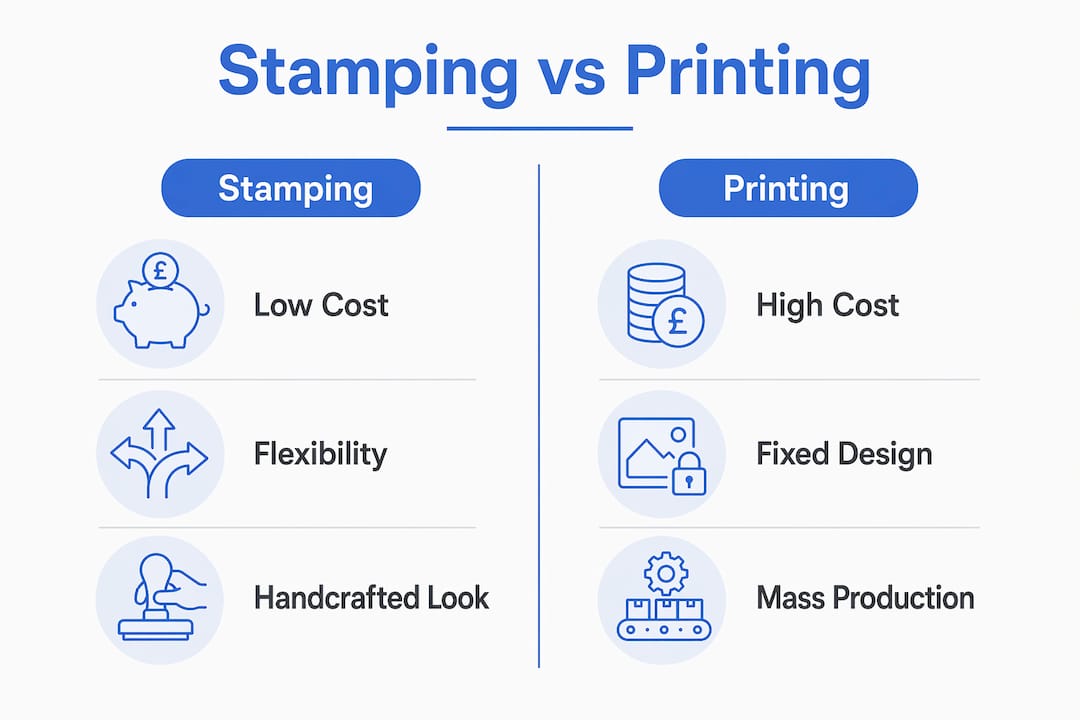
Stamping offers near-zero setup costs compared to the high upfront investment required for custom-printed packaging. That difference matters enormously when you are ordering 50 boxes rather than 5,000.
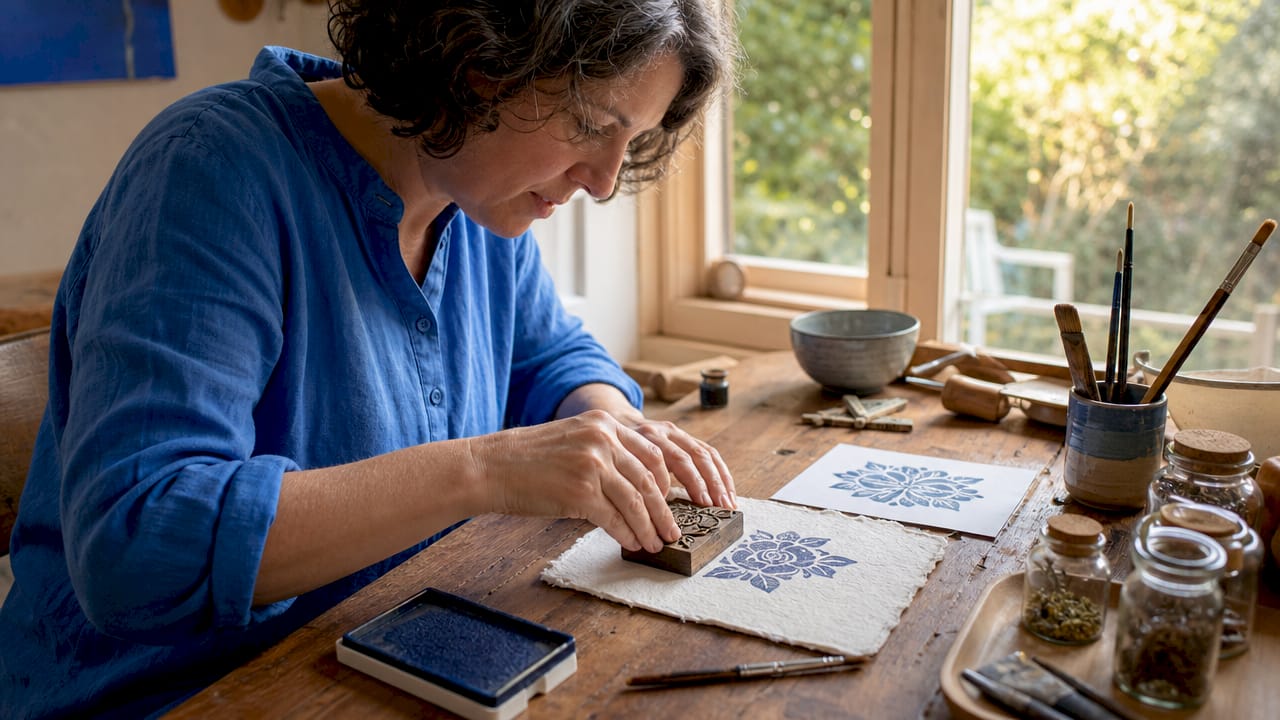
Traditional printing locks you into a fixed design and a minimum order quantity. If your logo changes, your address moves, or you launch a seasonal product line, you are left with redundant stock. Stamping removes that risk entirely. You order plain packaging, keep one stamp, and apply your branding only when you need it.
The table below contrasts the two approaches across the factors that matter most to small businesses.
| Factor | Stamping | Traditional printing |
|---|---|---|
| Setup cost | Near zero | High upfront investment |
| Minimum order | None | Often hundreds of units |
| Design flexibility | Change anytime | Fixed at print run |
| Lead time | Immediate after stamp delivery | Days to weeks per run |
| Visual finish | Handcrafted, tactile | Polished, uniform |
| Best suited for | Small batches, seasonal lines | High-volume, stable branding |
Experts recommend stamping for early-stage businesses precisely because it keeps capital free and branding decisions reversible. A startup selling handmade candles at a farmers’ market does not need a 500-unit print run. It needs a stamp, an ink pad, and a box of kraft mailers.
The visual difference is real but not a disadvantage. Stamped packaging carries a handcrafted quality that printed packaging cannot replicate. For artisan brands, that texture is the point.
Pro Tip: If you sell across multiple product categories, consider ordering one stamp per product line rather than one master stamp. The cost is minimal, and the result looks far more considered.
What design and material considerations matter for effective stamp making?
Good stamp design starts with the right file format. Suppliers require vector artwork with outlined fonts to maintain image clarity and prevent production errors. A rasterised logo saved as a JPEG will not produce a clean stamp. Submit an AI, EPS, or SVG file with all text converted to outlines before you send anything to a manufacturer.
Size and detail are the next critical variables. Fine lines and small text that look sharp on screen often fill in or break apart when engraved at stamp scale. The physical stamp size and the impression area can differ, so designers must account for manufacturing constraints when preparing artwork. A good rule: keep your minimum line weight above 1pt and avoid reversed-out text smaller than 8pt.
Choosing the right packaging substrate
Material compatibility determines whether your stamp impression looks professional or patchy. Clean impressions work best on smooth surfaces such as uncoated paper, kraft card, and tissue paper. Corrugated board and recycled stock present more of a challenge because their porous or uneven surfaces absorb ink inconsistently.
Real-world testing avoids issues such as inconsistent ink spread on corrugated or porous surfaces. Always proof your stamp on the actual packaging material you plan to use, not a substitute. Understanding your substrate material before committing to a full run saves both time and money.
The three variables to adjust during testing are pressure, ink load, and stamp speed. Too much ink causes bleeding. Too little produces a faint, incomplete impression. A consistent, moderate press with a freshly inked pad gives the cleanest result on most packaging types.
Pro Tip: Cut a small sample from your actual packaging stock and test your stamp on it before your first production run. Recycled kraft in particular varies batch to batch, so test each new delivery.
What benefits does stamp making bring to branding and customer experience?
Stamped packaging signals craftsmanship and personal attention. Stamped packaging signals craftsmanship preferred in artisan markets, and that signal is increasingly valuable as consumers grow tired of identical, factory-finished boxes. The tactile quality of a stamped logo tells a customer that a real person made a deliberate choice about how their order arrived.
The unboxing experience has become a genuine part of the product experience for many buyers. A stamped kraft box with a wax seal or a hand-tied ribbon creates a moment that a plain brown parcel never could. That moment gets photographed, shared, and remembered.
Stamped packaging reflects the branding shift towards authentic, humanised products. Consumers increasingly favour the imperfect, intentional aesthetic of a hand-applied mark over the factory-polished finish of mass-produced print. For small businesses, that preference is a competitive advantage, not a compromise.
The benefits of packaging stamps extend well beyond aesthetics. Consider what stamping makes possible in practice:
- Seasonal flexibility. Swap a Christmas stamp for a Valentine’s Day design without reprinting a single box.
- Product line differentiation. Use different ink colours or stamp designs to distinguish product ranges within the same plain packaging stock.
- Personalisation at scale. Add a customer’s name or a “thank you” message stamp to individual orders without slowing your packing process significantly.
- Reduced waste. Stamping alleviates the need for large pre-printed stock inventories, which means you never throw away obsolete branded boxes when your design changes.
For flexible, cost-effective branding options that suit small runs, stamping sits alongside private labelling as one of the most practical choices available to growing businesses. The combination of low commitment and high visual impact is difficult to match at this price point.
How can small businesses implement stamp making in their packaging workflow?
Getting stamping right is a process, not a one-off purchase. Follow these steps to build a reliable workflow from the start.
- Prepare your artwork. Create or convert your logo to a vector file. Outline all fonts. Simplify any fine detail that may not engrave cleanly at your chosen stamp size.
- Choose a stamp type. Photopolymer stamps suit detailed logos and work well on smooth surfaces. Rubber stamps offer durability for high-volume use. Laser-engraved stamps deliver the sharpest results for complex designs. A stamping machine guide can help you match the machine type to your production needs.
- Submit artwork and approve a proof. Most suppliers provide a digital proof before final stamp engraving. Review it carefully. Check that text is legible, proportions look correct, and no fine detail has been lost.
- Test on real packaging. Before stamping a single order, run at least ten test impressions on your actual packaging stock. Adjust ink load and pressure until the result is consistent.
- Integrate into your packing station. Keep your stamp, ink pad, and a damp cloth within arm’s reach of your packing area. A small stamp stand keeps the pad fresh and prevents accidental marks.
- Combine with other branding elements. Stamps work well alongside printed stickers, tissue paper, and branded tape. The goal is a cohesive look, not a maximalist one.
- Review and refresh. Stamps wear over time. High-quality rubber stamps produce consistent impressions across many uses, but check yours monthly for signs of edge degradation or ink build-up.
Pro Tip: Store ink pads face-down when not in use. This keeps the ink distributed evenly across the pad and prevents the surface from drying out between packing sessions.
Knowing how to select packaging supplies that are compatible with your stamp type makes the whole process more consistent. Not every plain box or mailer is equally stamp-friendly, so test before you buy in bulk.
Key takeaways
Stamp making is the most cost-effective and flexible branding method available to small businesses and artisan entrepreneurs working with low-volume or variable packaging needs.
| Point | Details |
|---|---|
| Near-zero setup cost | Stamping requires no minimum order and no print run investment, keeping capital free. |
| Vector artwork is non-negotiable | Submit AI, EPS, or SVG files with outlined fonts to avoid production errors. |
| Test on real substrates | Always proof on your actual packaging material before committing to a full run. |
| Stamping reduces waste | Plain stock stamped on demand removes the risk of obsolete pre-printed inventory. |
| Tactile quality builds brand trust | Hand-applied marks signal craftsmanship and authenticity that printed packaging cannot replicate. |
Why stamp making still earns its place in every small business toolkit
I have watched the packaging conversation shift considerably over the past few years. Businesses that once aspired to full-colour printed boxes are now actively choosing stamped kraft. That is not a budget compromise. It is a deliberate brand decision.
What strikes me most is how stamping rewards restraint. The businesses that use it best keep their designs simple: a single logo, a clean typeface, occasionally a short phrase. They resist the urge to fill every surface. The result looks considered rather than cheap, and customers respond to that.
The eco-friendly angle is real too. Buying plain packaging in bulk and stamping it on demand genuinely reduces overproduction. I have seen small businesses cut their packaging waste significantly just by switching from pre-printed stock to a stamp and a roll of kraft mailers. The environmental benefit is a side effect of good economics, which makes it sustainable in every sense.
My one caution: do not overcomplicate the stamp itself. A logo with twelve elements, three typefaces, and a gradient will not stamp well. It will frustrate you, and it will not represent your brand fairly. Simplify the design until it works at 40mm wide. If it looks good at that size, it will look good on everything.
Stamp making is not a stepping stone to “proper” printed packaging. For many UK small businesses and artisan makers, it is the right long-term answer.
— chris
Stamp making supplies and packaging solutions from Subliblanks
Subliblanks supplies everything a small business or artisan maker needs to get started with stamping, from stamp-making machines to a full range of packaging materials, all with no minimum order quantities.
Whether you are setting up your first packing station or refreshing an existing workflow, the Subliblanks product range covers stamp-making machines, packaging supplies, and the equipment to bring your branding to life. The team is UK-based, orders are straightforward, and there is no pressure to buy more than you need. Browse the full range and find what fits your business today.
FAQ
What is the role of stamp making for packaging?
Stamp making for packaging gives small businesses a low-cost, flexible way to apply brand marks to plain packaging materials on demand. It removes the need for minimum print runs and allows branding to change quickly as the business evolves.
Are custom stamps suitable for corrugated packaging?
Custom stamps can work on corrugated packaging, but the uneven surface requires careful testing. Adjusting ink load and pressure during sample runs helps achieve a clean impression on porous or textured substrates.
What file format do I need for a custom stamp design?
Suppliers require vector files such as AI, EPS, or SVG with all fonts outlined. This format maintains image clarity during engraving and prevents distortion or production errors.
How long does a rubber stamp last for packaging use?
High-quality rubber stamps produce consistent impressions across a large number of uses, though longevity depends on frequency of use and how well the stamp is maintained. Monthly checks for edge wear and regular cleaning extend the stamp’s working life considerably.
Can stamping replace printed packaging for a small business?
For most small businesses and artisan entrepreneurs, stamping is a complete branding solution rather than a temporary substitute. Its low setup cost, zero minimum order, and design flexibility make it the practical long-term choice for variable or low-volume packaging needs.


