



The role of badge making in branding: a practical guide
TL;DR:
- Badge making produces physical identifiers that reinforce brand identity across all customer touchpoints. It enhances recognition, trust, and customer satisfaction through consistent design, quality materials, and strategic deployment. Most brands undervalue badges but treating them as deliberate brand assets yields measurable marketing and revenue benefits.
Badge making is defined as the process of producing physical, wearable identifiers that carry brand colours, logos, and typography, making it one of the most direct tools a brand has for reinforcing identity at every human touchpoint. The role of badge making in branding extends well beyond staff identification. Badges appear at trade shows, retail floors, corporate events, and on clothing, creating constant, low-cost brand exposure. Companies maintaining consistent branding across all touchpoints see up to a 33% increase in revenue, with 68% attributing at least 10% of that growth to brand consistency alone. That figure tells you badges are not a minor detail. They are a measurable commercial asset.
How does badge making reinforce brand identity?
Brand identity lives in repetition. Every time a customer sees your logo, colour palette, and typography rendered consistently, their trust in your brand deepens. Badges are micro-touchpoints that carry this work into physical space, where digital branding cannot reach.
Inconsistent colours or fonts on badges create subconscious friction. Customers may not consciously notice a mismatched shade of blue or a different typeface, but their perception of your brand’s professionalism drops. The effect is subtle and cumulative, which makes it dangerous.
Badge design for brand identity requires strict adherence to your brand guidelines. That means using exact Pantone or hex colour references, approved logo files, and specified typefaces. A badge produced from a low-resolution logo or an off-brand font undermines every other investment you have made in visual consistency.
The most common design failure is prioritising aesthetics over legibility. Design for the longest realistic name your team will ever need to display. A badge that looks elegant with a short name becomes unreadable with a longer one, and that failure happens in front of customers.
- Use exact brand colour codes, not approximations
- Supply vector logo files to your badge manufacturer
- Set a minimum font size for name text and never compromise it
- Test badge designs with the longest names in your team before production
Pro Tip: Align badge design with your brand guidelines document before you brief any manufacturer. Treat the badge as you would a business card: every element must be intentional and approved.
To align your physical badge production with your broader print strategy, the guide on aligning print with branding offers a practical framework for maintaining consistency across all printed brand assets.
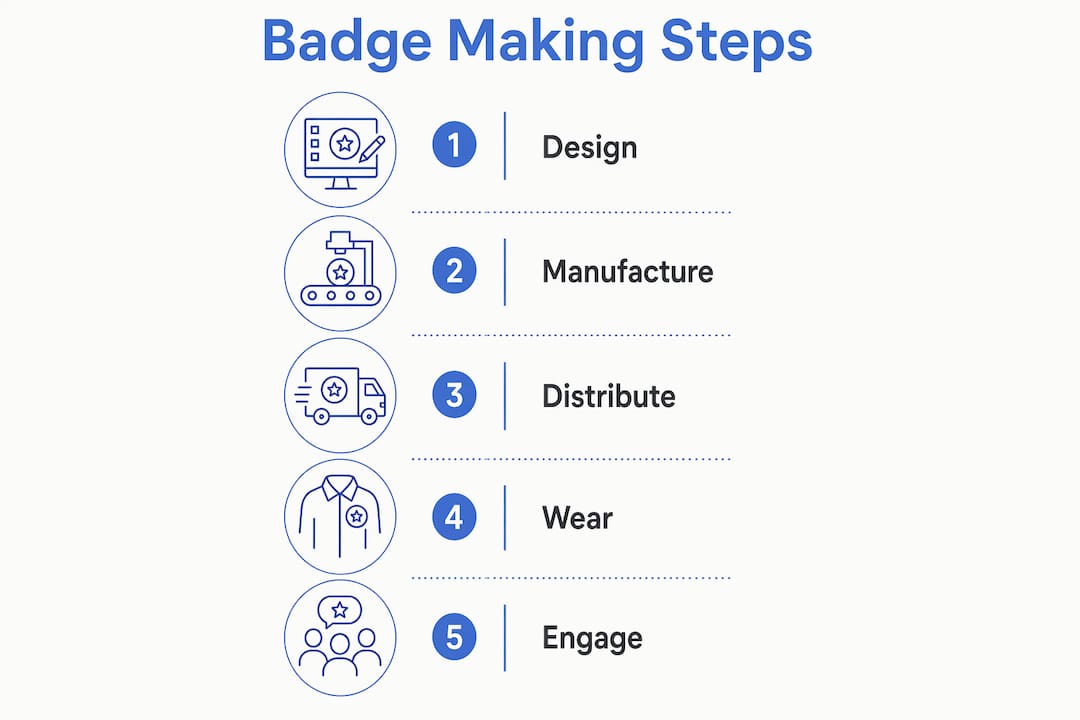
Do badges genuinely improve customer engagement?
Professional branded name badges improve customer satisfaction by up to 12% by fostering personal connections and trust. That improvement comes from a simple mechanism: when a customer can read a staff member’s name, the interaction shifts from transactional to personal. That shift matters in retail, hospitality, healthcare, and any environment where repeat business depends on relationship.
Staff wearing badges function as brand ambassadors in human form. The badge signals authority and accountability. Customers are more likely to approach a badged member of staff with a question, and more likely to remember the interaction positively. This is the importance of badges in branding that gets overlooked in purely digital marketing discussions.
Badges also increase brand recall in physical environments. Badges appear in social media images, trade show photographs, and event coverage, creating passive marketing exposure that costs nothing beyond the initial production. A well-designed badge in a conference photograph reaches every viewer of that image.
The practical benefits for customer-facing teams include:
- Faster customer identification of the right person to approach
- Increased accountability, which improves staff behaviour and service quality
- Stronger brand recall after the interaction ends
- Visible professionalism that signals the brand takes its presentation seriously
What are the practical applications of badges in branding strategies?
Badges serve three distinct functions in branding strategies, and the most effective brands use all three deliberately.
Staff and corporate identification
Staff badges are the most common application, and the most underestimated. A well-produced staff badge does more than identify a person. It communicates that the organisation has standards. Name prominence is the priority on any staff badge, with logo and colour supporting brand recall rather than dominating the design. The name must be readable at a conversational distance, which typically means a minimum of 18pt font for the primary name field.

Security is a secondary benefit. Consistent, professionally produced badges make it immediately obvious when someone is not authorised to be in a restricted area. This is why badge making in marketing and operations often intersects with facilities and HR teams.
Promotional badges as wearable merchandise
Promotional badges for clothing and streetwear brands typically cost £0.50 to £2.00 per unit and offer long-term brand exposure. That cost-to-exposure ratio is difficult to match with any other physical marketing format. A badge attached to a jacket or bag travels with the wearer, appearing in every environment they enter.
The significance of promotional badges lies in their durability. Unlike a flyer or a digital ad, a badge stays in circulation for months or years. Brands that include a promotional badge with product purchases create an additional reason for customers to feel connected to the brand.
Collectible badge series
Collectible-grade badges can be priced at £5–15 and sold as merchandise, converting a marketing cost into a revenue stream. This model works particularly well for brands with strong community identity: music labels, sports clubs, independent retailers, and lifestyle brands. A collectible series creates repeat purchase behaviour, social sharing, and a physical artefact that customers associate with brand membership.
| Application | Primary benefit | Typical cost per unit |
|---|---|---|
| Staff identification | Professionalism and accountability | Low |
| Promotional merchandise | Wearable brand exposure | £0.50–£2.00 |
| Collectible series | Community building and revenue | £5.00–£15.00 |
What materials and finishes maximise badge impact?
Material choice communicates brand values before a customer reads a single word on a badge. A lightweight plastic badge signals economy. A metal badge with a quality finish signals permanence and premium positioning. The material is part of the message.
Custom shapes increase brand recognition and employee confidence by making badges visually distinctive and aligned with brand personality. A rectangular badge is functional. A badge shaped to echo your logo or product form is memorable. Custom shapes cost more per unit, but the increase in brand recall justifies the investment for customer-facing roles and promotional applications.
Quality materials and craftsmanship transform badges into collectible tokens that reflect premium brand value. Customers who receive a well-made badge as part of a purchase or event experience associate that quality with the brand itself. The badge becomes a proxy for the brand’s overall standards.
Finish options worth considering include:
- Gloss or matte epoxy domes for printed designs
- Soft enamel or hard enamel for metal badges requiring colour fill
- Brushed or polished metal for premium corporate identification
- Dye sublimation printing for photographic-quality full-colour designs
Pro Tip: Always request a physical sample before committing to a full production run. Colour rendering on metal, plastic, and fabric differs significantly from screen proofs. A sample run saves costly reprints and protects your brand standards.
For a thorough overview of how different materials perform in production, the guide to badge making materials covers durability, finish options, and cost considerations in practical detail.
Key takeaways
Badge making reinforces brand identity, builds customer trust, and generates measurable commercial returns when design, material, and deployment are treated as deliberate brand decisions.
| Point | Details |
|---|---|
| Brand consistency drives revenue | Companies with consistent branding across touchpoints see up to a 33% revenue increase. |
| Badges improve customer satisfaction | Professional name badges improve customer satisfaction by up to 12% through personal connection. |
| Promotional badges offer strong ROI | At £0.50–£2.00 per unit, promotional badges deliver long-term wearable brand exposure. |
| Material signals brand values | Premium materials and custom shapes increase brand recall and communicate quality. |
| Collectibles convert cost to revenue | Collectible badge series priced at £5–15 turn marketing spend into a self-funding income stream. |
Why I think most brands are wasting their badges
Most brand managers treat badges as an afterthought. They brief the design team on the website, the packaging, and the social media templates, then hand badge production to the office manager with a vague instruction to “make it look professional.” The result is a badge that carries the right logo but the wrong shade of blue, printed on a material that communicates nothing about the brand’s actual positioning.
I have seen this pattern repeatedly across retail, hospitality, and events. The badge is the one brand asset that appears at every single customer interaction, yet it receives the least design attention and the smallest budget. That is a strategic error.
The brands that get this right treat the badge brief with the same rigour as a packaging brief. They specify materials, finishes, and exact colour references. They test legibility before production. They think about where the badge will appear and what it will communicate in that context. A badge worn at a trade show will appear in dozens of photographs. A badge worn by a retail team member will be seen by hundreds of customers each week.
The practical advice I give to brand managers is this: pull out one of your current staff badges and hold it next to your brand guidelines. If the colours, typography, and logo treatment do not match exactly, you have a problem worth fixing. The cost of correcting it is low. The cost of leaving it is a slow erosion of the brand trust you have worked hard to build.
Badges are not a commodity purchase. They are a brand asset. Treat them accordingly.
— chris
Subliblanks and your badge making programme
Subliblanks supplies badge-making machines, badge components, and dye sublimation equipment to trade customers across the UK, with no minimum order quantities. That means you can produce short runs for testing, sample new designs without committing to bulk stock, and scale production as your branding programme grows.
Whether you are producing staff identification badges, promotional merchandise, or a collectible series, Subliblanks carries the supplies to support every stage of production. Dye sublimation printing delivers photographic-quality colour reproduction on badge blanks, making it the preferred method for brands that require precise colour matching. Visit the Subliblanks product range to find badge-making machines, sublimation blanks, and printing equipment suited to your brand’s requirements.
FAQ
What is the role of badge making in branding?
Badge making creates physical, wearable brand touchpoints that reinforce identity, build customer trust, and extend brand visibility into environments where digital marketing cannot reach. Consistent badge design supports brand recognition and contributes directly to revenue growth.
How do badges improve customer satisfaction?
Professional branded name badges improve customer satisfaction by up to 12% by enabling personal interactions between staff and customers. The ability to address staff by name shifts the experience from transactional to relational.
What makes a badge design effective for brand identity?
Effective badge design prioritises name legibility first, with brand colours, logo, and typography supporting recognition rather than dominating the layout. Designs should use exact brand colour codes and vector logo files to maintain consistency with all other brand assets.
Are promotional badges worth the investment?
Promotional badges cost £0.50–£2.00 per unit and provide long-term wearable exposure, making them one of the most cost-effective physical marketing formats available. Collectible-grade badges can be sold at £5–15, converting marketing spend into a direct revenue stream.
What materials work best for branded badges?
Material choice depends on brand positioning and application. Metal badges with enamel or brushed finishes communicate premium value, while dye sublimation on badge blanks delivers full-colour photographic reproduction suited to detailed logo work and event badges.


