



Step by step product packaging for UK makers
How the product packaging process works, from start to finish
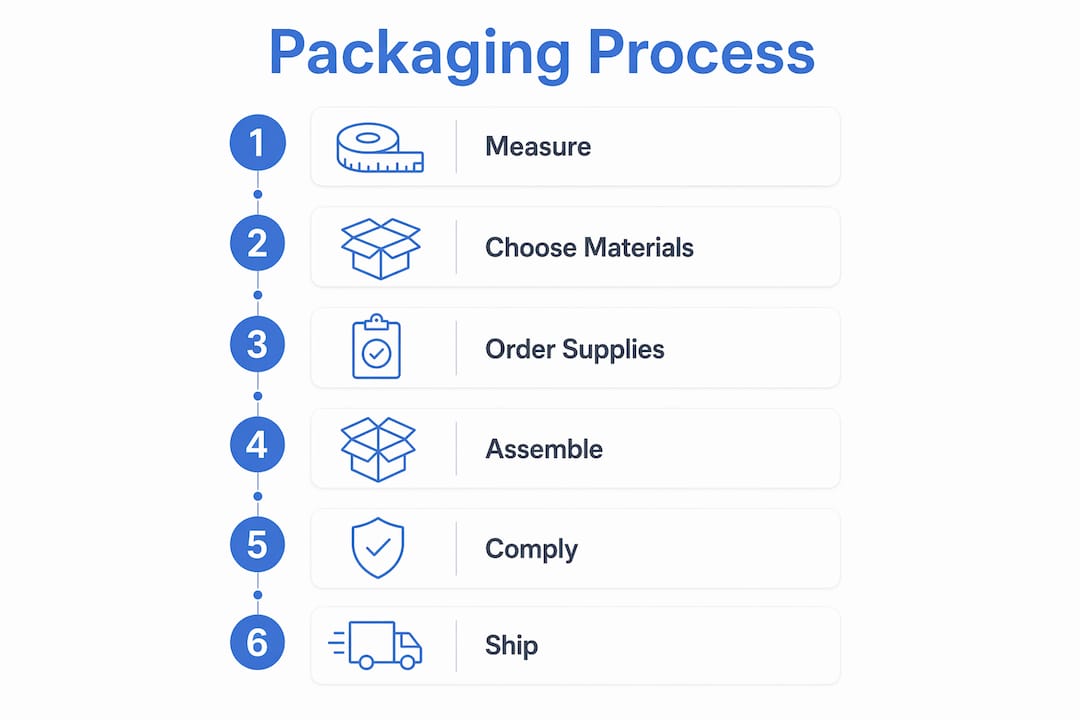
Getting your packaging right is not just about protecting what’s inside. Done well, it builds brand recognition, keeps you compliant with UK regulations, and signals to customers that you care about quality. Here is the full process at a glance:
- Plan your packaging: Define product dimensions, fragility, and shipping requirements before touching any material.
- Select materials: Choose from FSC-certified cardboard, compostable films, or biodegradable cushioning suited to your product and UK recycling infrastructure.
- Measure accurately: Snug-fitting boxes reduce waste and improve sustainability.
- Assemble: Cut, fold, fill, and seal using appropriate tools or machinery.
- Brand and finish: Apply labels, tissue paper, stickers, or printed inserts.
- Quality control: Check every unit for damage, fit, and presentation before dispatch.
- Comply with UK regulations: Producers must register and report packaging data under Extended Producer Responsibility (EPR) rules.
Table of Contents
- Planning and choosing materials: the foundation of good packaging
- Assembling your packaging: putting it all together
- Subliblanks has the packaging supplies you need
- Key takeaways
Planning and choosing materials: the foundation of good packaging
Preparation is where most packaging problems are actually solved. Measure your product’s length, width, and height, then add clearance for cushioning. Rectangular or fold-flat box structures ship more efficiently and reduce your environmental footprint compared with irregular shapes.
For materials, FSC-certified recycled cardboard is the go-to for boxes and inserts: it carries traceability credentials that UK consumers increasingly notice. For food or cosmetic products, compostable PLA and cellulose films replace single-use plastic without sacrificing barrier performance. Where you need a protective coating, water-based or plant-derived alternatives to plastic lamination are now widely available and compatible with kerbside recycling.
Cost efficiency comes from ordering at the right volume and avoiding oversized packaging that inflates courier costs. Knowing your packaging supply options before you commit to a supplier saves money and avoids material mismatches.
On the compliance side, UK EPR regulations require producers to collect and report packaging data annually. Small producers can use compliance schemes to handle registration and reporting. Packaging Recovery Notes (PRNs) verify that your packaging waste has been recycled and are mandatory under EPR rules.
Pro Tip: Ask your supplier for material specifications and recycled content certificates upfront. This evidence is exactly what auditors request under pEPR reporting, and gathering it at the sourcing stage costs nothing.
Assembling your packaging: putting it all together
Assembly is where planning pays off. For small-batch or craft production, the core toolkit is straightforward: a steel rule and craft knife for cutting, a bone folder for clean creases, and a hot-glue gun or packing tape dispenser for sealing. Larger runs benefit from a box-erecting machine or semi-automatic tape sealer, which cuts labour time considerably.
Start by erecting the base of the box and securing it firmly. Place any die-cut cardboard or moulded pulp inserts first; these hold the product in position without plastic void fill. Nest the product into the insert, then add any tissue paper, branded cards, or thank-you notes before closing the lid. Seal the outer box with reinforced tape, particularly at the edges if the parcel will travel through a courier network.

E-commerce packaging must balance durability with a clean unboxing experience. Minimal filler, a snug fit, and one well-placed branded element do more for customer perception than a box stuffed with loose packing peanuts. Run a drop test on your first batch: drop the sealed box from waist height onto a hard floor and check for damage. It is a simple quality check that catches weak points before your customers do.
Subliblanks has the packaging supplies you need
Subliblanks supplies packaging materials and finishing supplies with no minimum order quantity, which suits craftspeople and small businesses who need flexibility. Whether you are sourcing tissue paper, custom labels, or protective inserts, you will find the full range at subliblanks.com. Browse the packaging supplies range and order exactly what you need, when you need it.
Key takeaways
Snug, well-planned packaging protects your product, satisfies UK EPR compliance requirements, and strengthens your brand in a single step.
| Point | Details |
|---|---|
| Measure before you order | Accurate dimensions produce a snug fit, cutting material waste and courier costs. |
| Choose certified materials | FSC-certified cardboard and compostable films meet UK recycling standards and build consumer trust. |
| EPR compliance is mandatory | UK producers must register, report packaging data, and obtain PRNs under Extended Producer Responsibility rules. |
| Assembly tools matter | Die-cut inserts and a bone folder produce cleaner, more professional results than loose void fill. |
| Subliblanks for supplies | No minimum order quantities make Subliblanks practical for craftspeople sourcing packaging materials in the UK. |


