



What is custom packaging? A guide for UK businesses
TL;DR:
- Custom packaging is made to a brand’s specific size, design, and materials, unlike stock boxes. It enhances brand perception, reduces shipping costs, and supports sustainability through right-sized, recyclable solutions. Implementing custom packaging is most cost-effective at higher order volumes and can transform logistics into a powerful branding channel.
Custom packaging is product packaging manufactured to a brand’s exact specifications, covering dimensions, structural design, materials, and printed branding. Unlike stock boxes pulled from a generic catalogue, tailored packaging is engineered around your product and your identity. For business owners and marketers across the UK and Ireland, it represents one of the most direct ways to control how customers experience your brand from the moment a parcel lands on their doorstep. This guide covers the custom packaging definition, its core benefits, cost considerations, and how to decide when it makes sense for your business.
What is custom packaging and how does it differ from stock options?
Custom packaging is defined as packaging manufactured to a brand’s unique specifications, including custom-engineered structural design, choice of substrate, and tailored print. Stock packaging, by contrast, is a pre-made, off-the-shelf format sold in standard sizes with no brand-specific design. The difference is not cosmetic. A stock box that is too large for your product creates void space, increases dimensional weight (DIM) charges, and risks transit damage. Custom packaging eliminates all three problems by design.
The industry term for this category is “bespoke packaging” in British trade circles, though “custom packaging” is the more widely used phrase in marketing and procurement contexts. Both terms describe the same outcome: packaging built around the product rather than the product squeezed into whatever box is available. Packaging engineers describe this principle as engineering the pack to fit the product, not the other way around.
What are the main components of custom packaging?
Custom packaging is built from four core elements: structural design, substrate, print build, and finishing.
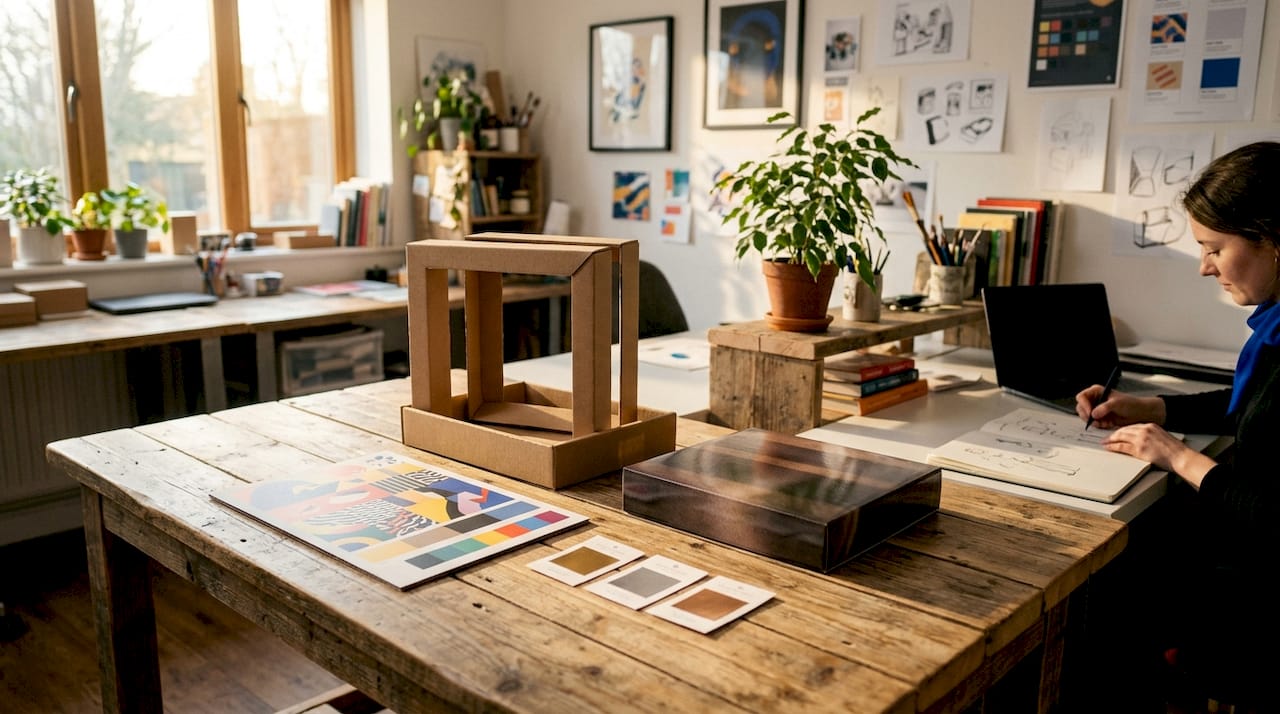
Structural design refers to the dieline, the flat template that determines how the box folds and locks. A well-engineered dieline reduces material waste, runs faster on automated fill lines, and protects the product during transit. Packaging engineers note that optimised dielines improve throughput and reduce operational complexity on packing lines.
Substrate is the material the pack is made from. The two most common choices for UK businesses are:
- Paperboard (also called cartonboard): used for retail-facing boxes, gift packaging, and product sleeves. It takes print well and supports premium finishes.
- Corrugated board: used for shipping boxes and outer cases. It offers structural strength and is widely recyclable.
Print build covers how your brand appears on the pack. Offset lithography delivers the sharpest colour reproduction for high-volume runs. Digital print suits shorter runs and variable data. Flexography is common for corrugated shippers.
Finishing options include soft-touch lamination, UV spot varnish, hot foil stamping, and embossing. Each finish changes how the pack feels in the hand, which directly affects brand perception.
Pro Tip: Standardise your pack formats across your top five SKUs before briefing a supplier. Reducing format variety cuts tooling costs and simplifies stock management without sacrificing brand impact.
How does custom packaging improve brand experience and customer loyalty?
Custom packaging transforms a shipment into a brand touchpoint. Every surface, inside and out, carries your logo, colour palette, and typography. That consistency builds recognition faster than advertising alone.
The commercial impact is measurable. Premium custom packaging correlates with up to 52% greater repeat purchase rates by enhancing the unboxing experience and reinforcing brand loyalty. That figure matters because acquiring a new customer costs significantly more than retaining an existing one. Packaging that prompts a second purchase pays for itself.
The unboxing moment has also become a social media event. 64% of consumers report that the unboxing experience is critical to their brand perception. A well-staged reveal, tissue paper, a printed insert, a QR code linking to a care guide, creates shareable content without any additional media spend.
Tactile finishes amplify this effect. Soft-touch lamination on a mailer box signals quality before the customer even opens it. Embossed logos on a rigid box create a premium feel that a plain brown shipper cannot replicate. These details are not decorative extras. They are the physical expression of your brand promise.
Custom packaging also supports consistent messaging across multiple touchpoints. Printed care instructions, sustainability statements, and brand stories inside the pack extend the customer conversation beyond the point of sale. Treating packaging as a marketing investment rather than a logistics cost is the shift that separates brands with strong retention from those that compete on price alone.
How does custom packaging reduce costs and support sustainability?
The most common objection to custom packaging is cost. The unit price is higher than a stock box. The all-in cost per order, however, tells a different story.
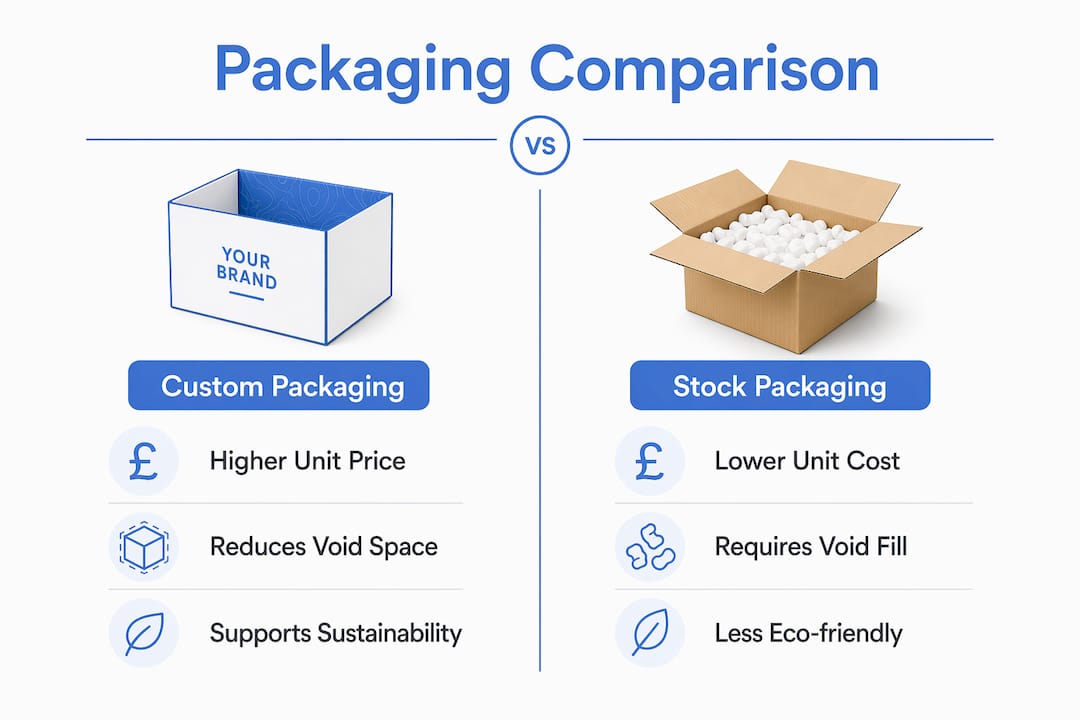
Custom packaging reduces transportation and logistics costs by up to 20% by eliminating void space and reducing DIM weight charges. DIM weight is how carriers calculate shipping fees for lightweight but bulky parcels. A right-sized box ships at actual weight, not inflated dimensional weight. That saving compounds across thousands of orders.
| Cost factor | Stock packaging | Custom packaging |
|---|---|---|
| Unit price | Lower | Higher |
| Void fill required | Yes | Minimal or none |
| DIM weight charges | Higher | Lower |
| Transit damage rate | Higher | Reduced by 15–30% |
| Branding materials | Separate cost | Integrated |
| All-in cost per order | Often higher | Often lower or comparable |
Properly fitted packaging reduces transit damage and returns by 15–30% compared to stock boxes using generic void fill. Fewer returns mean lower reverse logistics costs and fewer customer service interactions.
Sustainability is the other side of this equation. Custom packaging supports ESG performance by right-sizing packs, reducing materials used, and simplifying recyclability. Recyclable substrates and reduced void fill lower your carbon footprint per shipment. For UK and Irish businesses subject to Extended Producer Responsibility (EPR) regulations, reducing packaging weight and material complexity also lowers compliance costs.
Setup costs are amortised over volume, making custom packaging economically viable above roughly 1,000 orders per month. Below that threshold, the economics are less clear, which is why a pilot approach matters.
Pro Tip: Test custom packaging on your top three SKUs by volume before committing to a full rollout. Measure all-in cost per order, damage rates, and customer feedback over 90 days. The data will tell you whether to expand or hold.
When should UK and Ireland businesses choose custom packaging?
The decision to move from stock to custom packaging depends on four factors: volume, product complexity, brand strategy, and logistics profile. Here is a practical framework.
- Volume threshold. Custom packaging becomes cost-effective when setup costs can be spread across sufficient orders. A rough industry benchmark is 1,000 units per month per SKU, though this varies by format and supplier.
- Product fragility. Fragile or irregularly shaped products benefit most from custom-engineered structural design. A stock box with bubble wrap is a workaround. A custom insert that holds the product in place is a solution.
- Brand positioning. If your brand competes on quality or premium perception, stock packaging undercuts that message at the final touchpoint. Custom packaging aligns the physical experience with the brand promise.
- Logistics profile. Businesses shipping high volumes via courier networks pay DIM weight charges on every oversized parcel. Right-sized packaging pays back quickly in reduced shipping fees.
- Hybrid approach. Many brands adopt a hybrid strategy, using custom packaging for top-selling SKUs and stock packaging for slower-moving lines. This captures most of the DIM weight savings and brand experience benefits while managing inventory complexity.
The packaging solutions for small businesses context matters here too. A small business with three hero products and a strong brand identity can justify custom packaging for those SKUs even at modest volumes, particularly if the unboxing experience is central to the customer proposition.
The paper and cardboard manufacturing sector, which supplies most custom packaging in the UK and Ireland, operates under specific trade standards. Understanding how packaging is manufactured to brand specifications helps buyers ask better questions of suppliers and set realistic lead times.
Key takeaways
Custom packaging is the most direct way to align product protection, logistics efficiency, and brand identity in a single investment.
| Point | Details |
|---|---|
| Definition | Custom packaging is manufactured to exact brand specifications covering size, material, structure, and print. |
| Brand impact | 64% of consumers say unboxing experience shapes brand perception, making packaging a direct loyalty driver. |
| Cost efficiency | Right-sized packs cut logistics costs by up to 20% and reduce transit damage by 15–30%. |
| Sustainability | Recyclable substrates and reduced void fill lower both environmental impact and EPR compliance costs. |
| Decision trigger | A hybrid strategy using custom packs for top SKUs and stock for others balances cost and brand experience. |
Why I think most UK businesses underestimate packaging as a brand asset
The businesses I see getting the most from custom packaging share one trait: they stopped treating it as a cost line and started treating it as a channel. A well-designed mailer box does what a paid social ad cannot. It is physical, it is in the customer’s hands, and it arrives at the exact moment they are most engaged with your brand.
The mistake I see repeatedly is businesses waiting until they are “big enough” for custom packaging. The economics do require volume, but the brand argument does not. A small business shipping 500 orders a month with a strong visual identity loses something real every time a plain brown box lands on a customer’s doorstep. The business case for packaging is not just about cost savings. It is about what you are communicating when you say nothing at all.
Sustainability is the other area where I think businesses are behind the curve. EPR regulations in the UK are tightening. Brands that have already right-sized their packaging and switched to recyclable substrates will face lower compliance costs and less operational disruption than those who have not. That is a competitive advantage hiding inside a logistics decision.
My practical advice: start with your top three products, brief a supplier on a 500-unit trial, and measure everything. All-in cost per order, damage rates, and customer comments. The data almost always makes the case for you.
— chris
Subliblanks and your custom packaging needs
Building a brand through packaging starts with having the right tools and supplies. Subliblanks supplies a full range of packaging materials and sublimation printing equipment to help UK and Irish businesses create branded packaging that stands out.
Whether you are printing custom mailer boxes, branded tissue paper, or decorated product inserts, Subliblanks stocks the sublimation blanks, printers, and finishing supplies to bring your packaging vision to life. With no minimum order quantities, you can trial custom packaging on a small run before committing to volume. Explore the sublimation printer range to find the right equipment for your production scale, or browse the full catalogue to see what is possible for your brand.
FAQ
What is the custom packaging definition?
Custom packaging is product packaging manufactured to a brand’s exact specifications, including dimensions, structural design, materials, and printed branding. It differs from stock packaging, which uses pre-made, standard formats with no brand-specific design.
How much does custom packaging cost per unit?
Costs vary widely depending on materials and finishes. Industry guidance suggests allocating 8–10% of retail price to packaging, with unit costs ranging from basic runs up to premium constructions depending on format and finish.
Does custom packaging really reduce shipping costs?
Right-sized custom packaging reduces DIM weight charges and can cut transportation costs by up to 20%. It also reduces transit damage by 15–30% compared to stock boxes, which lowers return rates and reverse logistics costs.
When does custom packaging make financial sense?
Custom packaging becomes cost-effective at roughly 1,000 orders per month per SKU, as setup costs are amortised over volume. A hybrid strategy using custom packs for top SKUs and stock for others works well for businesses below that threshold.
Is custom packaging more sustainable than stock packaging?
Custom packaging supports better ESG performance by reducing packaging waste, eliminating unnecessary void fill, and using recyclable substrates. Right-sizing packs also lowers the carbon footprint per shipment and reduces material costs under UK EPR regulations.


