



Why use packaging supplies: the business case
TL;DR:
- Using the right packaging supplies protects products and reduces costs caused by damages and returns.
- Proper packaging enhances brand perception and encourages social sharing, influencing customer loyalty.
- Standardized supplies improve operational efficiency, safety, and help meet sustainability goals.
Packaging supplies are materials used to protect, contain, and present products during storage, shipping, and sale. Understanding why use packaging supplies correctly is one of the most underrated decisions a business can make. Poor packaging costs money through returns, complaints, and damaged goods. The right supplies protect your products, shape how customers feel about your brand, and increasingly determine whether your business meets modern sustainability expectations. This article covers all three areas with evidence and practical guidance.
Why use packaging supplies: protection and cost savings
Approximately 25% of product damage complaints come from poor packaging fit rather than carrier mishandling. That figure matters because it means a quarter of your damage claims are preventable before the parcel even leaves your door.
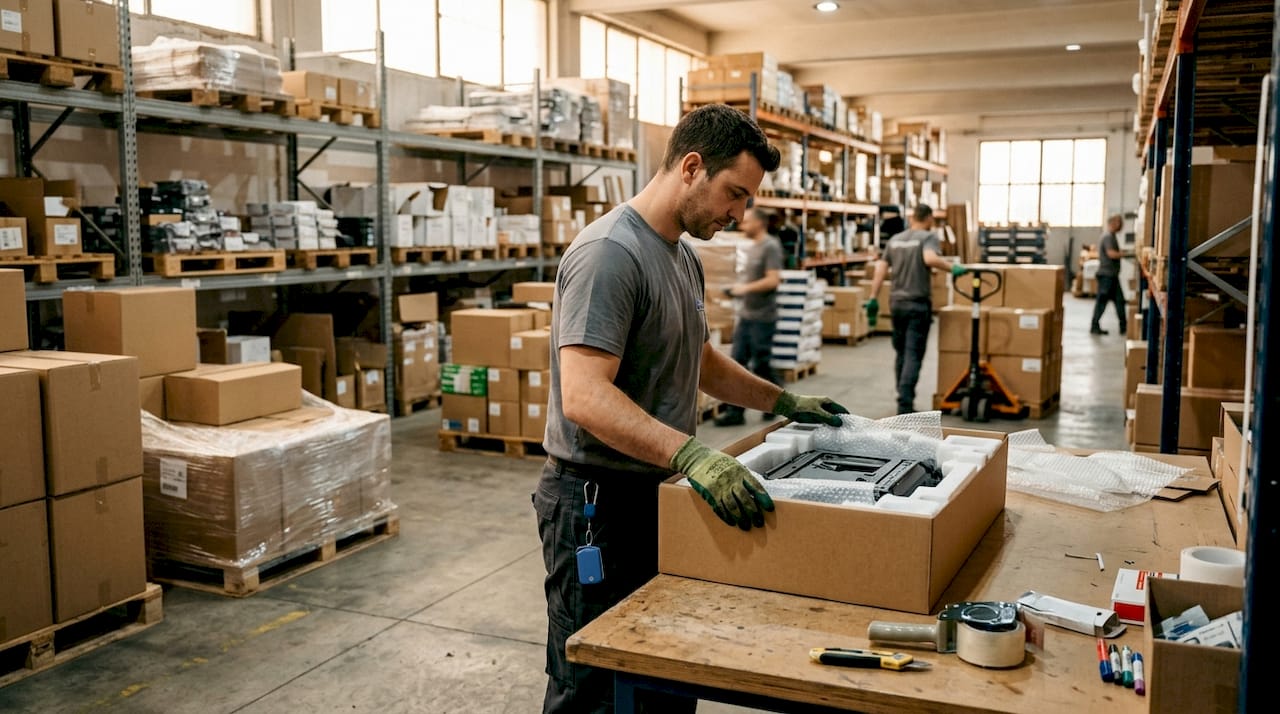
The consequences compound quickly. Returns require restocking labour. Replacements eat into margins. Refunds damage cash flow. Choosing cheap packaging often results in higher total costs through returns, re-shipments, and customer complaints. Businesses that treat packaging as a cost to minimise rather than a function to get right tend to pay for that decision repeatedly.
The most common failure in packaging is choosing the wrong size or material. Premium bubble wrap inside an oversized box still allows product movement. The box collapses under stacking pressure. The item arrives broken. Getting the fit right matters as much as getting the material right.
The core supplies that prevent damage are:
- Right-sized corrugated boxes that limit internal movement without excess void fill
- Cushioning materials such as bubble wrap, foam inserts, or moulded pulp to absorb impact
- Strong packing tape applied correctly to all seams, not just the centre strip
- Void fill such as kraft paper or air pillows to stabilise contents without adding significant weight
Pro Tip: Measure your product dimensions before selecting a box. A box that is no more than 5cm larger than the product on each side reduces void fill requirements and lowers the risk of in-transit movement.
Lighter packaging materials also reduce freight costs. Plastic containers can be up to 3.6 times lighter than equivalent glass or metal. That weight difference directly reduces dimensional weight charges on courier invoices, which adds up across hundreds of shipments per month.
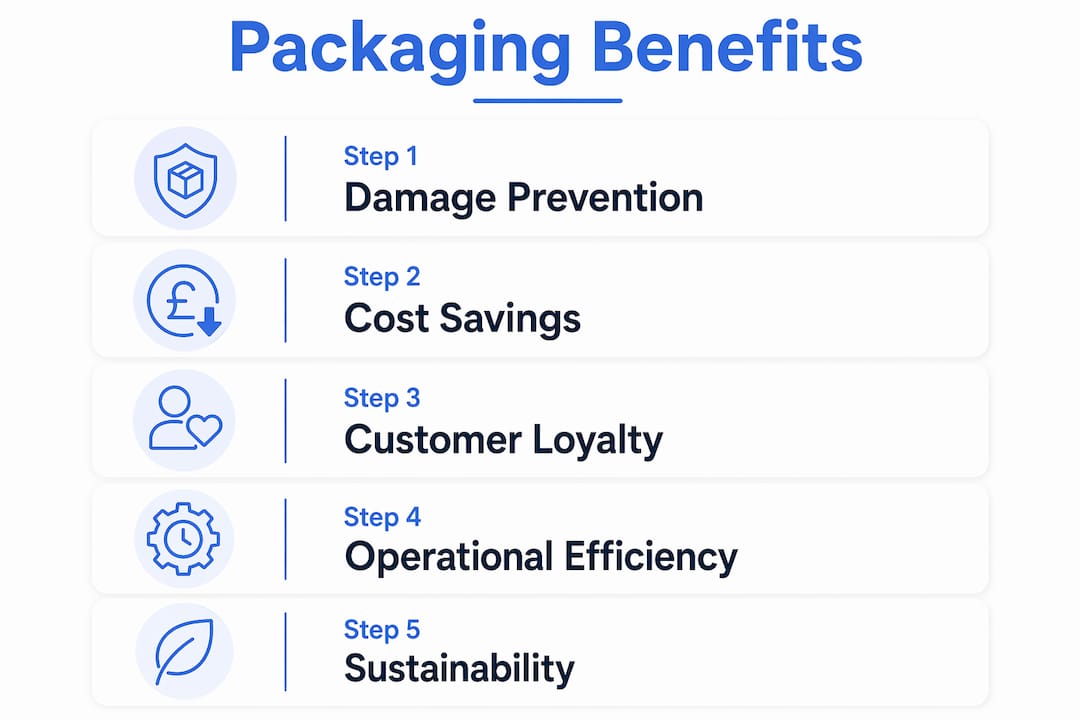
How does packaging affect brand image and customer experience?
Packaging is the physical brand interface. It is the first thing a customer touches when your product arrives, and that tactile moment shapes their perception of your business before they even open the box. Packaging communicates quality and commitment, affecting customer perceptions subconsciously and influencing future purchase behaviour.
The numbers behind unboxing are striking. 72% of consumers share images of attractive packaging on social media, creating organic marketing at no additional cost. A well-packaged order becomes a content moment. A poorly packaged one becomes a complaint post.
Brands that invest in tactile packaging quality see measurable returns. Brands like Aesop and Glossier invest 18–25% of their packaging budgets on box weight and tactile experience alone. That is not vanity spending. It is a calculated decision based on the understanding that packaging drives repeat purchase and word-of-mouth referral.
The signals that packaging sends to customers include:
- Box rigidity: a sturdy box signals that the contents are worth protecting
- Interior presentation: tissue paper, inserts, or branded void fill shows intentional care
- Print quality on outer packaging: crisp, consistent print reads as professional
- Ease of opening: packaging that tears cleanly or opens without scissors reduces frustration
Flimsy packaging communicates the opposite of all four. It tells the customer that the business cut corners, and that impression transfers to the product itself, regardless of its actual quality. For businesses selling packaging solutions for products at any price point, the packaging sets the expectation before the product can speak for itself.
What are the operational benefits of consistent packaging supplies?
Standardised packaging supplies remove guesswork from the packing process. When every team member knows which box fits which product, and which tape dispenser is loaded and ready, packing speed increases and error rates drop. Standardising packaging supplies drives consistency and speeds up operations by removing decisions that should not need to be made at the packing bench.
The labour savings from small efficiency gains are significant. Cutting two minutes per order saves nearly seven hours of labour daily in a business shipping 200 orders. That is almost a full working day recovered every single day, simply by having the right supplies in the right place.
Operational benefits extend beyond speed:
- Reduced packing errors: standardised supplies mean fewer wrong-box decisions and fewer items packed without adequate protection
- Predictable reorder cycles: consistent supply use makes stock forecasting straightforward and prevents last-minute shortages
- Improved safety: well-chosen tape dispensers, box cutters, and ergonomic tools reduce repetitive strain injuries in fulfilment environments
- Lower freight claims: fewer damaged goods means fewer carrier claims to process and dispute
- Easier onboarding: new packing staff learn faster when the process is defined by the supplies themselves
Improper packaging supplies can cause safety hazards and reduce efficiency in fulfilment facilities. Conversely, well-chosen supplies improve throughput and reduce worker injuries. The ergonomic case for quality supplies is often overlooked but carries real cost implications in businesses with high packing volumes.
Pro Tip: Select packaging supplies as a system rather than individual items. Match your box range to your product sizes, your cushioning to your fragility profile, and your tape to your box weight. A mismatched system creates gaps that damage fills.
Calculating the total cost of ownership of packaging supplies reveals hidden costs such as labour inefficiencies and freight claims that affect profit margins. Unit price is rarely the full picture.
Why does sustainable packaging matter for businesses?
Consumer preference for sustainable packaging is no longer a niche concern. 81% of shoppers prefer companies using eco-friendly, recyclable, or biodegradable packaging. That preference is now a purchase driver, not just a feel-good factor.
The environmental and commercial case for sustainable materials runs in parallel. Metal packaging uses up to 95% less energy when recycled compared to primary production. Moulded pulp is 100% recyclable and compostable, and PE lamination offers moisture resistance without sacrificing recyclability in the right waste streams. These are not compromises. They are materials that protect products and meet environmental expectations simultaneously.
The trade-offs between protection, cost, and sustainability are real but manageable. Recyclable kraft board costs slightly more per unit than standard corrugated in some markets, but the brand perception benefit and reduced waste disposal costs often offset that difference. For businesses shipping fragile items, moulded pulp inserts replace single-use foam and provide equivalent protection with a far better environmental profile.
Sustainable packaging also supports regulatory compliance. UK businesses face increasing pressure under extended producer responsibility regulations, which place financial obligations on businesses that place packaging on the market. Choosing recyclable or compostable materials reduces the levy exposure. For a broader view of eco-friendly packaging trends, the direction of travel is clear: sustainable materials are becoming the baseline expectation, not the premium option.
The business benefits of sustainable packaging choices include reduced waste disposal costs, stronger brand positioning with environmentally conscious customers, and lower regulatory risk. For businesses choosing packaging supplies at scale, the switch to sustainable materials is increasingly a financial decision as much as an ethical one.
Key takeaways
Packaging supplies are a strategic business investment that directly affects damage rates, customer retention, operational efficiency, and regulatory compliance.
| Point | Details |
|---|---|
| Damage prevention | Right-sized boxes and proper cushioning eliminate the 25% of damage claims caused by poor fit. |
| Brand perception | 72% of consumers share attractive packaging images, making presentation a free marketing channel. |
| Labour efficiency | Standardised supplies can save nearly seven hours of daily labour in a 200-order-per-day operation. |
| Sustainability demand | 81% of shoppers prefer eco-friendly packaging, making sustainable materials a purchase driver. |
| Total cost of ownership | Unit price understates true packaging cost; freight claims and labour inefficiencies are the hidden expenses. |
Packaging as a retention tool: a perspective from chris
Most businesses I speak with treat packaging as a procurement line item. They buy the cheapest tape, the nearest-size box, and whatever void fill is on offer. Then they wonder why their return rate sits stubbornly above industry norms.
The insight that changed how I think about this is simple: packaging is a retention tool, not a cost centre. Every damaged delivery is a customer who now has to decide whether to bother again. Most do not. The cost of acquiring that customer in the first place dwarfs the saving made on a cheaper box.
The total cost of ownership argument is the one I find most persuasive. When you add up the labour time spent processing returns, the freight claims disputed with carriers, the replacement stock consumed, and the customer service hours spent managing complaints, the “cheap” packaging option is rarely cheap. It is just cheap at the point of purchase.
The operational calm that comes from standardised, quality supplies is also underrated. When your packing team is not hunting for the right box or fighting with a tape dispenser that keeps jamming, they pack faster, make fewer errors, and go home less frustrated. That matters for staff retention too, which has its own cost.
My honest advice: audit your damage rate, your return rate, and your freight claims before your next packaging order. Then calculate what those failures actually cost you. The number will almost certainly justify spending more per unit on better supplies.
— chris
Subliblanks packaging supplies for your business
Subliblanks supplies packaging materials to businesses of all sizes, with no minimum order quantities. That means you can test new box sizes, switch to sustainable materials, or top up stock without committing to pallet-scale volumes before you know what works.
Quality-controlled supplies reduce the damage rates and complaint volumes that erode margins over time. Whether you need corrugated boxes, cushioning materials, tape, or void fill, Subliblanks stocks the range that covers most fulfilment needs. For businesses ready to treat packaging as the retention and brand tool it actually is, browse the full range and find supplies that match your products, your process, and your sustainability goals.
FAQ
Why use packaging supplies instead of reusing old boxes?
Purpose-made packaging supplies are sized and rated for specific loads, reducing the risk of in-transit damage. Reused boxes lose structural integrity after one use and are a leading cause of avoidable damage claims.
What packaging materials are best for fragile products?
Moulded pulp inserts, foam padding, and double-walled corrugated boxes provide the best protection for fragile items. The key is matching the cushioning material to the product’s weight and fragility profile.
How does packaging affect shipping costs?
Lighter materials such as plastic reduce dimensional weight charges, and right-sized boxes eliminate the surcharges carriers apply to oversized packaging. Plastic containers can be up to 3.6 times lighter than glass or metal equivalents.
What sustainable packaging options are available for businesses?
Moulded pulp, recyclable kraft board, and PE-laminated materials all offer functional protection with strong environmental credentials. Moulded pulp is 100% recyclable and compostable, making it a practical alternative to single-use foam.
How do packaging supplies affect customer loyalty?
Packaging is the first physical touchpoint a customer has with your brand after purchase. Sturdy, well-presented packaging reduces complaints, encourages repeat purchases, and drives organic sharing, with 72% of consumers sharing images of attractive packaging on social media.


