



The role of bulk packaging in cost and supply chain
TL;DR:
- Bulk packaging consolidates products into larger containers to reduce costs and streamline supply chains.
- It lowers material, labor, and freight expenses while supporting sustainability through fewer deliveries and reusable containers.
Bulk packaging is defined as the consolidation of multiple product units into a single large container or palletised unit for storage and transport. For businesses and manufacturers, this method directly reduces per-unit packaging costs, cuts handling time, and lowers transport emissions in a single operational shift. The role of bulk packaging extends well beyond simple cost reduction. It reshapes how supply chains function, how warehouses operate, and how businesses meet sustainability targets. Whether you handle sublimation blanks, industrial powders, or consumer goods, the principles apply equally.
How does bulk packaging reduce costs across the supply chain?
Bulk packaging reduces costs through four distinct mechanisms: lower material spend, reduced labour, optimised freight, and fewer administrative tasks. Each mechanism compounds the others, meaning the total saving is greater than any single line item suggests.
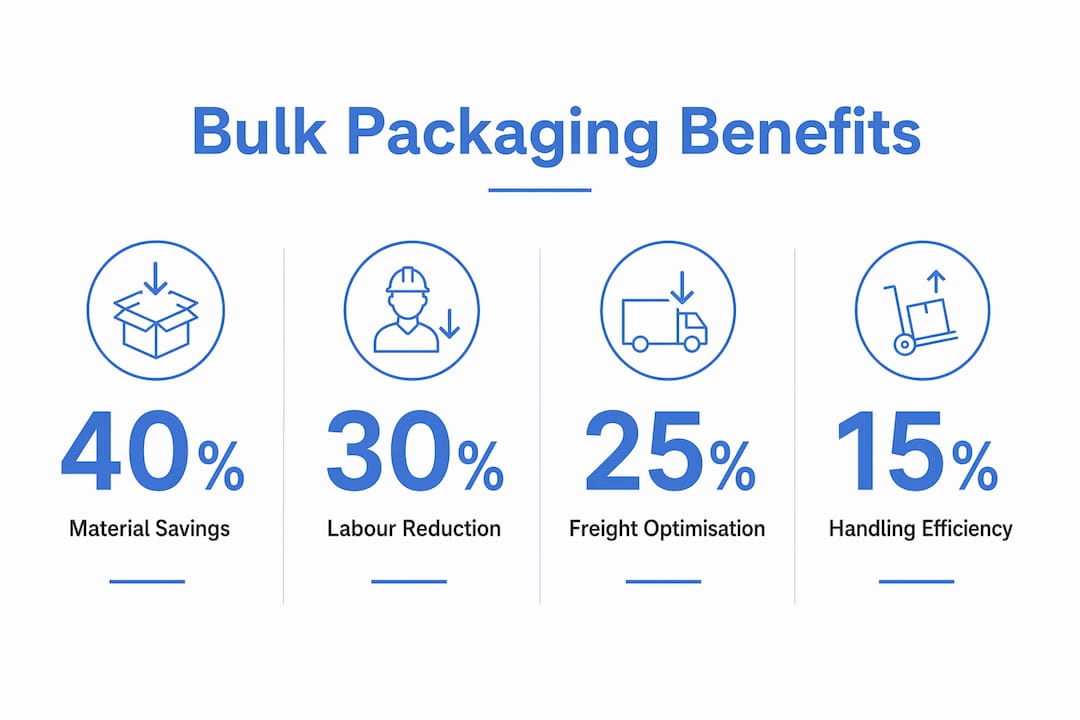
Packaging material savings are the most immediate benefit. Consolidating dozens of small cartons into a single Flexible Intermediate Bulk Container (FIBC) or Gaylord box eliminates the corrugated board, void fill, and tape required for each individual unit. Businesses that shift to bulk packaging can save between £2,500 and £2,900 annually on boxes alone. That figure does not include the additional savings from reduced freight and administration.
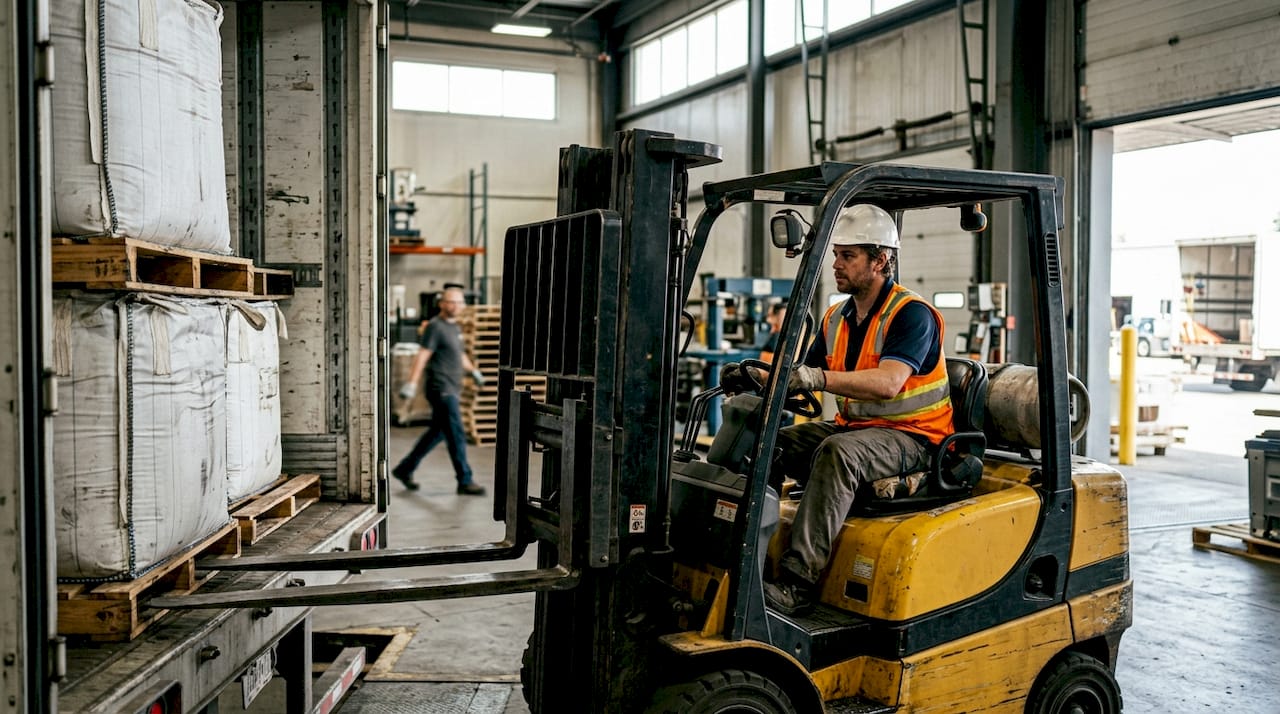
Labour costs fall sharply when handling units decrease. One forklift operator moving a single palletised bulk container completes the same task as several workers handling dozens of individual boxes. Replacing small packages with a single palletised bulk container drastically improves handling efficiency, requiring fewer forklift trips and reducing manual labour. That translates directly into lower hourly wage costs and fewer workplace handling injuries.
Freight optimisation is where bulk packaging delivers its most significant financial return. Fewer handling units mean better truck fill rates, which reduce the number of vehicle movements required per tonne of product. Fewer purchase orders and consolidated deliveries also cut administrative overhead, from invoice processing to supplier communications.
Pro Tip: Calculate your current cost per unit shipped, including materials, labour, and freight. Then model the same volume in bulk format. The gap is almost always larger than expected.
The key cost levers are:
- Reduced corrugated and secondary packaging spend
- Lower labour hours per tonne handled
- Improved truck fill rates and fewer vehicle movements
- Fewer purchase orders and supplier invoices to process
- Reduced storage space required per unit of product
In what ways does bulk packaging contribute to sustainability?
Bulk packaging supports sustainability by reducing material consumption and cutting transport frequency. Both outcomes lower a business’s environmental footprint without requiring separate green initiatives or additional investment.
Bulk packaging reduces material use and the frequency of deliveries, limiting transport waste and fuel consumption. Fewer deliveries mean fewer vehicle movements, which directly reduces carbon emissions per tonne of product moved. For manufacturers under pressure to meet corporate social responsibility targets or comply with UK and EU environmental reporting requirements, this is a measurable, auditable improvement.
Reusable bulk containers amplify the sustainability benefit further. Rigid Intermediate Bulk Containers (IBCs) and industrial drums can complete dozens of return cycles before reaching end of life. Each cycle displaces the production of new single-use packaging, reducing both raw material demand and landfill contribution.
Consolidating shipments into bulk packaging does more than cut costs. It reduces secondary packaging, lowers transport-related energy use, and gives businesses a credible, quantifiable contribution to their sustainability reporting. The environmental case for bulk packaging is as strong as the financial one.
For businesses supplying packaging solutions for small businesses, the sustainability argument also resonates with end customers who increasingly scrutinise supply chain practices before committing to a supplier relationship.
What bulk packaging formats are available?
Bulk packaging options including FIBCs, rigid IBCs, Gaylord boxes, and drums serve different operational needs, balancing payload capacity, durability, and regulatory demands. Choosing the wrong format creates handling problems, structural failures, and wasted freight capacity.
Proper bulk packaging choice requires analysing product flowability, density, and physical state, which dictate the container format and safe working load. A free-flowing granular product suits an FIBC. A liquid or semi-liquid product requires a rigid IBC with appropriate valve fittings. A fragile or irregularly shaped product may suit a Gaylord box lined with protective material.
| Format | Best suited for | Key trade-off |
|---|---|---|
| FIBC (big bag) | Free-flowing powders and granules | Lower tare weight, but single-use unless specified |
| Rigid IBC | Liquids and semi-liquids | Durable and reusable, but higher tare weight |
| Gaylord box | Fragile or irregular solid goods | Low cost, but limited stacking strength |
| Industrial drum | Chemicals, pastes, and dense solids | Excellent containment, but poor space efficiency |
Tare weight deserves particular attention. Heavier containers reduce allowable freight payload under highway weight regulations, which can eliminate the freight savings that made bulk packaging attractive in the first place. Total Cost of Ownership must account for tare weight, warehouse footprint, and handling equipment compatibility, not just the purchase price of the container.
Regulatory compliance adds another layer of complexity. Hazardous goods require UN-certified containers with specific performance test ratings. Food-grade products require containers manufactured from approved materials with documented cleaning protocols. Selecting a container without verifying its certification status creates legal exposure and potential supply chain disruption.
Pro Tip: Always pilot test bulk containers in real transit conditions before committing to full-volume deployment. Laboratory tests do not replicate stacking pressure, moisture exposure, or vibration encountered in actual shipping.
For businesses sourcing craft and packaging supplies, specialist suppliers such as Craft Supplies at CraftSuPrint offer a useful reference point for understanding the range of packaging formats available at different scales.
How does bulk packaging improve supply chain management?
Bulk packaging improves supply chain management by reducing the number of handling units, simplifying inventory tracking, and shifting purchasing from reactive to planned. Each of these changes reduces the risk of production delays and stock shortfalls.
Businesses moving to bulk packaging enjoy fewer handling units, which leads to faster dock turnover, streamlined warehouse workflows, and simplified inventory tracking. A warehouse managing 50 bulk pallets operates with far less complexity than one managing 500 individual cartons of equivalent volume. That simplification reduces picking errors, speeds up stock counts, and makes space planning more predictable.
Bulk packaging stabilises supply chains by shifting purchasing from reactive last-minute orders to planned, forecast-aligned buying. Predictable inventory levels reduce reactive decision-making and the premium costs that come with urgent replenishment orders. For manufacturers with production schedules tied to material availability, this stability is worth more than the direct cost savings alone.
The operational improvements stack up across the supply chain:
- Fewer handling units reduce dock congestion and speed up loading and unloading
- Consolidated inventory simplifies stock counting and reduces picking errors
- Planned bulk purchasing aligns with production forecasts and reduces emergency orders
- Automated handling systems integrate more easily with standardised bulk container formats
- Supplier relationships improve when order volumes are larger and more predictable
High-volume bulk packaging formats support scaling operations, but they must align with existing equipment capabilities to avoid logistical bottlenecks. A business with standard pallet racking and a single counterbalance forklift cannot efficiently handle rigid IBCs designed for reach-truck operation. Equipment compatibility is not a secondary consideration. It determines whether the efficiency gains actually materialise.
For a detailed look at how bulk handling affects warehouse workflow, the guide to bulk order fulfilment covers the operational mechanics in practical terms.
Key takeaways
Bulk packaging delivers its greatest value when businesses treat it as a supply chain decision rather than a purchasing one, aligning container choice with product properties, equipment capabilities, and sustainability targets.
| Point | Details |
|---|---|
| Cost savings are compounded | Bulk packaging cuts material, labour, freight, and admin costs simultaneously, not in isolation. |
| Sustainability gains are measurable | Fewer deliveries and less secondary packaging produce auditable reductions in emissions and waste. |
| Format selection is product-driven | Product flowability, density, and regulatory status determine the correct container format. |
| Tare weight affects freight economics | Heavier containers reduce payload capacity under weight regulations, eroding freight savings. |
| Supply chain stability requires planning | Bulk purchasing works only when aligned with production forecasts and warehouse equipment. |
Why bulk packaging deserves more strategic attention in 2026
Most businesses I encounter treat bulk packaging as a procurement decision. They compare container prices, pick the cheapest option, and move on. That approach consistently produces disappointing results, and I have seen it create more problems than it solves.
The businesses that genuinely benefit from bulk packaging treat it as a supply chain investment. They audit their current handling costs before selecting a format. They check equipment compatibility before ordering. They run pilot shipments before committing to volume. That discipline is not complicated, but it requires moving beyond the commodity mindset that dominates most packaging procurement.
The sustainability angle is also underused. Businesses that quantify their emissions reductions from consolidated deliveries gain a credible, auditable sustainability metric at no additional cost. That metric has real value in supplier qualification processes and customer-facing reporting.
My strongest advice is to align your bulk packaging choice with your supply chain rhythm, not just your product. A format that works brilliantly for a competitor with different warehouse equipment and order cycles may create bottlenecks in your operation. The format is the last decision, not the first.
— chris
How Subliblanks supports your bulk packaging needs
Subliblanks supplies a wide range of packaging and wholesale solutions for businesses and manufacturers that need reliable, consistent supply without minimum order constraints.
Whether you are sourcing packaging materials for a production line or building out a wholesale supply strategy, Subliblanks offers the product range and flexibility to match your operational requirements. From sublimation blanks and DTF supplies to packaging materials and laser-engraveable blanks, the catalogue covers the full breadth of what growing businesses need. Explore the wholesale packaging guide to understand how bulk purchasing translates into measurable cost advantages for your operation.
FAQ
What is the role of bulk packaging in supply chain management?
Bulk packaging consolidates multiple units into single large containers, reducing handling complexity, cutting transport costs, and stabilising inventory through planned purchasing rather than reactive ordering.
What are the main types of bulk packaging?
The four principal formats are FIBCs (flexible big bags), rigid IBCs, Gaylord boxes, and industrial drums. Each suits different product types based on flowability, density, and regulatory requirements.
How does bulk packaging support sustainability goals?
Bulk packaging reduces secondary material use and delivery frequency, which lowers transport-related fuel consumption and carbon emissions. Reusable formats such as rigid IBCs extend these benefits across multiple use cycles.
What is tare weight and why does it matter?
Tare weight is the weight of the empty container. Heavier containers reduce the allowable product payload under highway weight regulations, which can reduce or eliminate freight cost savings if not accounted for in container selection.
When should a business pilot test bulk packaging?
Pilot testing is necessary before full-volume deployment. Laboratory tests do not replicate real transit stresses such as stacking pressure, moisture exposure, or vibration, and structural failures discovered after scaling are far more costly to resolve.


