



Why Buy Wholesale Sublimation for Small Brands
Finding affordable ways to personalise merchandise can feel daunting when every pound counts. For small business owners and hobbyists across the United Kingdom and Ireland, wholesale sublimation brings creative control and lower costs within reach. By using heat and pressure, sublimation embeds vibrant designs into polyester products, letting you create custom mugs, apparel, and gifts without minimum order limits. Discover how sourcing wholesale supplies makes customisation simple and profitable for growing brands.
Table of Contents
- What Wholesale Sublimation Means For Makers
- Types Of Sublimation Products And Equipment
- Key Advantages Of Buying Wholesale Supplies
- Cost Savings, Margins, And Common Pitfalls
- How To Start With No Minimum Order
Key Takeaways
| Point | Details |
|---|---|
| Wholesale Sublimation Accessibility | Offers small brands a low-risk way to create customised products without hefty investments. |
| Cost-Effective Production | Wholesale suppliers provide lower per-unit costs and no minimum order quantities, enhancing profitability. |
| Creative Control | Makers can produce vibrant designs tailored to customer preferences without production constraints. |
| Streamlined Sourcing | All necessary equipment and materials can be sourced from wholesale suppliers in one place, simplifying operations. |
What Wholesale Sublimation Means for Makers
Wholesale sublimation opens doors for small brands that want custom products without massive upfront investment. It’s the difference between dreaming about your product line and actually making it happen.
How sublimation actually works
Sublimation printing uses heat and pressure to transfer dye directly onto synthetic materials like polyester. The dye converts from solid to gas, bonding permanently with the fabric or product surface. This process creates vibrant, long-lasting designs that won’t fade or peel over time.
Unlike screen printing or traditional printing methods, sublimation doesn’t require separate screens for each colour or design. You print once, heat once, and the design is embedded into the product permanently.
What this means for your business
Wholesale sublimation suppliers stock ready-made blanks in hundreds of styles and colours. You buy at wholesale prices, which means lower per-unit costs than retail.
Key benefits include:
- Lower costs per item compared to traditional manufacturing
- No minimum order quantities required (unlike most manufacturers)
- Access to a wide range of product types ready for customisation
- Fast turnaround times from order to finished product
- Ability to test designs and products without massive risk
Wholesale sublimation lets you skip the expensive setup costs of traditional manufacturing and start selling custom products immediately.
The creative freedom angle
You control the entire design process. Full-colour, photographic designs work brilliantly. Intricate patterns, gradients, and detailed artwork translate perfectly onto products.
This means your creative vision isn’t limited by production constraints. You can personalise items for individual customers or create limited-edition collections without waste.
Real products you can make today
Whether you’re creating custom mugs for a local café, personalised gifts, promotional merchandise for businesses, or branded apparel, sublimation blanks work across all of these. Using sublimation blanks for custom merchandise becomes straightforward once you understand the process.
The equipment side
You’ll need a sublimation printer, sublimation inks, transfer paper, and a heat press. Wholesale suppliers typically stock all of these components, so you’re sourcing from one place rather than hunting across multiple vendors.
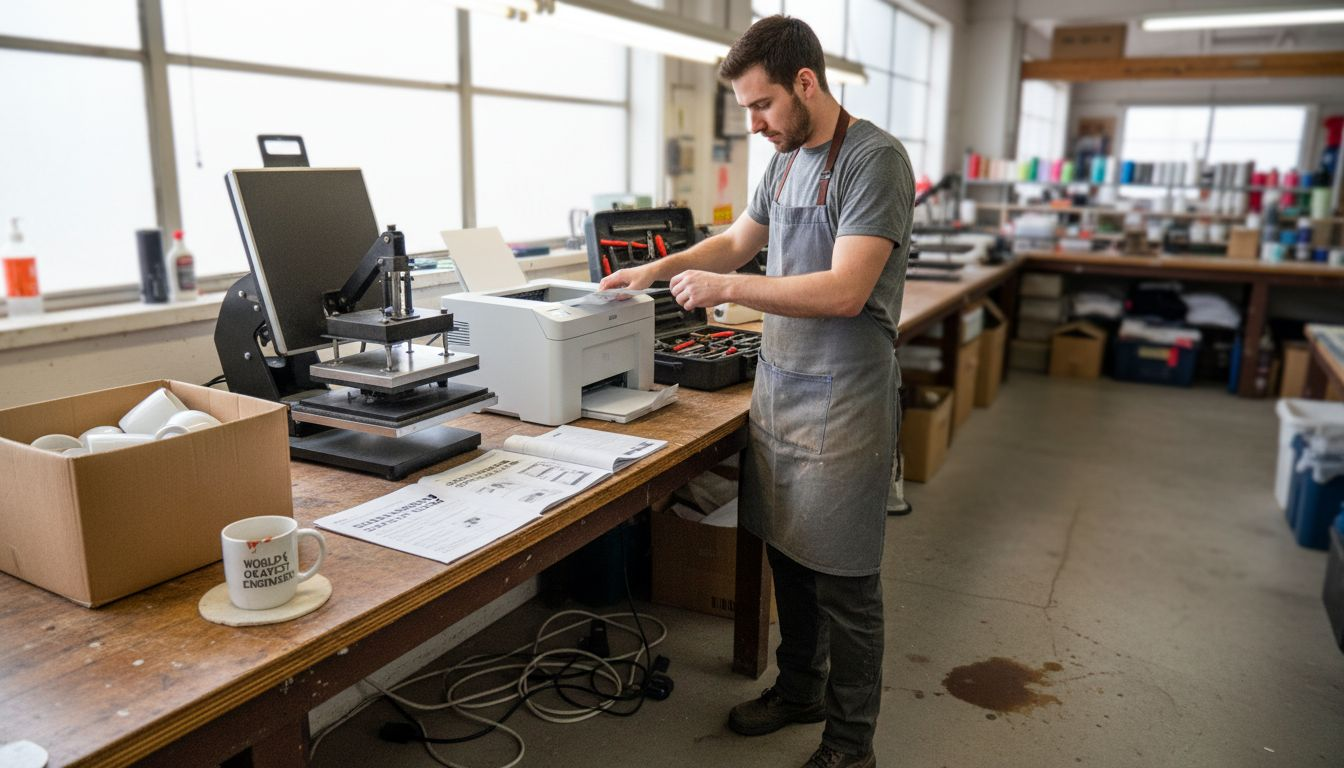
Starting is genuinely affordable. A basic setup costs significantly less than traditional manufacturing equipment.
Pro tip: Start with one product category that interests you most—perhaps drinkware or apparel—rather than trying to offer everything at once. This lets you perfect your process and build customer feedback before expanding your product range.
Types of Sublimation Products and Equipment
Sublimation covers far more ground than most makers realise. The products you can create range from everyday drinkware to technical apparel, and the equipment needed is more accessible than traditional manufacturing setups.
The products you can sublimate
Polyester and polymer-coated substrates are your foundation. Cotton blends work, but pure synthetic materials deliver the most vibrant, permanent results.
Popular product categories include:
- Mugs, tumblers, and drinking vessels
- T-shirts, hoodies, and apparel
- Mousepads and desk accessories
- Phone cases and protective items
- Coasters and decorative homeware
- Personalised gifts and keepsakes
- Promotional merchandise for businesses
Each product type has specific blank suppliers, meaning your options are genuinely endless once you understand your market.
The beauty of sublimation is that you’re not limited to one product category—you can test multiple product lines simultaneously without massive inventory investment.
Essential equipment breakdown
Equipment and supplies for sublimation printing have become affordable for small businesses. You’ll need four core components working together.
A sublimation printer converts your digital designs into printable form using special inks. Desktop models cost significantly less than traditional manufacturing equipment yet deliver professional results.
Sublimation inks are specifically formulated to convert from solid to gas under heat. Standard printer inks won’t work—you need the right chemical composition.
Transfer paper carries your printed design. It’s porous enough to hold the dye but designed to release completely during heat pressing.
A heat press applies precise temperature and pressure, transferring the dye permanently into the product. Temperature control is critical—too hot damages the substrate, too cool leaves faint designs.
Why equipment choice matters
Your heat press size determines maximum product dimensions. Smaller models suit jewellery and small gifts; larger models handle full-sized apparel.
Printer resolution affects design detail. Higher DPI means sharper images and finer details on finished products. For photographic designs, quality matters significantly.
Wholesale suppliers stock essential sublimation equipment so you’re purchasing from one trusted source. This simplifies your ordering process and ensures compatibility between components.
Getting started practically
You don’t need every product blank or every equipment option immediately. Start with one heat press size and one product category. Master that combination before expanding.
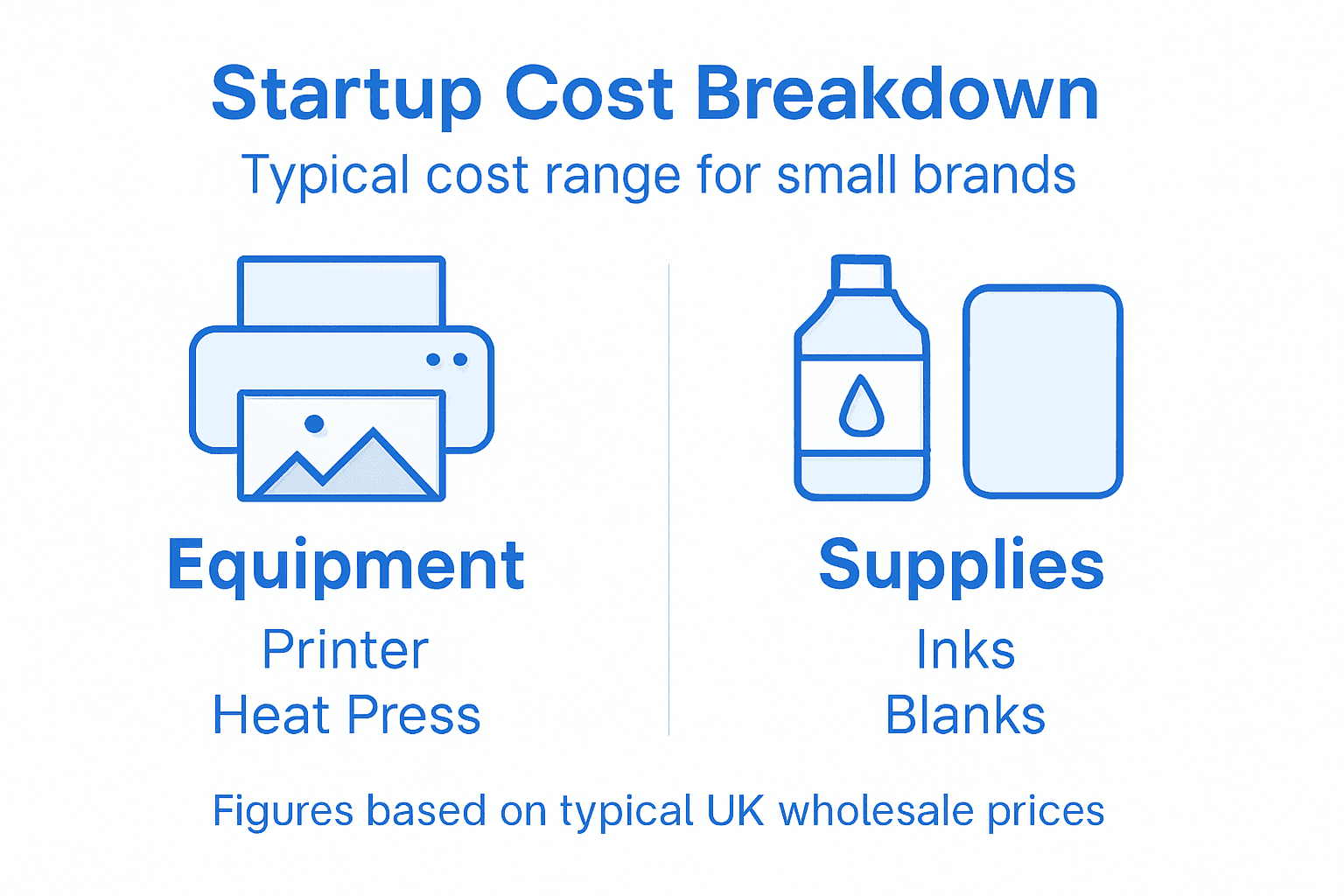
Budget roughly £500–£2,000 for a basic setup including printer, heat press, and initial supplies. This is genuinely affordable compared to traditional manufacturing tooling costs.
Pro tip: Invest in a good quality heat press with digital temperature control rather than a budget model—temperature accuracy directly impacts product quality and your ability to scale without waste.
Key Advantages of Buying Wholesale Supplies
Wholesale purchasing transforms your cost structure entirely. You move from retail pricing to trade rates, which means your profit margins expand dramatically before you’ve sold a single item.
Cost savings that compound
Retail sublimation blanks cost roughly double what wholesale suppliers charge. A mug that costs £2.50 wholesale might cost £5 or more at retail prices.
When you’re selling 100 mugs monthly, that difference becomes £250 in your pocket rather than your suppliers’. Scale that to 500 units monthly, and you’re looking at real business revenue.
These savings apply across every product category you stock.
No minimum order restrictions
Most traditional manufacturers demand minimum orders of 500 or 1,000 units. That’s thousands of pounds tied up in stock before you’ve validated market demand.
Wholesale suppliers without minimums let you start small:
- Order 10 mugs to test a design
- Order 50 t-shirts to gauge customer interest
- Order 25 phone cases to experiment with your market
- Scale up only once you see what customers actually want
This flexibility is transformative for small brands testing new product lines.
No minimum orders mean you can test multiple product categories simultaneously without risking your capital on inventory that might not sell.
Consistent supply for growing demand
As your business grows, you need reliability. Wholesale suppliers maintain stock and can fulfil repeat orders quickly.
You’re not scrambling to find new sources when orders spike. Your supplier relationship grows, and you build trust over time.
Simplified sourcing
Wholesale suppliers stock equipment, blanks, and supplies in one place. Rather than hunting across five different vendors, you make one phone call or place one order.
This saves time and ensures component compatibility. Your printer, inks, transfer paper, and heat press all work together because they’re sourced from suppliers who understand the full system.
Quality control at scale
Wholesale blanks meet consistent quality standards. You’re not gambling on inconsistent products batch to batch.
This consistency means your finished products meet customer expectations reliably. Happy customers become repeat customers.
Real profit margins
The maths works like this: wholesale cost £2.50, retail price £7.50, profit per unit £5. With 200 monthly sales, that’s £1,000 profit before expenses.
Retail pricing means you’re competitive whilst still capturing healthy margins. Your business becomes genuinely viable.
Pro tip: Build relationships with your wholesale supplier—ask about bulk discounts for larger orders, payment terms that suit your cash flow, and notification when products go on sale, maximising your purchasing power.
Cost Savings, Margins, and Common Pitfalls
Wholesale pricing cuts your material costs dramatically, but many makers sabotage their profits by miscalculating true expenses. Understanding real costs versus visible costs separates thriving businesses from struggling ones.
Hidden costs nobody talks about
You see the wholesale price: £2.50 per mug. That feels cheap. But your actual cost per unit includes much more.
Add labour time (designing, printing, pressing), electricity, equipment maintenance, packaging materials, and shipping to customers. Suddenly that £2.50 mug costs £4 or £5 when you account for everything.
Understanding full cost structure prevents you from pricing products unprofitably and wondering why your business fails despite “good” wholesale rates.
The pricing trap
Many makers price based only on product cost. They see £2.50 blanks and price mugs at £5.99, feeling clever about the margin.
Then reality hits. They sell 200 mugs monthly but work 40 hours doing everything themselves. Your hourly wage? Roughly £2.50 per hour. That’s not a business—that’s exploitation.
Common pricing mistakes:
- Forgetting to include your labour time
- Underestimating packaging and shipping costs
- Ignoring equipment replacement and maintenance
- Not accounting for failed prints or customer returns
- Competing on price instead of value
Calculating real profit margins
Start with actual costs, not wishful thinking. List every expense involved in getting one product to a customer’s door.
If true cost per unit is £4.50 (including labour, overheads, and shipping), pricing at £12.99 gives you £8.49 gross margin per unit. From that, you cover business expenses, taxes, and profit.
Wholesale pricing only works if you price your finished products correctly—cheap blanks don’t matter if you’re giving away your labour.
Equipment maintenance reality
Heat presses wear out. Printers need repair. Transfer paper quality varies batch to batch. Budget 10% of revenue for equipment maintenance, replacements, and quality control waste.
Here is a summary of key cost factors to consider when setting profitable prices for sublimation products:
| Cost Factor | Description | Impact on Pricing |
|---|---|---|
| Materials (Blanks, Inks) | Base cost for mugs, apparel, etc. | Directly affects unit cost |
| Labour Time | Time spent designing and producing | Determines profitability |
| Equipment Maintenance | Repairs and replacement for presses/printers | Adds to ongoing expenses |
| Packaging & Shipping | Boxes, labels, delivery costs | Essential for order fulfilment |
| Quality Control Waste | Defects, failed prints | Reduces overall margin |
| Overheads | Electricity, workspace, marketing | Impacts total business cost |
Business owners who ignore maintenance costs end up frustrated when equipment fails and they haven’t saved money for repairs.
Supplier vetting matters
Not all wholesale suppliers are equal. Cheap blanks from unreliable sources create quality inconsistency that damages your reputation.
Spend time choosing suppliers who deliver consistent quality. A supplier who reliably ships correct orders saves you from customer complaints and replacement costs.
Pro tip: Track every cost for your first 50 units, including your labour time in minutes—this actual data lets you calculate real profit per unit and price products sustainably rather than guessing.
How to Start with No Minimum Order
No minimum orders means you can launch with a few hundred pounds instead of thousands. This isn’t theory—it’s how most successful UK small brands started their sublimation businesses.
The real startup advantage
Traditional manufacturing demands 500-unit minimums. That’s £1,000+ before you’ve sold anything. No-minimum wholesale changes this entirely.
You buy 20 mugs. Test them. Adjust your design. Buy 50 more. Scale when demand justifies it. This iterative approach minimises your risk dramatically.
Starting sublimation businesses flexibly without massive inventory investment lets you validate your market before committing serious capital.
Your first 90 days
Week one to four: acquire equipment and initial blanks.
Week five to eight: create sample products, photograph them, launch basic marketing.
Week nine to twelve: analyse sales data, refine your product selection, reorder best sellers in slightly larger quantities.
This timeline is realistic because you’re not waiting for factory production runs.
Practical startup steps
Start small with strategic purchases:
- Invest £300-£500 in a desktop sublimation printer and supplies
- Buy a mid-range heat press (£400-£600)
- Order 50-100 blanks across 3-4 product types (roughly £100-£150)
- Total initial investment: £800-£1,250
This is genuinely affordable. You’re not locked into massive inventory.
The following table compares traditional manufacturing with wholesale sublimation for small brands:
| Aspect | Traditional Manufacturing | Wholesale Sublimation |
|---|---|---|
| Upfront Investment | High (£1,000+ minimum orders) | Low (often under £1,500) |
| Order Flexibility | Large minimum quantities | No minimums, test & adapt |
| Customisation Options | Limited, set in bulk | Unlimited, individual design |
| Lead Time | Weeks to months | Days to weeks |
| Risk Level | High (inventory burden) | Low (scale as needed) |
No minimums mean you can test which products your customers actually want before betting your budget on large stock purchases.
Testing your market
Don’t guess what sells. Order small quantities, list them for sale, and watch what happens.
If personalised mugs sell and phone cases don’t, you know to stock more mugs next time. You discover this through actual customer behaviour, not assumptions.
Many successful makers started with just mugs, then added apparel, then expanded to gifts. They didn’t do everything at once.
Scaling gradually
Once you’ve confirmed demand, increase order quantities incrementally. Buy 100 units instead of 20. Your cost per unit drops slightly, improving margins.
Gradual scaling lets you reinvest profits rather than requiring fresh capital investment.
The supplier relationship
Choose a supplier who values small orders. Reliable communication matters more at small volumes—you want quick answers and accurate shipments.
Build that relationship. Ask about upcoming stock, request advice on popular products, and discuss your growth plans.
Pro tip: Document your first month’s costs and sales meticulously—which products moved fastest, which ones sat, what your actual profit per unit was—because this data guides your next 90 days and prevents costly mistakes.
Unlock Your Small Brand’s Potential with Wholesale Sublimation Supplies
Starting a sublimation business or expanding your product range can feel overwhelming when faced with high upfront costs and restrictive minimum orders. This article has shown how wholesale sublimation solves these challenges by offering no minimum order quantities, lower unit costs, and faster turnaround times. You no longer have to risk large inventory purchases or compromise your creative freedom. Instead, you can test new designs, control production quality, and scale your brand sustainably using affordable equipment and a broad selection of sublimation blanks.
At Subliblanks, we understand the pain points of small makers and entrepreneurs who want flexibility and value. We supply everything from quality sublimation blanks to printers and heat presses ready for immediate use. Our no minimum order policy means you can confidently invest in exactly what you need, whether you are starting with personalised mugs, apparel, or niche gifts.
Explore our comprehensive range of sublimation equipment and supplies to empower your business journey today.
Take control of your production costs, avoid costly inventory risks, and deliver vibrant custom products to your customers without delay. Visit Subliblanks now and start ordering wholesale sublimation supplies designed specifically for small brands ready to grow.
Frequently Asked Questions
What are the benefits of wholesale sublimation for small brands?
Wholesale sublimation offers lower costs per item, no minimum order quantities, access to a wide range of customisable products, fast turnaround times, and the ability to test designs with minimal risk.
How does the sublimation printing process work?
Sublimation printing uses heat and pressure to transfer dye onto synthetic materials like polyester. The dye turns from solid to gas, bonding with the fabric, resulting in vibrant, permanent designs.
What equipment do I need to start sublimation printing?
To start sublimation printing, you will need a sublimation printer, sublimation inks, transfer paper, and a heat press. This equipment can be sourced from wholesale suppliers who provide compatible components.
What types of products can I create with sublimation?
You can create a variety of products with sublimation, including mugs, apparel, phone cases, coasters, and personalised gifts. The process works best with polyester and polymer-coated substrates for vibrant results.
Recommended
- Sublimation Blanks: Powering Custom Product Success – SubliBlanks Ltd
- Sublimation for Promotional Items: Boosting Customisation and Value – SubliBlanks Ltd
- How to Use Sublimation Blanks for Custom Merchandise – SubliBlanks Ltd
- Why Use Sublimation for Textiles: Lasting Impact and Value – SubliBlanks Ltd


