



The role of laser engraving in business growth
TL;DR:
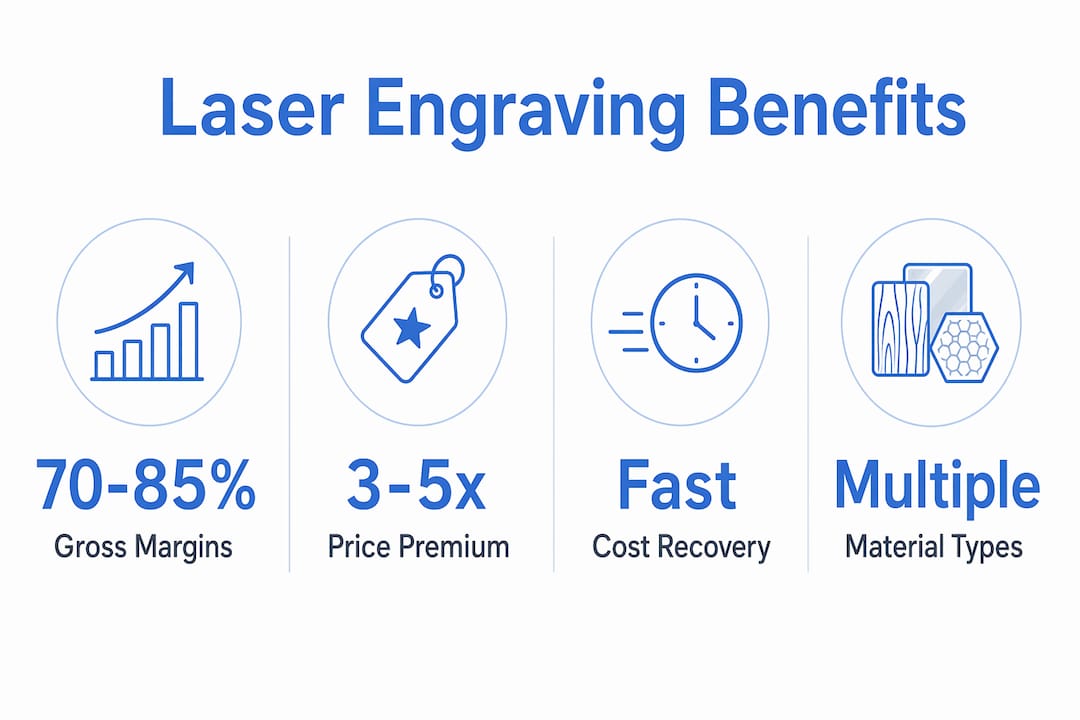
- Laser engraving offers small businesses high profit margins, with gross margins between 70 and 85 percent.
- Focusing on niche product categories and B2B clients helps maximize revenue and streamline operations.
Laser engraving is defined as a non-contact marking process that uses a focused beam of light to permanently etch designs, text, and logos onto a wide range of materials. The role of laser engraving in business has shifted from a niche manufacturing tool to a mainstream revenue driver, particularly for small and medium enterprises seeking high-margin product lines. Businesses using laser engraving report gross margins of 70–85% on personalised items. That figure alone explains why so many entrepreneurs are adding laser capability to their operations. Subliblanks supplies xTool laser engraving machines and laser-engraveable blanks to UK businesses ready to act on that opportunity.
How does laser engraving improve business profitability?
The economics of laser engraving are unusually favourable for small businesses. A CO2 laser machine priced between £1,500 and £5,000 can generate its own purchase cost in revenue within 60–90 days of operation. That recovery speed is rare in physical product businesses, and it makes laser engraving one of the most accessible routes to a profitable product line.
The personalisation premium is the single biggest profit driver. Customers pay 3–5 times more for a custom engraved product than for the same blank item. A tumbler blank costing £4.50 can retail for £35–£60 after an 8–12 minute engraving session. The machine time is short; the perceived value is high.
Laser engraving converts a commodity blank into a personalised product in under 15 minutes, generating margins that most product-based businesses never achieve. The gap between material cost and retail price is where the real business case lives.
Switching to laser marking also reduces consumable costs. Traditional marking methods rely on inks, pads, and chemical processes that accumulate ongoing expense. Laser engraving eliminates most of those consumables, cutting costs by approximately 30% compared to ink-based alternatives. That saving compounds quickly across high-volume runs.
Operational efficiency adds another layer of advantage. Because laser engraving is a non-contact process, it eliminates distortion and tool wear, producing identical quality from the first item to the five hundredth. Consistent output reduces rework, protects your brand reputation, and makes it easier to fulfil bulk orders with confidence.
- Gross margins of 70–85% on personalised laser engraved products
- Machine cost recovery typically within 60–90 days for active businesses
- Personalisation premium of 3–5x over blank product price
- Consumable cost reduction of approximately 30% versus ink-based marking
- Zero tool wear means consistent quality across every production run
What technologies and products does laser engraving involve?
Three laser types dominate the market, and each suits a different product niche. Choosing the wrong type for your product range is the most common and costly mistake new businesses make.
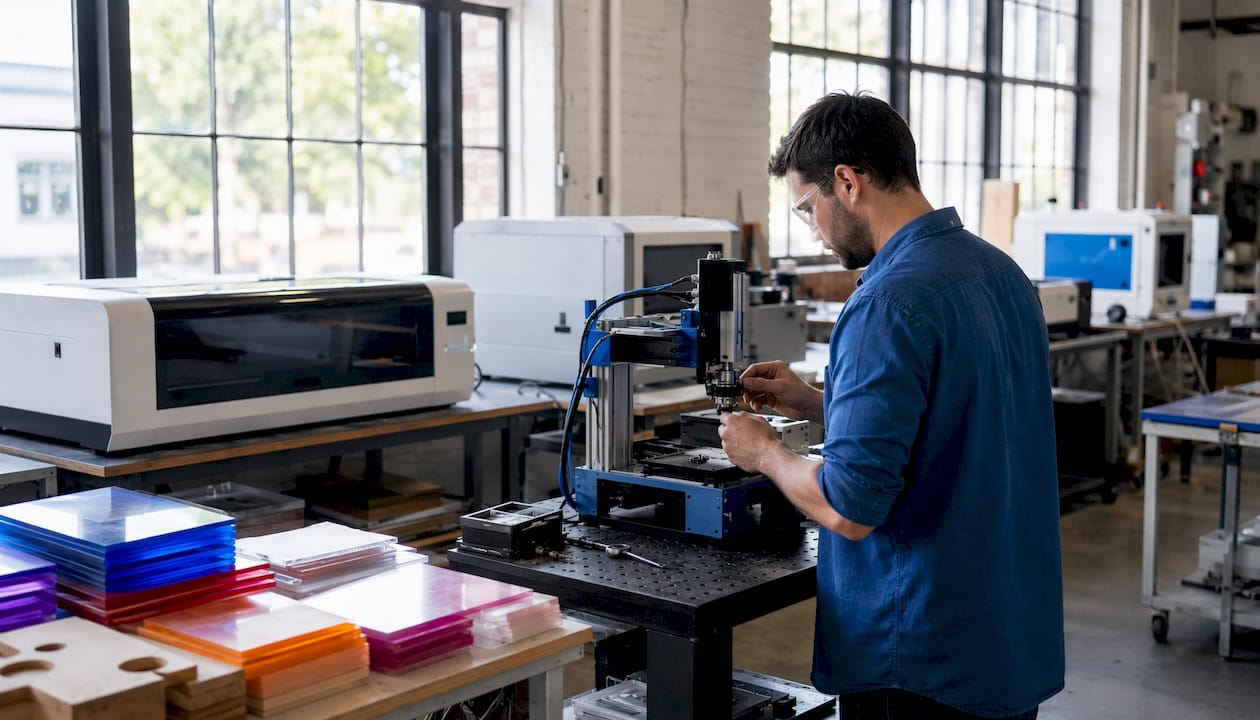
CO2 lasers work on wood, acrylic, leather, glass, fabric, and coated metals. They offer broad material compatibility and fast production speeds, making them the most popular choice for businesses selling personalised gifts, signage, and drinkware. Diode lasers are lighter, more affordable, and well suited to wood, leather, and coated metals. They are a practical entry point for startups testing a niche before committing to higher spend. Fibre lasers specialise in bare metal marking, including stainless steel, aluminium, and brass. They carry a higher price and greater complexity, but they are the right tool for jewellery, industrial parts, and premium metal gifts.
| Laser type | Best materials | Typical use case | Entry cost |
|---|---|---|---|
| CO2 | Wood, acrylic, glass, leather | Gifts, signage, drinkware | Mid-range |
| Diode | Wood, leather, coated metals | Startup testing, light production | Entry-level |
| Fibre | Bare metals, stainless steel | Jewellery, industrial marking | Higher investment |
Product niche selection should drive equipment choice, not the other way around. Successful shops match their machine to their product range rather than buying the cheapest available option. A business focused on metal awards needs a fibre laser. A business selling personalised wooden gifts needs a CO2 or diode machine. Buying a diode laser for a primarily metal product catalogue creates a mismatch that limits growth from day one.
Beyond laser type, machine features matter. Work area size determines the maximum product dimensions you can handle. Speed ratings affect throughput on volume orders. Enclosed machines offer safer operation and are often required for business premises. Software compatibility with design tools like Adobe Illustrator or LightBurn affects how quickly you can move from artwork to finished product.
Pro Tip: Before purchasing any machine, list your top three intended product types and confirm the laser type supports all three materials. Changing machines after launch is expensive and disruptive.
Common product niches with strong demand include personalised drinkware, wooden gifts and home décor, corporate awards and trophies, event signage, jewellery, and leather goods. Each niche has different margin profiles and order patterns. Drinkware and corporate awards tend to generate the most repeat business. Understanding laser engravable blank options for each niche helps you stock the right materials before orders arrive.
Which business models work best with laser engraving?
The most profitable laser engraving businesses focus on one or two product types rather than offering everything to everyone. A clear operational focus on 1–2 product types, combined with volume batching and B2B relationships, consistently outperforms broad product lines. Spreading across too many niches fragments your workflow, increases setup time, and dilutes your marketing message.
B2B corporate orders are the most reliable income source in this sector. 50% of US small businesses outsource marking and manufacturing tasks, and the same pattern holds in the UK. That outsourcing creates a steady pipeline of corporate clients needing branded merchandise, awards, and serialised parts. One corporate client placing monthly repeat orders can outperform dozens of individual retail transactions.
- Identify your primary niche. Choose one product category, such as personalised tumblers or corporate awards, and build your workflow around it.
- Batch production runs. Group similar jobs together to minimise machine setup time and maximise output per hour.
- Target B2B clients early. Approach local businesses, sports clubs, and event organisers who need branded items regularly.
- Build a referral system. Personalised products generate strong word-of-mouth. Ask satisfied customers for referrals and offer a small incentive for introductions.
- Use multiple sales channels. Etsy suits one-off personalised retail orders. Shopify gives you control over branding and margins. Local fairs and markets build community recognition and generate direct feedback.
Seasonal demand is real but manageable. Christmas, Father’s Day, and corporate award seasons create predictable spikes. Businesses that prepare product templates and blank stock in advance capture that demand without scrambling. Laser engraving technology now bridges manufacturing and creative retail, which means you can pivot between B2B industrial marking contracts and B2C personalised gift sales depending on the time of year.
Pro Tip: Serialisation and variable data engraving, such as unique numbers or QR codes on each item, are growing B2B requirements. Offering this capability positions you as a specialist supplier rather than a general gift maker.
What practical steps should you take to start laser engraving?
Starting with niche validation saves money and time. Before buying equipment, research demand on Etsy, Not On The High Street, and local Facebook groups. If personalised tumblers or wooden wedding gifts show consistent sales volume, that niche is worth entering. If demand is thin, choose a different category before committing capital.
Matching your laser type to your validated niche is the next decision. Use the CO2, diode, and fibre framework above. For most UK gift and personalisation businesses, a CO2 machine covers the widest range of popular products. Understanding how to select a laser engraver for your specific product types prevents the mismatch errors that stall growth.
Workflow setup is where most new businesses lose money without realising it. Engraving run time is often shorter than setup time, including file preparation, material alignment, and focus adjustment. For tumblers, the engraving itself takes 8–12 minutes, but total workflow time without optimisation runs to 15–25 minutes per unit. Reducing that gap through template libraries, jigs, and standardised file formats directly increases your effective hourly output.
- Create a template library for your top five product designs to eliminate repeated file prep
- Use physical jigs to speed up material alignment and reduce positioning errors
- Set fixed pricing tiers based on engraving area and complexity, not time spent
- Photograph every finished product for social media and portfolio use
- Track cost per unit including blank, machine time, and packaging to protect margins
Pricing strategy must capture the personalisation premium without undervaluing your work. A common mistake is pricing based on machine time alone. Price based on perceived value, which means the finished personalised product, not the raw cost of the blank plus electricity. Learning how to engrave blanks professionally and presenting that quality in your marketing justifies premium pricing to customers.
Key takeaways
Laser engraving delivers gross margins of 70–85% on personalised products, with machine costs typically recovered within 60–90 days, making it one of the highest-return additions a small business can make.
| Point | Details |
|---|---|
| Profitability is high | Gross margins of 70–85% and fast cost recovery make laser engraving financially accessible for small businesses. |
| Personalisation commands a premium | Customers pay 3–5 times more for engraved products, turning low-cost blanks into high-value retail items. |
| Match machine to niche | Choosing CO2, diode, or fibre laser based on your product range prevents costly equipment mismatches. |
| Workflow mastery drives output | Reducing setup and file prep time matters more than engraving speed for overall throughput and profit. |
| B2B clients anchor revenue | Corporate and repeat B2B orders provide more stable income than relying solely on retail sales. |
Why I think most businesses underestimate laser engraving
The conversation around laser engraving tends to focus on the machine. Which brand, which wattage, which work area. That focus misses the real point. The machine is just a tool. The business model around it is what determines whether you make money.
I have seen businesses invest in capable equipment and then stall because they tried to serve every customer with every product. The shops that grow consistently are the ones that pick a tight niche, build a repeatable workflow, and go after B2B clients early. One corporate client ordering 200 branded items per quarter is worth more than 200 individual Etsy orders, and it is far easier to manage.
The other thing most people overlook is workflow time. The laser runs fast. The bottleneck is everything around it: file preparation, alignment, quality checks, packaging. Businesses that invest time in building template libraries and physical jigs see their effective output double without touching the machine settings.
Laser engraving sits at an interesting point right now. The technology is mature enough to be reliable and affordable, but the market for personalised products keeps growing. That combination does not last forever. Businesses that build their systems and client base now will be in a much stronger position as the market matures and competition increases.
— chris
Subliblanks: laser engraving supplies for UK businesses
Subliblanks supplies everything a UK business needs to build or expand a laser engraving operation, from xTool laser engraving machines to a full range of laser-engraveable blanks across drinkware, wood, acrylic, and more. There are no minimum order quantities, which means you can test new product niches without committing to large stock purchases.
Whether you are setting up your first laser engraving workflow or adding new product categories to an existing operation, Subliblanks stocks the blanks and equipment to match your niche. The range covers the most popular UK gift and corporate product categories, with consistent quality across every item. Browse the full catalogue at Subliblanks and source what you need to start engraving at a professional level.
FAQ
What gross margins can laser engraving businesses achieve?
Laser engraving businesses typically achieve gross margins of 70–85% on personalised products. Machine costs are often recovered within 60–90 days of active trading.
How much more do customers pay for engraved products?
Customers pay 3–5 times more for a custom engraved product than for the equivalent blank. A blank costing under £5 can retail for £35–£60 after engraving.
Which laser type suits a small gift business?
A CO2 laser suits most small gift businesses because it works on wood, acrylic, glass, leather, and coated metals. Diode lasers are a lower-cost entry point for businesses starting with wood and leather only.
How long does laser engraving take per product?
Engraving a tumbler takes 8–12 minutes of machine run time, but total workflow time including file prep and alignment runs to 15–25 minutes without optimisation. Reducing setup time through templates and jigs is the fastest way to increase output.
Is B2B or B2C more profitable for laser engraving businesses?
B2B corporate orders provide more stable and predictable income than retail sales. One corporate client placing regular bulk orders can outperform dozens of individual retail transactions in both volume and margin.


