



What is digital transfer film: a guide for UK print businesses
TL;DR:
- Digital transfer film is a PET-based material used in direct-to-film printing that produces full-color, photo-realistic designs on various fabrics without screens or weeding. Its advantages include low setup costs, high versatility, and excellent durability, making it ideal for short runs and complex artwork. Success depends on precise workflow management, proper calibration, and quality supplies, especially for UK and Irish print businesses seeking consistency and profitability.
Digital transfer film is one of those terms that gets misused constantly in the print trade. Many businesses assume it refers to any generic heat-transfer film, slap it onto a standard heat press, and wonder why results disappoint. The reality is more specific and far more capable. Understanding what is digital transfer film properly means understanding a distinct printing workflow, the direct-to-film (DTF) process, that delivers full-colour, photo-quality output on almost any fabric without screens, weeding, or minimum order constraints. This guide unpacks the technology, process, and practical considerations UK and Ireland print businesses need to make informed decisions.
Table of Contents
- What is digital transfer film and how does it work?
- Advantages of digital transfer film over traditional transfer and printing methods
- Critical factors for successful digital transfer film printing
- Optimising digital transfer film for UK and Ireland print businesses
- Common challenges and troubleshooting in digital transfer film printing
- Rethinking digital transfer film: what UK printers often overlook
- Explore premium printing supplies to boost your digital transfer film business
- Frequently asked questions
Key Takeaways
| Point | Details |
|---|---|
| Definition of DTF film | Digital transfer film is a polyester-based material used in a full-colour, durable printing workflow for textiles. |
| Process steps | DTF printing involves printing on film, applying adhesive powder, curing, heat pressing, and peeling to transfer designs. |
| Advantages | DTF allows small runs without setup labour, supports photo-quality prints, and works on various fabrics. |
| Critical factors | Success depends on compatible inks, films, precise heat press conditions, and peel method choice. |
| Business application | Optimising consumables use and production workflow is key to profitability for UK and Irish print businesses. |
What is digital transfer film and how does it work?
In print and garment decoration, digital transfer film refers specifically to a PET (polyethylene terephthalate) polyester-based film used in a direct-to-film (DTF) workflow. Artwork is digitally printed onto this film using pigment inks, then bonded to garments via a hot-melt adhesive powder that is cured and heat-pressed onto fabric. It is emphatically not the same as generic iron-on transfer film or heat transfer vinyl.
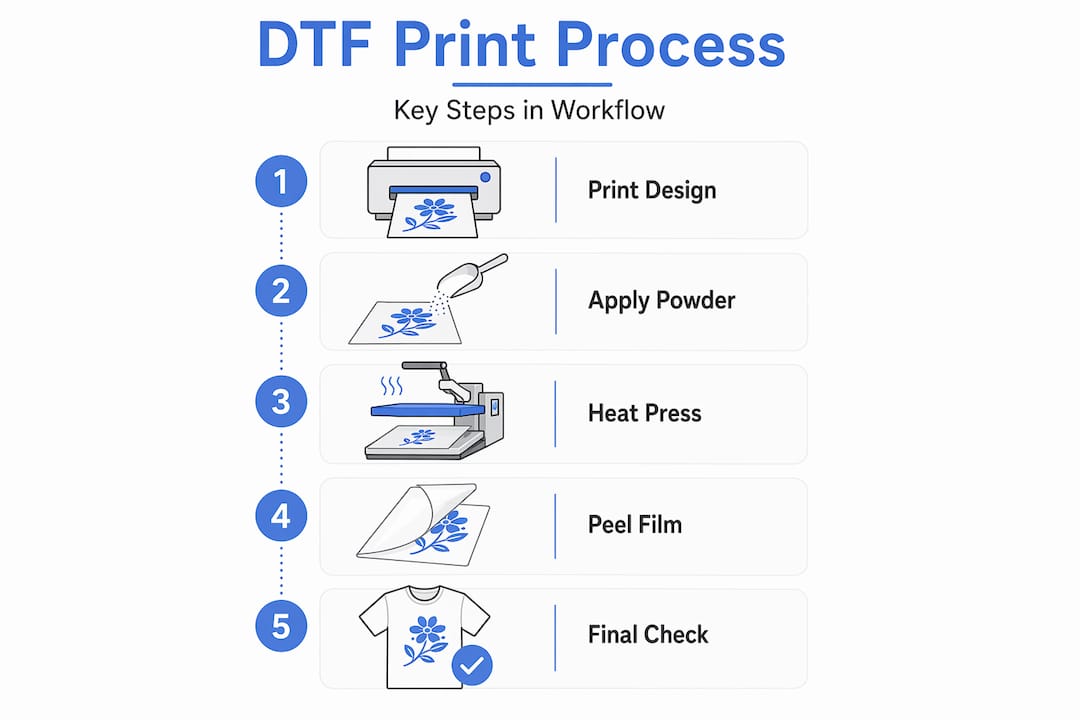
The process follows a clear sequence. Each stage matters, and skipping or rushing any step is where quality problems begin. Here is the core direct to film printing workflow:
- Design preparation. Create or prepare your artwork digitally, ensuring colour profiles and resolution are optimised for pigment ink output.
- Printing onto PET film. A modified inkjet printer deposits pigment inks, including a white ink underbase layer, directly onto the PET transfer film.
- Adhesive powder application. While the ink is still wet, hot-melt adhesive powder is applied evenly across the printed surface, coating the entire design.
- Curing. The film passes through a curing oven or under a heat source, melting the powder so it fuses uniformly with the ink layer.
- Heat pressing. The cured film is placed face-down onto the garment and pressed at the correct temperature, pressure, and time.
- Peeling. Once pressed, the PET film is peeled away, leaving the design bonded to the fabric.
What makes this process commercially compelling is the result: a soft-hand feel, exceptional colour vibrancy, and photo-level detail that traditional screen printing struggles to match on short runs. The adhesive layer creates a genuine bond with the fabric fibre rather than sitting on top, which explains the durability that repeat washing demands.
Advantages of digital transfer film over traditional transfer and printing methods
DTF printing has grown rapidly across the UK and Ireland for practical, measurable reasons. Understanding these advantages helps businesses position DTF correctly within their service offering rather than treating it as a replacement for every other method.
Key advantages include:
- No screens or weeding. Unlike screen printing or heat transfer vinyl (HTV), there is no artwork separation, screen burning, or vinyl cutting and weeding required. This alone eliminates hours of setup for complex or multi-colour designs.
- Small run viability. One piece costs roughly the same per unit as a hundred pieces, making on-demand and custom orders genuinely profitable.
- Full-colour and photographic output. Gradients, fine detail, and photographic images print cleanly without the colour count limitations of screen printing.
- Fabric flexibility. DTF adheres to cotton, polyester, blends, nylon, leather, and denim without fabric pre-treatment.
- Lower chemical demands. Compared to screen printing, DTF involves fewer pre-treatment chemicals, reducing operational complexity.
Choosing between screen print, DTF, and HTV comes down to run size, design complexity, and turnaround requirements. The table below makes the differences concrete.
| Method | Setup complexity | Cost per unit (small run) | Colour range | Fabric compatibility | Turnaround speed |
|---|---|---|---|---|---|
| DTF (digital transfer film) | Low | Low to medium | Unlimited | Very broad | Fast |
| Screen printing | High | Low (large runs only) | Limited by colour count | Broad | Slow |
| Heat transfer vinyl (HTV) | Medium | Medium | Limited | Broad | Medium |
| Traditional heat transfers | Low | Medium to high | Good | Moderate | Fast |
Pro Tip: DTF is not automatically cheaper than screen printing at scale. At 200 or more identical units, screen printing often wins on cost per piece. Use DTF where it excels: variable data, short personalised runs, and complex artwork that would require too many screens to be economical.
Critical factors for successful digital transfer film printing
Knowing the advantages is only half the picture. Successful DTF output depends on managing several technical variables that many newcomers underestimate.
The most important factors are:
- Ink, film, and printer compatibility. Using mismatched combinations causes ink deposition failures, curling, ghosting, or adhesion breakdown. DTF film is engineered to work with DTF-specific pigment inks and is not interchangeable with generic PET film.
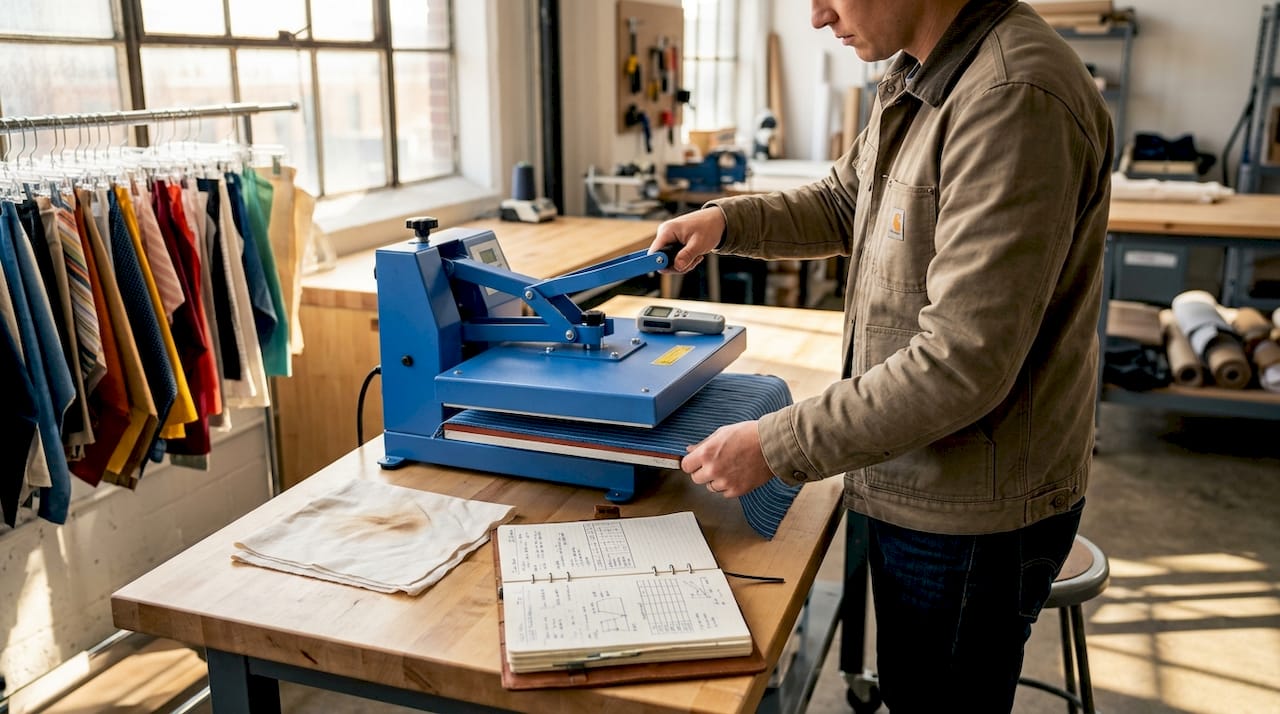
- Heat press parameters. Temperature (typically 160°C to 165°C), pressure (medium to firm), and dwell time (10 to 15 seconds) must be dialled in precisely for each garment type. Even minor deviations cause adhesion failure or garment damage.
- Peel method selection. Films come in three peel variants: hot peel (removed immediately after pressing), cold peel (allowed to cool before removal), and instant hot peel (a newer variant offering fast removal with high print stability). Each affects workflow speed, texture, and the risk of distortion.
- Powder application consistency. Uneven powder distribution creates patches of poor adhesion or visible texture variation in the finished transfer.
- Operator calibration routines. Equipment drift is real. Printers and heat presses need regular calibration checks to maintain consistent output, particularly under commercial production loads.
Common defects and their causes:
- Edge curling: Incorrect press temperature or incompatible film and ink combination.
- Ghosting: Film movement during pressing, typically from insufficient pressure or misalignment.
- Poor adhesion: Under-cured powder, incorrect press time, or incompatible materials.
- Ink smudging: Insufficient drying before powder application or printer settings misaligned to film type.
Pro Tip: Always run a test press on a scrap piece of matching fabric before starting a production batch. Three minutes spent testing saves a full run of wasted garments and film.
Understanding thermal transfer durability and how press conditions influence long-term washability is essential knowledge for any professional offering DTF-printed products.
Optimising digital transfer film for UK and Ireland print businesses
Technical knowledge is the foundation, but profitability comes from optimising workflows to suit your business scale and order mix. The following step-by-step approach applies directly to small and medium print shops across the UK and Ireland.
- Match film type to your fabric range. If you regularly press on synthetic or heat-sensitive fabrics, cold-peel films give you more control. For volume cotton or polyester work, instant hot-peel films reduce labour time between presses and increase daily output.
- Plan batch sizes deliberately. Per-job cost in DTF depends on printer utilisation and consumable yield, not setup labour. Grouping jobs by film width and ink colours reduces waste and keeps your cost per unit predictable.
- Invest in a powder shaker and conveyor curer. Manual powder application introduces inconsistency at volume. A shaker-curer combination automates two critical steps and pays for itself quickly in reduced waste and faster throughput.
- Select a heat press with platen temperature uniformity. Budget presses often have significant temperature variation across the platen, which causes inconsistent adhesion, particularly on larger transfers. Check the specification carefully.
- Document and standardise your settings. Create a simple settings sheet for each fabric type and film combination you use regularly. This reduces operator-dependent variation and speeds up onboarding when your team grows.
The table below shows how peel type affects production decisions:
| Peel type | When to use | Key advantage | Consideration |
|---|---|---|---|
| Hot peel | High-volume cotton, polyester | Fast cycle time | Risk of distortion if rushed |
| Cold peel | Sensitive fabrics, detailed designs | Maximum adhesion control | Slower throughput |
| Instant hot peel | Most production scenarios | Speed plus stability | Higher film cost |
For a fuller picture of DTF printing for garment businesses, including equipment investment guidance, and how to maximise DTF print ROI across different order types, the linked resources go deeper on operational strategy.
Common challenges and troubleshooting in digital transfer film printing
Even experienced operators encounter problems. What separates profitable businesses from frustrated ones is a structured approach to troubleshooting rather than trial and error.
The most frequent issues and their solutions:
- Curling edges: Reduce press temperature slightly and verify film storage conditions. Film exposed to humidity absorbs moisture and curls during pressing.
- Ghosting or double-image effect: Increase pressure to eliminate film movement, and ensure the garment is positioned flat before pressing.
- Ink smudging or bleeding: Check printer ink saturation settings and ensure the film is the correct type for your ink system.
- Transfer peeling after washing: Inspect curing temperature and dwell time. Under-cured powder is the primary cause of wash-failure transfers.
- Patchy adhesion: Review powder application for uneven coverage and confirm that curing temperature is consistent across the full film width.
Pro Tip: Store DTF film flat in sealed packaging in a cool, dry environment. Humidity causes static build-up and film warping that creates problems throughout the entire workflow, often in ways that are not immediately obvious until the press stage.
“Proper alignment, correct temperature, pressure, and timing are essential to avoid issues like edge curling or ghosting, making the workflow a balance of precision and patience.”
Understanding the heat press role in DTF production is often undervalued. The press is not a passive last step. It is where everything either succeeds or fails, and it deserves as much attention as the printer itself.
Rethinking digital transfer film: what UK printers often overlook
Here is the uncomfortable truth about DTF that the promotional side of the industry glosses over: eliminating setup labour does not automatically make a business more profitable. It changes where the complexity lives, not whether complexity exists.
Most newcomers to digital transfer film assume that no screens and no weeding means no real production management. That assumption costs money. The economics of DTF shift the critical variable from setup time to consumable yield and printer utilisation. A printer running at 40% capacity with inconsistent batching will always struggle on cost per unit, regardless of how simple the individual steps appear.
Peel method is another area where surface-level decisions create downstream problems. Many operators choose instant hot peel across the board because it sounds fastest. But on certain stretch fabrics or fine-detail designs, forcing an instant hot peel creates micro-distortions that only become visible after washing. The right choice depends on the garment, not the clock.
The businesses that get the most from DTF printing consistently share one trait: they treat calibration as a scheduled discipline, not a response to problems. Press temperature drift, printer head alignment, and curing oven consistency all degrade gradually. By the time the output looks wrong, waste has already accumulated.
Pro Tip: Schedule a full equipment calibration check every two weeks under normal production loads. Document baseline output quality with a standard test print so you have a reference to compare against. This single habit prevents the gradual quality drift that erodes customer confidence.
Investing in quality film is also not where most operators start, but it is where the gap between consistent and inconsistent output often lies. Budget film introduces more variables. In a process already sensitive to small deviations, adding another source of inconsistency makes everything harder to diagnose and correct.
Explore premium printing supplies to boost your digital transfer film business
If you are building or expanding a DTF operation, the quality of your supplies directly determines the consistency of your output and the repeat business you retain.
At SubliBlanks, we supply a wide range of products that complement DTF printing workflows, from DTF supplies and sublimation blanks to badge-making materials and packaging. Everything is available with no minimum order quantities, which means you can source exactly what you need without over-committing stock. Fast UK shipping supports the turnaround times your customers expect.
Useful product categories for DTF print shops include:
- Sublimation blanks for expanding beyond garments into mugs, panels, and accessories
- Badge-making supplies such as our round MDF name badge pin and sublimation MDF pin badge for add-on product lines
- Packaging supplies to present finished orders professionally
Browse the full SubliBlanks catalogue to find supplies that integrate with your existing DTF workflow and help you grow your product range without sourcing from multiple suppliers.
Frequently asked questions
Is digital transfer film the same as heat transfer vinyl?
No. Digital transfer film in DTF printing uses pigment inks and a hot-melt adhesive layer that bonds with fabric fibres, whereas heat transfer vinyl requires cutting and weeding pre-formed shapes and does not support photographic or unlimited-colour output.
What types of fabric work best with digital transfer film?
Digital transfer film works on cotton, polyester, tri-blends, nylon, and most synthetics, making it one of the most versatile transfer methods available for mixed-fabric production environments.
How do I avoid curling or ghosting when using digital transfer film?
Use only compatible film and ink combinations, and follow press temperature, pressure, and timing guidelines precisely. Calibration and proper garment alignment before pressing are the two most effective preventive measures.
Can digital transfer film printing handle small orders efficiently?
Yes. Because there are no screens or weeding steps involved, setup time is minimal regardless of order size, making DTF one of the most cost-effective options for one-off, personalised, or short-run orders.
Recommended
- Direct to film printing: a complete guide for UK print shops – SubliBlanks Ltd
- Understanding DTF technology: Key benefits for UK printers – SubliBlanks Ltd
- Essential types of DTF supplies for print businesses 2026 – SubliBlanks Ltd
- DTF Printing: Transforming Garment Businesses Today – SubliBlanks Ltd


