



What is digital badge making? A guide for educators
TL;DR:
- Digital badge making creates verifiable credentials with visual images, embedded metadata, and verification links. Following the Open Badges 3.0 standard ensures badges are portable, trustworthy, and easily verified online. Clear criteria, simple claiming processes, and standards-compliant platforms increase badge engagement and recognition.
Digital badge making is the process of creating verifiable, shareable digital credentials that combine a visual image, embedded metadata, and a verification link to confirm a specific skill or achievement. Unlike a PDF certificate or a scanned image, a properly made digital badge carries machine-readable data that anyone can check instantly online. The industry standard for this is the Open Badges 3.0 specification, maintained by 1EdTech, which defines how that data must be structured. For educators, trainers, and hobbyists across the UK and Ireland, understanding digital badge creation means understanding the difference between a decorative graphic and a credential that genuinely means something.
What is digital badge making and why does it matter?
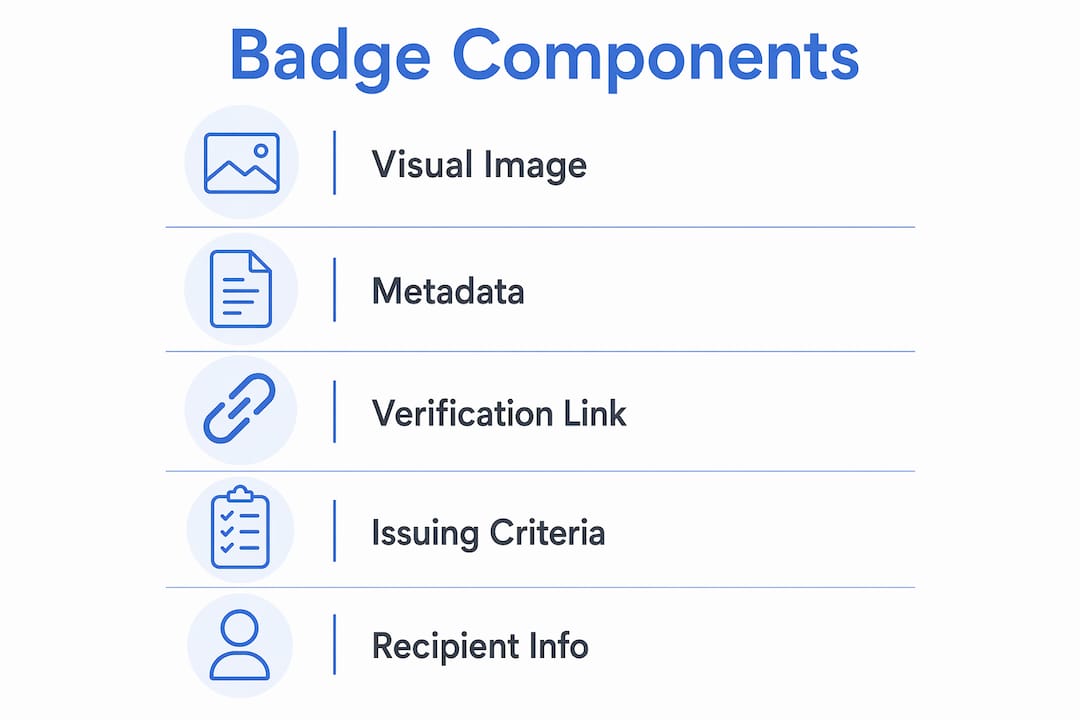
Digital badge making is the creation of a three-part credential: a visual image, a structured metadata file, and a permanent verification link. Each part plays a specific role. The image communicates the achievement at a glance. The metadata proves it. The verification link lets employers, institutions, or peers confirm it without contacting the issuer.
The Open Badges 3.0 standard, governed by 1EdTech, defines how metadata must be formatted and hosted. Badges built to this standard are interoperable across platforms, meaning a badge issued by a school in Dublin can be displayed and verified on a professional profile in Edinburgh without any manual intervention. That portability is what separates a genuine digital credential from a logo with a learner’s name on it.
Digital badges also function as what practitioners call “digital skills cards.” They provide clickable, verifiable proof of competencies online, unlike traditional certificates that require manual verification. That distinction matters enormously in recruitment and continuing professional development contexts across the UK and Ireland.
What components make up a digital badge?
A digital badge has three components, and all three must work together for the badge to function as a credential.
-
The visual image. This is the badge graphic that recipients display on LinkedIn, email signatures, or digital portfolios. The standard thumbnail size for LinkedIn is 88x88 pixels, and the design must remain legible at that scale. High-contrast layouts with simple iconography work best. A cluttered design loses its meaning when shrunk to thumbnail size.
-
The embedded metadata. This is the technical core of the badge. It takes the form of a JSON-LD assertion file hosted at a permanent URL. The file records who issued the badge, what criteria were met, when it was awarded, and who received it. This file is what makes the badge machine-readable and independently verifiable without contacting the issuing organisation.
-
The verification link. This is a permanent URL that leads to a specific evidence page confirming the badge’s authenticity. Broken or generic links reduce badge trustworthiness significantly. The link must resolve to a page that clearly identifies the badge, the recipient, and the criteria, so that an employer or institution can confirm the credential in seconds.
Understanding badge components at this level of detail is what separates educators who issue meaningful credentials from those who distribute decorative images.
Pro Tip: Test your verification link from a private browser window before issuing any badge. If you cannot confirm the badge details without logging in, neither can an employer.
How do you design and create digital badges?
The practical process of digital badge creation follows a five-step lifecycle. Each step builds on the previous one, and skipping any step produces a badge that is either unverifiable or unlikely to be claimed.
-
Define the criteria. Decide exactly what a recipient must do to earn the badge. Vague criteria produce low engagement. A well-defined criterion might read: “Completed a 12-hour course and passed a 60-question assessment with a score of 75% or above.” That specificity makes the badge defensible and gives recipients genuine pride in earning it.
-
Design the visual. Keep the design simple. Distinct brand colours and clear iconography help badges stand out on social profiles without requiring professional graphic design skills. Use a square canvas and test the design at 88x88 pixels before finalising it. Refer to badge design principles to get the visual fundamentals right.
-
Embed the metadata. Use a platform that supports Open Badges 3.0. Enter the issuer name, badge name, description, criteria URL, and issue date accurately. Errors in metadata cannot be corrected after issuance without revoking and reissuing the badge.
-
Issue the badge. Send the badge to the recipient via email or through the platform’s notification system. The recipient should receive a clear explanation of what the badge represents and how to claim and share it.
-
Enable verification and sharing. Confirm that the verification link is live and resolves correctly. Provide recipients with direct instructions for adding the badge to LinkedIn or other professional profiles.
Pro Tip: Create a short one-page guide for recipients explaining how to claim, display, and share their badge. Platforms that offer frictionless one-click claiming consistently see higher claim and sharing rates.
Well-designed badge programmes achieve claim rates between 70% and 90%, with social sharing rates of 30% to 60%. Those figures show that a well-structured programme, with clear criteria and easy claiming, generates genuine engagement rather than passive receipt.

What mistakes should you avoid in digital badge making?
The most common mistake in digital badge making is treating the badge as a graphic rather than a credential. A badge without Open Badges 3.0 metadata is just a decorative image. It cannot be verified, cannot be shared meaningfully, and carries no professional weight.
“Metadata is more important than visual design. A badge without it is just decorative and lacks utility. The visual draws attention, but the metadata is what makes the credential real.”
Other frequent errors include:
- Weak criteria definitions. Badges awarded for simply attending a session, without any measurable achievement threshold, are rarely shared and quickly forgotten. Measurable achievement thresholds increase recipient pride and sharing rates.
- Poor verification experiences. If the verification link leads to a generic homepage or a login screen, the badge loses credibility immediately. Employers who cannot verify a badge in one click will simply disregard it.
- Using non-standard platforms. Free tools that do not support Open Badges 3.0 risk badge longevity. If the platform shuts down, badges may become unverifiable. Platforms that meet 1EdTech standards protect credentials over the long term.
- Neglecting the claim experience. The moment a recipient receives their badge notification is the moment they decide whether to engage with it. A confusing or multi-step claiming process kills sharing before it starts.
Avoiding these mistakes is not complicated. It requires choosing a standards-compliant platform, writing specific criteria, and testing the full recipient journey before launch.
What are the benefits of digital badges in UK and Ireland education?
Digital badges serve a wide range of purposes across formal and informal learning environments in the UK and Ireland. The table below summarises the main use cases and their direct benefits.
| Use case | Who benefits | Key benefit |
|---|---|---|
| Continuing professional development | Teachers, nurses, engineers | Portable proof of CPD hours and skills |
| Online course completion | Adult learners, hobbyists | Shareable credential for LinkedIn profiles |
| Gamification in classroom settings | School pupils, college students | Motivational milestones that encourage participation |
| Informal skills recognition | Community groups, hobbyist clubs | Acknowledgement of non-accredited achievement |
| Corporate training programmes | Employees, HR departments | Verifiable record of internal training completion |
Badges used in gamified learning environments create visible progress markers that motivate learners to continue. A pupil who earns a badge for completing a coding module has a tangible record of that achievement, one they can share publicly and build upon. That visibility reinforces effort in a way that a grade in a register does not.
For institutions, digital badges reduce the administrative burden of credential verification. An employer who receives a CV listing a badge can verify it in seconds via the verification link, without writing to the issuing institution. That efficiency benefits both the learner and the recruiter.
Badges also support custom badge design strategies for organisations that want their credentials to reinforce institutional identity. A badge that carries a school’s or training provider’s branding becomes a piece of visible marketing every time a recipient shares it online.
The motivational impact of strong criteria combined with shareability is well documented. Defining strong, measurable criteria greatly increases badge sharing and recipient pride, which in turn enhances motivation across a cohort. That feedback loop makes digital badges one of the most cost-effective recognition tools available to UK and Irish educators.
Key takeaways
Digital badge making produces verifiable credentials only when visual design, Open Badges 3.0 metadata, and a permanent verification link work together as a single system.
| Point | Details |
|---|---|
| Metadata over aesthetics | A badge without Open Badges 3.0 metadata is decorative only and carries no professional value. |
| Specific criteria drive engagement | Measurable achievement thresholds increase claim rates and social sharing significantly. |
| Verification links must resolve correctly | Broken or generic links destroy badge credibility with employers and institutions. |
| Platform standards protect longevity | Use 1EdTech-compliant platforms to ensure badges remain verifiable over time. |
| Claim experience determines uptake | Frictionless one-click claiming consistently produces higher engagement across badge programmes. |
Why I think most badge programmes fail before they start
The single biggest problem I see with digital badge programmes in education and training is that they begin with the design and skip the criteria. Educators spend hours choosing colours and icons, then write a criterion that says something like “awarded for participation.” That badge will not be claimed, will not be shared, and will not be valued.
The programmes that work are the ones where the criteria conversation happens first. What does a learner actually have to do? How is that measured? Can you defend that threshold to a sceptical employer? If you can answer those three questions clearly, the badge will carry weight. If you cannot, no amount of good design will save it.
I also think the physical and digital worlds of badge making are more complementary than people realise. A well-run training day might issue a digital badge for verified completion and a physical badge for the lanyard. Both serve a purpose. The digital badge travels online and builds a professional record. The physical badge creates a moment of recognition in the room. Subliblanks supplies the physical side of that equation, and the combination is more powerful than either alone.
The future of digital badges in the UK and Ireland is tied to employer adoption. As more recruiters learn to click a verification link rather than request a paper certificate, the value of a properly made badge will grow. Educators who build standards-compliant programmes now are positioning their learners well for that shift.
— chris
Subliblanks: badge supplies for every project
Physical and digital badge making work best together. When you run a training event or award ceremony, a digital badge gives recipients a shareable online credential, while a physical badge creates a moment of recognition they can hold.
Subliblanks supplies badge-making machines and supplies with no minimum order quantities, making it straightforward for educators, trainers, and hobbyist groups to produce professional physical badges alongside their digital programmes. Whether you need sublimation equipment for full-colour badge blanks or a complete badge press setup, Subliblanks stocks everything required. For events where presentation matters, combining a quality physical badge with a verified digital credential leaves a lasting impression. Visit Subliblanks to see the full range of badge-making supplies available for your next project.
FAQ
What is digital badge making in simple terms?
Digital badge making is the process of creating a visual credential that includes embedded metadata and a verification link, allowing anyone to confirm the badge’s authenticity online. It follows the Open Badges 3.0 standard to ensure the credential is portable and trustworthy.
How do digital badges differ from certificates?
Digital badges provide instant, clickable verification that certificates cannot match, because the metadata is embedded in the badge itself rather than held in an issuer’s database. A recipient can share a badge on LinkedIn and any viewer can verify it in one click.
What size should a digital badge image be?
The standard thumbnail size for platforms including LinkedIn is 88x88 pixels. The design should use high contrast and simple iconography to remain legible at that scale.
Which standard should digital badges follow?
Digital badges should follow the Open Badges 3.0 standard, maintained by 1EdTech. Platforms meeting this standard ensure badges remain verifiable and accessible over the long term, even if the issuing organisation changes platforms.
How do I increase badge claim and sharing rates?
Write specific, measurable criteria and make the claiming process as simple as possible. Well-designed programmes achieve claim rates of 70% to 90%, with social sharing rates reaching 60% when recipients understand the badge’s value and can share it in one step.


