



Laser engravable materials: a practical guide for 2026
What materials can be laser engraved?
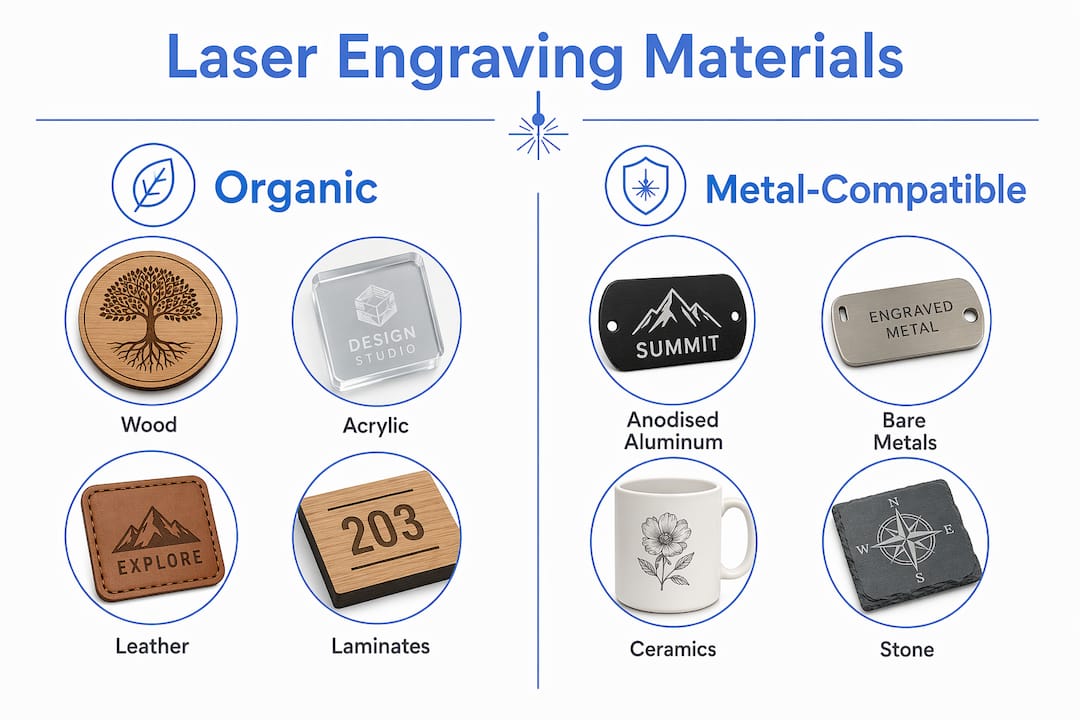
Laser engravable materials are substrates that absorb laser energy and undergo a clean, controlled surface change, producing high-contrast marks without melting, warping, or releasing harmful gases. The most common types fall into these categories:
- Wood (birch, basswood, MDF, bamboo): CO₂ laser; signage, décor, cutting boards
- Acrylic (cast and extruded): CO₂ laser; awards, displays, panels
- Metals (anodised aluminium, stainless steel, brass, copper): fibre laser; tags, nameplates, jewellery
- Laminates and two-colour boards: CO₂ laser; labels, badges, signage
- Leather and faux leather (PU-based only): CO₂ laser; wallets, patches, accessories
- Stone and slate: CO₂ laser; memorial plaques, coasters, décor
- Glass and ceramic: CO₂ laser; drinkware, tiles, awards
- Rubber: CO₂ laser; stamps
- Paper and cardboard: CO₂ laser; packaging, invitations, prototypes
- Fabric (polyester, felt, denim): CO₂ laser; apparel, patches, upholstery
CO₂ lasers work best on organic and non-metal materials, while fibre lasers handle metals and highly reflective surfaces. Knowing which laser type you own is the single most important factor before you buy any material.
Common laser engraving materials explained
Wood
Wood is the most forgiving starting point for anyone new to laser engraving. Birch and basswood are the go-to choices: both are light-coloured, low-density, and produce a clean, dark burn with strong contrast. MDF engraves smoothly thanks to its uniform surface, though its glue content can cause charring and uneven colour if settings are too aggressive. Baltic Birch plywood is specifically recommended over construction-grade plywood, which contains adhesives that produce excessive smoke and potentially toxic fumes.
Acrylic
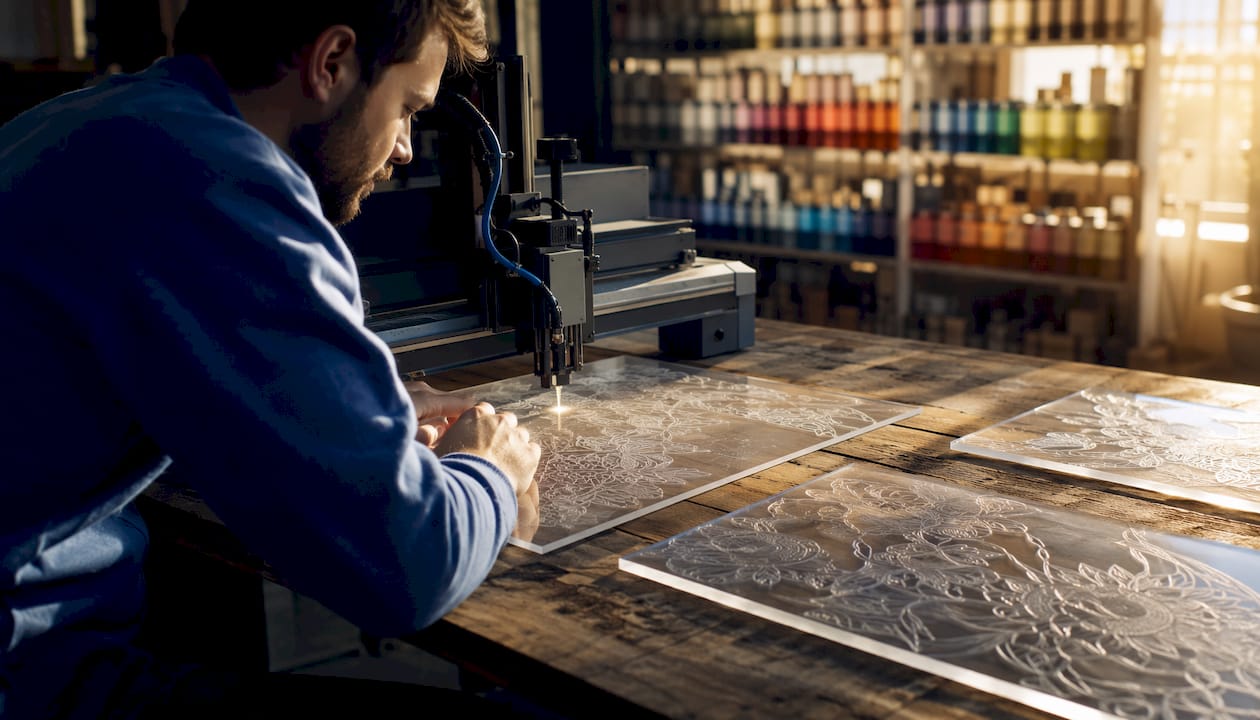
Cast acrylic (also called PMMA or GS acrylic) produces a distinctive frosty-white engraving that reads sharply against the base colour, making it ideal for retail signage, awards, and display panels. Extruded acrylic (XT) cuts cleanly but engraves with a grey-transparent finish rather than white, so it suits cutting jobs rather than engraving. This distinction matters a great deal for product finish.
Metals
Most bare metals reflect CO₂ laser energy rather than absorbing it, so direct engraving without preparation is not possible. Anodised aluminium is the exception: the anodised coating absorbs the laser and burns away cleanly, leaving a precise, permanent mark. For stainless steel, brass, copper, and gold, a fibre laser is the correct tool. Alternatively, applying a marking spray like CerMark to bare metal allows a CO₂ laser to create a chemically bonded, high-contrast mark that survives abrasion and salt-water exposure.
Laminates and two-colour boards
Two-colour laminates are engineered specifically for laser engraving. The laser removes the top layer to reveal a contrasting colour beneath, producing crisp edges and consistent results for badges, labels, and control panels. Laser-grade laminates outperform mechanical-grade ones: the edges stay clean and the contrast is sharper.
Leather and faux leather
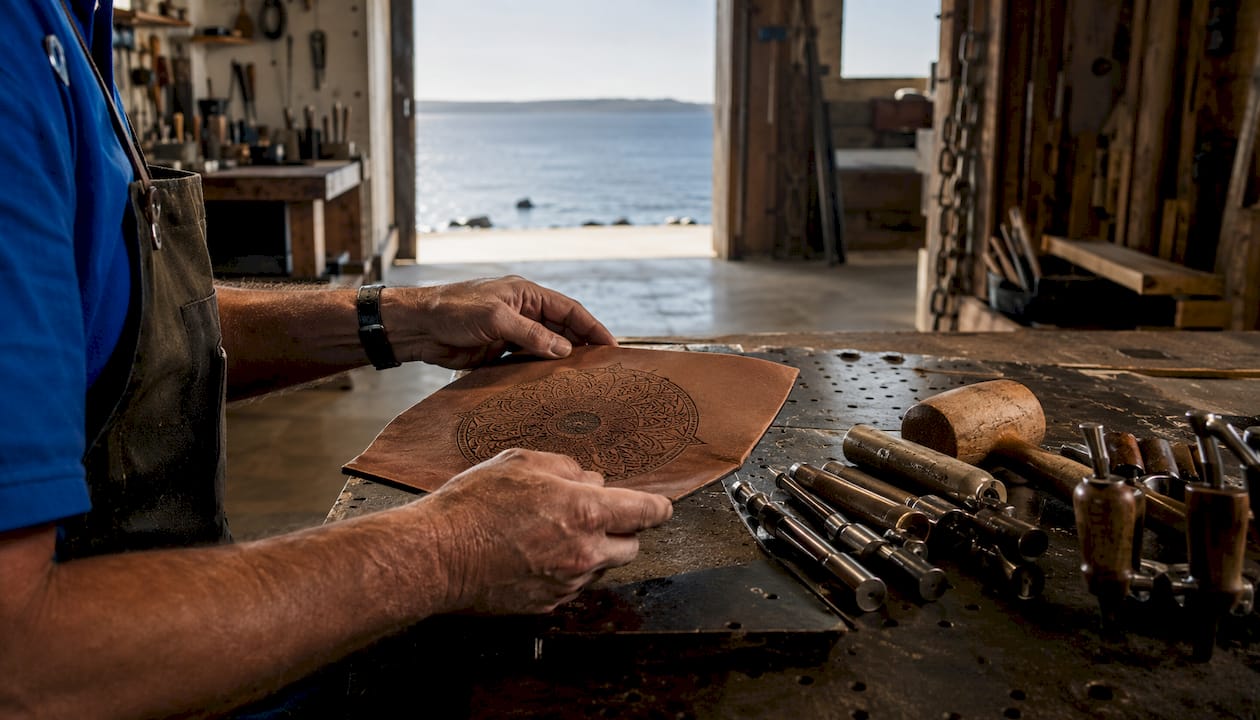
Natural, vegetable-tanned leather engraves beautifully with a CO₂ laser, producing a debossed, dark-contrast burn. PU-based faux leather designed for laser use also works well and is widely available as a laser-ready blank. Chrome-tanned leather can release problematic chromium compounds and should only be processed after confirming the tanning method.
Fabric
Synthetic polyesters respond better to laser engraving than natural cotton, which does not engrave cleanly. The laser seals polyester edges during cutting, preventing fraying. Denim is a useful exception: engraving creates a bleach-like faded effect that works well for apparel branding. Fibre composition, weave density, and airflow all affect the clarity of the result, so always test a sample first.
Sourcing consistent, high-quality laser-dedicated materials matters more than machine power alone. Small businesses benefit from using purpose-made blanks for more predictable output compared to general-purpose stock.
Stone, glass, and ceramic
Slate engraves with high-contrast light markings and is popular for serving boards, signs, and memorial plaques. Marble produces a shallow but visually effective surface change. Glass micro-fractures under laser heat rather than melting, creating a frosted appearance ideal for drinkware and awards. Ceramic requires a coating or glaze treatment for the laser to mark effectively; without it, results are inconsistent.
How to choose the right material for your laser and project
Matching material to laser type is non-negotiable. A CO₂ laser on bare stainless steel produces no useful mark; a fibre laser on acrylic can cause uncontrolled melting. Before buying stock, check your machine manufacturer’s compatibility chart.
For beginners, start with birch plywood or cast acrylic. Both are forgiving, widely available in the UK, and produce consistent results across a range of power settings. Beginner-friendly materials like these let you learn settings and workflows without burning through expensive stock.
Practical selection criteria:
- Laser type: CO₂ for wood, acrylic, leather, fabric, paper; fibre for metals
- Project finish: cast acrylic for frosty-white contrast; anodised aluminium for permanent metal marks
- Application: rubber for stamps; laminates for badges and labels; stone for memorial or premium décor
- Budget: MDF and birch plywood are the most cost-effective starting points for UK small businesses
- Availability: purpose-made laser engravable blanks reduce guesswork and waste
Pro Tip: Always engrave a small test piece before committing to a full production run. Even within the same material category, density, moisture content, and surface coatings vary between batches and suppliers.
Material preparation also affects results. Wipe surfaces with isopropyl alcohol before engraving to remove oils and dust. For metals requiring CerMark, apply an even coat, allow it to dry fully, engrave, then wash off the excess. Masking tape applied to wood or acrylic surfaces before engraving reduces smoke residue on the surrounding material.
Materials to avoid and essential safety practices
Some materials produce toxic or corrosive gases when laser-processed, damaging both the operator and the machine. These are not edge cases: the risks are well-documented and the consequences can be severe.
Never engrave these materials:
- PVC and vinyl: releases hydrochloric acid gas, which is acutely toxic and corrodes laser optics
- Polycarbonate: absorbs CO₂ laser energy poorly, turns brown, produces strong toxic fumes, and is flammable
- ABS plastic: releases hydrogen cyanide when heated; melts uncontrollably
- PVC-based faux leather: chlorine gas release; strictly prohibited
- Construction-grade plywood: adhesives produce toxic fumes and excessive smoke
- Chrome-tanned leather: potential chromium compound release; only process after confirming tanning method
- HDPE/PE: melts heavily, strings, and presents a fire hazard
Always work in a well-ventilated space or use a dedicated fume extraction system. Wear appropriate eye protection rated for your laser wavelength. Consult your manufacturer’s compatibility chart before processing any unfamiliar material, and never assume a material is safe because it looks similar to one you have used before.
Caring for laser engraved materials
Laser engraved items last well when treated correctly. Wood pieces benefit from a coat of clear sealant or wax after engraving, which protects the charred surface from moisture and handling. Acrylic awards and signage need only a soft, lint-free cloth; abrasive cleaners scratch the surface and dull the engraved contrast.
Anodised aluminium tags and panels are among the most durable engraved products available. The mark sits within the anodised layer rather than on top of it, so it resists scratching, UV exposure, and most cleaning agents. Leather items should be conditioned periodically with a leather-specific product to prevent the engraved area from drying and cracking.
For outdoor applications, choose materials rated for UV and moisture exposure. Slate and granite hold up well outdoors; MDF does not, as it absorbs moisture and can swell or delaminate over time.
Cost considerations for UK small businesses
Birch plywood is a widely available affordable entry point from UK timber merchants and specialist suppliers. Cast acrylic costs more per sheet than MDF but produces a premium finish that commands higher retail prices, particularly for awards and personalised gifts.
Anodised aluminium blanks sit at a mid-range price point and are well-suited to product lines like keyrings, tags, and personalised items for hospitality and corporate clients.
Leather and slate blanks carry a higher unit cost but appeal to customers willing to pay for a premium product.
Buying purpose-made laser blanks rather than general-purpose sheet material reduces waste and improves consistency, which matters more as order volumes grow. Subliblanks supplies laser engravable blanks with no minimum order quantity, so you can test new materials without committing to large quantities upfront.
Get started with Subliblanks
Subliblanks stocks a full range of laser engravable blanks and xTool laser engraving machines, available to UK buyers with no minimum order. Whether you are starting out with birch plywood or scaling up to anodised aluminium and cast acrylic, browse the full range to find materials matched to your machine and your market.
Key takeaways
Wood, cast acrylic, anodised aluminium, and purpose-made laminates are the most reliable laser engravable materials for UK small businesses, matched to CO₂ or fibre lasers depending on the substrate.
| Point | Details |
|---|---|
| Match laser to material | CO₂ lasers suit wood, acrylic, leather, and fabric; fibre lasers are needed for bare metals. |
| Cast vs extruded acrylic | Cast acrylic produces a frosty-white engraving; extruded acrylic is better suited to cutting only. |
| Avoid PVC and polycarbonate | Both release toxic gases and can permanently damage laser optics. |
| Baltic Birch over construction plywood | Construction plywood adhesives produce toxic fumes; Baltic Birch engraves cleanly and safely. |
| Purpose-made blanks reduce waste | Laser-dedicated materials deliver consistent results and lower rejection rates than general-purpose stock. |


