



Role of stamp equipment in Ireland: a practical guide
TL;DR:
- Stamp equipment in Ireland supports business compliance by enabling legal and tax markings on products and documents. It also offers small businesses cost-effective options for in-house branding and custom stamps, reducing dependency on external suppliers. Proper selection of equipment and tooling ensures consistent, durable, and compliant impressions across various applications.
Stamp equipment is defined as any mechanical, pneumatic, or digital device used to apply a permanent or repeatable mark, impression, or image onto a surface. The role of stamp equipment in Ireland spans far wider than most business owners realise. From Revenue-compliant tax stamps on excise goods to bespoke rubber stamps on craft packaging, stamping tools underpin product identity, legal compliance, and creative output across the country. Whether you run a small Galway gift shop or manage a production line in Cork, understanding how stamping machinery works and which type suits your needs can save time, reduce costs, and sharpen your brand.
How does stamp equipment support business compliance in Ireland?
Stamp equipment is one of the most direct tools Irish businesses use to meet regulatory requirements. Official document marking, company seals, and excise stamps all depend on reliable stamping tools to produce consistent, legible impressions. The Law Society of Ireland, for example, requires solicitors to apply firm stamps to legal correspondence and deeds. Revenue similarly mandates stamp duty documentation on property transactions. These are not optional processes. They carry legal weight, and the quality of the stamp impression matters.
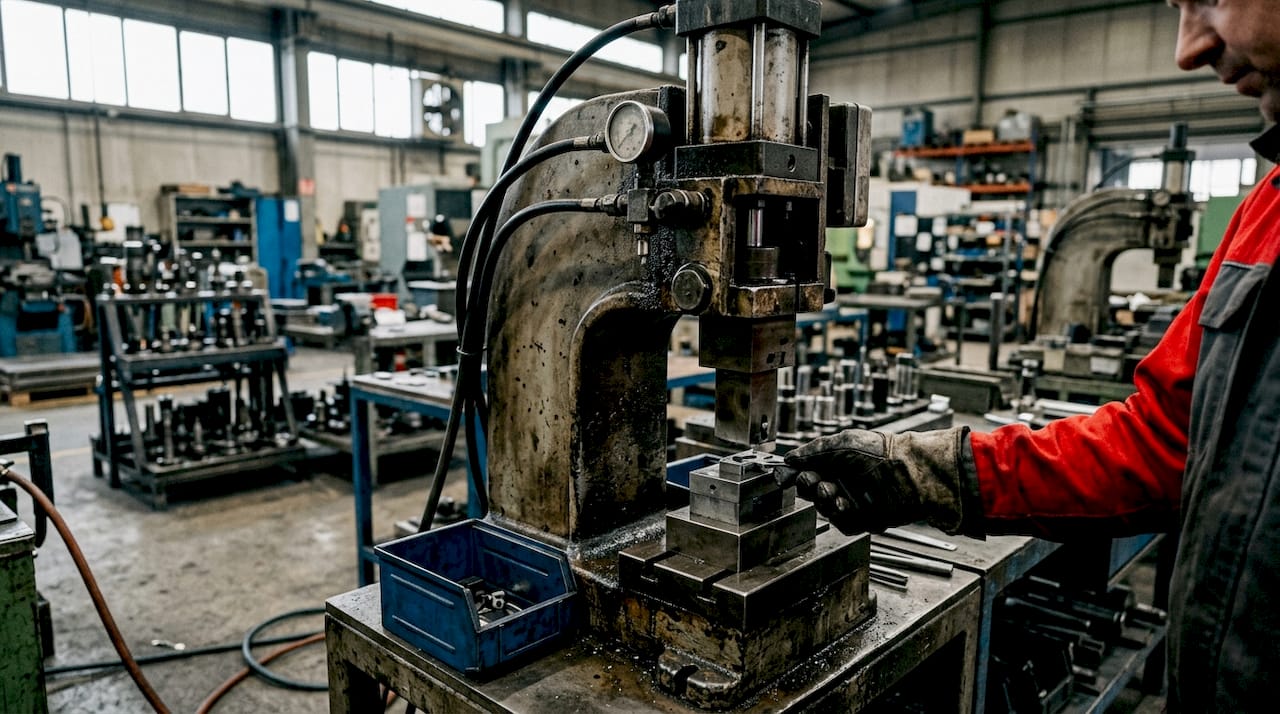
The push for mandatory tax stamps is growing beyond traditional excise goods. Responsible Vaping Ireland advocates for Revenue-issued tax stamps on vaping products to close illicit trade gaps. That proposal targets over 3,500 vape retailers across Ireland. The scale of that rollout would create significant demand for stamp equipment capable of applying consistent, tamper-evident marks at the point of sale or distribution.
For small to medium enterprises, stamp equipment also serves a simpler but equally important function: proof of authenticity. A clearly stamped invoice, delivery note, or product label signals professionalism and reduces disputes. Custom stamps with a company name, registration number, or address are inexpensive to produce and immediately raise the perceived credibility of any document.
Pro Tip: If your business handles excise goods or regulated products, consult Revenue’s guidance on stamp duty and excise marking before selecting your stamp format. The wrong impression size or ink type can invalidate a mark for compliance purposes.
Key stamp equipment applications for Irish business compliance include:
- Company seals and rubber stamps for legal documents
- Excise and tax stamps on tobacco, alcohol, and emerging categories like vaping products
- Date and received stamps for accounts payable workflows
- Address and registration stamps for outgoing correspondence
- Authentication stamps for certificates and official records
What types of stamp equipment are used in Ireland?
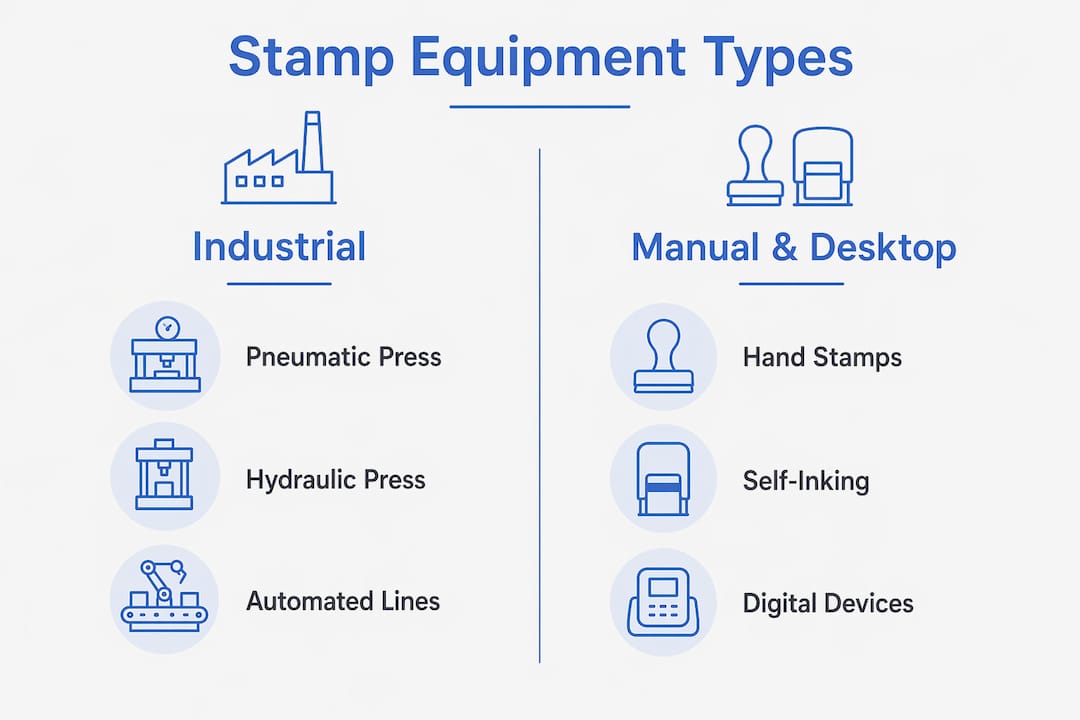
Stamping equipment in Ireland falls into two broad categories: industrial stamping machinery and manual or desktop stamping tools. Each serves a distinct purpose, and choosing the wrong type for your application leads to wasted spend and poor results.
Industrial stamping: pneumatic vs hydraulic presses
At the manufacturing end of the spectrum, the choice between press types is a technical decision with real cost implications. Pneumatic presses suit high-frequency stamping of small parts, while hydraulic presses handle complex, deep-drawn components more effectively. The right choice depends on production volume and part geometry. Getting this wrong increases per-unit cost and accelerates tool wear.
Automated stamping lines improve efficiency four to five times over manual feeding methods. That figure matters for any Irish manufacturer weighing the capital cost of automation against ongoing labour costs. For medium-volume production runs, a semi-automated pneumatic press often hits the right balance between upfront investment and throughput.
| Press type | Best application | Key advantage |
|---|---|---|
| Pneumatic press | High-frequency, small-part stamping | Fast cycle times, lower operating cost |
| Hydraulic press | Deep-drawn, complex components | Greater force control, suited to thick materials |
| Desktop stamp press | Craft and small business marking | Low cost, no power supply needed |
| Hot stamping unit | Plastic part identification | Permanent, ink-free, automated-line compatible |
Hot stamping for permanent identification
Hot stamping is a separate technique that deserves attention on its own terms. Hot stamping produces permanent, smear-resistant marks on plastics used in automotive, medical device, and consumer goods manufacturing. The mark resists peeling and smearing because heat bonds it directly to the substrate rather than sitting on top of it. That durability makes hot stamping the preferred method wherever traceability is a regulatory requirement.
Hot stamping creates high-clarity marks without inks or labels, which means no consumable costs for ink cartridges or label stock. Every part becomes identifiable and verifiable without additional materials. For Irish manufacturers supplying medical devices or automotive components to European markets, this level of traceability is not a nice-to-have. It is a contractual and regulatory expectation.
Why does tooling quality determine stamping outcomes?
Tooling is the part of the stamping process that most business owners underestimate until something goes wrong. The die, the punch, and the supporting components determine whether every impression is consistent or variable. Poor tooling produces scrap, slows production, and increases cost per piece over time.
Stamping tooling quality directly affects part tolerance, scrap rate, and cost-per-piece across production runs. Material choice, steel grade, and maintenance schedules are the three variables that most influence tool life. A die made from the wrong steel grade will degrade faster under repeated impact, leading to dimensional drift in the finished part. That drift is invisible at first and expensive to correct once it compounds.
In-house tool and die design reduces risk and shortens development cycles in stamping processes. When the team designing the die also operates the press, alignment between die geometry and press conditions is far easier to achieve. Outsourcing die design to a third party introduces communication gaps that often show up as tolerance failures in the first production run.
Ireland has the local expertise to support this. Ireland’s precision engineering SMEs supply stamping die components tailored for tight tolerances, particularly in aerospace and medical device sectors. That local knowledge base means Irish manufacturers do not need to source critical tooling components from overseas, which reduces lead times and simplifies quality control.
Pro Tip: Clarify tooling ownership in writing before any production run begins. If a supplier manufactures the die on your behalf, confirm whether you own the tooling outright or whether it remains their asset. Ambiguity here creates legal and operational problems if you ever need to switch suppliers.
Amortising tooling costs across an initial production run is a common approach for small businesses. It spreads the upfront cost but raises the per-part price early in the run. For businesses with tight margins, understanding this trade-off before committing to a tooling arrangement is worth the time.
You can read more about custom stamping techniques and how die design choices affect consistency in practice.
How does stamp equipment serve crafting and small business branding?
Stamp equipment is not only an industrial tool. For crafters and small business owners across Ireland, stamping machines and custom stamps are a practical way to create professional, repeatable marks without the cost of commercial printing.
The types of stamp making machines available to crafters range from simple flash stamp units to laser-engraved polymer plate systems. Each produces a different quality of impression and suits a different volume of use. A market trader stamping fifty paper bags a week needs a different solution to a craft brewery stamping labels on five hundred bottles per batch.
Custom stamps deliver several clear benefits for small Irish businesses:
- Consistent brand marks on packaging, tissue paper, and product labels
- Low cost per impression compared to printed labels or stickers
- Fast turnaround for seasonal or limited-edition product lines
- No minimum order quantities when using a stamp making machine in-house
- Professional appearance on handmade or artisan products that reinforces perceived quality
The connection between craftsmanship and brand identity is particularly strong in Irish markets. Consumers buying from independent makers expect a personal touch. A well-designed stamp on kraft paper packaging or a wax-sealed envelope communicates care and attention in a way that a printed sticker rarely does. Learning how to create custom stamps gives small business owners direct control over that impression without relying on external suppliers for every run.
For businesses that also use sublimation printing or DTF transfers alongside stamping, the workflows complement each other well. Stamps handle paper, card, and fabric surfaces where heat transfer is impractical, while sublimation covers hard substrates and polyester fabrics.
Key takeaways
Stamp equipment in Ireland serves a dual function: it meets legal and regulatory marking requirements while also giving businesses and crafters a reliable, repeatable way to express brand identity.
| Point | Details |
|---|---|
| Compliance drives demand | Revenue and Law Society requirements make stamp equipment a legal necessity for many Irish businesses. |
| Press type affects cost | Pneumatic presses suit small-part, high-volume runs; hydraulic presses handle complex, deep-drawn parts more effectively. |
| Tooling quality is decisive | Steel grade, maintenance, and die design determine scrap rate and cost-per-piece across any production run. |
| Hot stamping removes consumables | Permanent, ink-free marks on plastics reduce ongoing material costs and meet traceability requirements. |
| Crafters benefit from in-house stamping | Custom stamp machines give small businesses consistent brand marks without minimum order commitments. |
Stamp equipment in Ireland: what I actually think
The conversation about stamp equipment in Ireland tends to split into two camps that rarely talk to each other. Industrial manufacturers focus on press tonnage and die tolerances. Crafters focus on image quality and ease of use. Both groups are missing something the other knows well.
What strikes me most is how the regulatory side of stamping is about to force a reckoning for businesses that have never thought seriously about stamp equipment before. The push for mandatory tax stamps on vaping products is a preview of where excise enforcement is heading. If that proposal becomes law, thousands of Irish retailers will need compliant stamping solutions almost overnight. The businesses that already understand how stamp equipment works will adapt quickly. Those that have never considered it will scramble.
On the craft side, I think the underrated opportunity is in-house stamp production. Most small business owners still buy custom stamps from a third-party supplier and wait a week for delivery. A stamp making machine pays for itself quickly if you change your designs seasonally or run short-run product lines. The control it gives you over branding is worth more than the cost saving alone.
The one thing I would tell any Irish business owner right now is this: do not treat stamp equipment as a commodity purchase. The tooling, the ink, and the substrate all interact. A cheap stamp on the wrong surface produces a poor impression that undermines the brand signal you are trying to send. Spend the time to match the equipment to the application, and the results will be consistent for years.
— chris
Stamp equipment and supplies from Subliblanks
Subliblanks supplies stamp making machines, stamp-related equipment, and a full range of complementary products for Irish businesses and crafters, with no minimum order quantities.
Whether you need a stamp making machine for in-house custom stamps, sublimation blanks for product personalisation, or xTool laser engraving machines for permanent marking on hard substrates, Subliblanks stocks the equipment to match your application. The full product range covers everything from entry-level craft stamp units to professional-grade production equipment, with support for businesses at every scale. If your workflow also includes sublimation printing, the sublimation printer range pairs well with stamping for businesses that need both surface types covered.
FAQ
What is stamp equipment used for in Ireland?
Stamp equipment in Ireland is used for legal document marking, excise and tax compliance, product branding, and creative crafting. Applications range from Revenue-compliant excise stamps to custom rubber stamps for small business packaging.
What is the difference between pneumatic and hydraulic stamp presses?
Pneumatic presses suit high-frequency stamping of small parts, while hydraulic presses handle complex, deep-drawn components. The choice depends on production volume and part geometry, with each type offering different cost and capability trade-offs.
Why is hot stamping preferred for plastic part identification?
Hot stamping bonds a permanent, smear-resistant mark directly to the plastic surface without inks or labels. This makes it the preferred method for manufacturers who need durable traceability marks that meet regulatory requirements in automotive and medical device sectors.
How does tooling quality affect stamping results?
Tooling quality determines part tolerance, scrap rate, and cost-per-piece across a production run. Steel grade selection, regular maintenance, and alignment between die design and press conditions are the key factors that control long-term stamping consistency.
Can small businesses in Ireland benefit from in-house stamp making?
Small businesses benefit significantly from in-house stamp making because it removes supplier lead times and minimum order requirements. A stamp making machine allows businesses to produce custom marks for seasonal packaging, product labels, and branding materials on demand.


