



Types of lanyard supplies: a practical guide for UK buyers
TL;DR:
- Lanyard materials vary from polyester and nylon to woven jacquard, each offering different durability and print qualities. Choosing the appropriate attachment, such as breakaway clasps for safety and double bulldog clips for professional display, is essential based on environment. Bulk ordering strategies and sustainable options like rPET and bamboo can optimize costs and demonstrate environmental responsibility.
Lanyard supplies are categorised primarily by material and attachment style to meet diverse functional and promotional demands. Whether you are organising a corporate conference in Dublin, running a craft fair in Manchester, or sourcing branded ID holders for a school in Belfast, understanding the types of lanyard supplies available will save you money and prevent costly ordering mistakes. The core categories cover lanyard materials such as polyester, nylon, woven jacquard, rPET, and bamboo, alongside lanyard attachments including bulldog clips, swivel hooks, breakaway clasps, and badge reels. Getting the combination right determines how your lanyard looks, how long it lasts, and whether it keeps wearers safe.
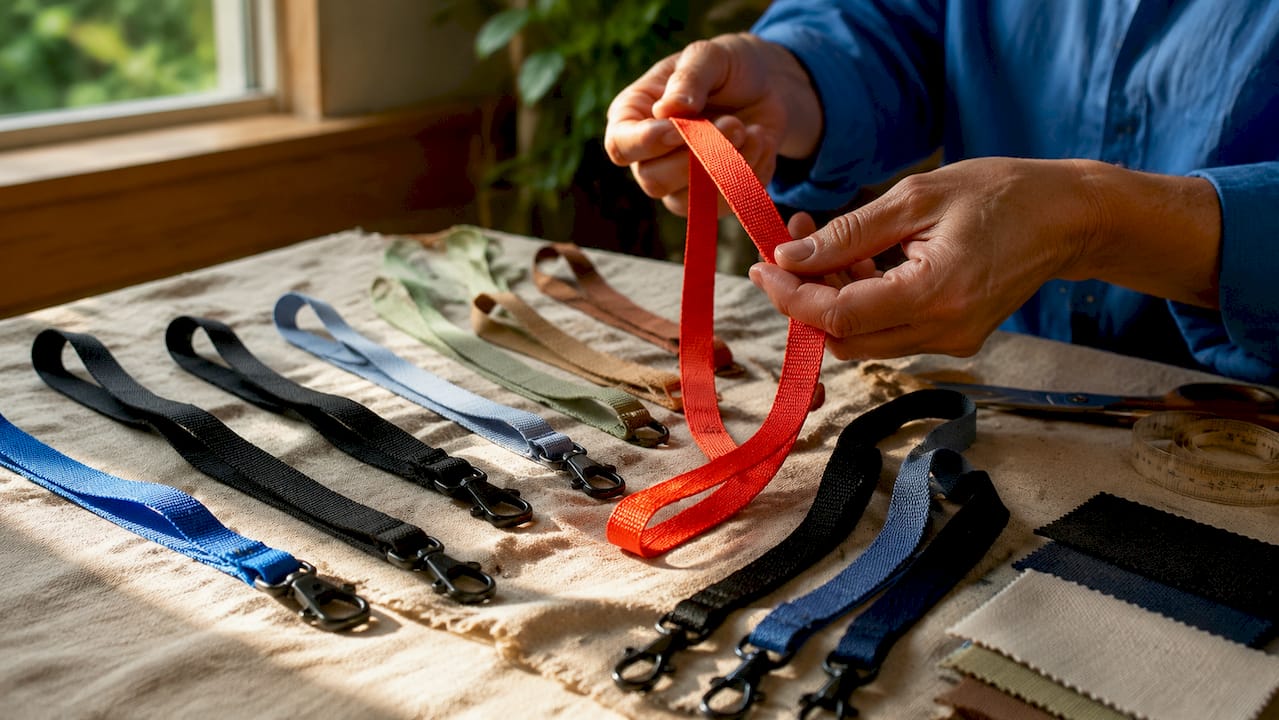
1. What are the main types of lanyard materials?
Polyester is the industry baseline for corporate and event use, valued for its durability, low cost, and excellent print quality. It holds colour well under UV exposure and is one of the more recyclable synthetic options available. For bulk event orders where budget is the primary concern, polyester delivers the best return.
Nylon sits a step above polyester in terms of feel and finish. It has a slight sheen that reads as more premium, making it the preferred choice for corporate branding where appearance matters. Nylon supports superior print adhesion after 50 wash cycles, which means branded lanyards stay sharp through repeated laundering. That durability makes nylon worth the modest price increase for long-term institutional use.
Woven jacquard lanyards embed the design directly into the fabric using coloured threads. There is no printed ink layer to crack or fade. This makes them the most durable option for organisations that reuse lanyards across multiple events or years, such as universities, NHS trusts, or large retailers.
- Tubular cotton: soft against the skin, affordable, and biodegradable. Best for short-term craft events or eco-conscious brands on a tight budget.
- Bamboo: a genuinely sustainable lanyard material with a natural texture. Signals environmental responsibility without requiring a premium price.
- rPET (recycled polyester): made from post-consumer plastic bottles. Carries strong sustainability credentials and is increasingly requested in public sector procurement across the UK and Ireland.
Pro Tip: A standard lanyard width of 20mm balances logo visibility with wearer comfort. If your staff wear badges for more than four hours at a stretch, consider a 25mm strap to reduce neck strain.
2. Which lanyard attachments and accessories matter most?
The attachment is the functional heart of any lanyard. It determines what you can carry, how securely it stays put, and whether the lanyard is safe to wear in a physical environment. Choosing the wrong attachment is a common and avoidable mistake.
The most widely used lanyard attachments are:
- Bulldog clip: grips ID cards and badge holders firmly. Standard across most event and corporate settings.
- Double bulldog clip: holds badges flat against the chest, improving presentation and preventing the badge from flipping. Preferred in professional settings where ID visibility is non-negotiable.
- Swivel hook: attaches to keyrings, zip pulls, or badge reels. Common in retail and hospitality where staff carry keys alongside ID.
- Lobster clasp: a stronger, more secure hook suited to heavier loads such as USB drives or multi-card holders.
- Keyring: simple and low-cost. Works well for craft lanyards or light personal use.
Safety is a separate consideration from convenience. Breakaway clasps are essential in high-contact environments such as schools, warehouses, and manufacturing facilities. They release under tension, preventing injury if the lanyard catches on machinery or equipment. Many UK schools now specify breakaway clasps as a minimum requirement for all staff lanyards.
Additional accessories worth considering include badge reels (which allow the badge to extend for scanning without removing the lanyard), phone loops for festival or event use, and quick-release buckles that let wearers remove their lanyard without lifting it over their head. You can explore lanyard clip and buckle options to see how these components combine in practice.
Pro Tip: If your event involves catering, physical activity, or outdoor work, always specify a breakaway clasp. The cost difference over a standard clasp is negligible, but the safety benefit is significant.
3. How do printing and customisation methods affect quality?
The printing method you choose determines how your branding looks on day one and how it holds up over time. Mismatching your artwork to the wrong technique is the single most common cause of disappointing lanyard orders.
| Method | Best for | Durability | Cost |
|---|---|---|---|
| Dye sublimation | Full-colour, gradient, photographic logos | Very high | Medium |
| Screen printing | Bold, simple logos with 1–3 colours | High | Low |
| Woven jacquard | Institutional logos, long-term reuse | Excellent | Medium-high |
| Heat transfer | Short runs, detailed designs | Medium | Low-medium |
Dye sublimation is ideal for colour-critical complex branding. It produces edge-to-edge, full-colour prints with no colour limits, making it the right choice for logos with gradients, photography, or multiple brand colours. The ink bonds with the polyester fibres rather than sitting on top, so the print will not crack or peel.
Screen printing suits organisations with a clean, bold logo and a large order quantity. The setup cost is higher per colour, but the unit price drops significantly at volume. Woven lanyards, by contrast, embed logos in fabric using coloured threads, producing a textured, premium finish that cannot fade because there is no ink involved at all.
Brand consistency drives the choice of printing method. If your brand guidelines specify Pantone colours, woven or screen printing will match them more precisely than sublimation. If your logo is a complex illustration, sublimation is the only method that will reproduce it faithfully at lanyard scale.
4. What affects lanyard prices and how to buy in bulk wisely?
Lanyard pricing follows a straightforward logic: the more complex the customisation and the smaller the order, the higher the unit cost. Understanding where the costs come from helps you make smarter decisions.
- Material choice is the first cost driver. Polyester is the most affordable base material. Nylon and woven jacquard cost more per unit but last longer, which can reduce total cost over time.
- Printing method adds to the base price. Standard single-colour screen printing is the cheapest option. Full-colour dye sublimation adds cost but is often worth it for brand-critical orders.
- Attachments and accessories each carry a small unit cost. A breakaway clasp, badge reel, and double bulldog clip will add to the per-unit price compared to a basic swivel hook.
- Order volume is the biggest single lever. Bulk ordering with tiered pricing spreads the setup cost across more units, reducing the price per lanyard significantly. An order of 500 units will cost considerably less per unit than an order of 50.
- Delivery and split-site logistics can add cost for organisations ordering across multiple locations. Consolidating orders to a single delivery address and then distributing internally is almost always cheaper.
Bulk lanyard prices start low for standard models and rise with customisation complexity. The practical implication is that ordering slightly more than you need now is usually cheaper than placing a second smaller order later. For event organisers, ordering 10–15% above your expected attendance covers last-minute additions without triggering a new setup charge.
Pro Tip: When comparing suppliers, ask for the price at three volume tiers rather than just your target quantity. The jump from one tier to the next is often small enough to justify ordering more. You can read more about the advantages of bulk purchasing to understand when it makes financial sense.
5. Eco-friendly lanyards: are they worth the investment?
Sustainable lanyard options have moved from niche to mainstream in UK and Ireland procurement. rPET and bamboo are no longer premium curiosities. They are now standard options from most trade suppliers.
rPET lanyards are made from recycled plastic bottles. They perform comparably to virgin polyester in terms of durability and print quality. The difference is in the supply chain story, which matters increasingly to public sector buyers, universities, and B-corps who must demonstrate environmental responsibility in their purchasing decisions.
Bamboo lanyards offer a natural, tactile alternative to synthetic materials. They are biodegradable and carry a lower carbon footprint than polyester. The trade-off is that bamboo is softer and less suited to heavy-duty use. For a one-day craft fair or a community event, bamboo is an excellent choice. For a security team wearing lanyards daily in a warehouse, polyester or nylon remains the more practical option.
The material choice signals commitment to sustainability in a way that other branding decisions do not. Handing a delegate an rPET lanyard at a conference communicates something about your organisation’s values before they have read a single word of your programme.
6. Matching lanyard style to your specific use case
Different lanyard styles serve different purposes, and the best choice depends on context rather than personal preference. A lanyard that works perfectly at a music festival will look out of place at a legal firm’s client event.
For corporate and professional settings, nylon or woven jacquard with a double bulldog clip and a 20mm width is the standard. The finish is clean, the badge sits flat, and the branding is legible at a distance. For schools and educational institutions, polyester with a breakaway clasp is the minimum specification. Many UK schools also add a badge reel to allow cards to be scanned at entry points without removing the lanyard.
For craft enthusiasts and makers, tubular cotton or bamboo lanyards offer a tactile, handmade feel that suits the aesthetic of craft markets and independent studios. These materials also accept hand-stamping and fabric paint, making them a popular base for personalised lanyard projects. Subliblanks supplies a range of sublimation blank lanyards that work well as a starting point for custom craft projects.
For large-scale events such as trade shows, festivals, or conferences, polyester with dye sublimation printing and a swivel hook is the most cost-effective combination. The print quality is high, the unit cost is low at volume, and the swivel hook accommodates a wide range of badge holder types.
Key takeaways
The best lanyard for any application is determined by matching material, attachment, and printing method to the specific demands of the environment and the brand.
| Point | Details |
|---|---|
| Material drives durability and cost | Polyester suits bulk events; nylon and woven jacquard suit long-term institutional use. |
| Attachments affect safety and presentation | Specify breakaway clasps for physical environments; use double bulldog clips for professional badge display. |
| Printing method must match artwork | Use dye sublimation for complex colour logos; use screen printing or woven for bold, simple designs. |
| Bulk ordering reduces unit cost | Tiered pricing means ordering more now is almost always cheaper than a second smaller run later. |
| Eco materials carry branding value | rPET and bamboo signal environmental responsibility and are now standard options from trade suppliers. |
Why I always ask clients about the environment first
The question I ask before anything else is: where will this lanyard actually be worn? The answer changes everything. I have seen organisations spend money on beautiful woven jacquard lanyards for a one-day outdoor event where they were soaked in rain and binned at the end of the day. I have also seen schools order standard lanyards without breakaway clasps because they were cheaper, only to replace them after a safety incident.
The double bulldog clip is genuinely underused. Most buyers default to a single clip or a swivel hook because that is what they have always ordered. But in any setting where ID visibility matters, the double clip holds badges flat and prevents the constant flipping that makes single-clip lanyards frustrating to wear. It costs almost nothing extra and makes a visible difference to how professional a team looks.
Sustainability is no longer a nice-to-have in UK procurement. I am seeing more tenders and event briefs that specify recycled materials as a requirement rather than a preference. If you are ordering for a public sector client or a university, rPET is worth specifying from the outset rather than retrofitting later.
The one thing most buyers overlook is width. A 20mm lanyard is the standard, but anyone wearing a heavy badge for a full conference day will notice the difference if you move to 25mm. The comfort improvement is real, and the cost difference is small. It is the kind of detail that delegates remember, even if they cannot articulate why.
— chris
Source your lanyard supplies through Subliblanks
Subliblanks is a UK trade wholesaler with no minimum order quantities, which means you can order exactly what you need whether you are testing a new lanyard style or fulfilling a large event brief. The range covers sublimation blank lanyards ready for custom printing, alongside the equipment and supplies needed to produce finished lanyards in-house. From polyester blanks suited to dye sublimation through to lanyards with clip and buckle attachments, the catalogue covers the full range of lanyard supply options for craft makers, event organisers, and businesses across the UK and Ireland. Explore the full range at Subliblanks to find the right combination of material, attachment, and finish for your next project.
FAQ
What is the most popular lanyard material in the UK?
Polyester is the most widely used lanyard material for corporate and event use due to its durability, low cost, and strong print quality. It is the industry standard for bulk orders.
Are breakaway clasps required by law in UK schools?
Breakaway clasps are not mandated by a single piece of legislation, but they are widely specified in UK school health and safety policies because they release under tension and prevent injury. Most lanyard suppliers recommend them as standard for educational settings.
What is the difference between dye sublimation and woven lanyards?
Dye sublimation prints full-colour designs onto polyester fabric, producing vibrant edge-to-edge results. Woven lanyards embed the design in coloured threads, making them fade-proof and more durable for long-term institutional use.
How do I choose the right lanyard width?
A 20mm width is the standard and suits most applications. For heavy badges or all-day wear, a 25mm strap distributes weight more evenly and reduces neck strain.
Can I order lanyards in small quantities for craft projects?
Yes. Subliblanks operates with no minimum order quantities, making it practical to order small runs of sublimation blank lanyards for craft projects, product testing, or personalised gifts.


