



Buy One Sheet, Not a Case: Nonstick Heat Press Sheets 9x12 & 16x20
Use a PTFE (Teflon) cover sheet when you want a reusable barrier for HTV, foil, and general platen protection; use non-coated butcher paper for sublimation, where you need it to absorb bleed-through and get thrown away after one press. PTFE sheets typically handle continuous heat to around 260°C (500°F). PTFE sheets are available in 9x12 inch and 16x20 inch sizes, covering most standard platen dimensions without guesswork.
TL;DR:
- Choose PTFE sheets for repeated use in heat transfer and foil applications, ensuring they handle continuous heat up to around 260°C.
- Use non-coated butcher paper exclusively for sublimation, as it absorbs bleed-through and is intended for single use to prevent ghosting.
- Measure your platen first and buy a sheet slightly larger to allow trimming, avoiding gaps and ensuring even coverage during pressing.
- Regularly clean PTFE sheets with a dry cloth and replace them once they show signs of scorching or thinning to maintain transfer quality.
- Avoid waxed or coated papers, and verify sheet specifications such as size, heat rating, and durability directly from the seller to prevent transfer failures.
Table of Contents
- Matching the sheet to the job: HTV, sublimation, foil and plastisol
- PTFE vs butcher paper vs silicone: what actually differs
- How do you pick the right nonstick sheet for your press?
- Step-by-step: placement, settings, cleaning and storage
- Why is my transfer ghosting or coming out patchy?
- Why we recommend PTFE and butcher paper the way we do
- Where to buy your nonstick sheets and what to check first
- Sources
Matching the sheet to the job: HTV, sublimation, foil and plastisol
The right nonstick sheet for heat press work depends entirely on what’s going through the machine. HTV and foil transfers want a barrier that survives repeated use, while sublimation wants something that soaks up the mess and gets binned.
Here’s how the choice usually breaks down:
- HTV (heat transfer vinyl): a PTFE/Teflon sheet on top protects the platen from adhesive residue and gives you a reusable non-stick transfer sheet you’ll use for months.
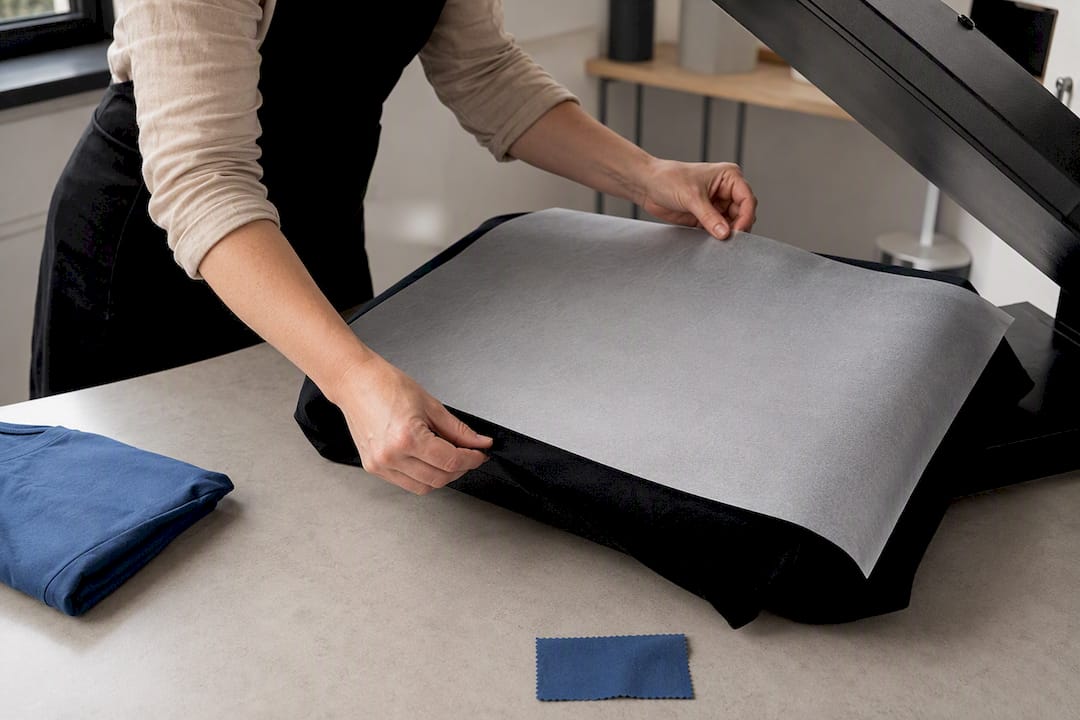
- Sublimation: non-coated butcher paper goes over the design to catch dye bleed-through before it hits your top platen. Never reuse it.
- Foil and plastisol transfers: PTFE sheets work well here too, since high-temp non-stick sheets are built specifically for HTV, sublimation, foil and plastisol jobs without sticking to any of them.
- Delicate fabrics or uneven items: a silicone pressing mat or heat-resistant pressing sheet cushions the press better than a flat PTFE sheet can.
Buy your sheet slightly larger than your platen and trim the excess rather than risk gaps at the edges. 9x12 inch and 16x20 inch PTFE sheets cover most home and small-production presses without needing to cut down a bigger sheet.
PTFE vs butcher paper vs silicone: what actually differs
The three materials solve different problems, and mixing them up is the fastest way to ruin a transfer. PTFE is the workhorse: it’s reusable, heat resistant to roughly 260°C continuous, and cleans up with a dry cloth or mild detergent rather than anything abrasive. Skip the scouring pads. Scratching the coating shortens its life fast.
Butcher paper works the opposite way. It’s absorbent by design, and retailers explicitly recommend a fresh sheet for every sublimation press to stop ghosting and colour transfer between jobs. Silicone mats sit somewhere in between: less rigid than PTFE, gentler on delicate items, but not the material you’d reach for on a high-volume production run.
Quick reference:
- PTFE/Teflon: reusable, wipes clean, rated for continuous high heat.
- Butcher paper (non-coated): single-use, absorbs bleed, cheap per sheet.
- Silicone/pressing sheets: flexible, good for uneven surfaces, moderate reusability.
One number worth remembering: some non-stick sheets shave a small amount off your platen’s surface heat, so a scrap test press before a full run isn’t wasted time. And avoid waxed or coated papers altogether. They melt or transfer residue at heat-press temperatures rather than protecting anything.
How do you pick the right nonstick sheet for your press?
Buying the correct sheet comes down to five checks, and skipping any one of them tends to show up as a ruined transfer later.
- Measure your platen first. Buy a sheet that’s slightly bigger, not exact size. A 9x12 inch platen needs more like a 10x14 inch sheet if you want margin to trim.
- Check the temperature rating. Confirm both the continuous rating and the short-exposure maximum. Most quality PTFE sheets list both.
- Decide reusable vs single-use based on volume. If you’re pressing daily, PTFE pays for itself quickly. If you’re doing occasional sublimation runs, butcher paper’s low per-sheet cost wins.
- Check thickness and tear resistance. A thin sheet stretches thin over time and tears at the corners first. Thicker gauge PTFE lasts through more press cycles.
- Ask the seller directly if specs aren’t listed. Material composition, exact dimensions, and heat ratings should all be stated. If a listing is vague on any of these, treat that as a red flag on quality.
Pro Tip: Keep a printed sheet of your press settings taped near the machine, noting which nonstick sheet type you used for each job. It saves you from re-testing every time you switch between HTV and sublimation work.
Pre-cut protective sheets and butcher paper come in sizes matching common platen dimensions like 9x12, 12x15, and 16x20, so you rarely need to custom-cut for a standard press.
Step-by-step: placement, settings, cleaning and storage
Getting the sequence right matters more than most guides let on. Here’s the order that actually works.
- Place the sheet correctly for the job. PTFE goes on top for HTV and foil transfers; butcher paper goes over the sublimation design, and for garments prone to bleed-through, slip a sheet inside the garment too.
- Run a test press first when switching sheet types. PTFE sheets can slightly reduce platen surface temperature, so a scrap press tells you whether to bump time or temperature before committing a real blank.
- Let PTFE cool before cleaning. Wipe with a dry cloth, or mild detergent if there’s residue, and retire the sheet once you notice scorching, thinning, or a coating that’s gone dull rather than glossy.
- Treat butcher paper as single-use, no exceptions. Fold it away immediately after the press and bin it. Reusing a sheet even once is where most ghosting complaints start.
- Store sheets flat. Curled PTFE sheets don’t sit evenly on the platen, which creates uneven pressure and patchy transfers. A drawer or flat folder works better than rolling them.
Pro Tip: If you press both HTV and sublimation regularly, keep separate storage for your PTFE sheets and your butcher paper stock. Grabbing the wrong one under pressure is a more common mistake than it sounds.
Our guide to placing sublimation blanks covers positioning in more detail if you’re pressing mugs, tumblers, or other rigid items alongside garments.
Why is my transfer ghosting or coming out patchy?
Most quality complaints trace back to one of five causes, and all of them are fixable without buying new equipment.
- Ghosting on sublimation jobs: almost always caused by reusing butcher paper. Swap in a fresh sheet and test again before assuming the printer or ink is at fault.
- Stains on the platen itself: clean with a soft cloth and appropriate cleaner rather than anything abrasive; if staining persists, it may need a service check.
- Cold spots or weak colour transfer: test with a laser thermometer across the platen. A worn or ill-fitting nonstick sheet can create uneven heat distribution.
- Torn or curled sheets: high pressure at the edges wears sheets out fastest. Replace anything visibly thinning before it fails mid-run.
- Persistent problems despite fresh materials: sometimes the fix is simply switching material. A silicone mat for delicate items, or a thicker PTFE sheet for high-volume work.
Our equipment maintenance guide walks through platen cleaning in more depth if staining keeps recurring.
Why we recommend PTFE and butcher paper the way we do
Subliblanks trades as a wholesale supplier with no minimum order quantities, which means we see the same questions from home crafters and small production shops alike: which sheet, which size, how often to replace it. That’s shaped the advice above. We stock PTFE sheets in 9x12 inch and 16x20 inch sizes, the two dimensions that cover most standard presses without needing custom cutting. The recommendation to treat butcher paper as single-use isn’t caution for its own sake. It’s the difference between a clean sublimation print and a ghosted one.
— chris
Where to buy your nonstick sheets and what to check first
The supplier is set up without minimum order quantity, so you can buy exactly one sheet or a full case without hitting a wall at checkout.
If you’ve read this far, you already know what to check before adding anything to your basket: confirm the size against your platen, confirm the temperature rating covers your press cycle, and check the returns policy in case a sheet arrives damaged. Our PTFE sheet listings give you both the 9x12 inch and 16x20 inch options mentioned throughout this guide, and if you’re building out a fuller sublimation setup, our sublimation printer range covers the equipment side too. For a look at broader print technique choices, Amajice’s guide to personalisation techniques is worth a read alongside this one. Head to the Subliblanks homepage to browse the full range and place an order today.


