



DTF technology's role in the UK market explained
TL;DR:
- Direct-to-Film (DTF) printing offers UK textile businesses greater fabric versatility, faster production, and waste reduction compared to traditional methods. It enables quick, cost-effective short-run orders on various fabrics, with error-only losses on film protecting garment stock, and supports expansion into new product ranges. Adoption of DTF technology enhances operational efficiency and market competitiveness, especially as innovations like jettable adhesives emerge.
Direct-to-Film (DTF) printing is defined as a process where designs are printed onto a specialised PET film, coated with hot-melt adhesive powder, and then heat-pressed onto fabric. The role of DTF technology in the UK market has grown considerably over the past three years, reshaping how print service providers approach short-run orders, fabric compatibility, and production costs. Unlike screen printing or direct-to-garment (DTG) methods, DTF works on cotton, polyester, nylon, and blended fabrics without pre-treatment. For UK businesses weighing up their next equipment investment, understanding what DTF actually delivers, and where it falls short, is the difference between a profitable upgrade and an expensive mistake.
What advantages does DTF printing offer UK textile businesses?
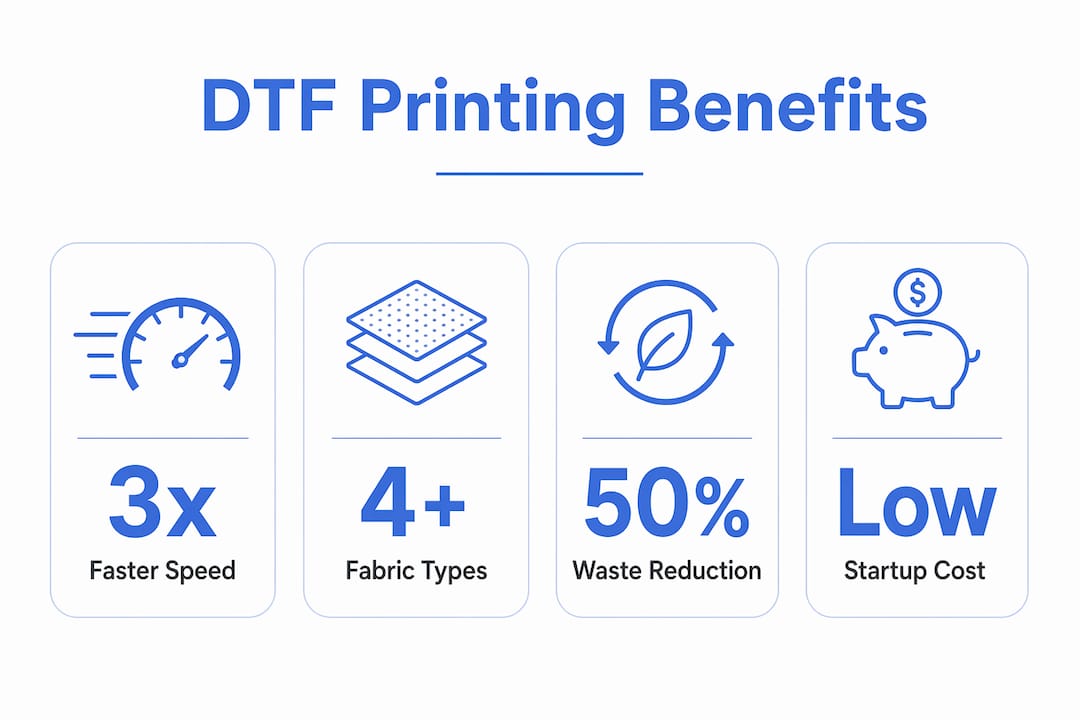
DTF printing delivers three core advantages over traditional methods: fabric versatility, speed, and waste reduction. Screen printing requires separate screens per colour and struggles with small runs. DTG demands pre-treatment chemicals and works best on high-cotton fabrics. DTF sidesteps both constraints entirely.
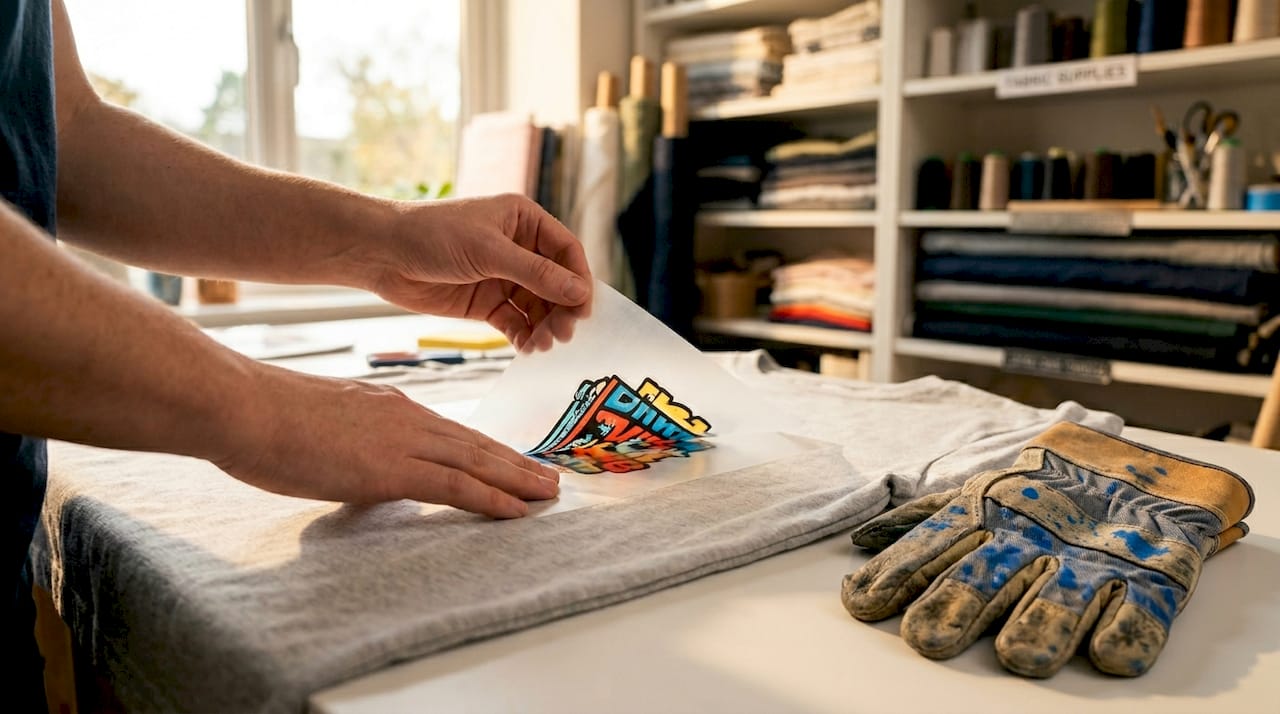
The print quality speaks for itself. DTF transfers produce a soft hand-feel with high colour vibrancy across both light and dark fabrics, including performance wear and blended textiles that DTG handles poorly. For UK print shops serving the sportswear, promotional products, and fashion sectors, this breadth of fabric compatibility translates directly into more billable work per machine.
Pro Tip: If you are printing on polyester-heavy fabrics such as sports kits, DTF is almost always the better choice over DTG. The adhesion is stronger and the colour output more consistent on synthetic fibres.
Waste reduction is the biggest hidden advantage of DTF printing. When a design error occurs, only the PET film is lost, not the garment. Compare that to DTG, where a misprinted hoodie worth £40 goes straight in the bin. For small to medium UK print shops operating on tight margins, this error management benefit alone can justify the switch.
- No pre-treatment chemicals or sprays required
- Compatible with cotton, polyester, nylon, leather, and blended fabrics
- Short-run and on-demand orders are economically viable from a single unit
- Colour vibrancy and soft hand-feel maintained across fabric types
- Print errors affect only the film, protecting garment stock
The cost structure also favours smaller operators. Entry-level DTF setups require significantly less capital than screen printing infrastructure, and there are no minimum order quantities to worry about. A single custom transfer is as cost-effective per unit as a batch of fifty.
How does DTF integrate into UK print businesses: equipment and workflow?
Integrating DTF into a UK print operation involves four components: the printer, the film, the hot-melt adhesive powder, and the heat press. Getting each one right determines whether your output is consistent and durable or prone to cracking and peeling.
-
Choose the right printer for your scale. Entry-level converted Epson printers suit micro-businesses and sole traders testing the market. Industrial units such as the Epson SureColor G9000 are built for high-volume production. Matching printer type to scale improves uptime and reduces costly downtime, a point Duncan Ferguson of Epson has made explicitly when discussing digital transformation in textile printing.
-
Select your film carefully. Standard clear and white DTF films cover most applications. However, specialist DTF films such as scented (fragrance-release) and neon variants are now available, allowing UK providers to differentiate their product offerings without changing their core workflow. These are particularly effective for promotional merchandise and children’s apparel.
-
Apply hot-melt powder correctly. Powder is applied to the wet ink on the film, then cured in an oven or heat tunnel before pressing. The grade and particle size of the powder matters enormously. Fine-particle powders produce a softer hand-feel and sharper detail. Coarser grades suit heavier fabrics. Using the wrong grade leads to print cracking or poor adhesion after washing.
-
Heat press with precision. Temperature, pressure, and dwell time must be calibrated to the specific film and fabric combination. Most DTF transfers press at 160 to 170 degrees Celsius for 10 to 15 seconds.
-
Maintain your equipment consistently. DTF printers use pigment inks that can clog printheads if the machine sits idle. Daily maintenance routines, including nozzle checks and head cleans, are non-negotiable for production reliability.
Pro Tip: Keep a dedicated maintenance log for your DTF printer. Tracking nozzle checks, cleans, and ink consumption by week helps you spot degradation patterns before they cause a production failure mid-run.
For a detailed breakdown of what consumables you need at each stage, the essential DTF supplies guide from Subliblanks covers the full checklist for 2026.
What are the current DTF printing trends in the UK and Europe?
The DTF market is growing steadily and the data reflects genuine commercial momentum. The global DTF Hot Melt Powder market reached USD 1,387 million in 2025, growing at a compound annual growth rate of 3.7% through to 2032. This growth is driven by increased demand for small-batch fashion, limited-edition collections, and performance wear across the UK and Europe.
| Trend | Driver | UK relevance |
|---|---|---|
| Bio-based and eco-friendly powders | Sustainability regulations and buyer preference | Growing demand from fashion brands with ESG commitments |
| Jettable adhesive technology | Replaces powder application, cleaner workflow | Reduces labour and improves print precision |
| Sensory and neon DTF films | Product differentiation in promotional markets | Expanding use in children’s wear and branded merchandise |
| AI-driven quality control | Reduces waste and improves consistency | Relevant for mid-to-large UK print operations |
| Premium fine-particle powders | Demand for superior hand-feel and wash-fastness | European buyers favour premium powders for limited-edition runs |
Jettable adhesive technologies are particularly worth watching. These systems replace the traditional powder-coating stage entirely, applying adhesive directly through the printhead. The result is a cleaner production environment, more precise ink layering, and reduced labour per unit. For UK businesses planning equipment purchases in 2026, this technology signals where the mid-market will be in three to five years.
The promotional products and branded merchandise sectors are driving significant DTF technology adoption in the UK. Short-run orders for events, sports clubs, and corporate gifting are exactly the kind of work DTF handles better than any competing method.
How does DTF adoption impact efficiency and product versatility?
The efficiency gains from DTF are measurable and significant. Advanced DTF setups can produce up to 500 transfers in 15 minutes, with each garment taking approximately 15 seconds at the heat press. That throughput is competitive with screen printing for short runs, without the setup time or screen costs.
For UK print businesses, the impact of DTF technology on day-to-day operations breaks down across three areas:
- Production speed. Pre-printed transfer sheets can be prepared in advance and pressed on demand, decoupling design production from fulfilment. This means a single operator can manage both stages without a bottleneck.
- Product range expansion. Because DTF works on virtually any fabric, a business that previously specialised in cotton T-shirts can immediately offer hoodies, tote bags, caps, nylon jackets, and leather patches without additional equipment.
- Financial risk reduction. The film-based error management system means complex, multi-colour designs can be proofed and corrected at film stage before a single garment is touched. This is particularly valuable for high-value items such as embroidered-look transfers on premium sportswear.
Outsourcing DTF transfer printing during peak periods is also a practical option many UK businesses overlook. Rather than turning away orders during busy seasons, you can source pre-printed transfers from a trade supplier and press them in-house, maintaining quality and margin without capital expenditure on additional printers.
What pitfalls should UK businesses avoid when adopting DTF?
DTF is not a plug-and-play technology. The businesses that struggle with it share common mistakes, and most of them are avoidable with the right preparation.
- Mismatching printer to volume. An entry-level converted printer running 300 transfers a day will fail faster than one running 50. Understand your realistic production targets before purchasing.
- Using the wrong powder grade. Selecting the correct hot-melt powder grade is critical. The wrong choice causes cracking and reduces wash-fastness to fewer than 10 wash cycles, which is commercially unacceptable for most UK garment applications.
- Neglecting calibration. Temperature and pressure settings that worked last month may not work after a printhead replacement or a change in film supplier. Regular calibration checks are not optional.
- Skipping test runs on new fabrics. Every new fabric type should be tested with a sample transfer before committing to a full production run. Adhesion varies significantly between fabric weights and weave structures.
- Underestimating consumable costs. Ink, film, and powder are ongoing costs that compound quickly at volume. Build them into your pricing from day one.
Pro Tip: When trialling DTF for the first time, start with a known fabric, such as 100% cotton jersey, and a standard white film. Once you have consistent results, expand to other substrates. Trying to master multiple variables simultaneously is the fastest route to wasted stock.
For a practical guide to selecting the right DTF printer for your business scale, the DTF printing guide from Subliblanks is worth reading before you commit to any equipment purchase.
Key takeaways
DTF technology gives UK print businesses a measurable production and versatility advantage over screen printing and DTG, provided equipment, consumables, and workflow are matched correctly to business scale.
| Point | Details |
|---|---|
| Fabric versatility | DTF prints on cotton, polyester, nylon, and blends without pre-treatment. |
| Waste reduction | Print errors affect only the film, protecting garment stock and margins. |
| Market growth | The global DTF powder market reached USD 1,387 million in 2025 at 3.7% CAGR. |
| Powder grade matters | Wrong powder choice causes cracking and reduces wash-fastness below 10 cycles. |
| Throughput potential | Advanced setups produce up to 500 transfers in 15 minutes at the heat press. |
Why DTF is the most underestimated shift in UK textile printing right now
I have watched a lot of print technologies arrive with fanfare and quietly disappear. DTF is different, and I say that having seen the adoption curve accelerate sharply over the past two years among UK trade suppliers and print shops alike.
What strikes me most is how many businesses are still treating DTF as a secondary option rather than a primary production method. The hesitation usually comes down to two things: unfamiliarity with powder and film consumables, and a lingering loyalty to DTG for cotton work. Both are understandable, but neither holds up under scrutiny once you have seen a well-calibrated DTF setup in action.
The businesses getting the most from DTF are not the ones with the biggest printers. They are the ones who invested time in understanding their consumables, particularly powder grades, and built reliable supplier relationships early. The technology rewards consistency and punishes shortcuts.
My honest prediction is that jettable adhesive systems will make powder management largely redundant within five years, and the businesses that have already built DTF into their core workflow will be best placed to adopt those next-generation systems without disruption. Start now, learn the fundamentals properly, and the transition will be straightforward.
— chris
How Subliblanks supports your DTF printing operation
Subliblanks supplies a full range of DTF consumables and equipment to UK print businesses, with no minimum order quantities. Whether you are setting up your first DTF printer or scaling an existing operation, you can source DTF films, hot-melt powders, and heat press equipment directly from a UK trade wholesaler that understands production realities.
Beyond DTF supplies, Subliblanks also stocks sublimation blanks and complementary product lines such as the sublimation MDF name badge, which pairs well with DTF-decorated apparel for event and corporate clients. Explore the full DTF supplies range to find the right consumables for your current setup and production goals.
FAQ
What is DTF printing and how does it work?
DTF (Direct-to-Film) printing involves printing a design onto a PET film, applying hot-melt adhesive powder, curing the powder, and then heat-pressing the transfer onto fabric. It works on virtually any fabric type without pre-treatment.
Is DTF printing suitable for small UK print businesses?
DTF is well-suited to small and medium UK print businesses because it supports single-unit runs with no minimum order, requires no screen setup costs, and has a lower entry cost than screen printing infrastructure.
How durable are DTF prints after washing?
DTF print durability depends heavily on powder grade selection. Using the correct hot-melt powder matched to the fabric type maintains wash-fastness for up to 10 wash cycles or more. The wrong powder grade causes cracking and early print failure.
What is the production speed of a DTF setup?
Advanced DTF setups can produce up to 500 transfers in 15 minutes, with each garment taking approximately 15 seconds at the heat press, making it competitive with screen printing for short-run orders.
What are the emerging trends in DTF technology for UK businesses?
Key trends include bio-based adhesive powders, jettable adhesive systems that replace traditional powder application, and specialist films such as scented and neon variants that allow UK print providers to differentiate their product offerings within standard workflows.
Recommended
- Understanding DTF technology: Key benefits for UK printers – SubliBlanks Ltd
- Why choose DTF supplies: maximise print versatility and ROI – SubliBlanks Ltd
- DTF supplies checklist: the UK entrepreneur’s guide – SubliBlanks Ltd
- Direct to film printing: a complete guide for UK print shops – SubliBlanks Ltd


